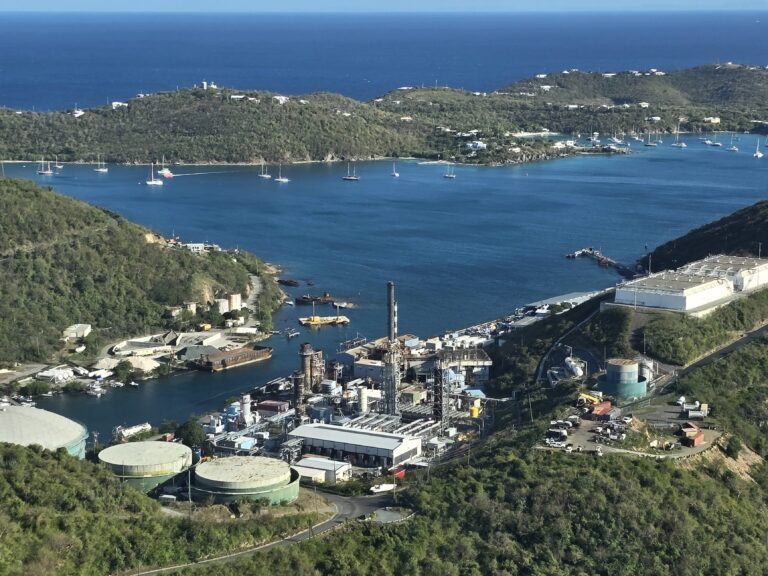
 The global economy is not a collection of isolated systems operating independently of one another. It is an interconnected network where disruptions in one region can produce immediate and measurable consequences in another, particularly in small, import-dependent economies. Nowhere is this more evident than in the U.S. Virgin Islands, where global energy instability translates quickly into local economic pressure. What is unfolding in international energy markets is not a distant geopolitical concern; it is a real-time stress test of the Territory’s structural vulnerabilities. Understanding the present moment requires not only acknowledging rising fuel prices, but examining the underlying systems that make those increases both inevitable and disproportionately impactful.
At the center of the current disruption is the Strait of Hormuz, one of the most critical energy transit corridors in the world. Approximately twenty percent of global oil supply moves through this narrow passage, making it a central artery in the international energy system. Recent geopolitical tensions and escalating conflict in the region have created near-closure conditions, significantly reducing tanker traffic and increasing the risk profile for any vessel attempting to pass through. As a result, insurers have imposed substantial war-risk premiums, and producers have begun adjusting output in response to constrained transport capacity. These developments have immediate consequences for global markets. Oil prices do not wait for physical shortages to materialize; they respond in anticipation of disruption. In this case, analysts have already described the scale of the shock as comparable to, and potentially exceeding, historic oil crises. For a territory like the Virgin Islands, which relies almost entirely on imported fuel, this exposure is direct and unavoidable.
The relationship between global oil prices and local fuel costs is not speculative. It is grounded in well-established economic principles. A widely accepted rule of thumb within energy economics indicates that every one-dollar increase in the price of crude oil translates to approximately ten to twelve cents per gallon at the pump. When global prices increase by fifteen to twenty dollars per barrel, the resulting impact on retail fuel prices becomes mathematically predictable, ranging from roughly one dollar and fifty cents to over two dollars per gallon. Importantly, these figures reflect only the base cost of crude oil. They do not account for additional expenses associated with transportation, insurance, storage, and distribution, all of which are amplified in a high-risk shipping environment. Consequently, the actual price experienced by consumers in the Virgin Islands is likely to exceed these baseline estimates. This is why projections of sharp increases at the pump should not be dismissed as alarmist; they are the logical outcome of quantifiable inputs within a constrained supply system.
Compounding this global pressure is a parallel issue unfolding locally: the question of pricing transparency and regulatory compliance within the Territory’s fuel market. The Department of Licensing and Consumer Affairs has taken the significant step of escalating enforcement actions by seeking judicial intervention to compel fuel retailers to produce historical pricing, cost, and sales records after prior requests were not honored. This development is particularly consequential because it suggests that concerns about pricing practices existed prior to the current global disruption. In practical terms, this means that residents may be facing the dual burden of externally driven price increases layered on top of a market that is already under scrutiny for potential inefficiencies or excess margins. The intersection of global supply shocks and local regulatory uncertainty creates a scenario in which public trust is strained and the need for transparency becomes even more urgent.
It is also important to recognize that the present situation was not unforeseen. The Virgin Islands Energy Strategy explicitly identified the Territory’s dependence on imported fossil fuels as a primary vulnerability, noting that geopolitical instability, supply chain disruptions, and price volatility would pose significant risks to economic stability. What is occurring now is not an unexpected anomaly, but rather a real-world validation of those projections. The implications of this validation are profound. It suggests that the current challenges are not solely the result of external events, but also of internal policy decisions that have not yet sufficiently mitigated known risks. In this context, the conversation must shift from reacting to immediate price increases to addressing the structural conditions that make such increases so disruptive.
Beyond the direct impact on fuel prices, the secondary effects of global energy disruption must be understood as part of a broader economic chain reaction. One of the most immediate and often underestimated factors is the cost of shipping and insurance. In conflict zones, war-risk premiums can add several dollars per barrel to the cost of oil, expenses that are passed along the supply chain and ultimately borne by consumers. For island economies, where all goods must be transported by sea, these additional costs extend far beyond fuel. They influence the price of nearly every imported product, magnifying the overall cost of living.
This dynamic is particularly evident in the food supply system. Fuel is an embedded cost in every stage of food production and distribution, from international shipping and port operations to local transportation and refrigeration. As fuel prices rise, these costs are transferred to consumers in the form of higher grocery prices, often within a relatively short timeframe. For households already managing high living expenses, this creates an immediate and tangible strain. The relationship between fuel and food is not indirect; it is structural, and its effects are both rapid and cumulative.
The impact on electricity further intensifies this pressure. In the Virgin Islands, where energy generation remains heavily dependent on fuel, fluctuations in global oil prices directly influence the cost of electricity. This places additional stress on household budgets, increases the financial burden on public utilities, and often necessitates greater government subsidies to stabilize rates. The result is a compounding effect in which residents experience rising costs across multiple essential services simultaneously. This convergence amplifies the economic impact of global disruptions and underscores the interconnected nature of the Territory’s energy and financial systems.
In periods of crisis, it is critical to maintain a clear distinction between legitimate market responses and unjustified pricing behavior. While certain price increases are unavoidable due to external factors, this does not eliminate the need for regulatory oversight and consumer protection. On the contrary, moments of instability heighten the importance of transparency and accountability. Ensuring that price adjustments are supported by verifiable cost data is essential to maintaining public confidence and preventing opportunistic practices that could further burden residents. The role of regulatory agencies is therefore not diminished in times of crisis; it is strengthened.
Ultimately, the current situation reinforces a fundamental principle that has often been discussed but insufficiently operationalized: energy policy is inseparable from cost-of-living policy. Decisions related to energy sourcing, infrastructure, and diversification have direct and lasting implications for economic stability and household affordability. Investments in renewable energy, efficiency measures, and localized capacity are not abstract environmental goals; they are practical strategies for reducing exposure to external shocks and improving resilience. Each dollar spent mitigating dependency is a dollar that reduces vulnerability in future crises.
The convergence of global conflict, market volatility, and local structural challenges presents a clear and urgent reality. The Virgin Islands is not merely observing these events; it is experiencing them in real time. Fuel prices, food costs, electricity rates, and overall affordability are all part of the same interconnected system, and disruptions in that system reverberate quickly through the Territory. The path forward requires more than acknowledgment. It requires deliberate, sustained action to address the vulnerabilities that have been identified repeatedly over time. The question is no longer whether these risks exist, but whether the Territory is prepared to confront them with the seriousness and urgency they demand.
Editor’s Note: Opinion articles do not represent the views of the Virgin Islands Source newsroom and are the sole expressed opinion of the writer. Submissions can be made to visource@gmail.com.