
Home Blog Page 258

St. John Residents Dispute Proposed Port Authority Fees

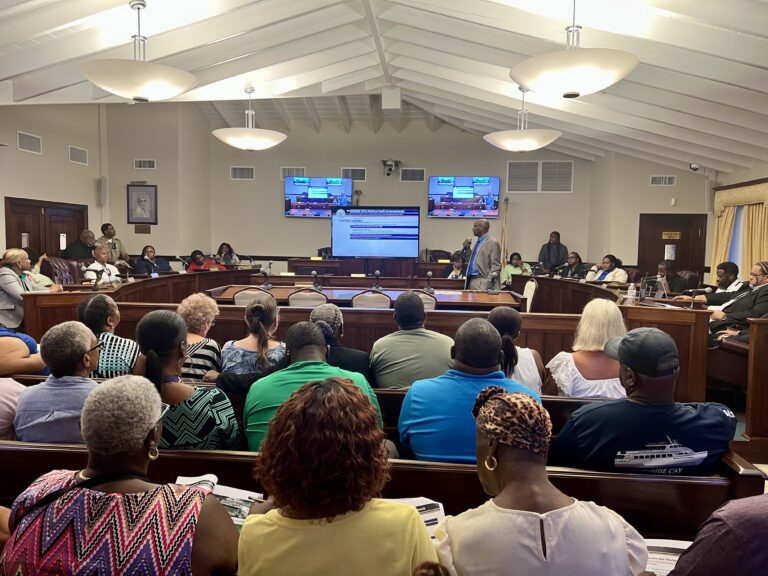
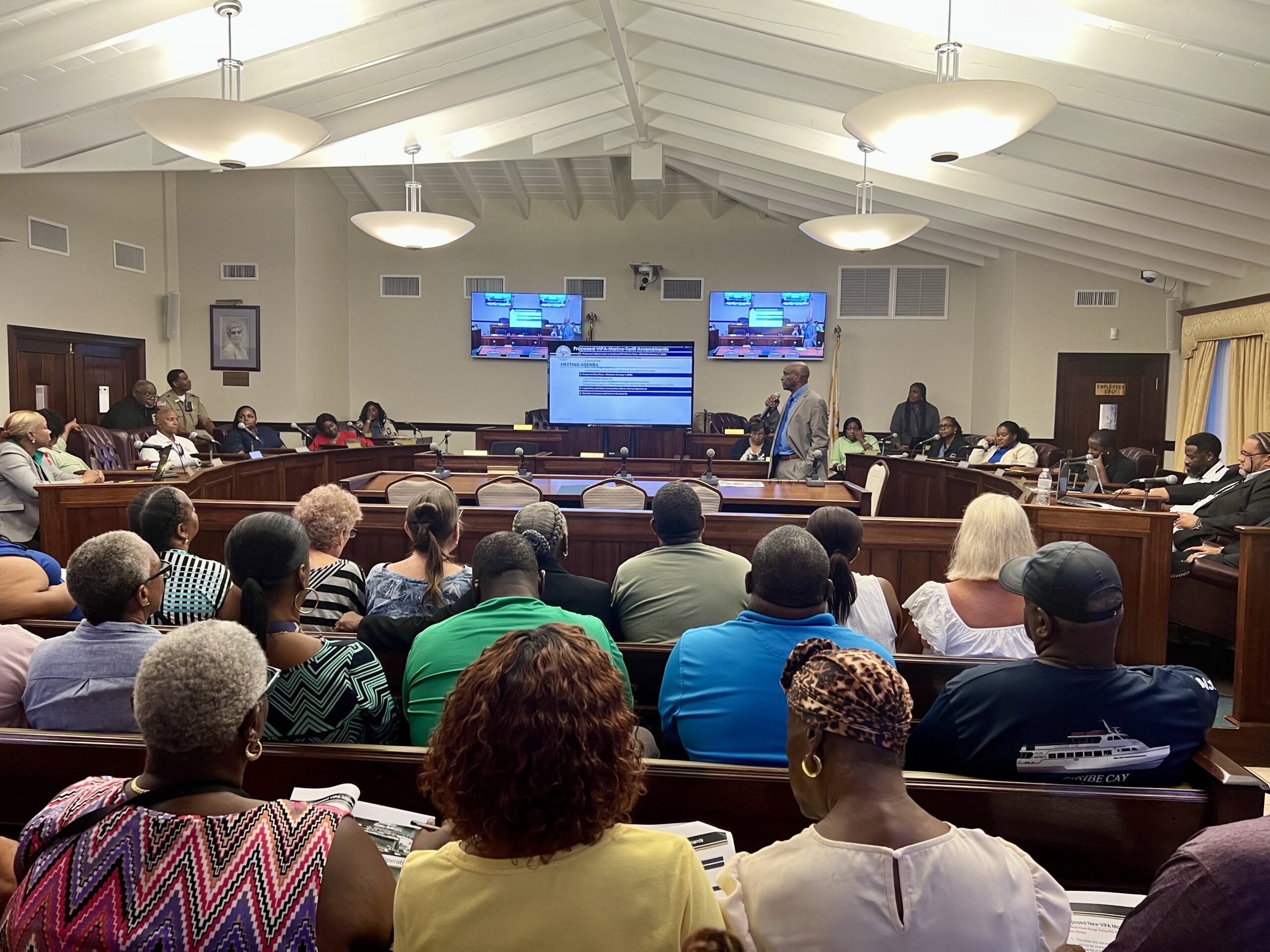
The Cleone Creque Conference Room at the St. John Legislative Annex was filled to capacity for Mondayโ€™s VIPA rate hearing. (Source photo by Amy H. Roberts)

At the town hall meeting hosted by the Virgin Islands Port Authority Monday night to discuss proposed increases in marine fees and tariffs, the message from the St. John community was loud and clear: โ€œYou are punishing St. John!โ€

That was one of the cries heard inside the Cleone Creque Legislative Conference Room, which was filled to capacity and locked down 10 minutes before the start of the meeting. A crowd of nearly 60 gathered on the balcony outside the conference room, clamoring to get in; their calls almost disrupted the presentation by VIPA Executive Director Carlton Dowe during the first hour.

When a loudspeaker was brought to the balcony so those outside could listen to the discussion inside, the crowd settled down to hear what community members had to say about the proposed fees.

The Port Authority has proposed a slate of fee increases that affect everyone in the territory, including docking fees at V.I. ports, fees for travelers between the BVI and USVI, and pilotage fees (primarily for cargo) for vessels over 100 tons.ย Doweโ€™s presentation, which outlines current VIPA projects and provides details of the fees, can be seen here.

But St. John community members were mostly concerned with proposed new fees as well as increases to ongoing fees, which specifically affect them. โ€œI look at your presentation, and I have one question,โ€ said Bonny Corbeil. โ€œHave you thought of the deep burden and suffering youโ€™re putting on the 4,000 who live on St. John? Weโ€™re a small community.โ€

Among the proposals is an increase in the barge ramp fee โ€“ the fee collected when a vehicle travels by barge from St. Thomas to St. John. โ€œWeโ€™re being charged for coming back home,โ€ said Pat Richards. โ€œNo one else in the territory has to pay to come home.โ€

The current fee is $3 for a car or small SUV. The Port Authority plans to double that fee to $6. In addition, VIPA plans to start charging a $2 fee for more than one passenger over the age of 12. (This is in addition to the $65 round-trip now charged by the barge companies.)

Several people testified about the need to go to St. Thomas for services that are not available on St. John. โ€œWho rides a barge?โ€ asked Meaghan Enright. โ€œA teen going for a recreational activity? A senior for dialysis? A person going over for jury duty? Itโ€™s a very predatory fee on the most vulnerable in our community.โ€

One retired educator said she is the caregiver for her father, who has Alzheimerโ€™s; she has to bring him with her when she takes the barge to St. Thomas with her husband, who cannot get his medical treatment on St. John. With the increases, she will have to pay an additional $5 every time she goes. โ€œIโ€™m not against increases,โ€ she told Dowe. โ€œJust do them rationally.โ€

The barge companies, too, will be affected by the new docking fees, according to barge owner Carmen Hedrington. โ€œThe car ferries will have to raise their prices. We were told we canโ€™t collect a fee for extra passengers. But why is VIPA allowed to?โ€

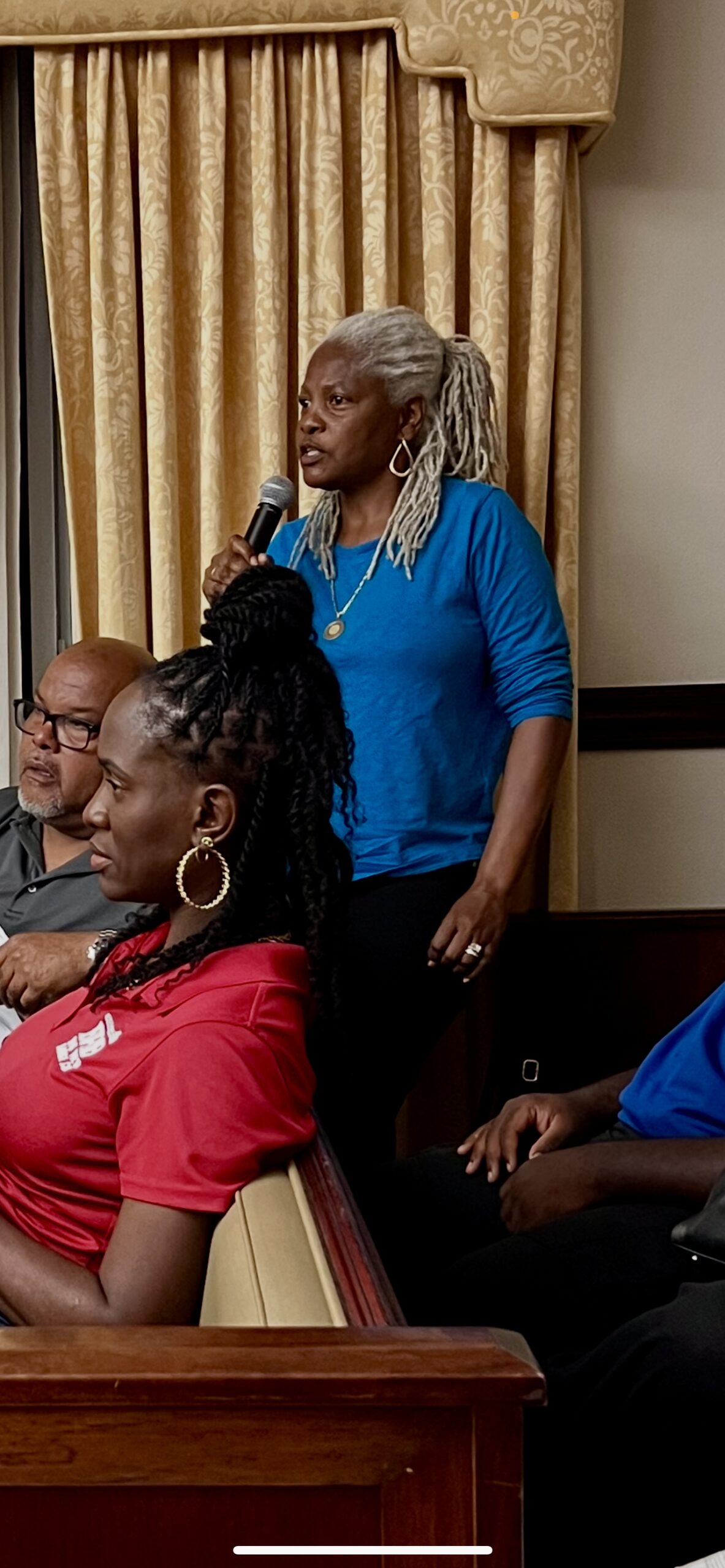
Carmen Hedrington warns that barge fees will increase if new VIPA fees are implemented. (Source photo by Amy H. Roberts)

The Port Authority is also planning to start charging โ€œcargo overflow staging feesโ€ throughout the territory. These fees will apply to trailers, containers, and heavy equipment that are awaiting transport at marine terminals and Port Authority properties. VIPA has proposed 10 new fees, eight of which affect cargo heading to or from St. John. โ€œWith an increase in fees for trailers, that burden will fall on St. John residents,โ€ said Dior Parsons.

Dowe said several times that while barge companies have raised their fees to cover their increased costs, the Port Authority has not increased its ramp fees in 19 years. Similarly, VIPA has not raised its docking fees in eight years. Dowe presented photos of facilities throughout the territory, including the St. John dock, that are in need of repair. โ€œUnderline this,โ€ he said. โ€œVIPA can only spend what it makes. We donโ€™t get anything from the central government.โ€

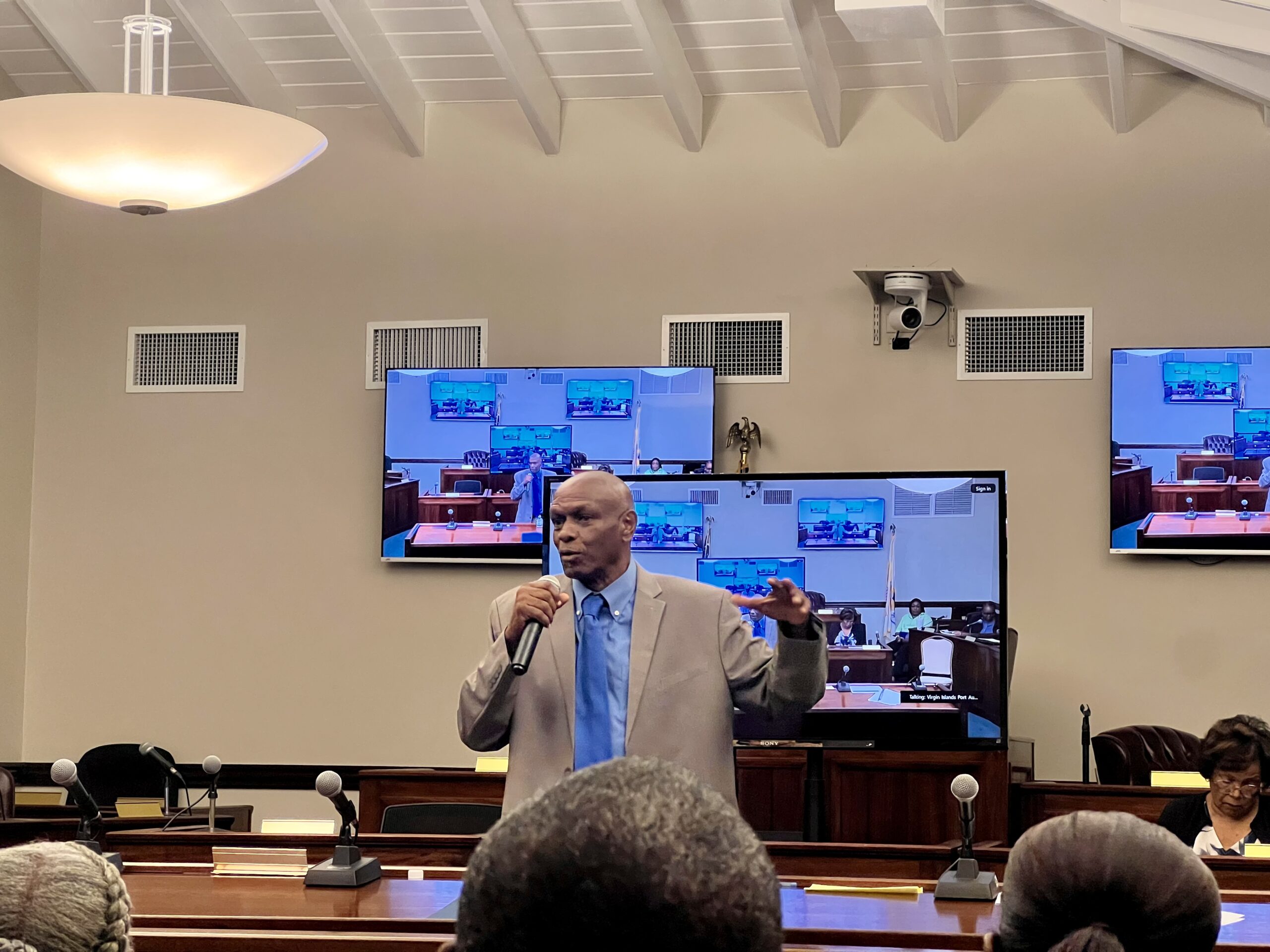
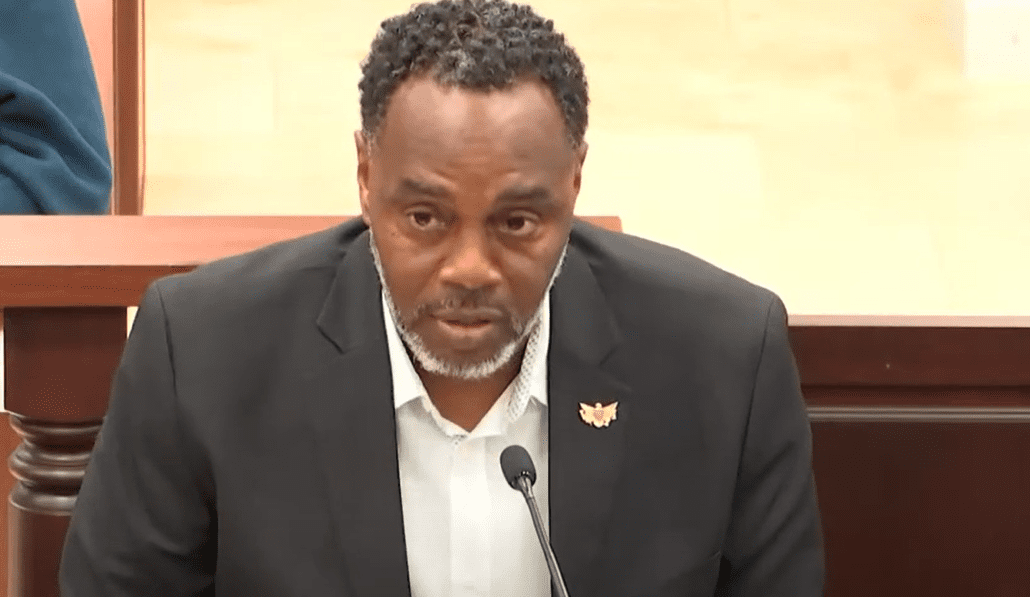
Carlton Dowe gestures in response to an audience question. (Source photo by Amy H. Roberts)

But St. John residents didnโ€™t buy his argument.

โ€œYouโ€™re putting an obscene and disproportionate burden on St. John,โ€ said Hadiya Sewer. โ€œThe people of St. John are being displaced. Our land taxes are proportionally higher. Thereโ€™s no public high school on St. John, and no hospital. The government is creating conditions which force us to leave.โ€

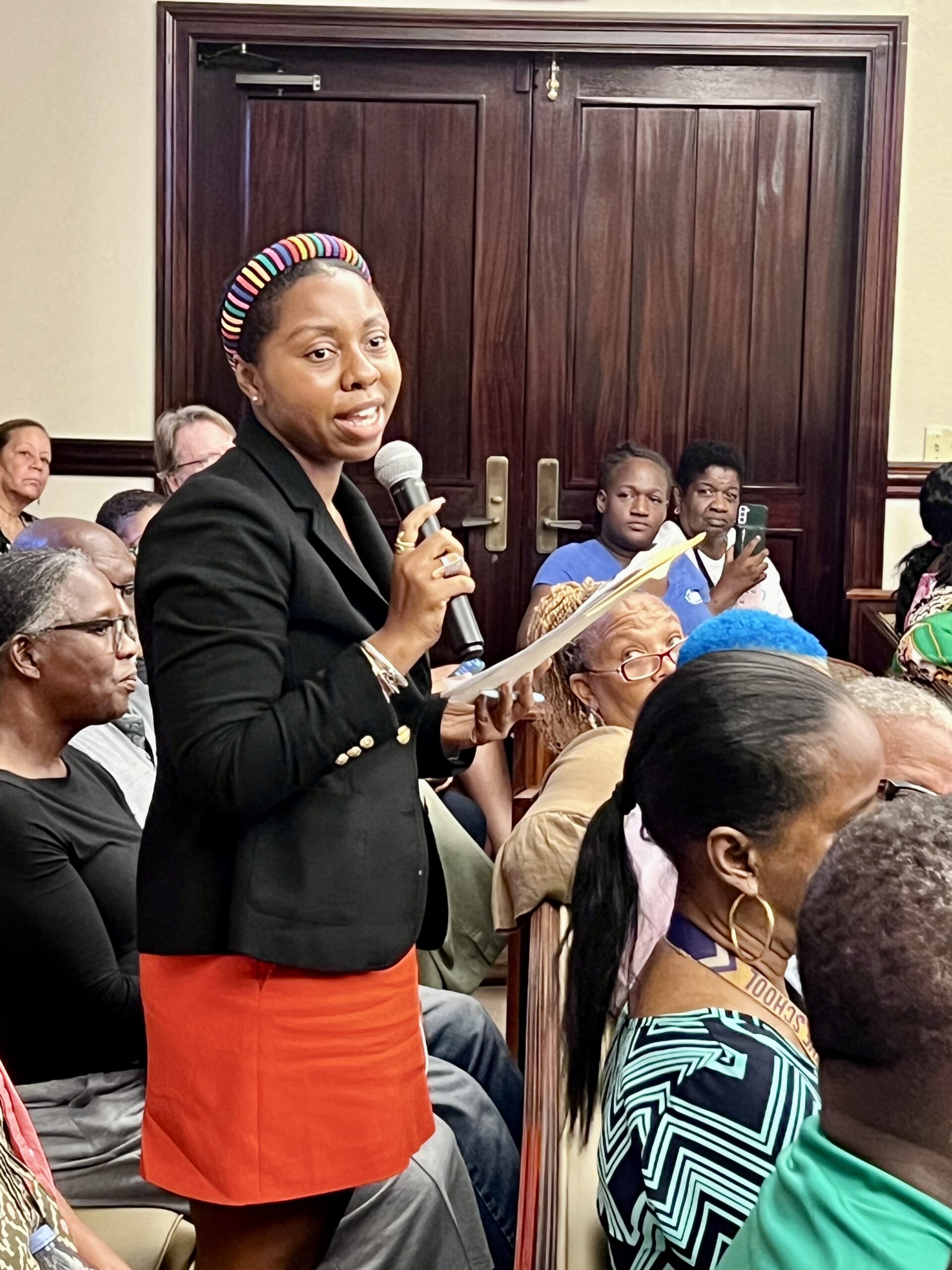
Hadiya Sewer warns that the cost of living is forcing St. Johnians to move elsewhere. (Source photo by Amy H. Roberts)

St. John residents were also opposed to charging for parking at the lot, which is part of the Victor Sewer Marine Facility in Cruz Bay. This parking lot โ€” locally known as the Customโ€™s lot โ€” is routinely used by St. John residents for trips to the post office or the Health Department clinic across the street.
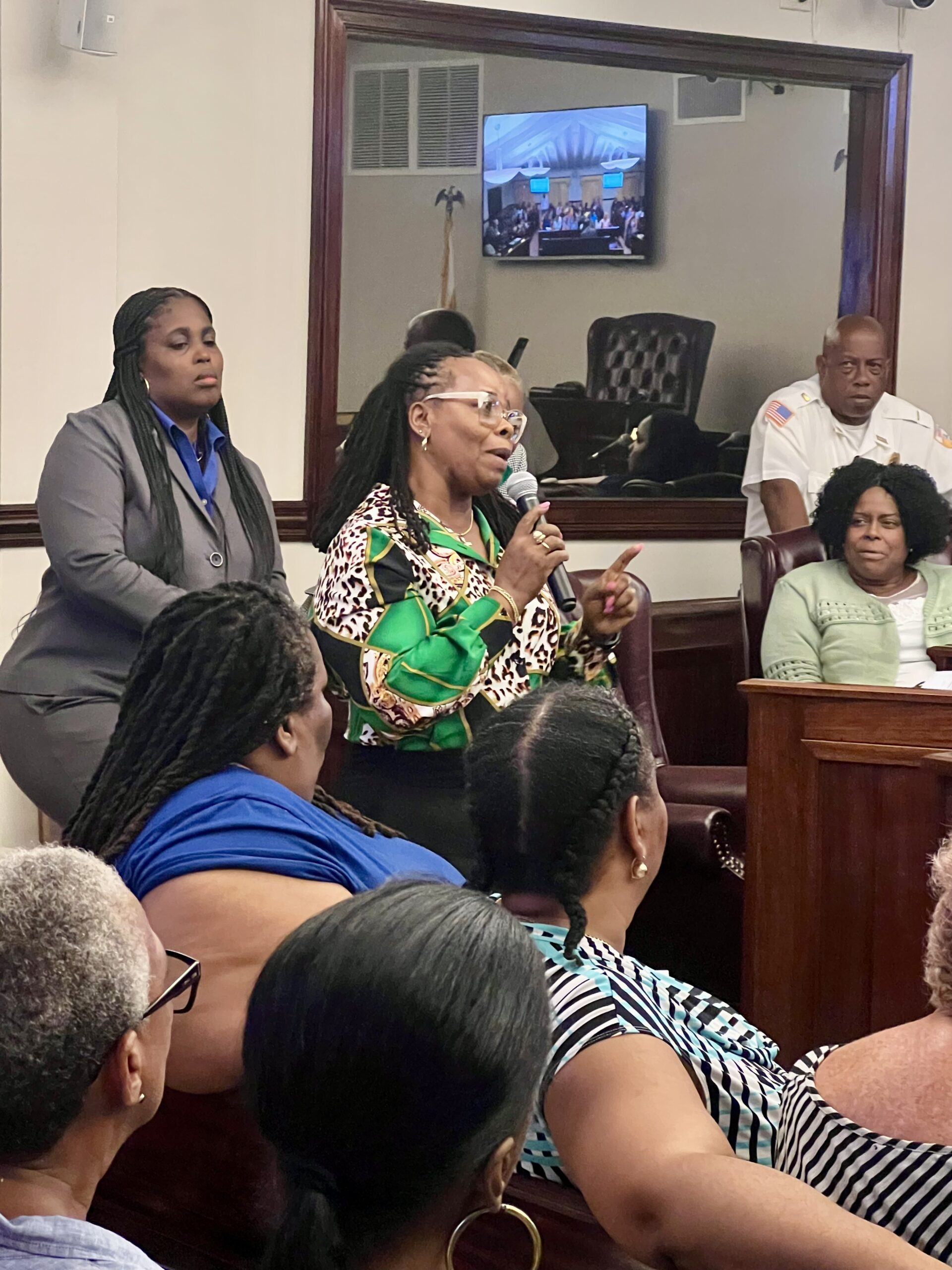
Elva Goodwin speaks about troubling new parking rates in Red Hook and Cruz Bay. (Source photo by Amy H. Roberts)

The Port Authority has proposed allowing 30 minutes of free parking, but several audience members said they often spend more than 30 minutes to complete business at the post office.

Dowe said one reason for charging at the lot was to prevent people from parking there and then going off island for weeks at a time. Carol Beckowitz said, โ€œThere are ways to police the lot to keep long-term parking abusers away.โ€

One person who said she uses the Customโ€™s lot daily is Elva Goodwin, the pastor of the Moravian churches on St. John. She supplements her income by teaching at the Moravian School on St. Thomas. She keeps a car on St. Thomas and pays for parking at the Red Hook terminal โ€“ another facility which is slated for an increase in fees. โ€œI now pay $175 a month, and you want me to pay $250? And now pay for parking here (on St. John)? I look at the people in my congregation โ€ฆ. The little man canโ€™t afford it.โ€

Residents Question VIPAโ€™s Basis for Calculating Proposed Fees

St. John residents questioned the Port Authorityโ€™s basis for raising the fees. In an op-ed published in the Source,ย Pam Gaffin, an accounting professional on St. John for 35 years, said the proposed fee increases were calculated based on financial statements from 2022-2024 when VIPA projected a loss in 2025. But Gaffin said VIPA has made โ€œspectacularโ€ profits during the first six months of 2025.
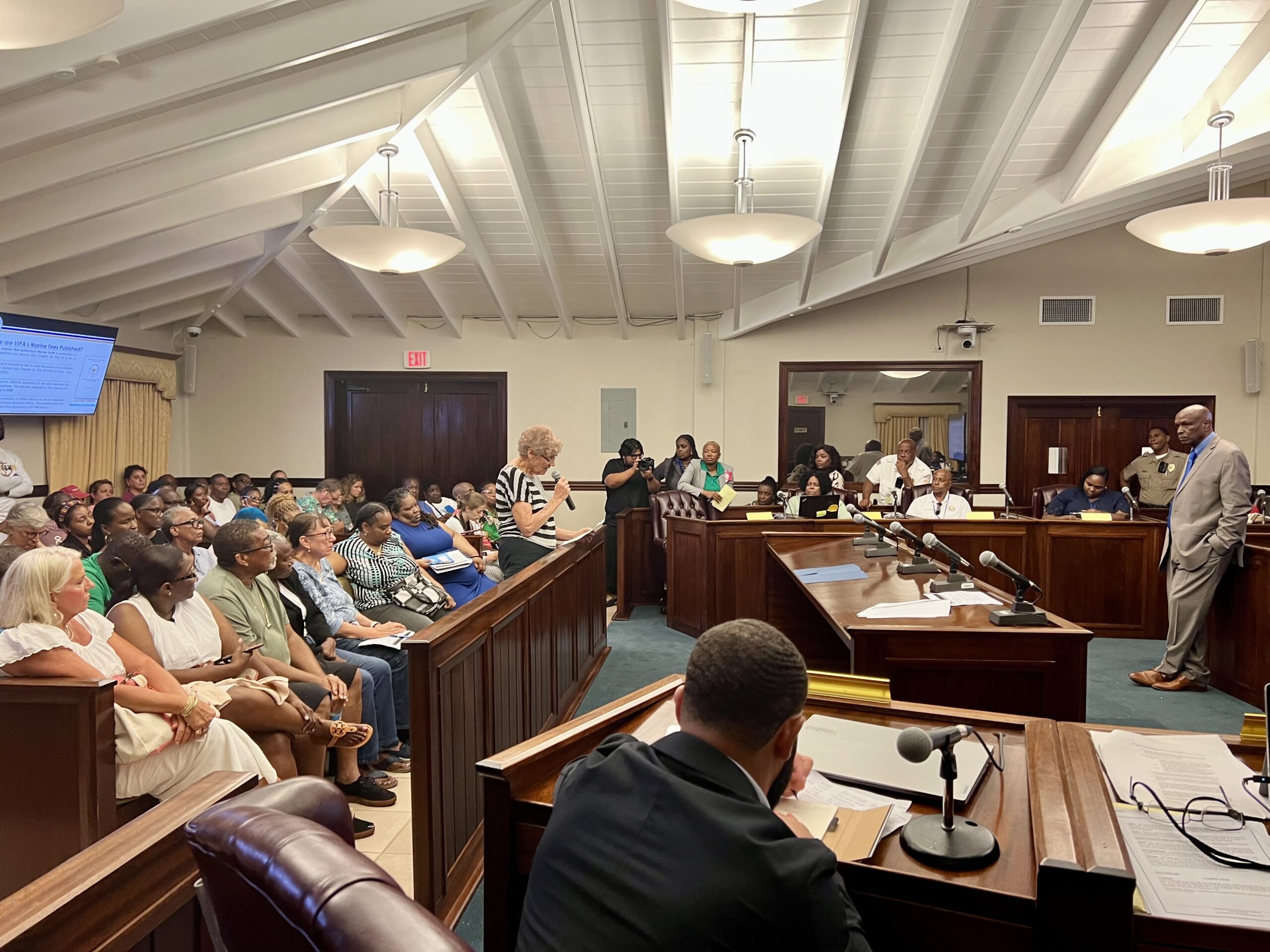
Pam Gaffin reads her testimony about VIPA rates while Carlton Dowe listens. (Source photo by Amy H. Roberts)

Gaffin said, although the data available on the VIPA website is incomplete, โ€œthe limited documentation that is available shows consistent increases in St John revenue.โ€

โ€œFor example,โ€ Gaffin continued, โ€œtheir data shows quite impressive June monthly revenue for the Barge Ramp ($52K), the Red Hook Parking ($99K) and the Gravel lot ($6K), for a year-to-date total of $1.3 million, up 4% from the previous year. The Creek Cruise Ship passenger revenue for St. John went up 53% from the previous year.โ€

Gaffin asked, โ€œCould some of this windfall be used to prevent residents from suffering economic hardship due to the fee increases?โ€

At the meeting, St. Thomas resident Imani Daniel also asked VIPA to make available their profit and loss statements for each of their facilities. She promised to attend the town hall meeting scheduled for Tuesday night on St. Thomas to follow up on her request.
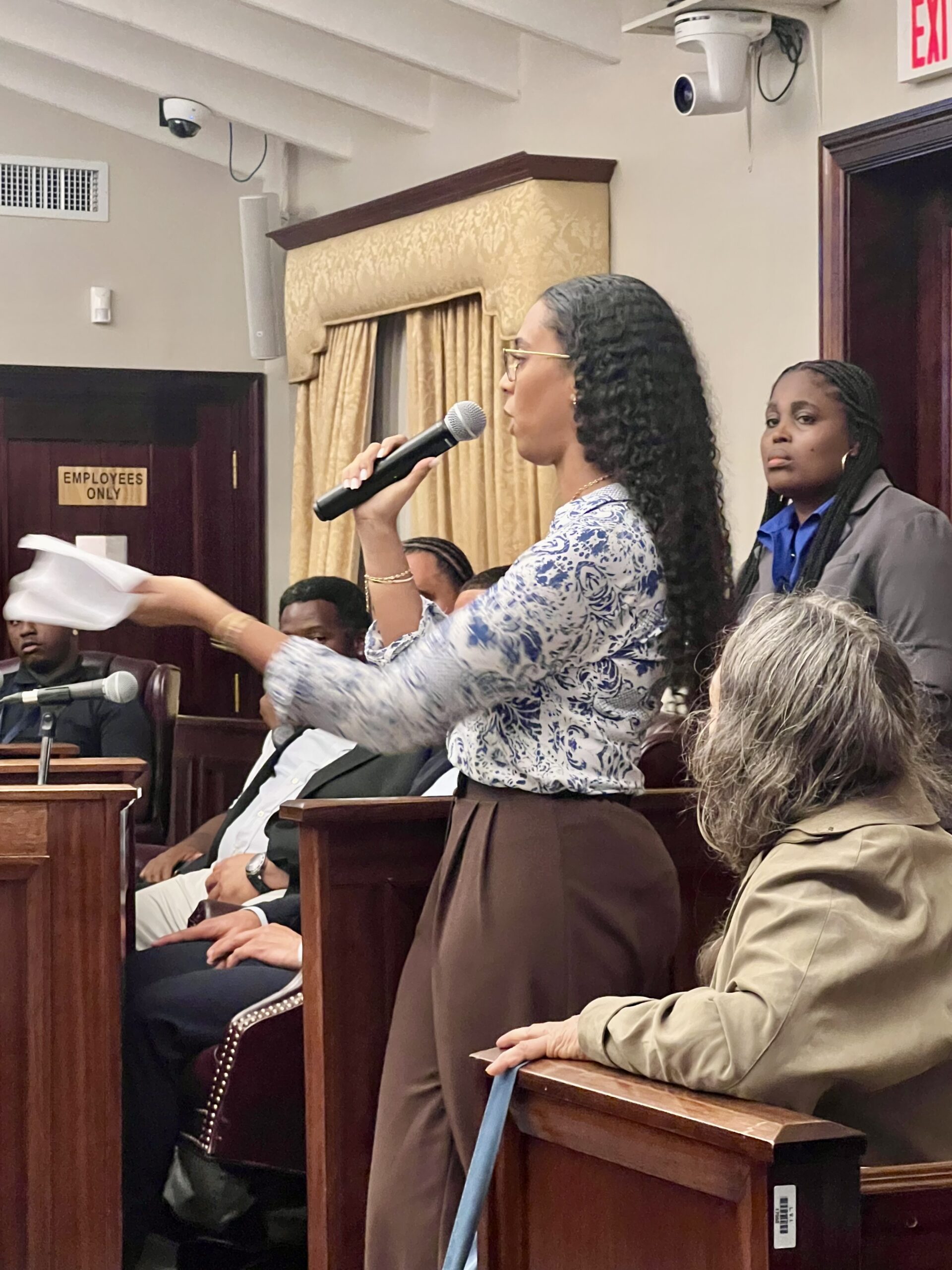
Imani Daniel asks for financial details for VIPA facilities. (Source photo by Amy H. Roberts)

The St. Croix meeting is scheduled for Wednesday at 6 p.m. at the Henry E. Rohlsen Airport Terminal VIPA Conference Room on the second floor.

Several residents asked how and when a decision would be reached regarding the proposed fees. Dowe said he and his staff would review the responses gathered from the three public meetings held this week and make recommendations to the board. Dowe said he hoped the decisions would be made at the monthly October meeting, which is open to the public.

The board currently has seven members. Leona Smith, the one board member from St. John, was the only member who attended Mondayโ€™s meeting.

โ€œThe (whole) board should be here โ€“ to feel our rhythm and our heart and our pulse,โ€ said Myrtle Barry.

Committee Review of Racetrack Bill Marked by Passionate Testimony

0
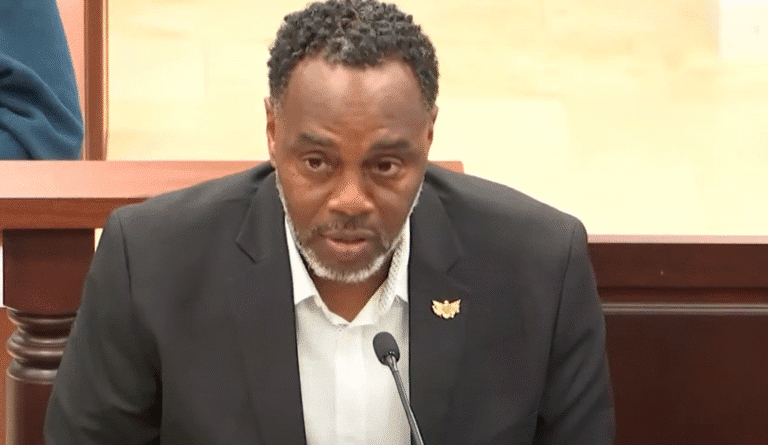
Vincent Roberts, commissioner of the Sports, Parks and Recreation Department, addresses the Senate Budget, Appropriations, and Finance Committee during Tuesdayโ€™s meeting on St. Croix. (Screenshot from V.I. Legislature livestream)

Emotions ran high Tuesday as the Senate Budget, Appropriations, and Finance Committee met on St. Croix to debate Bill 36-0119, which would reprogram $5 million to the Sports, Parks and Recreation Department to complete long-delayed renovations at the Randall โ€œDocโ€ James Racetrack โ€” a project stalled for years amid funding and oversight disputes.

The session, marked by passionate testimony and heated exchanges, exposed deep divisions within the community and among lawmakers. Supporters of the measure, including Sen. Avery L. Lewis, called the racetrack โ€œa cultural landmark, a community gathering place, and a cornerstone of St. Croix heritage for generations.โ€

Lewis, who sponsored the bill, described it as โ€œcultural preservation, economic revitalization, and community pride. It is a promise to every horseman, every small business owner and every young person who looks to the track as a place of opportunity โ€ฆ that this legislature will not allow their future to remain on hold.โ€

The meeting quickly revealed deep divisions and lingering anger over years of stalled progress and unmet promises, much of it stemming from the racetrackโ€™s troubled development history. โ€œThe IGL did not live up to its end of the deal, and the people of St. Croix have been denied their racetrack far too long,โ€ Lewis said, referencing the failed agreement with the previous developer.

Lawmakers continually revisited the legal and contractual setbacks that have long plagued the project. As Sen. Kurt A. Vialet explained, โ€œA breach of contract lawsuit was filed by the executive branch. It was settled back in January โ€ฆ As a part of the breach of contract lawsuit, all of the plans are turned over to Government House,โ€ marking a new chapter of government control and responsibility.

Elroy Bates Jr., president of the Flamboyant Park Horsemen Association, warned that โ€œsome owners are running horses in Saint Thomas and training them on Saint Croix, often in open fields and roadsides, and some are even training on the highway, which is unsafe for drivers, riders and the horses involved.โ€

Despite broad support for moving the project forward, many participants questioned whether the proposed $5 million appropriation would be enough to restore the racetrack to modern standards. Vincent Roberts, commissioner of the Sports, Parks and Recreation Department, testified that while the funding is a โ€œcritical step forward,โ€ it falls short of what is truly needed. โ€œThe total estimated cost for the completed construction and modernization of the facility is approximately $12 to $14 million,โ€ Roberts said, noting that the current appropriation would only cover initial phases of the work.

Roberts added that the funding would still allow the project to begin important preparatory work.

โ€œThe $5 million appropriation, although not sufficient to complete the racetrack, will enable us to proceed with crucial design management and site preparation work that makes this project possible,โ€ Roberts said.

Roberts outlined how the funds would be prioritized, emphasizing that โ€œthe most important thing is the safety of the jockeys and the horses.โ€ He explained that the first phase would focus on repairing the running surface and stables, with additional improvements โ€” such as perimeter fencing, clearing overgrown vegetation and renovating the paddock area โ€”dependent on securing further funding.

Lawmakers and community members expressed concern that the project could stall again without a clear plan for bridging the funding gap. โ€œIs it $5 million enough? No, but I know one thing, itโ€™s a start [toward] moving in the right direction,โ€ Lewis said, urging colleagues to support the measure as an essential first step.

While questions about funding dominated much of the discussion, an equally contentious issue emerged over who should ultimately operate the racetrack. As lawmakers weighed the best path forward, the debate shifted to whether the government should retain control or seek out a private promoter to manage the facility. The general consensus was that a public-private partnership would be the ideal long-term solution, but in the meantime, most agreed that government oversight was necessary to move the project forward in its current status.

Roberts acknowledged the long-term goal of finding a private partner but emphasized the need for public oversight in the immediate future. โ€œThe plan is to secure the first $5 million to get the project started โ€ฆ After that, we will see whether we have any interested investors. If not, we most likely will probably end up back in the legislature,โ€ Roberts said.

โ€œWe do not want the government running the racetrack. No way, no way,โ€ said Roberts, reflecting a widely shared sentiment among industry stakeholders.

Jay Watson, a horse racing advocate, echoed these concerns, urging lawmakers that โ€œin an environment where our hospitals, schools, GERS and other critical government functions severely lack funding to operate. Horse racing needs to be looked at from a venue revenue-generating perspective, and not as a cost to the government.โ€

The committeeโ€™s deliberations culminated in a pivotal amendment to the bill, shifting oversight of the $5 million appropriation from a private company to the Sports, Parks and Recreation Department. โ€œI move amendment number 36-579, an amendment in the nature of a substitute to bill number 36-0119,โ€ said Sen. Marise C. James, as the committee unanimously adopted the change.

Transparency and process remained flashpoints throughout the meeting, with lawmakers pressing officials on the lack of a new request for proposals for a private promoter. โ€œThe RFP did not receive a response,โ€ said Hugo Hodge, a member of the horse race commission. โ€œDiscussions have started to get another one prepared.โ€

Amid the debate over funding and management, lawmakers also raised pointed questions about the fate of materials and equipment previously located at the racetrack. Sen. Angel L. Bolques Jr. pressed officials for answers, asking, โ€œWe have things that have been removed from the track. Iโ€™m talking about the footings, the foundation, the elements, the truss, the steel, the seating, the staging area, where they gone, where they gone?โ€

Roberts acknowledged the concern but admitted he did not know what had happened to the missing items. โ€œThey are no longer on the property,โ€ Roberts said.

Bolques expressed frustration that government-owned materials could disappear without clear documentation or compensation, noting, โ€œI donโ€™t understand how it is a contract that could just remove these items that belong to the government of the Virgin Islands without having to pay for them if they wanted to use them, or if we sold them to them. I donโ€™t know what the situation is, but theyโ€™re gone now.โ€

When the roll was called, the committee approved the amended bill by a vote of 5-1, with one senator absent.

Vialet cast the lone โ€œnoโ€ vote on the amended bill, delivering a pointed critique of both the process and the substance of the proposal. He warned that the $5 million appropriation could lead the territory to repeat a cycle of incomplete or stalled projects.

โ€œThereโ€™s no clear plan, none,โ€ Vialet said, expressing frustration with what he described as a lack of coordination and transparency.

With the committeeโ€™s approval, the bill now advances to the Rules and Judiciary Committee for further consideration. As the meeting adjourned, a sense of cautious optimism prevailed. โ€œSlow motion is better than no motion,โ€ Roberts said.

The fate of the Randall โ€œDocโ€ James Racetrack and the future of horse racing on St. Croix now rest with the next round of legislative review.

Bryan Seeks Exemption as USVI Businesses Struggle With New Shipping Tax

0
For items under $800, if the Zonos Prepay application often defaults to tariffs levied against China, making a $20 hat actually cost $28.04. (Photo illustration by the Source)

Gov. Albert Bryan Jr. was gathering leaders from the other U.S. territories to petition the Department of the Interior and the White House for an exemption to new U.S. Customs rules that ended duty-free treatment for shipments valued at $800, Government House said Tuesday.

The rule changes, laid out in President Donald Trumpโ€™sย Executive Order 14324 in July and implemented Aug. 29, disproportionately affect people in the territories outside the U.S. Customs zone because so much commerce and daily life depend on overseas shipping, Bryan said.

โ€œFamilies, students, seniors and small businesses in the Virgin Islands rely on small packages the way most communities rely on a corner store,โ€ the governor said in a written statement. โ€œThey carry essentials, tools, and hope in a box. A targeted exemption recognizes that the same rule can weigh differently on an island. We can meet national enforcement goals without making everyday life harder for people who already pay more for distance.โ€

As the Virgin Islands prepared for the upcoming tourist season, small businesses said theyโ€™d struggled with the rule changes and their associated impact โ€” slowing shipping, raising prices, and, above all, sowing confusion.

Kristin Wall, owner of Fish Face in Charlotte Amalie, invested heavily in a state-of-the-art website a few years ago that allowed her customers easy online browsing and shipping. The rule change upended that.

โ€œWe made a really big investment and it’s been paying off until now,โ€ Wall said. โ€œThat investment will not pay off if we cannot ship internet sales.โ€

Like many Virgin Islands businesses, the bulk of Wallโ€™s in-store customers are tourists boating or flying by for a day or two. Four or five times a week, sheโ€™s asked to ship fragile or oversized purchases to visitorsโ€™ homes, she said.

โ€œWe were finally recovering from Irmaria and then COVID, and now trying to deal with this. I support a lot of local artists, this is hurting many families,โ€ Wall said. โ€œOne reason St. Thomas is such a great destination is due to our duty-free status. If we no longer have that, many more businesses will go under.โ€

Antiques dealers, art galleries, jewelry stores, and more said the new rules had been an off-season burden they hoped not to carry into the 2025-26 tourist season, just a few weeks away.

Confusion about the tariffs drove at least one St. John jewelry store to briefly take their website offline, removing a vital slow-season sales channel.

Another Cruz Bay perplexed jeweler soldiered through the changes, which included the recent implementation of the Zonos Prepay mobile phone app. The free fee-estimating application requires users to photograph items valued at less than $800 before Customs imposes the needed tariff.

As cumbersome as the app may be, said Ruby Taylor, an inventory administrator for Vibe Jewelry, itโ€™s easy compared to the paperwork โ€” and trip to the post office โ€” needed for shipments of $800 or more.

โ€œItโ€™s definitely a lot of extra steps, especially if it is something over $800,โ€ said Taylor, who started with the jewelry store about a week before the Customs change.

She also witnessed the added cost of even modest jewelry purchases.

โ€œLetโ€™s say you buy a product for $340, the tariff would be about $50,โ€ she said, โ€œnot including shipping.โ€

For items under $800, the Zonos Prepay application often defaults to tariffs levied against China. This puts a $6 duty on a $20 USVI flag novelty hat โ€” and then adds more than $2 in clearing and processing fees. The $20 hat now costs $28.04.

In St. Croix, Crucian Gold owner Therese Trudeau said she and other small business owners were left guessing about what to do.

โ€œThere is no real clear instructions on how to navigate these new tariffs. We mail out packages on a daily basis from our store and have been given contradictory information regarding what to do when we speak to the US post offices,โ€ Trudeau said. โ€œAlso, as territories of the United States, certain customs and duty exemptions have always applied to products manufactured, produced or grown in the USVI and Puerto Rico, so why did this change now?โ€

She said nearly all the local businesses, as well as individual people, rely heavily on shipping.

โ€œI am also concerned about the increase in cost, which will unavoidably land on the greater community,โ€ Trudeau said.

Kristin Wall agreed, saying online retailers were taking on โ€œlocation surchargesโ€ for anything ordered from the mainland.

โ€œSo instead of free shipping on Walmart Plus for $99 a year, I got hit with a $300 location charge on cat food and personal items I ordered. Itโ€™s a mess,โ€ Wall said.

Other businesses, from jewelers to fishermen, worried the parts and raw materials needed were becoming more expensive or not available at all.

Hamblet and Shelley Williams, owners of Great Exploration Tours, said theyโ€™d been waiting on replacement parts for their tour vehicles for weeks. Itโ€™s added anxiety to preparation for the upcoming busy season.

โ€œNormally parts would come in three days; now itโ€™s been two weeks,โ€ Shelley Williams said. โ€œI think itโ€™s really relevant to the operations of transportation because thatโ€™s a big part of tourism, right?โ€

Bryan said a โ€œdistinct customs frameworkโ€ lets the territory calibrate costs for residents and businesses, coordinating enforcement closely with federal partners.

โ€œThis is a practical fix with human stakes,โ€ he said. โ€œIt keeps the shelves stocked, the classrooms supplied and the wheels of our local economy turning.โ€

Congressional Delegate Stacey Plaskettย suggested in Septemberย that if being outside the U.S. Customs zone was no longer a benefit to the territory, the governor could request the federal government initiate a change in status.

Bryan pushed back on the point, saying any change in Customs status was up to Congress.

โ€œThe customs status of the Virgin Islands is determined by Congress through federal law and administered by federal agencies, including the U.S. Department of the Treasury, the Department of Homeland Security, and U.S. Customs and Border Protection. The governing framework was established in the Tariff Act of 1930 and related statutes, and only Congress has the power to change it,โ€ Bryan said

The governor said he would send a formal request this week to federal partners about an exemption to the shipping tariffs, and lead a territorial coalition to ensure the proposal reflects the realities of island life โ€œwithout undercutting national policy.โ€

Tropical Outlook: NHC Monitors Tropical Storm Jerry, Forecast to Pass Near Northern Leeward Islands Later This Week

0

The National Hurricane Center is monitoring newly formed Tropical Storm Jerry across the Atlantic. Forecasters say the storm could approach or pass very near the Northern Leeward Islands late this week, bringing the potential for gusty winds and rainfall. Residents across the region are urged to follow official forecasts closely.

Tropical Storm Jerry

The NHC had been tracking Invest 95L for several days before upgrading the disturbance to a tropical storm Tuesday afternoon. Now named Jerry, it is the 10th named cyclone of the 2025 Atlantic hurricane season, and forecasters expect it to strengthen into a hurricane within the next few days.

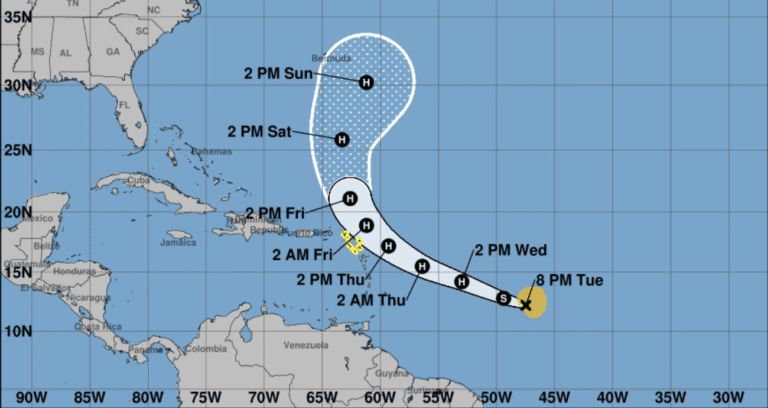
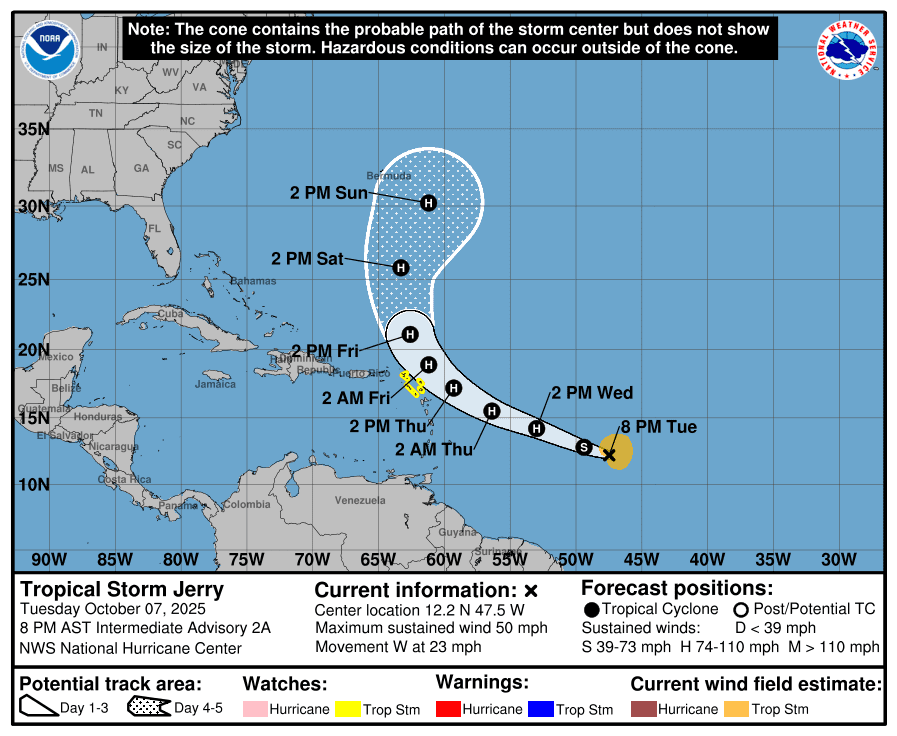
Tropical Storm Jerryโ€™s official forecast track as of 8 p.m. from the NHC. Several tropical storm watches have been issued across the Caribbean. As of Tuesday evening, no tropical weather alerts have been issued for the U.S. Virgin Islands or Puerto Rico. (Photo courtesy NHC)

As of Tuesday evening, the cyclone was located about 1120 miles east-southeast of the Northern Leeward Islands, traveling quickly westward, and packing winds of approximately 50 mph. Jerry is forecast to continue strengthening as it travels toward the Caribbean.

Official Forecasts from the National Hurricane Center

โ€œAt 8:00 p.m. AST, the center of Tropical Storm Jerry was located near latitude 12.2 North, longitude 47.5 West. Jerry is moving toward the west near 23 mph,โ€ according to an update from the NWS on Tuesday evening.

โ€œA decrease in forward speed and a turn to the west-northwest is expected during the next couple of days. On the forecast track, the core of the system is expected to be near or to the north of the Northern Leeward Islands late Thursday and Friday.

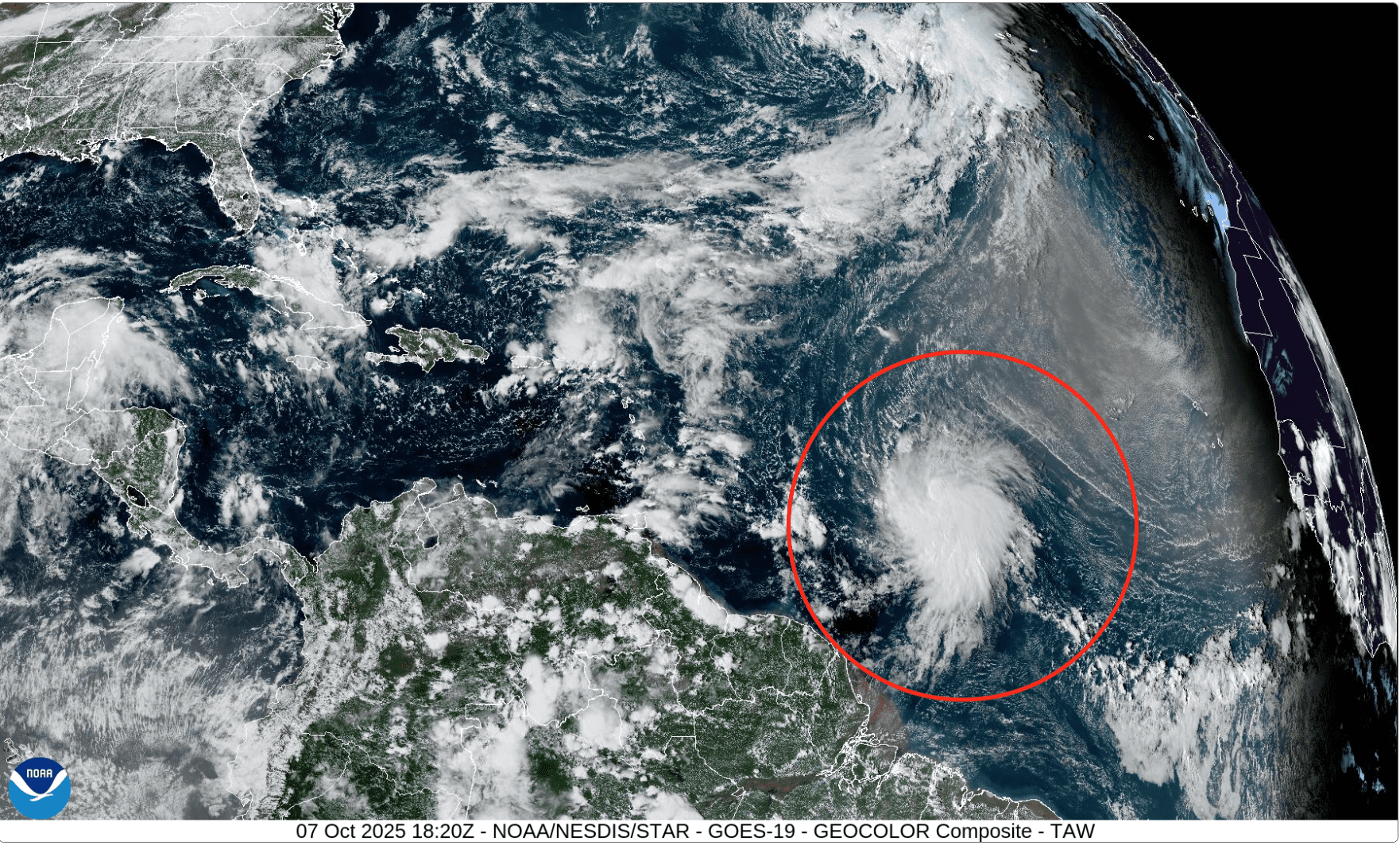
Visible satellite imagery captured at 2:40 p.m. Tuesday shows Tropical Storm Jerry, circled in red, located east of the Lesser Antilles. (Photo courtesy NOAA)

โ€œMaximum sustained winds are near 50 mph with higher gusts. Steady strengthening is forecast, and Jerry is expected to become a hurricane in a day or so. Tropical-storm-force winds extend outward up to 140 miles from the center, and the estimated minimum central pressure is 1003 millibars,โ€ the NHC explained.

Due to the potential for the system to pass very close to several Caribbean islands, a tropical storm watch has been issued for Antigua, Barbuda, and Anguilla, St. Kitts, Nevis, and Montserrat, St. Barthelemy and St. Martin, and Sint Maarten, Guadeloupe and the adjacent islands, and Saba and St. Eustatius. As of Tuesday evening, no tropical weather alerts have been issued for the U.S. Virgin Islands or Puerto Rico.

โ€œInterests elsewhere in the Northern Leeward Islands and the British and U.S. Virgin Islands should monitor the progress of Jerry,โ€ the NHC advised.

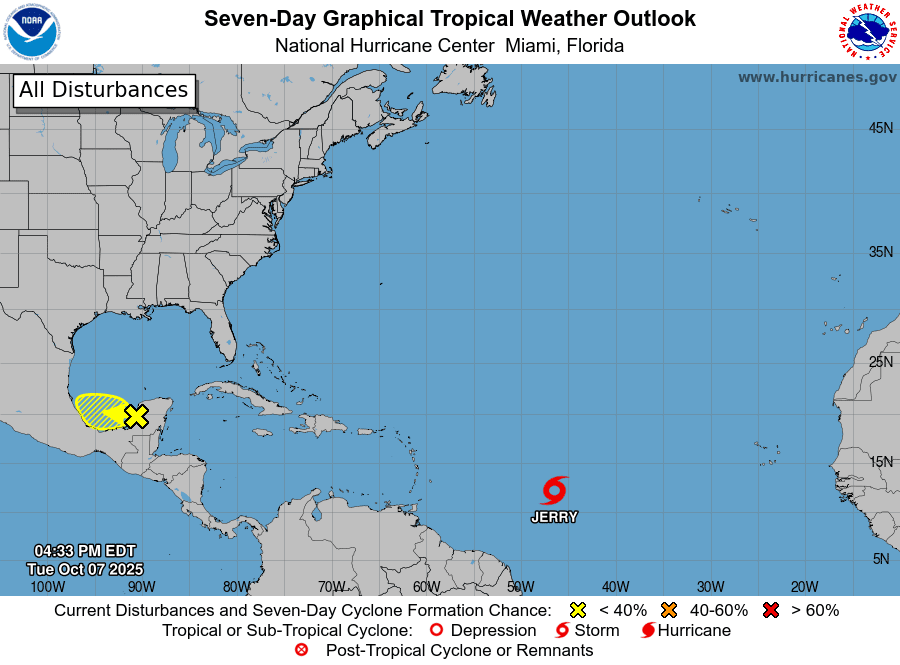
In addition to Tropical Storm Jerry, a low-pressure area over the Southwestern Gulf is being monitored for possible development, though it currently has only a low chance of intensification. A separate system could also bring severe weather to portions of the U.S. East Coast later this week.

On Tuesday, the NHC was monitoring Tropical Storm Jerry, along with another area in the Southwestern Gulf. Jerry is forecast to pass near the Northern Leeward Islands later this week. (Photo courtesy NHC)

Hurricane Expert Insight

On Tuesday morning, AccuWeather released information about Tropical Storm Jerry, noting that while the storm is expected to turn northward and away from the U.S. Virgin Islands and Puerto Rico, the track could still change, and residents across the Caribbean islands should remain alert.

โ€œThe cyclone will begin to turn northward as it approaches the northern Lesser Antilles, where it could bring some heavy rain and gusty winds as it passes Thursday into Friday,โ€ according to AccuWeather. โ€œInterests in the Lesser Antilles and Puerto Rico should monitor the progress of this storm, as a shift in the track could bring stronger impacts. This system is then expected to intensify into a hurricane as well, before losing wind intensity and moving into the open Atlantic.โ€

The Source reached out to Alex DaSilva, AccuWeatherโ€™s lead hurricane expert, to learn more about Tropical Storm Jerry, as well as any other potential tropical weather threats in the coming days.

โ€œJerry is being guided westward by the Bermuda High, and thereโ€™s a weakness developing on the western side of that ridge of high pressure, which should allow the storm to turn toward the north,โ€ DaSilva said. โ€œIn addition, a dip in the jet stream across the East Coast will help steer Jerry out to sea and away from the United States. That said, the system could come close enough to the Northern Leeward Islands to bring some impacts Thursday into Friday, and if the storm tracks a bit farther west than currently forecast, those impacts could increase,โ€ DaSilva noted.

โ€œOverall, we expect the northward turn to occur sometime Thursday afternoon or Friday as the system approaches the islands,โ€ he added.

DaSilva explained that the cyclone has been battling disruptive wind shear, which could potentially help keep the storm from undergoing rapid intensification.

โ€œJerry has been dealing with some wind shear, and that will likely continue for the next couple of days, and because of that, we expect gradual intensification, not rapid strengthening,โ€ DaSilva stated. โ€œWe expect Jerry to reach hurricane strength as it nears the islands.โ€

โ€œThe storm could strengthen into a Category 2 hurricane, with a low but not impossible chance of briefly reaching Category 3 status if wind shear subsides at the right time, but a Category 4 or 5 outcome appears very unlikely,โ€ DaSilva said. โ€œAt this stage, a strong Category 1 or low-end Category 2 hurricane is the most reasonable expectation as Jerry approaches the Northern Leeward Islands,โ€ DaSilva reported.

Potential Impacts for the Virgin Islands and Puerto Rico

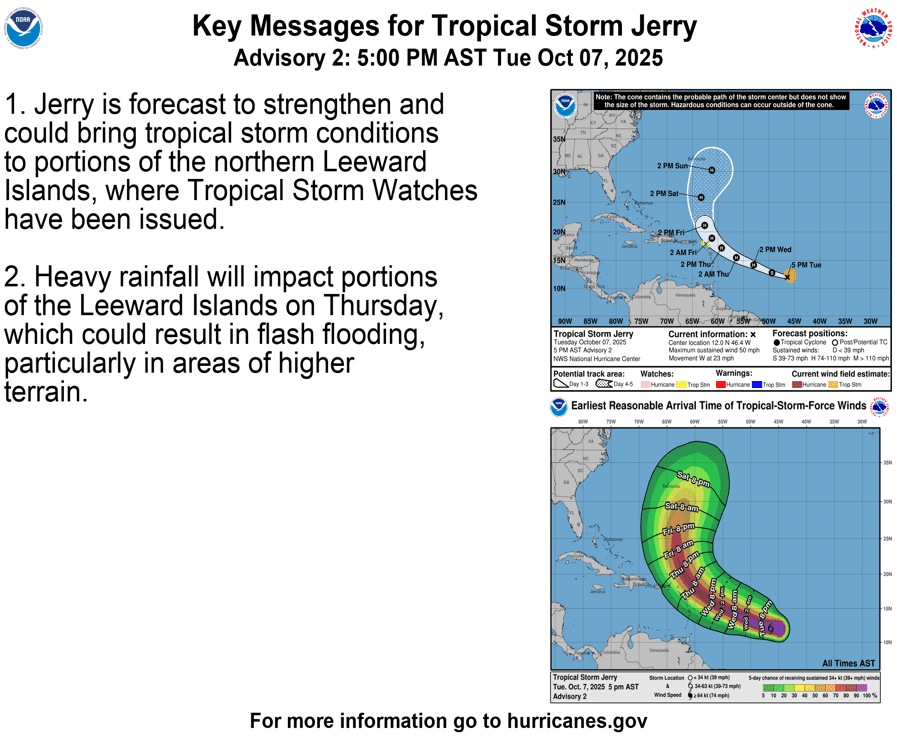
On Tuesday evening, the NHC said that many computer models agree that the center of Tropical Storm Jerry will pass to the northeast of the Northeastern Leeward Islands. However, the agency cautioned that some models show the storm tracking closer to the islands, and residents are urged to remain vigilant.

The NHC issued โ€œKey Messagesโ€ for Tropical Storm Jerry on Tuesday. (Photo courtesy NHC)

โ€œThe best-performing models show the core of Jerry missing the Northern Leeward Islands. However, there are some forecast models that show the core of Jerry passing very near or over the islands. Therefore, interests there and in the Virgin Islands should monitor the system’s progress as details in the forward speed of the storm and strength of the ridge will be the main factors determining how close Jerry gets to the islands,โ€ the NHC said.

DaSilva also noted that even if the core of the cyclone remains over water, some impacts could be felt across the USVI and Puerto Rico.

โ€œMost of the heavy rain and strong winds should remain east of the U.S. Virgin Islands and Puerto Rico, focused more across areas located farther east in the Northern Leeward Islands,โ€ DaSilva said. โ€œIf the current track holds, the U.S. Virgin Islands may see around one inch of rain, with gusts between 30 to 40 mph. The predicted 40 to 60 mph wind field is currently just east of the islands, but a slight westward shift in the track could bring stronger winds and heavier rainfall.

โ€œMarine conditions will be quite rough, with large waves and strong rip currents developing later this week as Jerry passes the region,โ€ DaSilva emphasized.

โ€œPuerto Rico is likely to see fewer impacts than the U.S. Virgin Islands, given its position farther west,โ€ DaSilva predicted. โ€œThe worst conditions are expected Thursday night into Friday, mainly in outer rainbands that could bring periods of gusty winds and brief downpours.

โ€œHowever, if a northward turn happens later than forecast, both the timing and intensity of impacts could increase. Weโ€™ll have greater confidence in that aspect of the forecast within the next 24 to 36 hours,โ€ he acknowledged.

ย National Weather Service Monitoring Tropical Storm Jerry

The National Weather Service in San Juan, Puerto Rico, is closely watching Tropical Storm Jerry, warning that the track of the storm remains uncertain. While the official track from the NHC shows Jerry passing to the north of the USVI and Puerto Rico, any wobbles or shifts in the storm path could significantly affect weather conditions across the local islands.

At the very least, forecasters at the National Weather Service expect periods of rain, gusty winds, and rough seas associated with the system to affect the local islands by the end of the week. The agency urged residents and visitors across the U.S. Virgin Islands and Puerto Rico to stay alert and monitor official updates closely.

โ€œThe forecast places Jerry as a hurricane located about 200 to 250 miles northeast of the U.S. Virgin Islands, Vieques, Culebra, and Northeastern Puerto Rico by late Thursday into early Friday,โ€ the NWS said on Tuesday. โ€œHowever, uncertainty remains regarding its track and intensity forecast. Residents and visitors should remain informed and monitor official updates from the National Hurricane Center and our local office as Jerry approaches the Caribbean basin,โ€ the NWS advised.

Possible Cyclonic Development in October

ย The Atlantic hurricane season continues for about two more months, officially ending November 30. DaSilva noted that there is still time for tropical development to occur, including systems that could organize and potentially affect the local islands. However, based on climatology, the risk of tropical cyclone impacts across the Northeastern Caribbean typically decreases after mid-October.

Still, he advised individuals across the Caribbean to keep an eye on a tropical wave that is forecast to emerge off Africa this week for possible organization.

โ€œWeโ€™re monitoring another tropical wave emerging off Africa later this week that could organize as it moves westward,โ€ DaSilva stated. โ€œSome forecast models have begun to hint at potential development, and itโ€™s possible we could officially begin highlighting that system within the next day or so. That said, weโ€™re nearing the time of year when tropical activity in the U.S. Virgin Islands and Puerto Rico typically starts to wind down. After about Oct. 15 to 20, the likelihood of additional tropical impacts in that region drops significantly,โ€ DaSilva noted.

โ€œTherefore, while another system or two could still develop in the Atlantic, the odds of one affecting the islands will decrease sharply later this month,โ€ he concluded.

NOAA Global Tropics Hazards Outlook

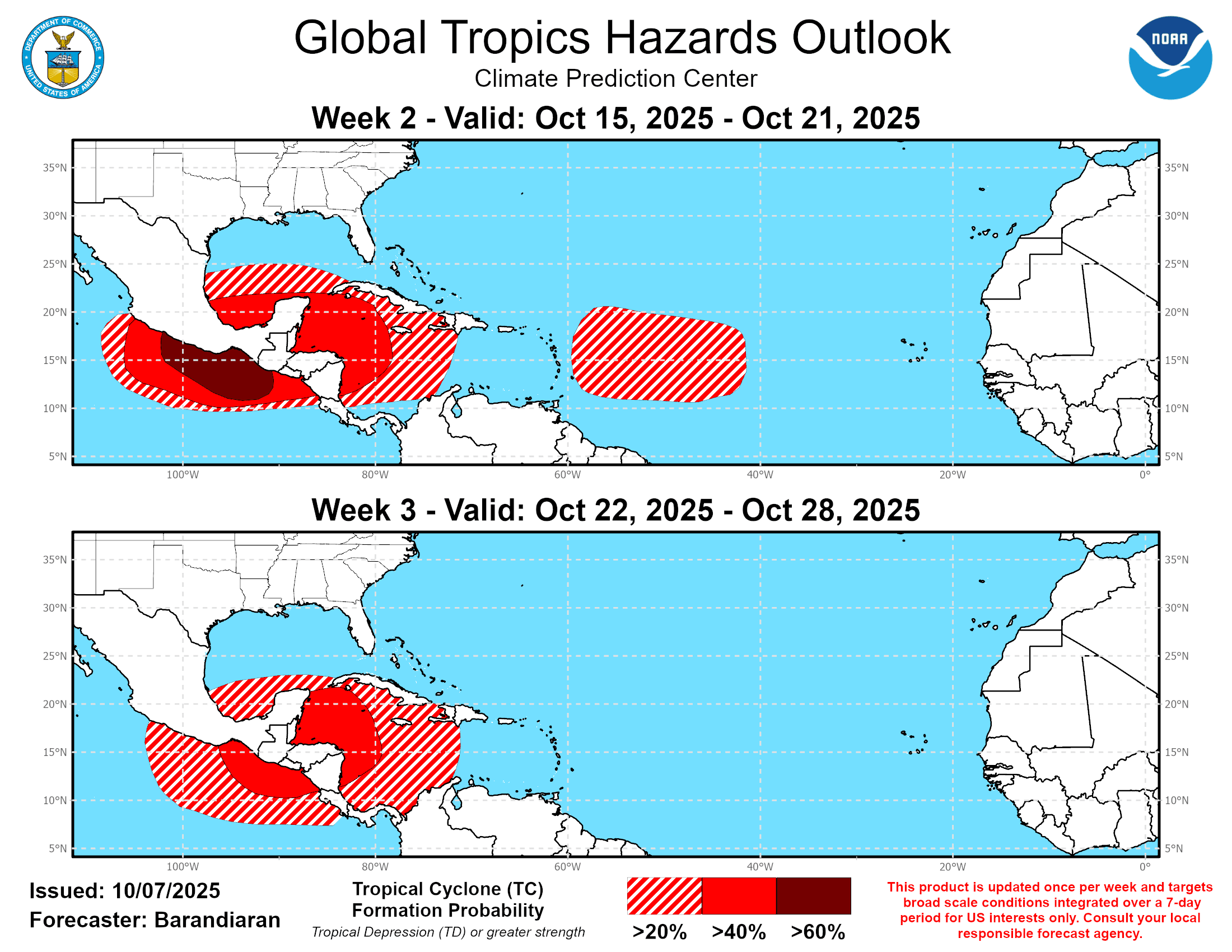
According to a Global Tropics Hazards Outlook released Tuesday, there will continue to be an elevated chance of cyclonic development across portions of the Atlantic basin in the coming weeks. The forecast tool, which is issued every Tuesday by NOAAโ€™s Climate Prediction Center, provides insight into potential activity across tropical basins up to three weeks in advance.

NOAAโ€™s Climate Prediction Center released its weekly Global Tropics Hazards Outlook on Tuesday. NOAA highlighted areas across the Atlantic basin and Eastern Pacific basin as having increased chances for tropical activity in October. (Photo courtesy NOAA)

In its latest update, NOAA said that areas across a portion of the Main Development Region of the Atlantic basin โ€” the zone between the west coast of Africa and the Caribbean โ€” may experience a 20-40% chance of tropical development during the โ€œWeek Twoโ€ outlook period, which runs from Oct. 15 until Oct. 21. Development is not forecast across the Main Development Region in the โ€œWeek Threeโ€ outlook, running from Oct. 22 through Oct. 28.

However, according to the forecast, areas across the western Caribbean Sea and the Gulf are likely to see an elevated chance of tropical cyclogenesis at times in October.

Additionally, the Eastern Pacific basin, which remains active, is also expected to experience an increased risk for cyclonic development in the coming weeks.

Local Weather Information and Staying Informed

Finally, the NWS has reminded residents and visitors of ongoing weather-related threats across Puerto Rico and the U.S. Virgin Islands, including the potential for showers and thunderstorms as a weak tropical wave moves through the area through Wednesday. Very warm temperatures could also prompt continued heat alerts, while marine conditions are expected to remain hazardous due to a fading northeasterly swell.

The forecast can change very quickly, and USVI residents and visitors are encouraged to continue to remain prepared. Weather information is available from the NWS, the NHC, and NOAA.

The local weather forecast for the U.S. Virgin Islands is also regularly updated on theย Source Weather Page andย VI Source YouTube Channel. Additionally, A weekly Tropical Outlook article from the Source will be published throughout hurricane season to provide in-depth updates.

Residents and visitors can find additional weather alerts and preparedness information from the Virgin Islands Territorial Emergency Management Agency.

Virgin Islands Agricultural Council Highlights Roadblocks and Progress

0

On Monday night, during a hybrid meeting held at the University of the Virgin Islands Conference and Administration Center on St. Thomas, the Local Food and Farm Council provided a detailed accounting of its eight-point agricultural transformation plan, revealing both significant achievements and persistent challenges in the territory’s food production system.

Safiya George, council co-chair and president of the University of the Virgin Islands, presents a slide outlining the eight mandates guiding the councilโ€™s work. (Screenshot from Zoom meeting)

1. Regulatory Framework (Status: Not Started)

The first mandate of the Local Food and Farm Council remains “not started,” focusing on establishing a comprehensive agricultural regulatory framework for the Virgin Islands for the purpose of establishing clear, updated laws and definitions.

Preliminary work exists from previous councils, but the current body lacks the personnel to advance comprehensive legal reviews.

“When the Food and Farm Council coordinator comes on and that position is hired, that body of work will be passed to the coordinator as they can take it to the next step. So the prework has been done, but within the council, it’s not started yet,โ€ Sommer Sibilly-Brown said, a local food systems advocate and the founder and executive director of Virgin Islands Good Food.

2. Business Development (Status: Active)

Commissioner Louis E. Petersen Jr. highlighted the Public-Private Partnership Investment Fund as a landmark achievement: “The program awarded over half a million dollars to grantees on St. Croix, St. Thomas and St. John, something we are very proud of. And we’re looking forward at this point to expanding this initiative.”

Shay Roberts, director of the VI Agriculture Business Center, reinforced the program’s impact: “Our centers operate across all three islands, and this year we’re actively assisting 23 clients while reaching out to over 80 participants in workshops and training. We focused this year on practical topics like organics, soil management, planting and pruning, livestock management, the types of skills that help strengthen production and sustainability.โ€

3. Coordinator for Local Food and Farm Programs (Status: In Transition)

The Local Food and Farm Councilโ€™s third mandate, establishing a dedicated coordinator for local food and farm programs, remains in a state of transition, with the position yet to be fully funded. The role has been identified as Sibilly-Brown.

For the past year and a half, Sibilly-Brown has filled the role on a volunteer basis.

“I have been serving in a voluntary manner for a year and a half,โ€ Sibilly-Brown said. โ€œWe are building a full job description and seeking allocated funding.โ€

The coordinator is intended to serve as a link between the council, farmers, and fishers, ensuring the agricultural plan is implemented and that communication flows across all stakeholders.

4. Council Establishment and Oversight (Status: Active)

The fourth mandate of the agricultural plan centers on the formal establishment and ongoing operation of the Local Food and Farm Council, a body designed to guide and oversee the territoryโ€™s agricultural transformation.

The council brings together leaders from government agencies, educational institutions, and the farming and fishing communities.

“Our council represents a number of people with expertise across a number of different sectors,โ€ said Safiya George, council co-chair and president of the University of the Virgin Islands.

Members include commissioners from the Agriculture Department, Economic Development Authority, and Department of Planning and Natural Resources, as well as representatives from the farming and fishing sectors.

The council meets every two weeks, providing a consistent forum for advancing the agricultural plan, sharing updates, and coordinating initiatives.

โ€œWe are committed to working with our local farmers, fishers, and community members. Prioritizing agriculture and creating the next generation,โ€ George added.

5. Advisory Committee and Community Engagement (Status: Developing)

The fifth mandate of the Local Food and Farm Council centers on establishing a robust advisory committee and strengthening community engagement. This initiative aims to ensure that farmers, fishers, and residents have a direct voice in shaping agricultural policy and programs.

The councilโ€™s advisory committeeโ€™s structure and outreach mechanisms are still being developed.

6. Branding and Marketing (Status: Initiated)

The sixth mandate of the Local Food and Farm Council focuses on branding and marketing local agricultural products through the creation of a distinctive food and farm symbol. The symbol is designed to help consumers easily identify and trust products that are grown, raised, or processed in the Virgin Islands, supporting both local producers and the broader goal of food sovereignty.

Initial batches of stickers featuring the symbol have been distributed at community events, and the council is working to expand its visibility across the territory. Council members say the symbol is a key step in building pride in local agriculture and encouraging residents to buy Virgin Islands-grown products.

However, the council acknowledges that more work is needed to ensure the symbolโ€™s credibility. Efforts are underway to develop a transparent distribution and monitoring system so that only qualifying products carry the mark. Leaders believe maintaining the integrity of the symbol, along with strong branding, marketing, and public awareness campaigns, will be essential for building consumer trust.

A slide from the Food & Farm Council presentation displays the new symbol designed to help consumers identify and support Virgin Islands-grown and processed products. (Screenshot from Zoom meeting)

7. Education and Training (Status: Active)

The seventh mandate of the Local Food and Farm Council centers on expanding education and training opportunities in agriculture across the Virgin Islands. This year, the council reported significant progress, including the development of a comprehensive, 360-degree curriculum that integrates agricultural concepts into core subjects like math, science, and English. The new curriculum is designed to prepare students for careers in agriculture and related fields, while also promoting sustainability and food security.

Student engagement has also seen dramatic growth. “We’ve increased our FFA roster from 25 to 150 students,” reported Cydney Meadows, director of Sustainability and Agricultural Education. The council has partnered with local schools and organizations to offer hands-on training, capstone projects, and outreach events that connect students with real-world agricultural experiences.

Despite these advances, the council continues to face challenges, particularly in retaining qualified agricultural educators. Council leaders say that addressing this issue will be critical to sustaining the momentum of their education and training initiatives and ensuring that the next generation of Virgin Islands farmers and food leaders is well-prepared.

8. Data Collection and Benchmarking (Status: Active)

The eighth mandate of the Local Food and Farm Council focuses on comprehensive data collection and benchmarking to guide the territoryโ€™s agricultural development.

Council leaders have partnered with the Eastern Caribbean Center to gather critical information on arable land, food costs, and other key metrics across the Virgin Islands.

By using accurate data and establishing clear baselines, the council aims to measure the effectiveness of its programs and track progress toward the ambitious Vision 2040 goal of producing 35% of the territoryโ€™s food locally.

Op-ed: Virgin Islands at a Crossroads, Part III: Building the Workforce of the AI and Diversified Clean Energy Economy

Infrastructure alone is not enough. The future depends on whether Virgin Islanders are prepared to seize the jobs and opportunities of tomorrow.

In the first two installments of this series, Virgin Islands at a Crossroads, I argued that the territory must act boldly to diversify its economy. Part I focused on the urgency of aligning with global shifts. Part II highlighted the extraordinary opportunity in St. Croixโ€™s undersea cables, dark fiber, and energy potential to position the Virgin Islands as a digital hub.

But infrastructure alone is not enough. Cables, data centers, and power plants may create potential โ€” yet the true measure of success will be whether Virgin Islanders are prepared to seize the jobs, lead the businesses, and build the innovations that flow from these investments. The next phase of our transformation must be about people.

Lessons from Our Past

Our history offers clear lessons.

When Cuba closed to U.S. tourists in the 1950s, the Virgin Islands became a tourism hotspot, creating thousands of jobs. But managerial and technical expertise often came from abroad, limiting how much wealth stayed in Virgin Islanders’ hands.

In the 1960s and โ€™70s, the arrival of Harvey Alumina and Hess Oil ushered in an industrial boom. Thousands of Virgin Islanders found work, but again, many of the specialized and higher-paying technical roles were filled by imported labor.

The lesson is unmistakable: unless we deliberately build homegrown talent pipelines, we risk watching outside expertise capture much of the value created here. This time, we must ensure Virgin Islanders โ€” both at home and in the diaspora โ€” are at the center of the opportunity.

The Skills of the Future

The AI and diversified clean energy revolutions are reshaping global labor markets. The Virgin Islands must align with the skills that will power these industries:

  • AI and Digital Skills: coding, data analytics, cybersecurity, and machine learning.
  • Diversified Energy and Climate Tech: solar and wind installation, grid engineering, battery storage, LNG operations, and next-generation technologies like small modular reactors.
  • Blue Economy: marine sciences, aquaculture, eco-tourism, and marine technology.
  • Entrepreneurship: local founders and innovators who can translate Virgin Islands ideas into global scalable ventures.

These are not abstract skills. They are the practical tools that will decide whether our people fill the jobs created by data centers, energy infrastructure, and new industries โ€” or whether those jobs go to outsiders.

Building the Pipeline

To prepare, the territory must commit to a comprehensive talent strategy:

  • Kโ€“12 Reform: Introduce STEM and AI curricula into schools as early as middle school. Partner with organizations like Code.org or Khan Academy to give students early exposure to digital literacy.
  • Vocational Training: Expand programs that train solar and wind technicians, coders, data analysts, and logistics managers. Align with industry to ensure certifications lead directly to jobs.
  • University Partnerships: Create scholarship pipelines with mainland universities, while also building online hubs to deliver cutting-edge courses to students who remain in the territory.
  • Diaspora Talent Network: Incentivize Virgin Islanders abroad to mentor, invest, and return home โ€” creating โ€œbrain circulationโ€ instead of brain drain.
  • Entrepreneur Incubators: Establish accelerators that give young entrepreneurs funding, mentorship, and exposure to global markets.

Policy Enablers

The government must also create the conditions for success. That means:

  • Incentives for companies that hire and train local talent.
  • Student loan forgiveness or tax breaks for Virgin Islanders who return after gaining skills abroad.
  • Public-private partnerships to co-fund workforce development aligned with major projects in energy and digital infrastructure.

With smart policy, we can ensure that every major investment in infrastructure also builds human capital.

A Call to Action

Without talent, cables and power plants are just steel and fiber. With talent, they become the foundation of a new economy.

This is why the most important investment we can make is not only in megawatts or terabits, but in our people. If we fail to prepare, we risk repeating the patterns of the past โ€” jobs created here, but wealth and expertise flowing elsewhere. If we succeed, we can create a future where Virgin Islanders lead the companies, invent the technologies, and build the prosperity of the next generation.

The AI and diversified clean energy revolutions will create thousands of new jobs worldwide. The only question is whether Virgin Islanders will be the ones to fill them.

This piece is part of the โ€œVirgin Islands at a Crossroadsโ€ series, which invites Virgin Islanders at home and abroad to join the conversation on building a resilient, diversified future.

โ€” Bernard Dyer is a Virgin Islander in the diaspora, technologist, and strategist with more than 25 years of public-sector experience, including 16 years with Booz Allen Hamilton supporting digital transformation at the U.S. Food and Drug Administration. He is also a monthly co-host on WSTX 970 radioโ€™s Community Digest, where he highlights new ideas and best practices to help build a more diversified and sustainable Virgin Islands economy.


Editorโ€™s Note: Opinion articles do not represent the views of the Virgin Islands Source newsroom and are the sole expressed opinion of the writer. Submissions can be made toย visource@gmail.com.ย 

Op-Ed: The Summerโ€™s End Opinion and the Need for an Elected Attorney General

When the law bends to political power, public confidence in justice breaks. Itโ€™s time to strengthen the Virgin Islandsโ€™ system of checks and balances by making the Attorney General accountable to the people of the Virgin Islands โ€” not just the governor.

Thereโ€™s not a week that goes by without me thinking about the fact that Gov. Albert Bryan Jr. fired the previous Attorney General, Denise George, just days after she filed a major federal civil lawsuit against JPMorgan Chase for allegedly enabling Jeffrey Epsteinโ€™s sex-trafficking operation in the Virgin Islands. The suit, filed on behalf of the Government of the Virgin Islands, fell squarely within her jurisdiction as Attorney General โ€” the chief legal officer charged with protecting the public interest.

Dr. Hadiya Sewer
Dr. Hadiya Sewer (Submitted photo)

This week, that history came to mind again after the governorโ€™s public relations officer announced at an Oct. 6, 2025 press briefing that the current Attorney General, Gordon Rhea, had issued a legal opinion concluding that The Summerโ€™s End Group (SEG) Coastal Zone Management (CZM) permit โ€œhas not expiredโ€ and remains valid until all required federal approvals are obtained.

In essence, the opinion contends that because the SEG permit was contingent on receiving federal approvals, the 12-month clock for beginning construction under 12 V.I.C. ยง 910(d)(7) never began. But that reading stretches the statute. The law says development must start โ€œwithin twelve months from the date [the] permit is issued.โ€ The contingency language in ยง910(g) bars construction before federal permits arrive โ€” it doesnโ€™t appear to suspend or erase the one-year deadline. Under ยง910(d)(7), a permit that sits idle for a year without an extension automatically lapses by operation of law. Once it does, the only legal path forward is a new application and review by the CZM Committee.

As community advocate and Save Coral Bay founder David Silverman noted, the governorโ€™s earlier request that the Legislature โ€œextendโ€ the permit effectively acknowledges that it expired โ€” an admission that contradicts the AGโ€™s new interpretation.

This is more than a technical dispute. It is a reminder of how fragile our checks and balances are. The Attorney General should be empowered to act in the peopleโ€™s interest and must not be vulnerable to retaliation from the executive branch when their work implicates government officials. An AG who serves primarily at the governorโ€™s pleasure runs the risk of eroding public confidence in the integrity of law enforcement.

In fact, in most jurisdictions across the United States, the Attorney General is elected by the people, not appointed by the governor โ€” a structure designed to safeguard independence and uphold the rule of law. In two other U.S. territories, Guam and the Northern Mariana Islands, appointed AGs were replaced with elected ones, thereby creating a level of accountability that can curb corruption and abuse of power. With the Sixth Constitutional Convention of the Virgin Islands underway, Virgin Islanders should ask whether it is time to follow suit.

An elected Attorney General could be directly accountable to the public, free to issue opinions and pursue enforcement actions without fear of dismissal. Such a shift would begin to build stronger systems of accountability and trust in government.

Restoring confidence in our institutions begins with ensuring that justice serves the people โ€” and not just those in power.

โ€” Dr. Hadiya Sewer is a strategist, philosopher, and President and Co-Founder of St. JanCo: the St. John Heritage Collective, a founding member of theย Virgin Islands Studies Collective, and anย Environment and Democracy Cross-Territorial Fellow at Right to Democracy. She was aย Research Fellow in African and African American Studies at Stanford Universityย and aย Visiting Scholar at Brown Universityโ€™s Center for the Study of Slavery and Justice. A longtime advocate for decolonization, environmental justice and equitable development, she writes on governance, transparency, and the intersection of culture and public policy.


Editorโ€™s Note: Opinion articles do not represent the views of the Virgin Islands Source newsroom and are the sole expressed opinion of the writer. Submissions can be made toย visource@gmail.com.ย 


Celebrating Education During Hispanic Heritage Month

Join the Virgin Islands Department of Education as we celebrate Hispanic Heritage Month by highlighting the remarkable journeys of former English Learners. This special project showcases how the ESOL program has empowered students to achieve excellence and become leaders in our community.

Michael Morla de la Cruz (Photo from Youtube video)

Discover inspiring stories of success, resilience, and dedication from those who have transitioned from being English Learners to professionals, innovators, and educators. Their stories are a testament to the power of education and the vibrant spirit of the Virgin Islands community.

The project will launch on Sept. 15, and will feature new stories throughout Hispanic Heritage Month, which concludes on Oct. 15.

Featured Success Story: ย 
Michael Morla de la Cruz

Find new stories and exclusive content by following us on our official platforms:

Website: www.vide.vi

YouTube: Virgin Islands Department of Education

Facebook: Virgin Islands Department of Education

Instagram: @VIEDUCATION

GoOpenUSVI: https://goopenusvi.vide.vi/hubs/ESOL

Patricia Williams Dies at 94

0

With heavy hearts and thankful spirits, the family of Patricia โ€œPatโ€ Williams announces her peaceful passing on Sept. 10, 2025 at 94 years old. Patricia was a devoted mother, grandmother, aunt, and friend whose love, laughter, and faith touched every life she encountered.

Patricia Williams

She was preceded in death by her parents John Williams and Violet Civil-Williams, and her siblings Sylvia Rodgers, John โ€œ Pandoโ€ Williams, Mae Williams, Mary Williams, Rosalia Thomas and Leander Williams.

She is survived by her children, Linda Sealey-Cipriani, Robert โ€œRabashiโ€ Sealey, Marsha Sealey and Tiffoni King- Sealey;ย Her grandchildren, Quiana Cipriani, Jerome and Josette Cipriani, Quinisha โ€œKimmiโ€ Cipriani, Jonathan Cipriani, Kevin โ€œLamarโ€ Newell, Kiahna Sealey, Robert โ€œAnthonyโ€ Sealey, Jonathon Sealey, Emmet โ€œJโ€ and Gymarie Petersen, Dโ€™niqua Guide and Tyesha King; Great-Grandchildren, Laura, Emily and Ava Cipriani, Roland Newell, Avi Sealey, Angel, Jonathan, Emily and Eโ€™Marie Petersen, and Tayson King; Sons in Law, Jerome Cipriani Sr., Elvis Liburd and Ted King Sr.; Sister in Law, Lolita Williams; Nieces and Nephews, Norbert โ€œHutโ€ Rogers, Veronica โ€œVeroโ€ Williams, Joan Hartzog, Brenda Richards, Cheryl Frazer, Heather Nicholson, Burton Oโ€™Rielly, Kareem and Farrah Harris; Close relatives, Marilyn Martin, Judge Emile Henderson and Family, Vuriley Harris and family, The Family of the late Asta Martin,Petrie and Juanita Joseph and family, Alvin Milligan and family, Pastor George Knight and Family, Esther Moorehead-Urgent, the Family of theย  late Severina โ€œSebyโ€ Williams, Palmira Benjamin and Family, Gloria Lambert and family, Lydia Taylor and family, James “Jimmy” Ferguson and family, Zulma and Rafael Van-Putten, The Walker Family, Iris James and family, Daruis George, Wanda Morris and the Messer family, James family, Francis family, and Dolan family. Other family and friends too numerous to mention.

Family and Friends viewing will be held on Friday, Oct. 10 at the James Memorial Funeral Home, between 5:30 p.m.-7:30 p.m.

Funeral service will be held on Saturday, Oct. 11 at the St. Patrick Catholic Church in Frederiksted. The viewing will begin at 9:30 a.m. and Service/Mass starts at 10:30 a.m.ย Interment will follow at Frederiksted Cemetery.

Professional services entrusted to James Memorial Funeral Home, Inc.ย 

UVI Research and Technology Park Announces Upcoming Board of Directors Meeting

0

The University of the Virgin Islands Research and Technology Park (UVI RTPark) announces that the next meeting of its Board of Directors will take place onย Tuesday, Oct. 21, atย 2 p.m. The meeting will be conductedย virtually via Zoom.

University of the Virgin Islands Research and Technology Park

In alignment with the UVI Research and Technology Parkโ€™s commitment to transparency and good governance, and in accordance with V.I. Code tit. 1, ยง 254, the upcoming board meeting will include a regular session that is open to the public. Individuals wishing to attend must RSVP in advance using the official form. Zoom access details will be sent to verified attendees 48 hours prior to the meeting.

Meeting Details:

Date:ย Tuesday, Oct. 21

Time:ย 2 p.m.

Format:ย Virtual (Zoom)

Access:ย Regular session only (RSVP required)

RSVP Link:ย https://hubs.ly/Q03lTm3C0ย 

Please note that only the regular session of the meeting will be open to public attendees. At any point, the Board may enter an executive session, which is closed to the public.ย This is allowed under Virgin Islands law (V.I. Code tit. 1, ยง 254 and tit. 17, ยง 810) to discuss sensitive topics like legal matters, personnel issues, or confidential business information. When that happens, public attendees will be placed in the Zoom waiting room and brought back in if the regular session continues.

About the UVI RTPark

The University of the Virgin Islands Research and Technology Park (UVI RTPark) is a specialized economic development organization committed to attracting knowledge-based businesses to the U.S. Virgin Islands. In partnership with the University of the Virgin Islands, the UVI RTPark promotes innovation, workforce development, and economic diversification through targeted business attraction and community-rooted initiatives.

Jobs - Click Here