

Dear Source:
We the People Project, a non-profit founded in 2013 to advance equality and civil rights in U.S. territories, recently changed its name to “Equally American.”
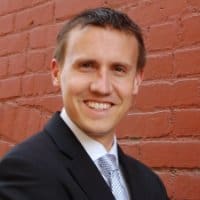
“For the last five years we have been working to end the second-class status of Americans living in U.S. territories, so we wanted to have that mission reflected more directly in our name,” said Neil Weare, a Yale Law School-trained civil rights attorney who grew up in Guam.
“Recent national attention to U.S. territories following Hurricanes Maria and Irma and North Korea’s nuclear threats to Guam create an unprecedented opportunity to make the case that it is time to treat the 4 million citizens living in U.S. territories as ‘Equally American,’” Weare said.
Equally American will carry over the non-profit’s motto: “Equal rights, wherever you live.” This reflects the belief that where you live or what your zip code is shouldn’t determine your rights as a U.S. citizen.
The rebranding is part of a broader effort to expand the non-profit’s advocacy for equality and civil rights in U.S. territories, both inside and outside the courtroom. In the coming weeks, Equally American will have some big announcements related to its work.
People can follow Equally American’s work online at www.EquallyAmerican.org, on Facebook at https://www.facebook.com/EquallyAmerican/ or on Twitter: @EquallyAmerican.
Neil Weare, Equally American’s president, may now be contacted at nweare@equallyamerican.org.
Editor’s note: Neil Weare is a Yale Law School-trained civil rights attorney who grew up in Guam.




Think this thing through. I think it is a bad idea. Right now residents of Guam and other territories do not pay Federal Income Tax to the Federal Government. The Federal Income Tax is collected and turned over to the territorial government. This means residents of the territories have a very low tax burden. “Equal Rights” means the taxes would go to the Federal Government and local taxes would have to be increased. This would be a very heavy financial burden for people residing in the territories.