

Part 1 of 2
As told to Judi Shimel
Among the vital facilities left in the wreckage of Hurricanes Irma and Maria are some that Virgin Islanders stake their lives on. Fire stations, hospitals, clinics and a cancer center were crippled by winds measuring over 125 mph over the course of two catastrophic storms.
That left the most vulnerable among us in a desperate situation. Cancer patients, those in need of kidney dialysis and others needing extended hospital stays were quickly taken off island with help from federal partners.
But it didn’t take long before alarms began to ring. Some from families that had been separated from their loved ones. Others from evacuees who said they felt they’d been cast adrift.
Some of those stories were shared in Senate testimony that was not allowed to be presented at the public hearing. Other stories made the talk-show circuit.
Most recently one story made headlines on a tabloid newspaper.
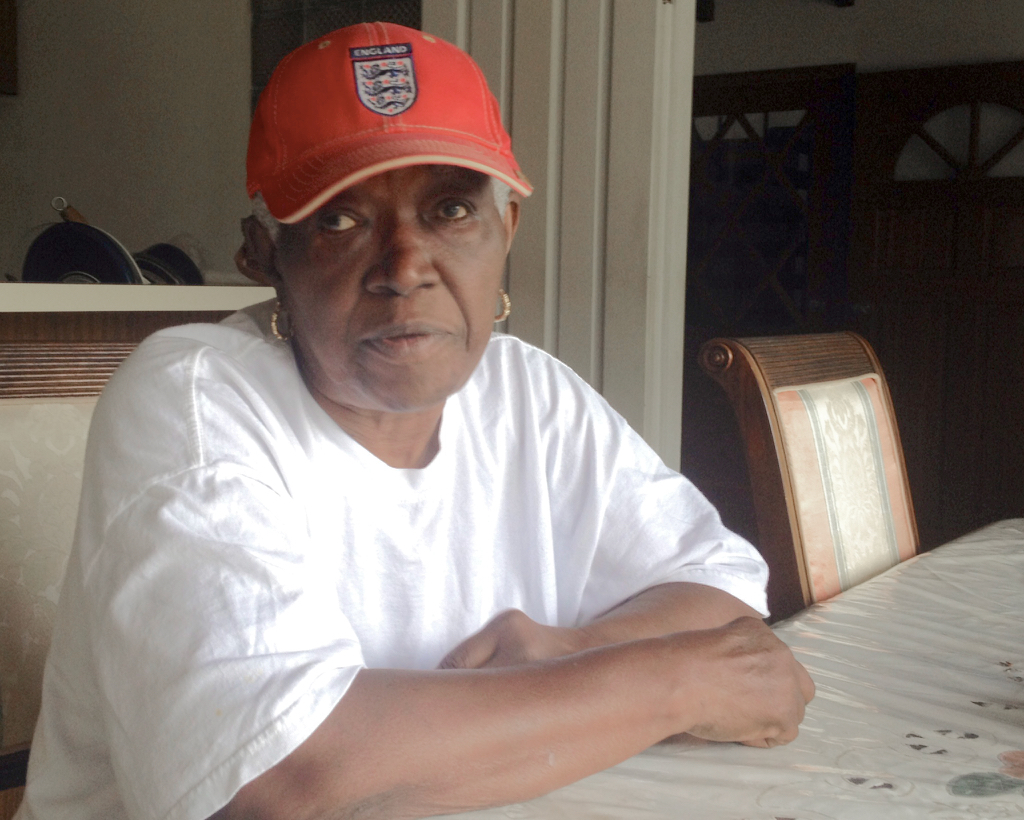
The following is an interview conducted Feb. 20 with Dr. Ophelia Torres, retired professor of nursing at the University of the Virgin Islands. Her story, told in her words.
Ophelia Torres: We knew the hurricane was coming. We had ample warning.
And let me just say in the beginning, I am not an ungrateful person. I’m grateful for certain things that was done. But when you talk about vulnerability, I felt so vulnerable.
You know why? Vulnerable … you know why?
Because I didn’t know where I was going, I didn’t know who I was going to. No one in my family knew where I was and I’m saying, ‘Here I am. I have to leave my students to go to … I don’t know where I’m going.’
They took us to Puerto Rico.
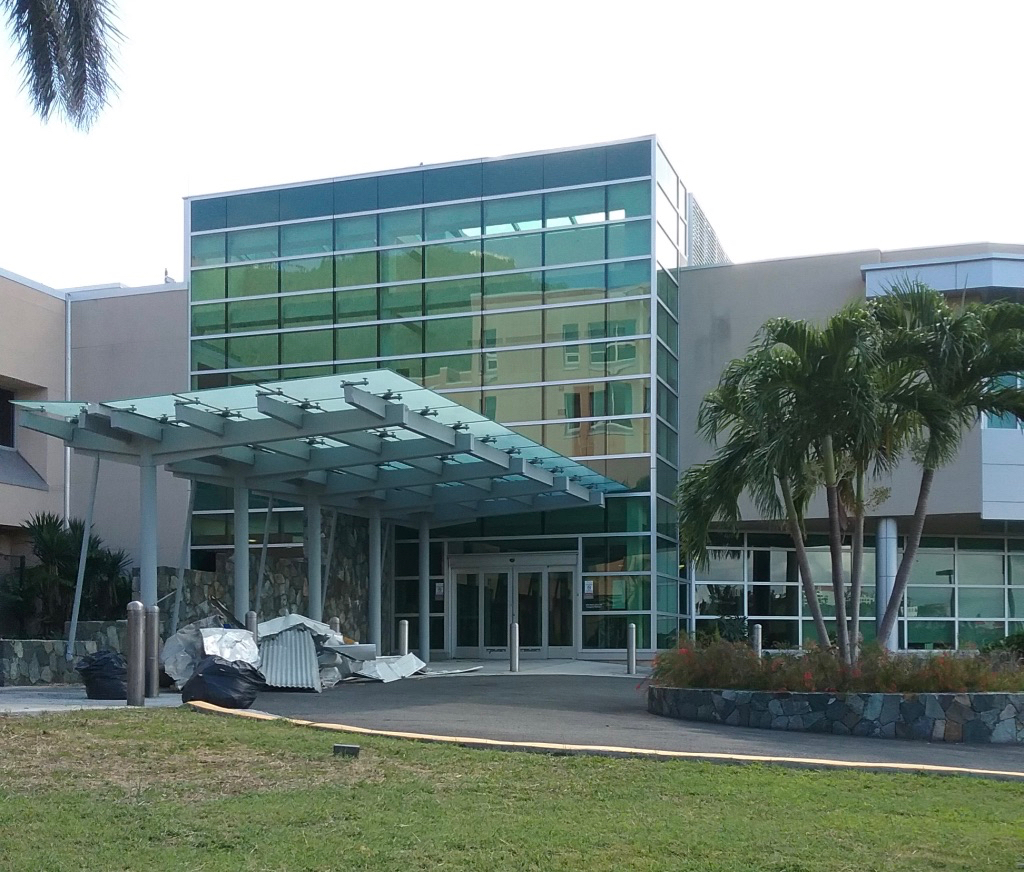
First of all, at the hospital when we went to dialysis that morning, they told us to pack a little bag because (Hurricane) Jose was coming and they did not know what was going to happen and they might not have water.
This was Carribean Dialysis Center. They said said they may not have water and that we need to pack a bag, just in case.
JS: Now, you said Jose? The storm between Irma and Maria?
Torres: That’s right. Irma had already passed. So, OK. Jose didn’t come.
A bunch of us came back. We went to dialysis that morning, only to find the Caribbean Dialysis Center was closed and there was no one there. No one came. It’s 6:30, 7, 8, 9.
Nobody came.
So there was a minister there, a Seventh-day Adventist minister. So he says, ‘Let me go over here and look, go to the hospital and check out and see what’s going on. So he came back and told us – we had about six of us, seven of us there — and he said, ‘Come on over to the Community Health Center.’
So we went over there. When we went over there, we sat in the lobby for a couple of hours. And they said, ‘Come on back to the dialysis center. So we went back and we’re thinking, ‘Okay, they’re going to dialyze us,’ but they didn’t come.
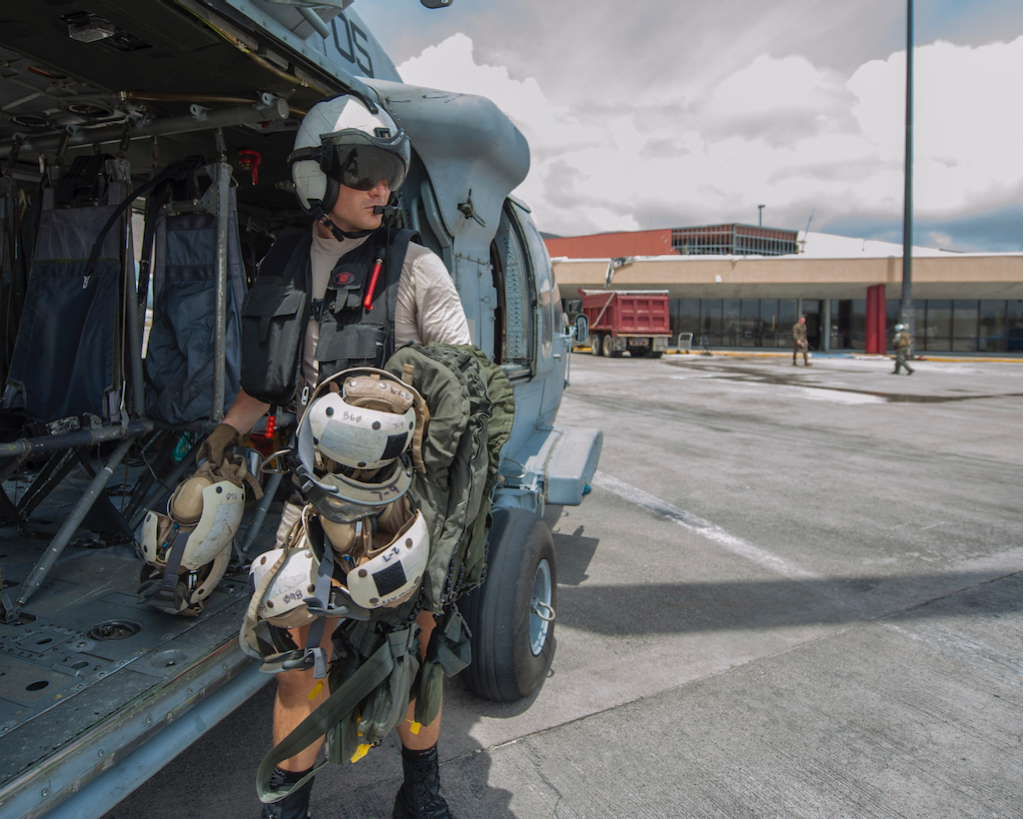
Well they started filling out a little piece of paper, you know, like a form. And then they say to us, ‘The bus is waiting outside. We going to Puerto Rico.’
So I said, ‘But I don’t have anything with me. I don’t have my medication. I don’t have clothes. I don’t have anything, just my purse and two draggers on my feet (flip flops.) We board the bus. My son didn’t have time to get home and come back. We boarded the bus and then there was a small plane, like a private plane that was there.
They took us to Puerto Rico and we didn’t even get to Immigration there. They set up tents on the runway.
JS: On the tarmac?
Torres: Yes. So we – myself, another gentleman – I don’t know his name, ‘cause I’m new to dialysis, so I don’t know those folks. The two, three of us went on that flight.
When we got there they pass us through the tent, through Immigration, straight into a bus and then two policemen driving in front the bus, and they’re going full speed in front, and they took us to this center.
I don’t know the name of the center. I think later on I found out it was Guy…
JS: Guaynabo?
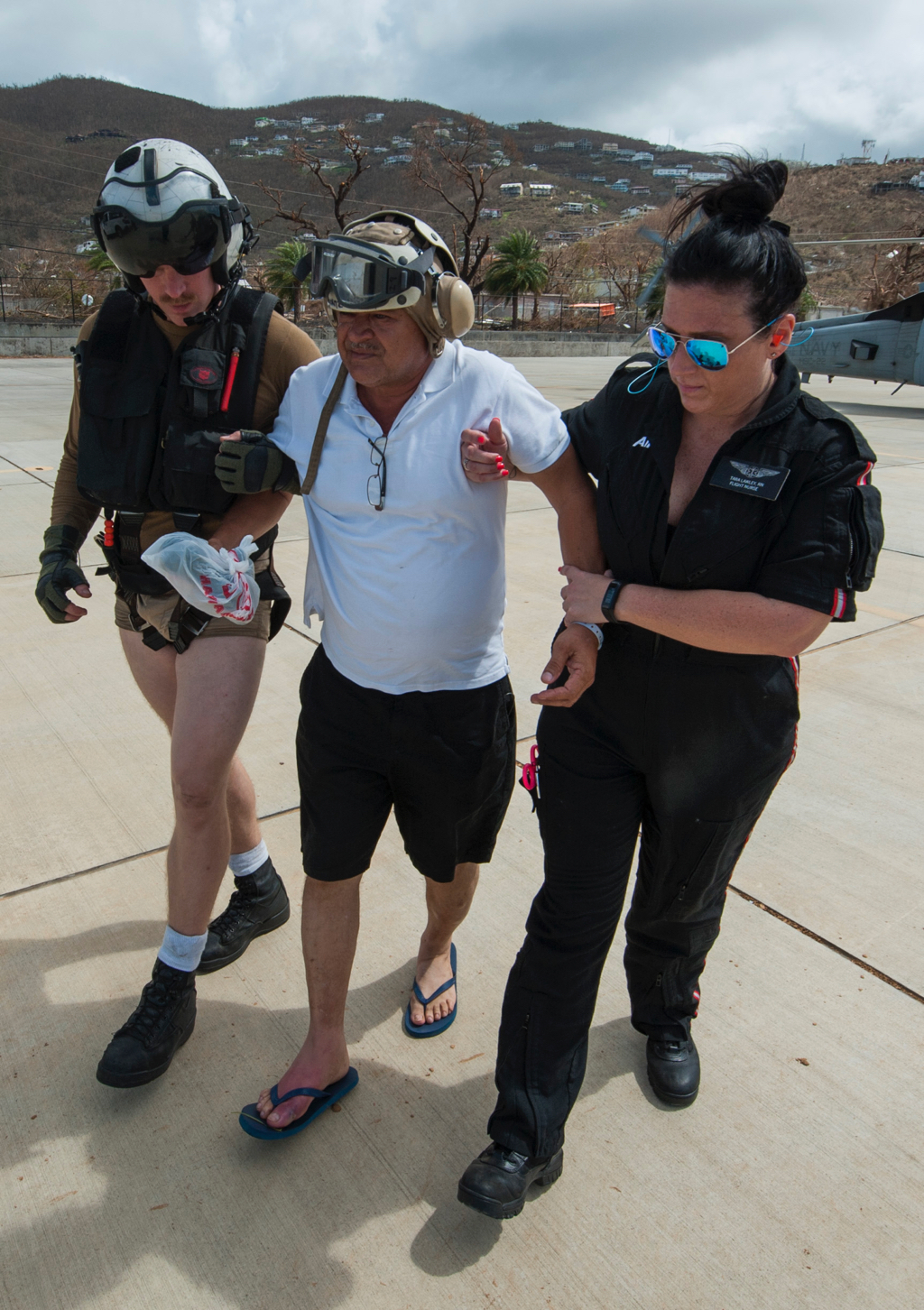
Torres: No, No. I forget, it was a dialysis center. And we got there, we sat in the lobby. They came outside and they took our vital signs and stuff.
JS: Do you remember the name of the town? Or the name of the turnoff on the highway?
Torres: No. I don’t know anything. ‘Cause we don’t know where we were going.
JS: Do you remember how many minutes you traveled?
Torres: It took about maybe 40 minutes or so …
JS: From the airport?
Torres: Yeah. For about 40, 45 minutes.
Anyway, when we got there they took our vital signs. And then the doctor – he said he’s a doctor – he came out and he said to me, ‘I’m not touching you today. You’re not being dialyzed today because your heart rate is very low and you need to go to a cardiology center. I’m sending you to a cardiologist.’
So I said to him, I said, ‘Look here. Nothing is wrong with me. Look at me. I’m not complaining. I don’t have any symptoms – you know? – and I don’t have any signs. This is me. This is my heart rate. I take medication that lowers heart rate and I already have a low heart rate.’
‘No, no, no, no, no,’ he said. He doesn’t know me and he’s not touching me.
JS: Who had your medical records?
Torres: That’s it. The little piece of a record I had, but it wasn’t enough for the man. That’s it. And I didn’t tell him I was a nurse. He said they’re going to evaluate me and perhaps they’re going to dialyze me there, at the cardiology center.
When I got there, they didn’t say anything about dialysis or anything. There were nurses around me, and they’re trying to put IVs and draw blood.
I haven’t had breakfast. I haven’t had lunch. It’s late afternoon. OK? (Laughs). It’s late afternoon.
And I say, ‘Look here. I’m getting dehydrated. I haven’t had a drop of water for the whole day.’
JS: Anybody speak English?
Torres: One or two. Yeah … so they’re not going to get any blood from me. OK. One of the nurses went outside and she came back in. Then another person stand there, stuck me seven times. Eight times.
After the last time I say, ‘Lady, you’re not sticking me anymore. That’s it. That’s it. Okay? I don’t know why I need an IV. I don’t know why you need blood from me.’
But I said, ‘No more, no more.’
So she came back and said, “Oh. You’re a nurse.’
I said, ‘How do you know that?’
She said, ‘Because, on your little record that they send, it said RN at the end.’
I said, ‘OK.’
They did EKG. They did chest Xray. They’re trying to prop up. They’re trying to start an IV …
JS: But they didn’t give you nothing to eat yet? You need dialysis but they’re not giving you any water?
Torres: No, no, no! Wait. I have to tell you the story. Nothing! Not even a little water. Nothing. And it’s getting late now. It’s late now.
JS: You need dialysis, but they’re not giving you any water?
Torres: Nothing. It’s late afternoon, late evening now.
JS: It’s the second day?
Torres: No. It’s the same day. Then the young guy … the doctor comes in and says, ‘Ms. Torres, do you have any family in Puerto Rico?’
I said, ‘No.”
He said, ‘because you need to be admitted for a pacemaker.’
I said, ‘Hell, no!’
I said, ‘No you don’t. No you don’t. You’re not going to put any pacemaker in me today.’
I said, ‘Look here … I’m telling you, look at me. I’m talking to you. You see fainting, or anything? Symptoms? I’m not complaining of anything. I’m fine.’
I said, ‘I take medication that causes heart rate to slow down. I already have a slow heart rate. I was an avid athlete in my day.
I said, ‘Look. No!’
So he stuck to me for a little bit. And then he said to me – now it’s about 7:30, 8 o’clock. And he said to me, ‘Well, Ms. Torres, since you’re not going to agree to have the pacemaker put in, I’m going to have to discharge you.’
Okay? I don’t know where I am. I don’t know where I’m going. I don’t know where others are. I don’t know where they’re staying. I don’t know anyone.
Alright. So he asks me, he said to me, ‘Well, where are you going?’
I said, ‘I heard somebody saying they’re staying at the Ritz, so I’m going to take a taxi and I’m going to go there. I dunno. I dunno.’
So he discharged me. I’m sitting in the lobby, and I’m sitting there over an hour. ‘Cause it’s after 8 at night, going on 9 o’clock at night.
And the security guard said to me, ‘Well, you know, there’s a Howard Johnson upstairs. There’s a hotel upstairs. Why don’t you go up there and see if you can get a room.’
(Laughs) So, thank God, I’ve got my credit card in my bag. I went up there.
I have no number for no one, FEMA, nobody, no center. Nothing. That’s what bothered me the most.
Part 2: Hardships mount for medical evacuees when they are evicted from the hotel they were taken to.