The Virgin Islands Water and Power Authority will hold a public vehicle auction on St. Thomas on Wednesday, March 18, at Market Square East (WAPA Line Department Headquarters) from 10 a.m. to 12 p.m.
Map of location of St. Thomas vehicle auction by the Virgin Islands Water and Power Authority.
All vehicles will be sold “AS IS.” Many of the vehicles are suitable for parts.
The sealed bid submission deadline is 12:30 p.m. Sealed bids must be submitted to the WAPA Purchasing Department representative on-site at the auction.
Bids must be made in person and will only be accepted from individuals 18 years of age or older. Payment for accepted bids must be made within 24 hours. WAPA reserves the right to accept or reject any or all bids.
Vehicle listings are available for preview online or may be picked up from the Port of Sale Business Office.
The University of the Virgin Islands has been selected to host the 2026 Capital Project Kaleidoscope (PKAL) Regional Network Meeting, organized by the Association of American Colleges and Universities (AAC&U).
The virtual event will bring together faculty members, administrators and higher education leaders from public and private two- and four-year institutions nationwide to examine how artificial intelligence is transforming teaching and learning.
The meeting will be held virtually via Zoom on April 24, 2026, from 9 am to 4 pm and is open to the public. UVI and AAC&U invite educators and administrators across the country to submit proposals and participate in discussions on the evolving role of artificial intelligence in higher education.
The program will feature a keynote presentation titled “Teaching and Learning in the Age of Artificial Intelligence: Challenges and Opportunities for Higher Education,” delivered by Dr. Talitha Washington, professor in the Department of Mathematics and executive director of the Center for Applied Data Science and Analytics at Howard University.
Opening remarks will feature Dr. Lora Bailey, Provost and Vice President of Academic Affairs at the University of the Virgin Islands and Dr. Kelly Mack, AAC&U Vice President for Undergraduate STEM Education and Executive Director of Project Kaleidoscope.
UVI’s selection as host was supported by Dr. Verleen McSween, Associate Professor of biology at UVI, who has been actively involved with the national PKAL network for several years and has previously presented at the conference.
McSween said the meeting’s theme reflects a growing challenge for educators navigating the rapid integration of artificial intelligence into academic environments.
“Artificial Intelligence is transforming how students learn and how faculty teach,” McSween said. “Educators recognize that AI tools are becoming an essential part of the learning landscape, but we are also working to ensure that students continue to develop critical thinking, creativity and problem-solving skills. The goal is to find the right balance so that AI enhances learning without replacing the intellectual engagement that is central to higher education.”
The AAC&U PKAL Regional Network Meetings are designed to foster collaboration among educators committed to strengthening undergraduate STEM education and advancing innovative teaching practices.
Faculty members, academic leaders and researchers interested in presenting are encouraged to submit proposals highlighting research, classroom practices, institutional strategies or collaborative initiatives related to the meeting’s theme. Participation and proposal submissions are open to individuals from institutions across the United States.
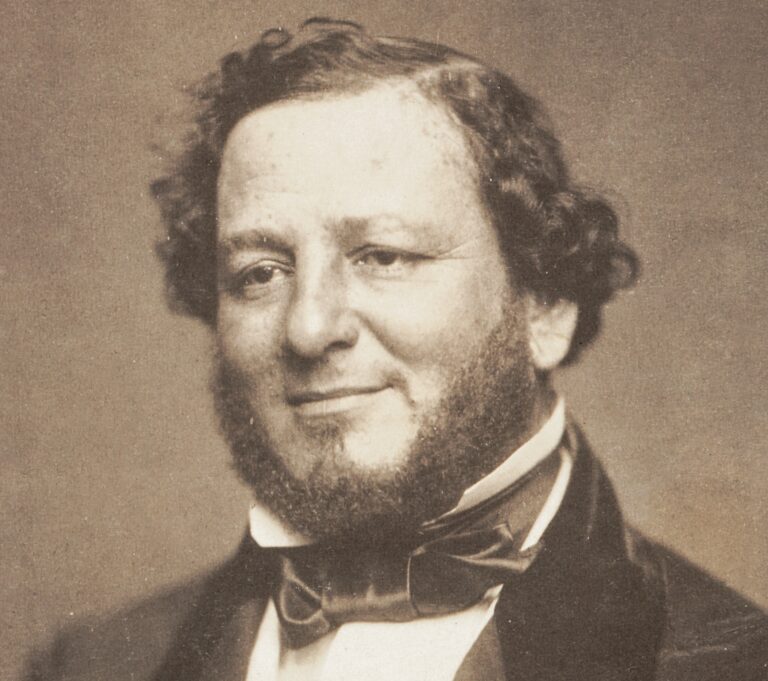
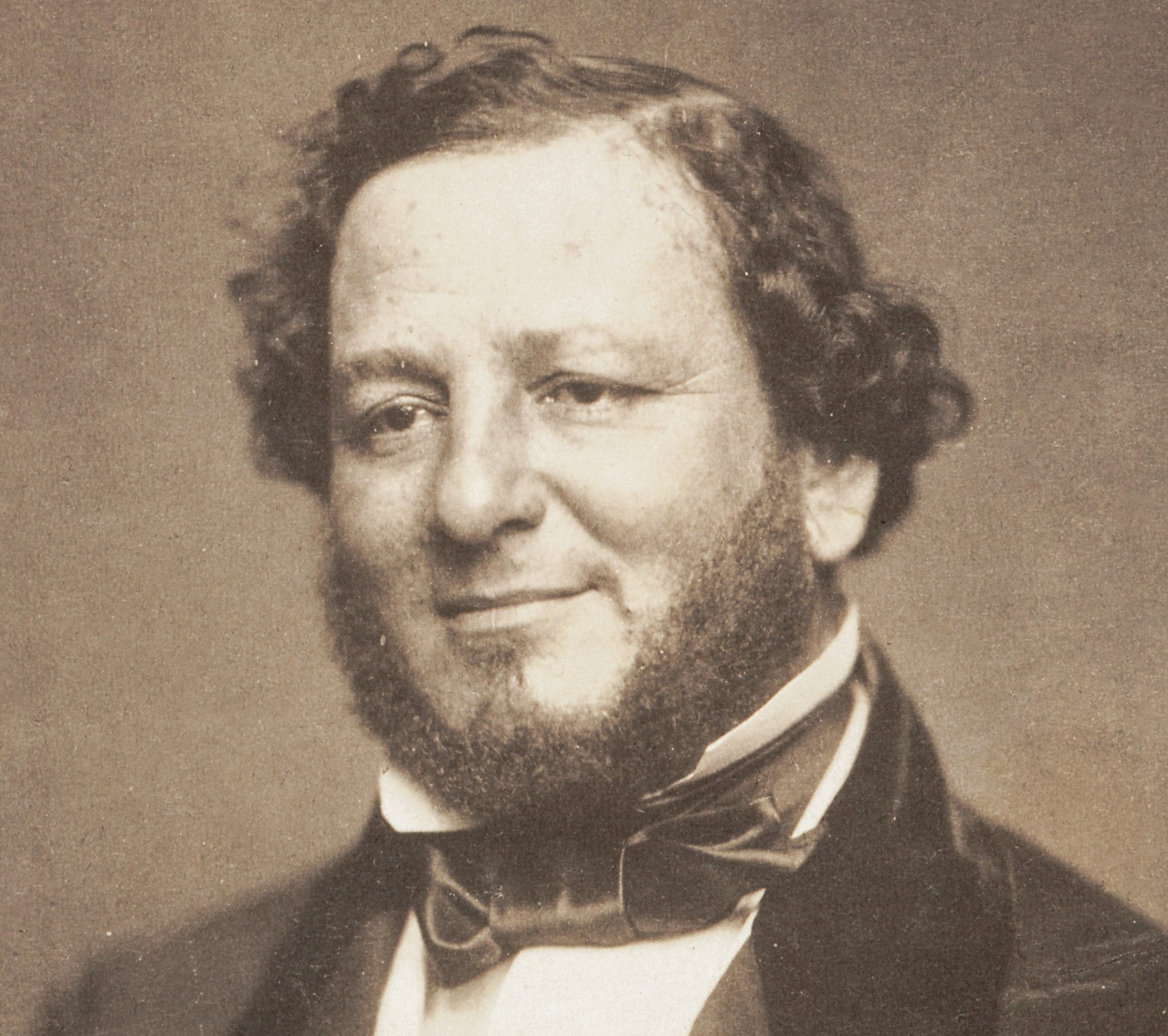
Native Virgin Islander Judah Philip Benjamin was a U.S Senator, Confederate Secretary of State, Secretary of War and Attorney General. (Photo courtesy Library of Congress)
March is Virgin Islands History Month. Thanks to former Sen. Shawn-Michael Malone for his foresight in sponsoring Act 6802 that established March as Virgin Islands History Month. Every year, I receive email messages and phone calls from private and public schools, businesses and others, inviting me to participate in Virgin Islands History Month events. Whether I am giving a lecture at one of our local schools on Virgin Islands historical, natural, cultural, and marine history or taking children hiking on one of the many trails on St. Croix, history is always the talk of the day.
Olasee Davis, Ph.D. (Submitted photo)
As small as these Virgin Islands are, they had a major impact and still do today on the world stage. When I was in college, I learned about the confederacy in American history. The Confederate states were 11 Southern states that seceded from the United States (1861-1865) and broke away from the Republic, to protect the institution of slavery. These Southern states also promoted states’ rights, which led to the American Civil War.
Judah P. Benjamin, a native Virgin Islander, was a Confederate in the United States during the 19th century. He was born to Sephardic Jewish parents Phillip Benjamin and Rebecca de Mendes. His given name was Judah Philip. Benjamin was born on Aug. 11, 1811, on St. Croix when the British occupied the Danish West Indies from 1807 to 1815. The takeover of the Danish West Indies by the British was an act of hostility during the Napoleonic Wars era. Judah’s ancestors, particularly his maternal grandfather, escaped from Spain to Portugal following the Expulsion Edict of 1492, also known as the Alhambra Decree.
The Expulsion Edict was issued by Spain’s Catholic monarchs, Ferdinand II and Isabella. It was a mandate that all Jews in the kingdoms of Aragon and Castile convert to Catholicism or leave the country. Many generations later, his father and mother met in London and got married. Eventually, they found themselves in the Danish West Indies. At that period in Virgin Islands history, there were many Sephardics in the Danish West Indies, especially on the island of St. Thomas, with names such as De Castro, Da Costa, and Sasso.
Reimert Haagensen, a Dane who ventured to the Danish West Indies in the 1730s, mentioned several nationalities including Danish, French, Dutch, English and few Jews who all established plantations in the Virgin Islands and had slaves. Today, the second oldest synagogue in the Western Hemisphere is located on the island of St. Thomas. Judah’s parents had seven children, four of whom were born on St. Croix. According to Danish historical records, in 1812 the Benjamins resided at 8-B and C on Company Street in Christiansted town.
The following year, the Benjamin family left the island by boat and sailed to Wilmington, North Carolina. The occupation of the British troops on St. Croix, according to historic documents, made it difficult for the Benjamin family to make a living. It was Judah’s mother’s uncle, Jacob Levy, who encouraged the Benjamin family to move from St. Croix to the United States. In 1813, the Benjamin family moved to Fayetteville, North Carolina. That city had one of the largest Jewish communities in the United States and had a reputation of religious tolerance.
Young Judah attended Fayetteville Academy where his intellect began to develop and he was known to be immaculately attired. At age 14 in 1825, he attended Yale College, an institution popular among white Southerners. He was successful as a student at Yale, but for some unknown reason he left school in 1827 without graduating. He then moved to New Orleans, where he read law and passed the bar exam. At age 21 in 1832, Benjamin was admitted to the bar. He rapidly rose in politics, becoming a wealthy slave owner.
He was elected to serve in both houses of the Louisiana legislature, and as a member of the Confederate State Cabinet. In 1852, he was elected to the U.S. Senate, making him one of the first Jewish senators in U.S. history. There he was, and became, a vocal advocate of slavery. He served in the senate from 1853 to 1861. In 1861, he resigned from the senate and was appointed by Confederate President Jefferson Davis as Attorney General.
Thus, he became the first Confederate States Attorney General. Later on, he was appointed as Secretary of War and then promoted as Secretary of State in March in 1862, due to his loyalty to the president of the United States. President Millard Fillmore offered to nominate Judah P. Benjamin to the U.S. Supreme Court, which would have made him the first Jewish American justice, but he declined the position to be judge.
President Franklin Pierce also offered Benjamin a U.S. Supreme Court position, which he turned down as well. Benjamin was a brilliant, exceptionally talented, and skillful lawyer. Nevertheless, as the American Civil War ended in 1865, there was a mass exodus of politicians from the Confederate capital running for their lives. Many Confederates were captured, like President Jefferson Davis, while some were able to escape with the help of local people throughout the South.
Benjamin was able to escape to Britain following the Confederacy’s collapse to avoid political indictment or end up in prison. In Britain, he became a barrister where he rose again to the top of his professional career as a great lawyer. In his young years, Benjamin viewed slavery based on his belief that citizens had the right to their property as guaranteed by the U.S Constitution. Slaves were considered property owned by their masters. This ideologic view was widespread among white Southerners, that African Americans were not ready for emancipation — or if ever.
White Southerners had the fear that freeing slaves would lead to murders and rapes of their former mistresses and masters. Such massacres had been feared by Southerners since the Haitian Revolution that took place between 1791 and 1804. However, Benjamin reversed many of his positions about slaves while in the United States. “His advocacy of the total population, including slaves, as the basis for representation and voting was thought to be the most flagrant,” noted Axel C. Hansen, a native Virgin Islander and medical doctor who wrote the book, “From These Shores.”
Benjamin’s health began to decline over the years. He couldn’t return to the U.S. because he was the key target for federal prosecution as a top Confederate official. He died on May 6, 1884, and was buried in the Pere Lachaise cemetery in Paris, France. In history, he was remembered for being hated by his opponents, an aggressive yet charming person, adored by his friends, egotistical and brilliant. However, his contribution to American history remains impactful, especially in today’s political climate.
— Olasee Davis is a bush professor who lectures and writes about the culture, history, ecology and environment of the Virgin Islands when he is not leading hiking tours of the wild places and spaces of St. Croix and beyond.
Editor’s Note: Opinion articles do not represent the views of the Virgin Islands Source newsroom and are the sole expressed opinion of the writer. Submissions can be made to visource@gmail.com.
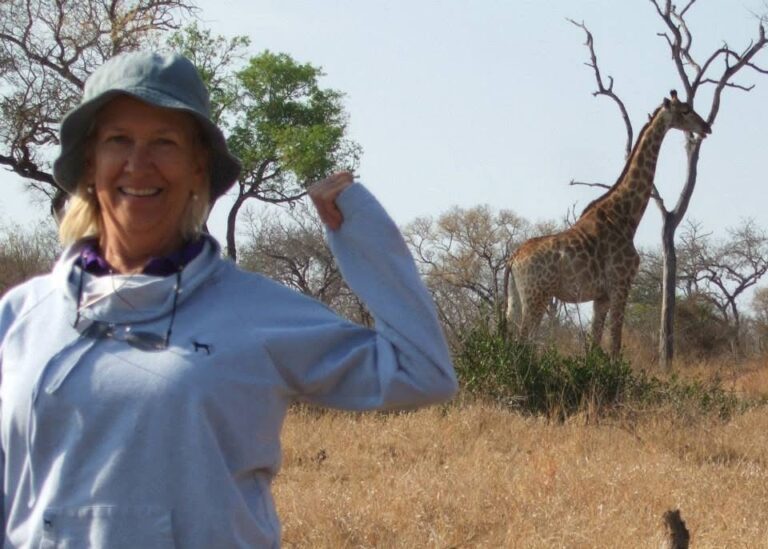
Veteran Virgin Islands journalist Susan Ellis is remembered for her decades of community-centered reporting. (Photo submitted by the family)
Sometimes Susan Ellis was sitting quietly through a long public meeting, notebook open, listening as officials debated decisions that would shape daily life on St. Croix.
Other days, she was out following up on reports of abused or abandoned animals, asking questions about how those cases were investigated and whether the systems meant to protect them were working.
That range — from the routine rhythms of civic life to the issues that stirred deep concern in the community — defined Susan’s decades of work as a journalist in the Virgin Islands.
The Virgin Islands Source newsroom — and the St. Croix community she loved so deeply — is mourning the loss of Susan, a veteran reporter whose writing helped capture the everyday life, challenges, and character of the territory she called home.
Susan died March 7, 2026, at Juan F. Luis Hospital on St. Croix. She was 79.
Susan was born June 2, 1946, in Tulsa, Oklahoma, and spent her early years in Wyoming before studying journalism and earning a bachelor’s degree from Mesa State University. She later raised her two daughters in Colorado before moving to St. Croix in 1993.
Susan joined the Virgin Islands Source in 2013 after years of reporting for the St. Croix Avis. Over time, her byline became a familiar one across the island and throughout the territory.
She showed up wherever the story was — from hospital board meetings and legislative hearings to community gatherings that reflected the culture and traditions of island life. Her stories often explored the deeper threads that shape the community, from agricultural traditions and bush cook culture to the history preserved at places like the Whim Museum.
But Susan was also drawn to issues that touched the territory’s most pressing challenges.
She wrote about the state of mental health care in the Virgin Islands and followed ongoing conversations about how the territory could expand services and support for families navigating those challenges.
She also took a solutions-oriented look at the long and complicated history of the Virgin Islands Water and Power Authority, exploring how the utility might move forward more effectively for residents across the territory.
Her love of animals shaped some of her most determined reporting. Susan wrote about animal cruelty cases on St. Croix and examined the systems meant to investigate them, reporting on community concerns about enforcement and the creation of additional animal cruelty investigator positions within the Virgin Islands Police Department.
For Susan, that work was personal. She volunteered regularly with animal rescue organizations and spent time helping care for dogs at the St. Croix Animal Welfare Center.
Those who knew her say the same qualities that drove her reporting — curiosity, empathy, and determination — defined her life beyond the newsroom as well.
Before returning to journalism, Susan spent years working with Lutheran Social Services on St. Croix, helping support the Queen Louise Home for Children and assisting with the annual fundraiser that sustained the orphanage’s programs.
Ellie Hirsch, one of the founders of the Children’s Museum of St. Croix, came to know Susan during those years when she worked alongside Hirsch’s husband, Chris Finch, at Lutheran Social Services.
Among other tasks, Susan and Finch helped organize the annual fundraiser for the Queen Louise Home for Children.
Susan always displayed “grace under pressure,” Finch said, recalling her “tireless activities” preparing for the major annual event. Even after weeks of sleepless nights preparing for the reliably successful fundraiser each year at Carambola Resort, Susan maintained a completely pleasant demeanor throughout the weeklong, high-energy activities, Finch said.
As a reporter, Finch said, “she was fair and understood the full picture from multiple angles,” which he described as “a measure of her intelligence.”
Cassandra Dunn, former Water and Power Authority public information officer and now president of the Yvonne Ashley Galiber Breast Cancer Foundation, said Susan approached journalism with deep empathy.
“A story was not just news to Susan,” Dunn said. “She really cared about the things that were happening in the community.”
Friends say that same compassion shaped every part of Susan’s life.
“Caring, concerned, giving and kind,” is how one friend described her.
Susan also loved the ocean and the natural beauty of the island. Just weeks before her passing, she was snorkeling with a group of longtime friends who called themselves the “swimmin’ women,” taking to the water on Fridays whenever the seas allowed before gathering for lunch together afterward.
For more than a decade at the Virgin Islands Source — and for many years before that at the St. Croix Avis — Susan helped document the life of the islands she loved so deeply.
Susan believed journalism mattered — that it could inform a community, hold institutions accountable, and preserve the stories that make a place what it is.
And she carried that belief into every story she told.
Susan is survived by her daughters, Sandra and Ashley; her grandchildren Connor, Cole and Maeve; and great-grandchildren Ivee and Milo, along with siblings, extended family members, and a wide circle of friends.
Because of her deep love of the ocean and the natural beauty of St. Croix, Susan chose to be laid to rest at sea.
A gathering in Susan’s memory is planned for 5 p.m. Friday at Dorsch Beach on St. Croix. Her family has asked friends to consider making a donation to Ruff Start St. Croix in her memory.
The entire Virgin Islands Source team extends its deepest condolences to her daughters, her grandchildren, great-grandchildren, her loved ones, and the many friends in the St. Croix community who were like family to her.
Government House said this week it is reviewing a request from an attorney representing St. Thomas businessman Brett “Mac” McClafferty seeking an investigation into whether relationships between Banco Popular employees and Virgin Islands law enforcement influenced the criminal case filed against him.
The request was sent Tuesday in a letter to Gov. Albert Bryan Jr. by attorney Bradley P. Lehman of the law firm Whiteford, Taylor & Preston. Lehman wrote that his firm represents McClafferty and his business interests and asked the governor to order an investigation into what the letter describes as potential “inappropriate personal relationships” between bank employees and members of the Virgin Islands Police Department that could have affected the charging decision tied to McClafferty’s Feb. 21 arrest.
Government House confirmed it had received the request and said it is reviewing the matter.
Under Virgin Islands law, investigations into government operations may be conducted by the Office of the Virgin Islands Inspector General, an independent oversight office empowered to review allegations of fraud, waste, abuse, or misconduct involving government agencies or programs. The Inspector General may initiate inquiries on its own or at the request of the governor or the Legislature and can refer potential criminal matters to the Justice Department or other appropriate authorities. In cases where criminal prosecutions are already underway, oversight reviews are often handled by independent entities rather than prosecutors directly involved in the case.
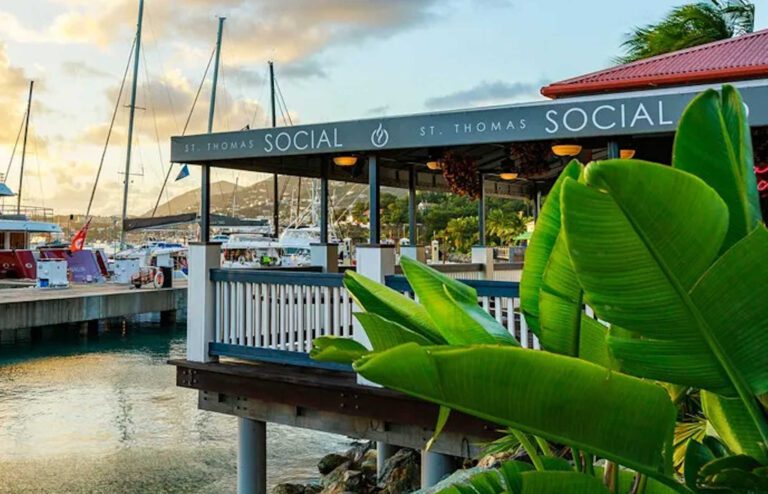
The request comes about a week after a development in a related civil lawsuit filed by McClafferty and Social Hospitality Group Inc., the operator of St. Thomas Social, which is seeking $10 million in damages from Banco Popular de Puerto Rico and its parent company.
On March 5, Superior Court Judge Sigrid M. Tejo issued an order recusing herself from presiding over that civil case. In the order, Tejo wrote that during her previous service as an assistant attorney general, she worked closely with the Virgin Islands Police Department’s White Collar Crime Division and Banco Popular’s fraud department and had developed personal relationships with officers involved in those areas. She stated that stepping aside was appropriate to avoid even the appearance of impropriety or a potential conflict of interest.
Lehman’s letter to the governor references that recusal as part of a broader argument that the circumstances surrounding the case warrant review. The attorney wrote that Virgin Islanders “have a right to know that charging decisions are being made ethically and after due consideration,” and asked that the administration determine whether relationships between bank employees and law enforcement may have influenced the investigation or charging decision tied to McClafferty’s case.
The request follows the filing of a civil lawsuit on March 4 by McClafferty and Social Hospitality Group Inc., which accuses Banco Popular and Popular Inc. of negligence, defamation, abuse of process, false arrest, and intentional infliction of emotional distress. The suit alleges the bank improperly reported fraudulent activity connected to checks deposited into the company’s account, triggering the criminal investigation that led to McClafferty’s arrest.
According to the complaint, the dispute traces back to late 2023 after Social Hospitality Group opened business accounts at Banco Popular. The lawsuit states that a check connected to a proposed multiday medical symposium at St. Thomas Social was deposited by a former general manager and initially accepted before later being returned. The bank allegedly advised the business to obtain a replacement check from the event organizer, and a second check from the same source was later deposited and also returned.
The event ultimately never took place after the organizer died unexpectedly on St. Croix.
Months later, the lawsuit alleges, the bank accused the plaintiffs of knowingly depositing fraudulent checks and reported the matter to police.
Authorities allege that 12 fraudulent transactions totaling about $888,500 moved through the accounts, though Banco Popular reported a confirmed loss of more than $80,000.
Those allegations eventually resulted in felony charges against McClafferty. As previously reported by the Source, a Superior Court judge signed a warrant for his arrest on Dec. 30, 2025. The warrant was executed months later, when officers with the Virgin Islands Police Department’s Economic Crimes Unit arrested McClafferty at his residence on Feb. 21.
Prosecutors charged him with grand larceny, passing or possessing forged bills, obtaining money by false pretenses, making and passing fictitious bills and delivering worthless checks. At an advice-of-rights hearing days later, Magistrate Judge Julie Todman Smith found probable cause for the charges and set bail at $150,000. McClafferty was released after posting 10% of the bond in cash, with the remainder unsecured.
The criminal charges remain pending in Superior Court.
In the civil filing, the plaintiffs argue the bank failed to properly investigate the deposits, maintain accurate records of who made the transactions or follow internal safeguards before reporting alleged fraud to police. The complaint also alleges the bank’s handling of the matter wrongly tied the deposits to McClafferty, even though employees or other associates routinely made deposits on behalf of the business.
McClafferty, 37, describes himself as a private investor and philanthropist and is a co-owner of St. Thomas Social at Yacht Haven Grande. He is also listed as principal of Mac Private Equity and MPE Clearings and Holdings. The restaurant, its parent company Social Hospitality Group and McClafferty have been involved in a number of legal disputes in recent years, and Mac Private Equity filed a Chapter 7 bankruptcy petition in Delaware earlier this year. McClafferty has also faced landlord-tenant litigation tied to St. Thomas Social’s operations at Yacht Haven Grande, which was later dismissed without prejudice. In those matters, McClafferty has denied wrongdoing and characterized some claims as business disputes.
Meanwhile, both the civil lawsuit against Banco Popular and the criminal case against McClafferty remain pending. A press release accompanying the civil filing states that McClafferty has recused himself from the day-to-day operations of Social Hospitality Group and its properties while the legal matters proceed.
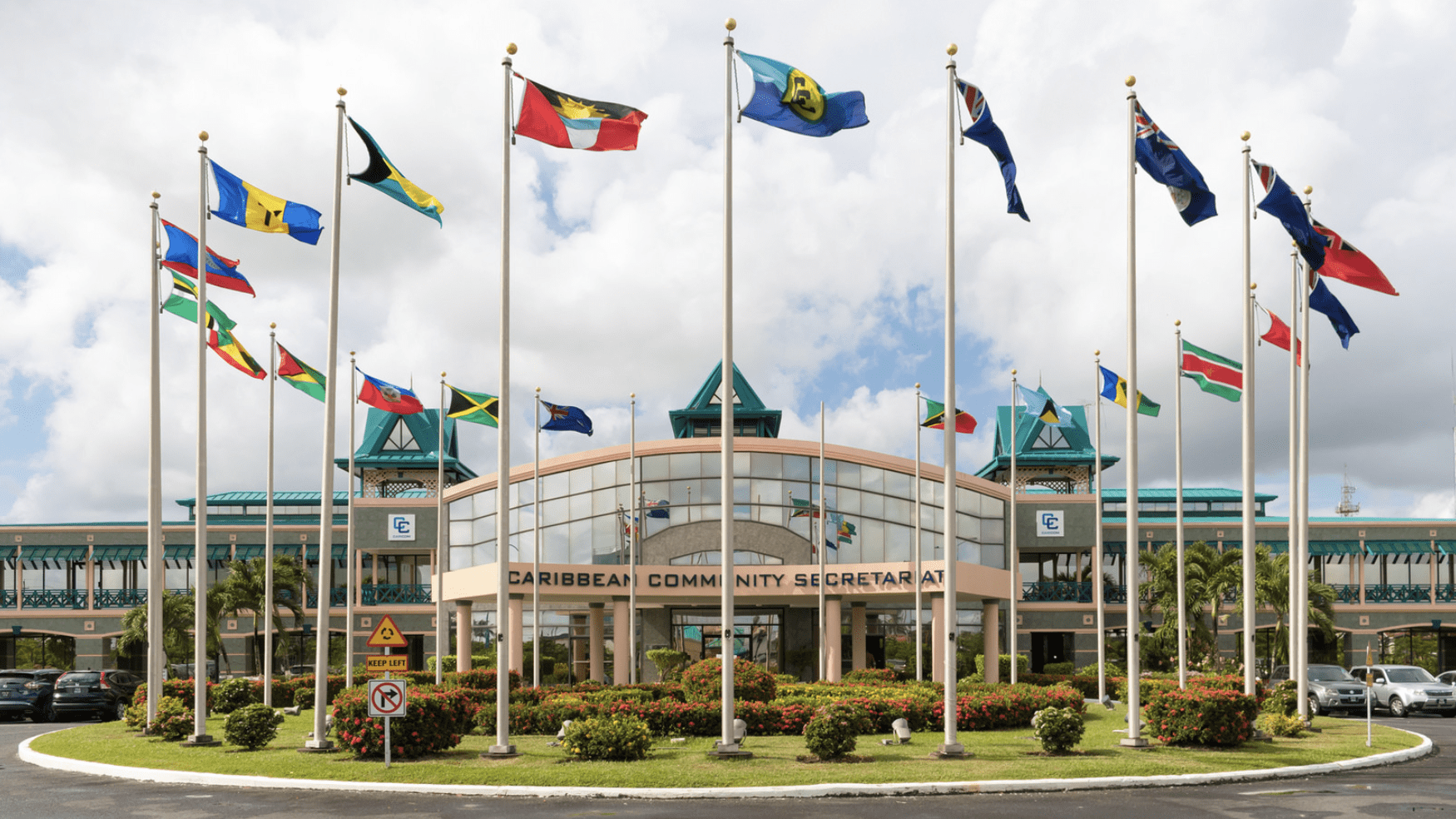
CARICOM’s secretariat headquarters in Georgetown, Guyana. (Photo courtesy CARICOM.org)
The escalating territorial controversy between Guyana and Venezuela demands more than just a reflexive defense of borders; it requires a critical re-evaluation of the Caribbean Community (CARICOM) as the primary institutional expression of our regional construct. In previous interventions, I have argued that “the Caribbean” is often less a geographical certainty than a historical proposition, a name retroactively imposed on a field of disparate colonial trajectories that never fully coalesced into a single consciousness.
We have historically mistaken linguistic convenience for organic community, treating regionalism as an administrative solidarity of necessity rather than one of deep-seated conviction. However, the current geopolitical crisis reveals that if we are to survive the pressures of continental expansionism, CARICOM must complete its transition from an imagined geography into a decisive instrument of sovereign protection.
Historically, CARICOM’s position on the Guyana-Venezuela border has been one of “aspiration” and rhetorical unity, often hamstrung by the varying bilateral dependencies of its member states. We saw this in the past with the uneven influence of initiatives like PetroCaribe, which at times blurred the lines of regional solidarity. Yet, we are witnessing a profound shift. The Community’s unqualified support for the International Court of Justice (ICJ) process marks a departure from the “administrative solidarity” of the past toward a more rigorous, legally-grounded collective security.
By moving beyond mere communiqués to active diplomatic encirclement of the aggressor, CARICOM is finally performing the substance it long only implied. It is no longer enough to “speak the Caribbean into being” at annual summits; the institution is now enacting a coherence that is essential for Guyana’s survival.
This evolution is consistent with the “geography of our future” that I have previously outlined. For Guyana to walk creatively into the 21st century, it must recognize that its inclusion in the British West Indies was a colonial logic based on labor regimes and imperial convenience, not on ecological or continental continuity.
As we turn our face toward the South American mainland to discover a new horizon of possibilities, our “Caribbean-ness” must not be a fixed destiny but a strategic affiliation. In this context, a strong, pro-government stance that reinforces CARICOM’s role is not a surrender to colonial categories, but a sophisticated use of the regional apparatus to safeguard the Republic’s legal and moral architecture.
The current administration’s success in marshaling CARICOM’s support proves that when the State upholds both justice and sovereignty, it transforms the regional construct from a historical artifact into a modern shield. We must confront the fact that our fragmentation is structural, yet our solidarity remains a conscious, ethical choice.
By standing firmly with Guyana against the nullification of the 1899 Arbitral Award, CARICOM is finally validating itself as more than a colonial residue; it is becoming the institutional bedrock of a sovereign, continental future that history did not design for us, but which we are now determined to build.
— Walter H. Persaud, Ph.D., is a retired Guyanese-Canadian professor of political and cultural studies. He has worked in national broadcasting media in Canada and taught in Thailand for a quarter century. He currently resides in Guyana where he publishs regularly on a variety of national and regional issues. Dr. Persaud holds a Bachelor’s in History and a Ph.D. in Social and Political Thought from York University, Toronto.
Editor’s Note: Opinion articles do not represent the views of the Virgin Islands Source newsroom and are the sole expressed opinion of the writer. Submissions can be made to visource@gmail.com.
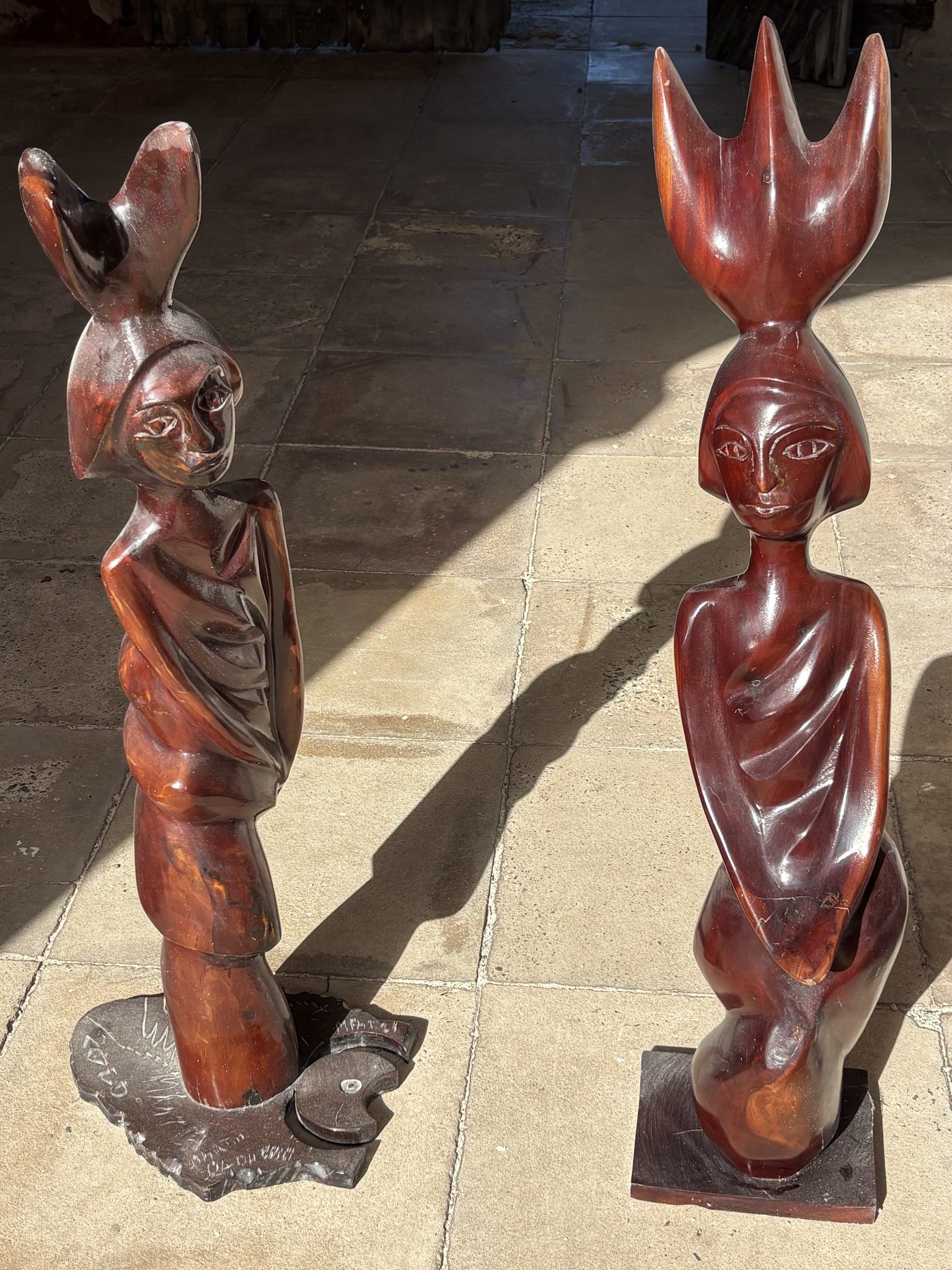
Editor’s Note: An earlier version of this article incorrectly stated that the museum received the statues several years ago. They were received in 1998 when the territory commemorated the 150th anniversary of Emancipation.
The V.I. Department of Planning and Natural Resources is asking for help in recovering a mahogany statue stolen from the Fort Frederik Museum on St. Croix.
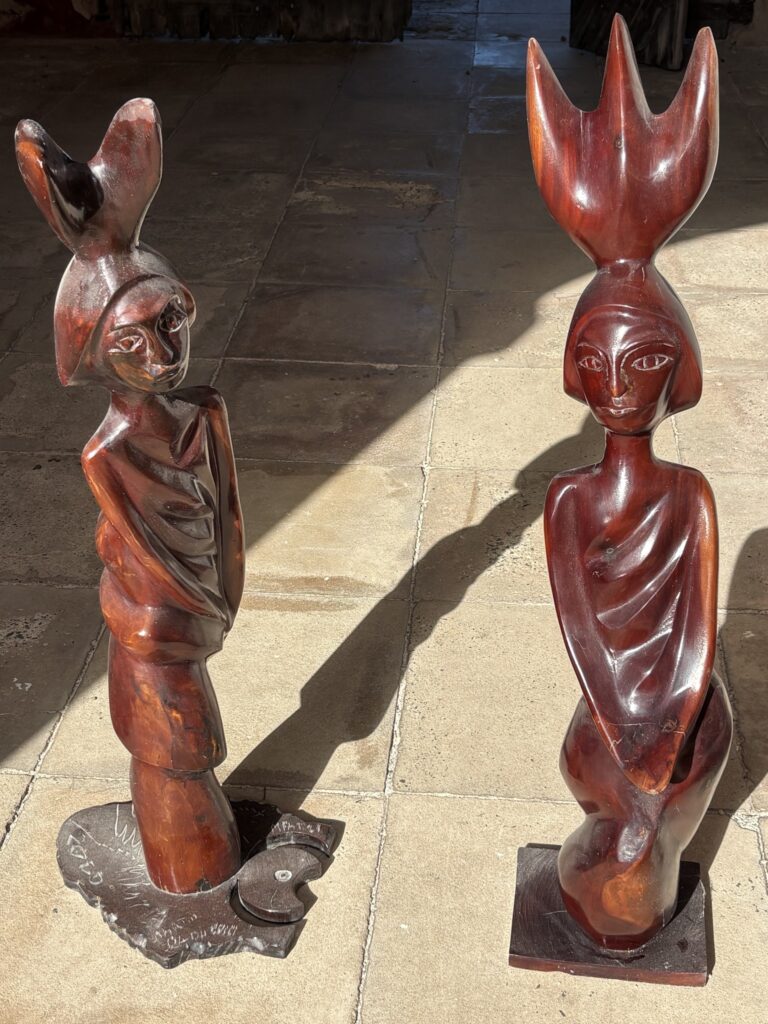
The V.I. Department of Planning and Natural Resources released a photo of two statues depicting two of the Three Queens of the Fireburn rebellion after announcing that the third statue was stolen from the Fort Frederik Museum last month. (Photo courtesy DPNR)
In a statement Wednesday, DPNR said the statue, which was commissioned for the museum to commemorate the 150th anniversary of Emancipation, depicts one of the Three Queens of the Fireburn rebellion and “holds deep cultural and historical significance and belongs to the people of the Virgin Islands. Its theft was reported to the V.I. Police Department last month. VIPD did not respond to questions sent by the Source.
DPNR urged anyone with information to contact the police or call the museum directly at 340-249-0765. Information can also be shared anonymously, according to DPNR’s statement.
“These statues are not just art pieces — they are part of our collective heritage; we ask the public to help ensure this important cultural artifact is safely returned,” curator Monica Marin said in a statement. “To those responsible for its removal, we strongly urge you to return it immediately. It belongs to all of us.”
Marin told the Source that the wood statue is approximately three and a half feet tall and features a single-pointed headpiece.
“That’s the distinctive feature, because the suite of the Three Queens has the three different headpieces,” she said. Marin said the pieces have been part of the museum’s collection since 1998.
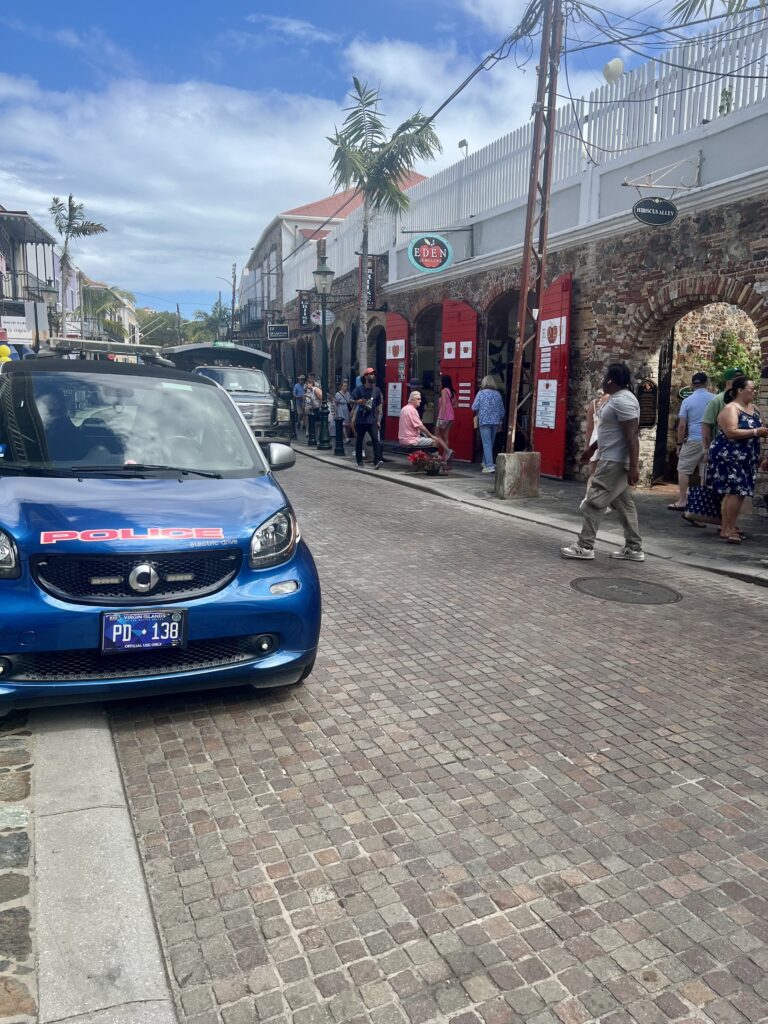
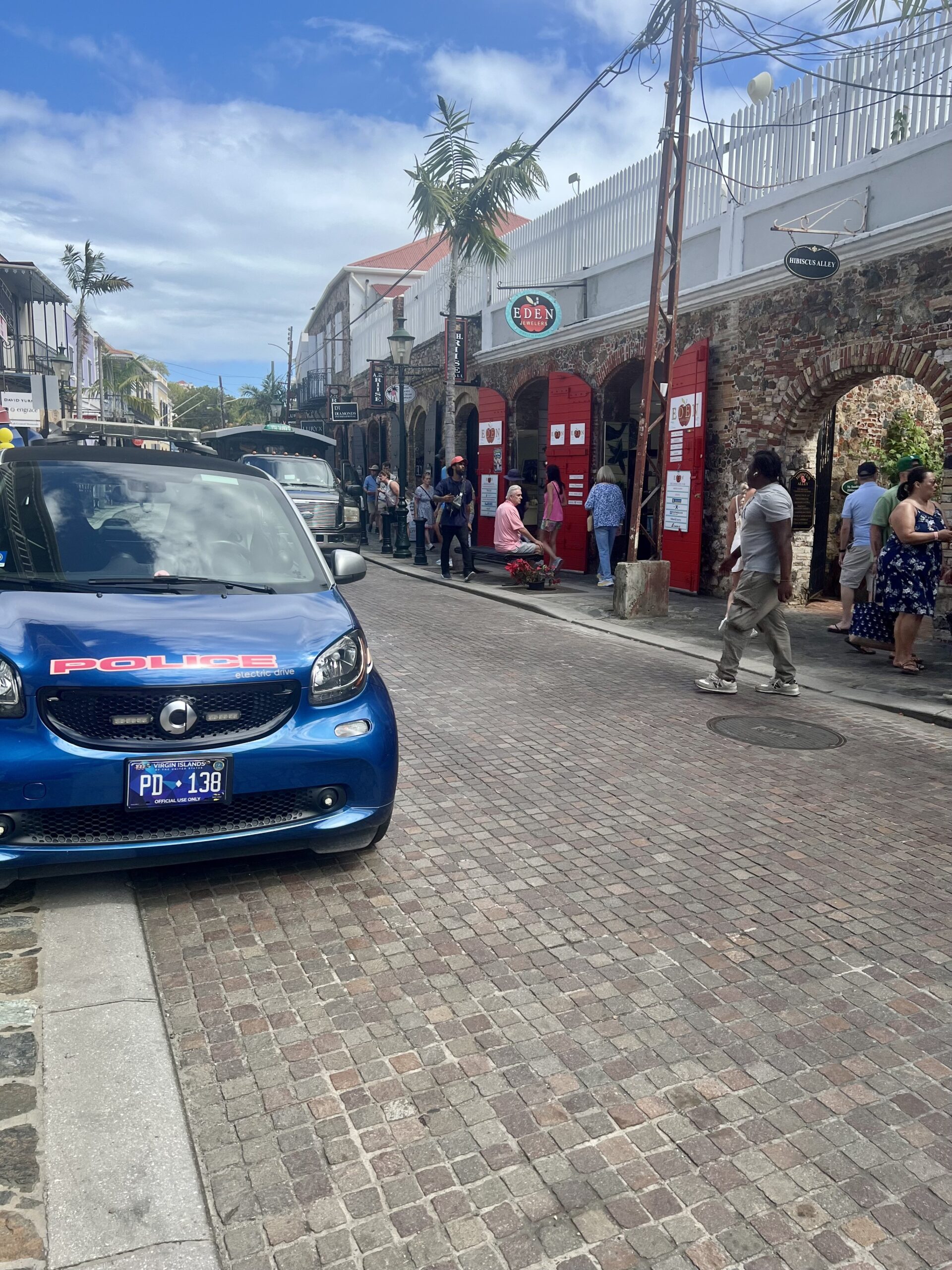
Recent armed robberies taking place in St. Thomas’ diamond district have prompted police to seek what they hope will be new crime-fighting strategies. Concern among merchants operating in the area of Main Street has garnered attention at Government House.
Police patrol car seen on Main Street Wednesday. (Source photo by Judi Shimel)
But while some members of the business sector say they would welcome heightened security, they also say they’re cautious about how to reach that objective.
The most recent incident — captured on security recordings — took place on March 5, depicting masked individuals pointing firearms and taking merchandise from a shattered glass display case. That incident took place nearly two months after a group of masked and armed intruders took an undisclosed amount of merchandise from Precious Jewels on Jan. 7.
An increase in police surveillance was apparent by Wednesday, with five cruise ships making port and foot traffic brisk in the shopping district, VIPD patrol cars were visible among the taxis and vehicles heading west along Main Street.
VIPD Communications Director Glen Dratte on Friday called investigations into those robberies ongoing; some progress appeared in February when five persons were detained and questioned about the January heist. One of those suspects, when questioned by detectives, admitted taking part in a conspiracy to rob the store.
One day after the latest incident, St. Thomas-Water Island Deputy Police Chief Rael Donastorg made a recorded appeal to the public for help. “I really would like to catch these individuals and curtail the robberies,” Donastorg said.
The deputy chief also announced a public outreach effort to recruit Main Street area businesses willing to work closely with police. Pash Daswani, head of the India Association of the Virgin Islands, said he has had direct talks with Donastorg over that initiative.
Daswani expressed concern about some of the technical aspects. “What I’ve offered is, let’s put up some cameras on the balconies of the buildings that are already in play. We can go to owners and say ‘Hey — let’s put up two cameras’ — and if that doesn’t work we’re happy to give them access to the outside cameras of our individual stores,” he said.
Attempts to reach St. Thomas-St. John Chamber of Commerce President John Woods, for comment, were unsuccessful.
Donastorg’s appeal, posted to the VIPD Facebook page, is urging anyone who may have seen or heard anything connected to the March 5 robbery to leave an anonymous tip with CrimeStoppers USVI at 800-222-8477 (TIPS).
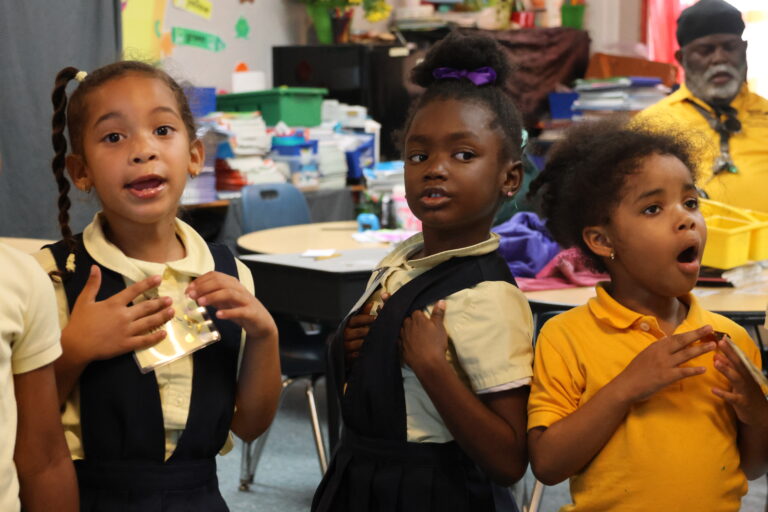
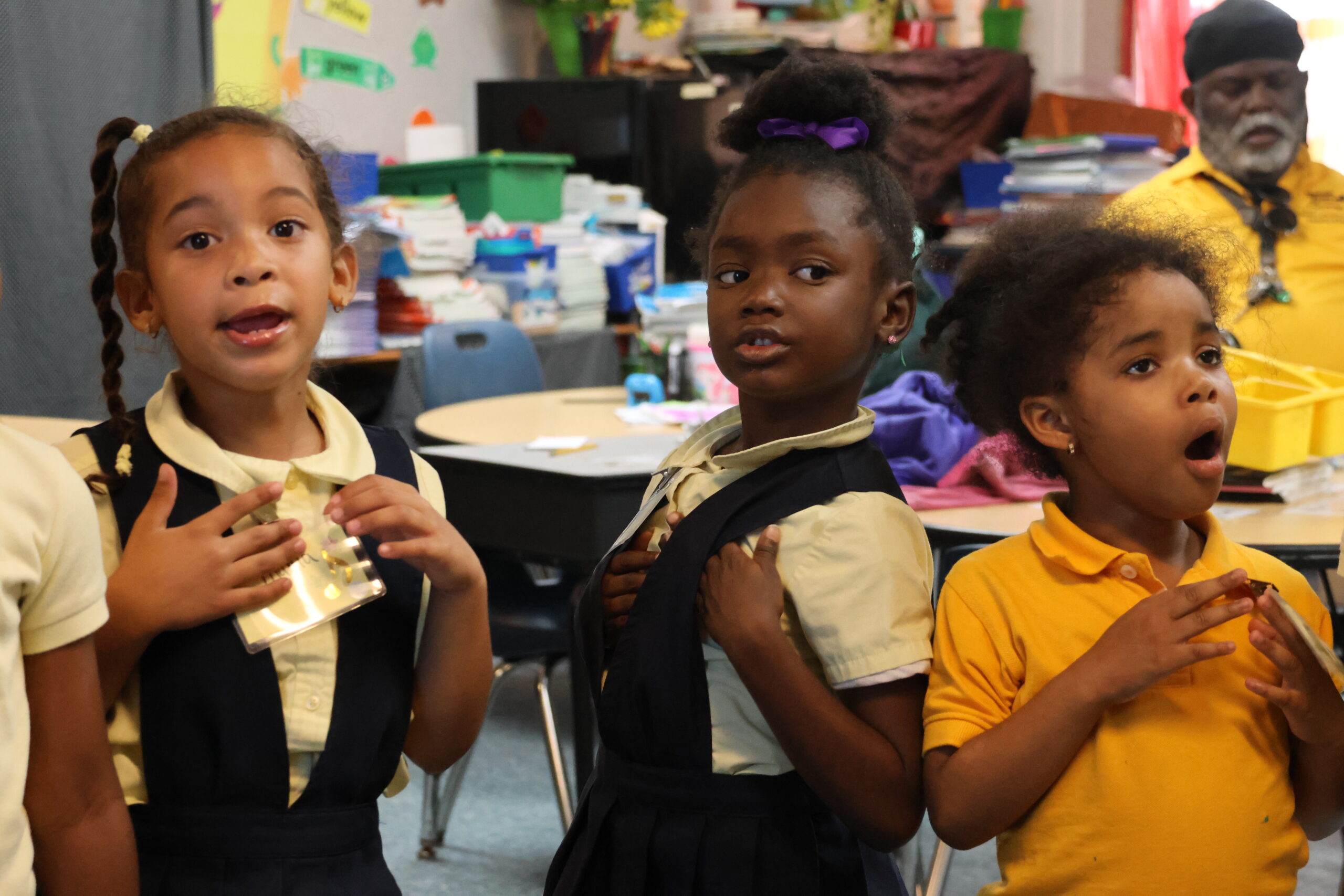
Kindergarten students sing during a rehearsal for the St. John All Island Children’s Choir concert at Julius E. Sprauve School. (Photo by William Stelzer)
A total of 138 children in grades K-2 will take the stage on Wednesday, March 18, at Julius E. Sprauve School for a concert by the St. John All Island Children’s Choir, a press release announced.
The community is invited to attend the program, which begins at 5:30 p.m. The concert will last about 30 minutes and is free to the public, according to the press release.
The concert represents months of preparation by choir director Kristen Carmichael-Bowers, along with staff members from Julius E. Sprauve School, Gifft Hill School, and St. John Christian Academy, and 22 volunteers, the press release stated.
“Sing St John provides this program (as with all our programs for all ages) free of charge for our community,” Carmichael-Bowers said. “We function entirely on donations and grants, so the community’s support is the only thing that makes our gathering in this way possible.”
For more information or to make a donation, contact Carmichael-Bowers at (802) 380-0761 or visit www.singstjohn.org.
The University of the Virgin Islands will host the 34th Annual Afternoon on the Green on Sunday, from noon to 5 p.m. at the Herman E. Moore Golf Course on the Orville E. Kean Campus on St. Thomas, the university announced in a press release.
The event, held during UVI Charter Month, brings together residents, students, alumni and visitors for an afternoon of food, music and family activities while raising funds for the Edward Thomas Volunteer Scholarship Fund. The scholarship supports Virgin Islands high school students who demonstrate a commitment to community service and plan to attend UVI, according to the press release.
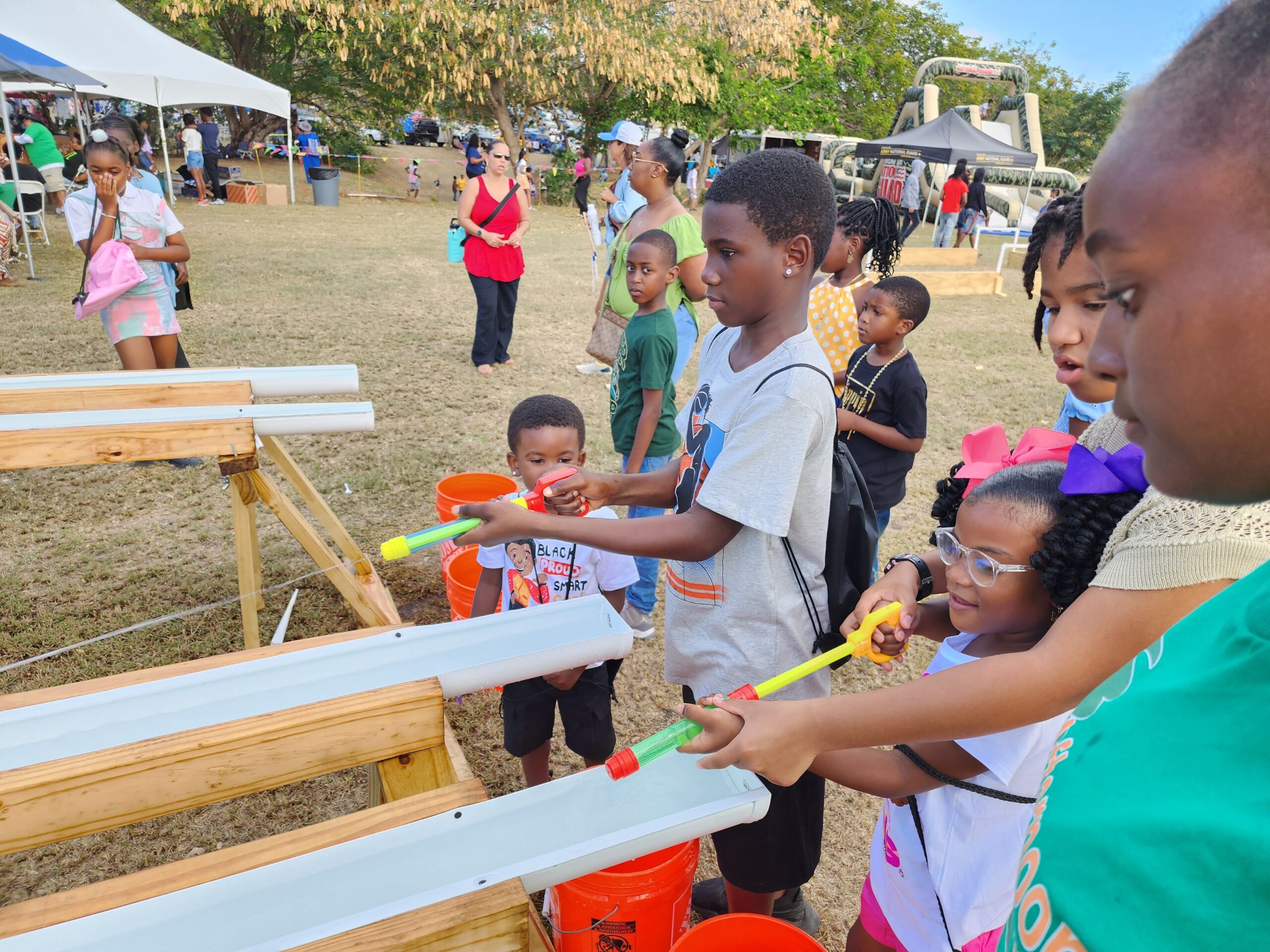
Children take part in a hands-on activity during a previous Afternoon on the Green on the Orville E. Kean Campus on St. Thomas, where families enjoy games, food and entertainment. (Photo courtesy UVI)
This year’s theme is “A Culinary & Cultural Mix for 2026,” highlighting Virgin Islands cuisine and cultural traditions through live entertainment, interactive activities and a community food competition, the press release stated.
“We are excited to welcome the community back for another vibrant Afternoon on the Green,” said Kyza A. Callwood, chair of the Afternoon on the Green Committee. “This event celebrates the culture, talent and generosity of the Virgin Islands while supporting scholarships that help local students pursue their education at UVI. It’s a day where the entire community can come together for great food, great music and a great cause.”
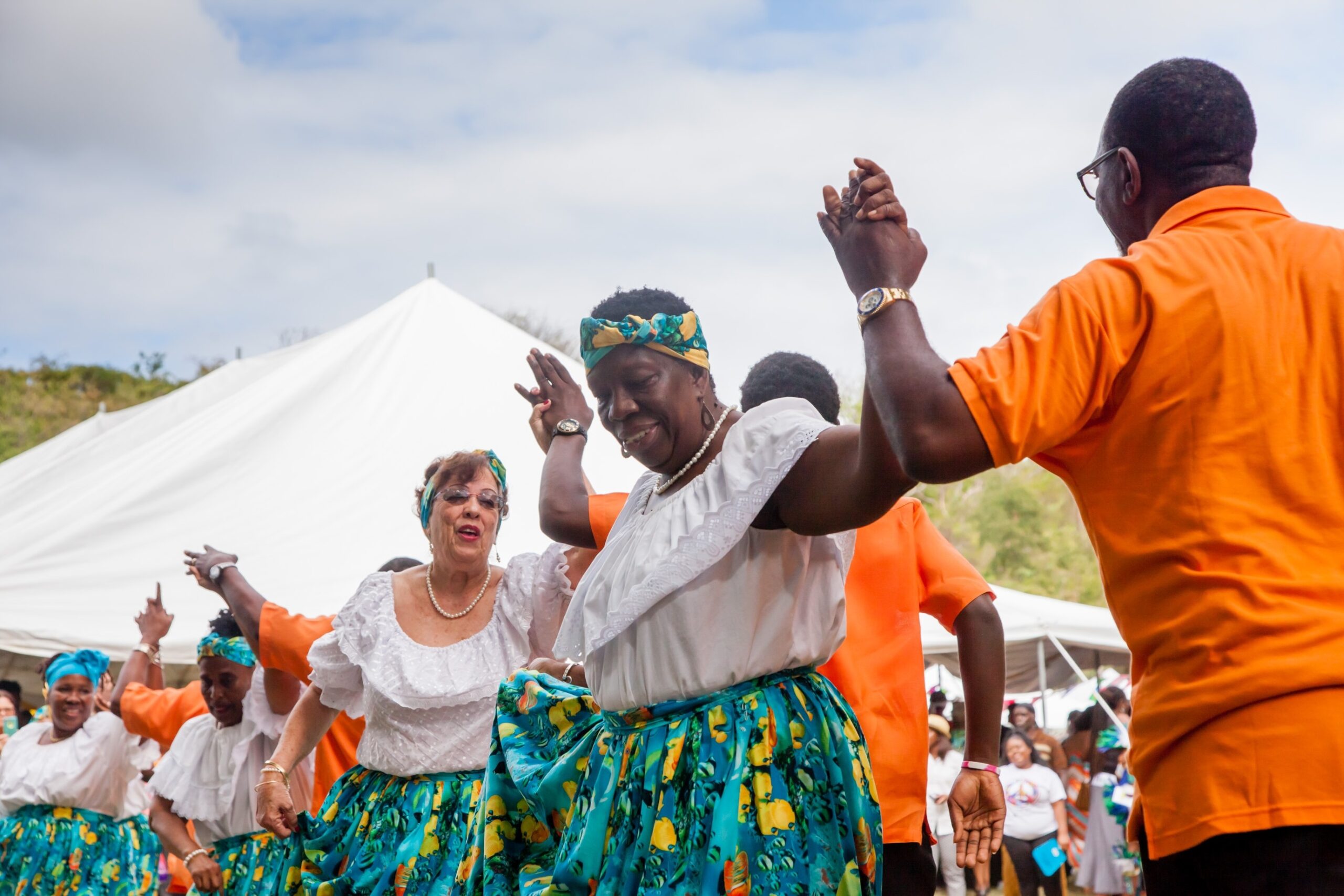
Live entertainment will feature headliner Klimaxx Band along with performances by the Jairay Petty Quintet, a live DJ, the UVI Buccaneer Twirlettes, the Mungo Niles Cultural Dancers and the St. John Dynamic Dancers, the release stated.
Dancers perform traditional Virgin Islands cultural dances during a previous Afternoon on the Green on the Orville E. Kean Campus on St. Thomas. (Photo courtesy UVI)
Attendees can also visit interactive displays hosted by UVI schools and colleges, giving prospective students and families an opportunity to learn about academic programs. The event will include children’s activities, a car show and sponsor exhibits, the release stated.
Following the event, participants can take part in a pickleball tournament at the UVI tennis courts. Check-in begins at 4 p.m., and the tournament runs from 5 to 9 p.m. Registration is available at aog.uvi.edu.
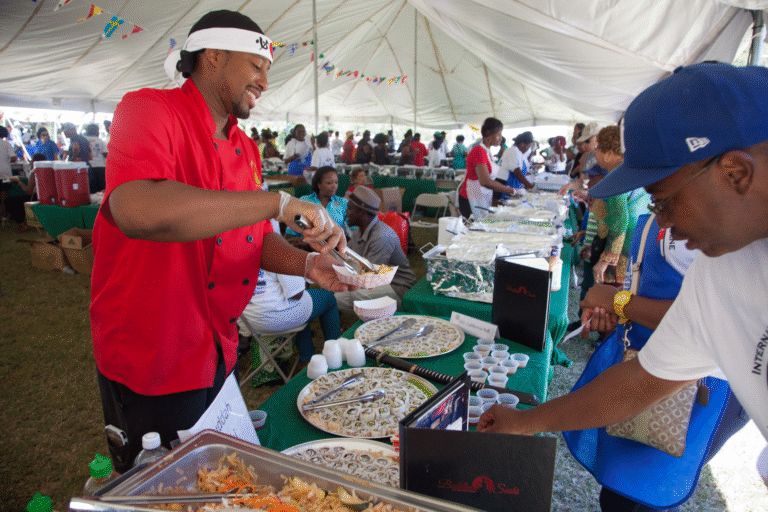
One of the event’s central attractions is the Afternoon on the Green Food Tent, where community cooks donate dishes, desserts and drinks for attendees to sample and vote on. Prizes will be awarded to the overall top vote-getter and the top entries in several categories, including main dishes, seafood, vegetarian dishes, soups, side dishes, bread, pastries or sweets, and native drinks, the release stated.
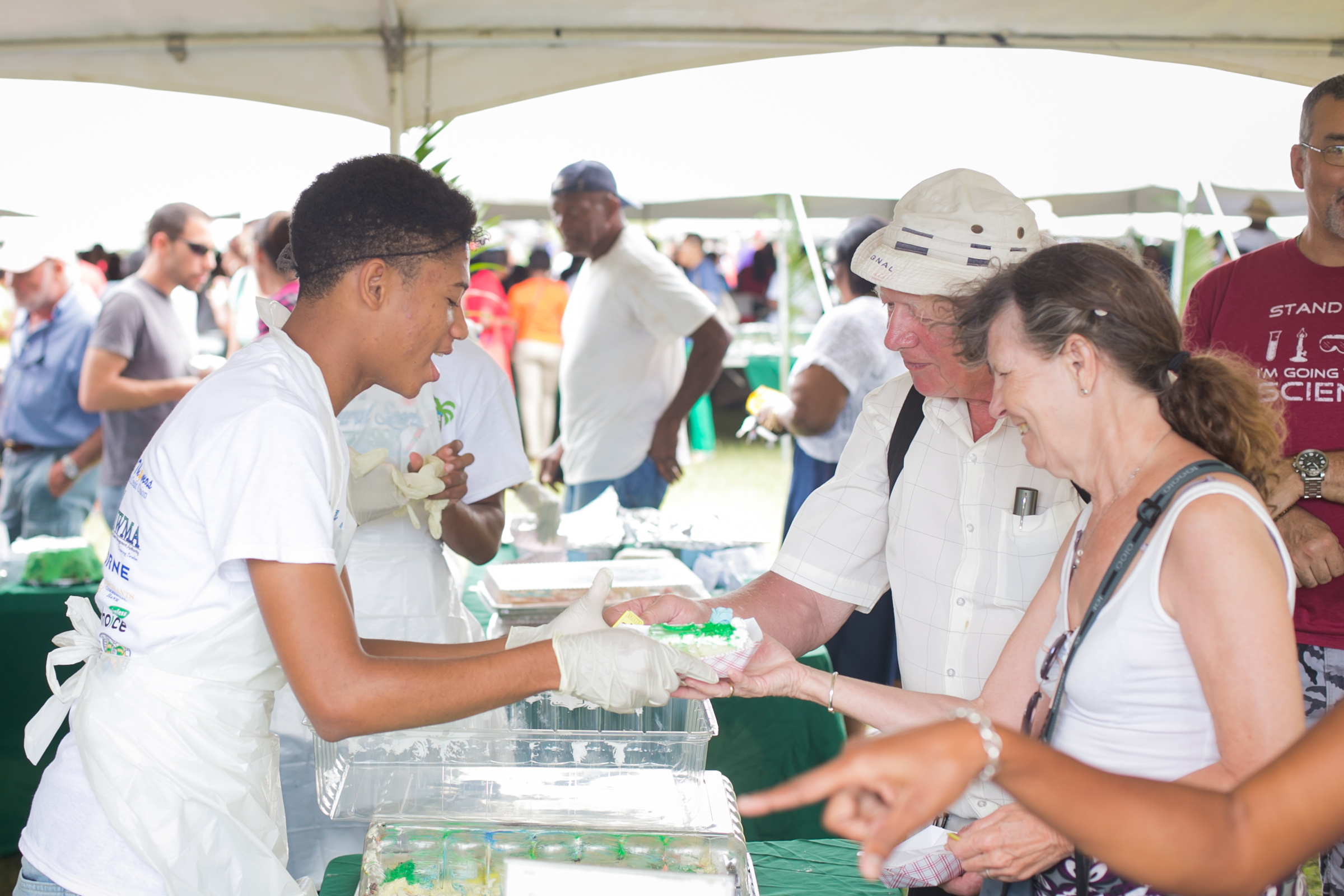
A volunteer serves food samples to attendees during a previous Afternoon on the Green on the Orville E. Kean Campus on St. Thomas. The community event features local cuisine, live entertainment and activities while raising funds for student scholarships. (Photo courtesy UVI)
Organizers are making a final call for cooks to participate in the culinary showcase. Community members who want to share their dishes can register by Thursday at aog.uvi.edu.
By donating a dish, participants help support scholarships for Virgin Islands students and contribute to a long-standing community tradition. All cooks who participate will receive a gift in appreciation for their support, the release stated.
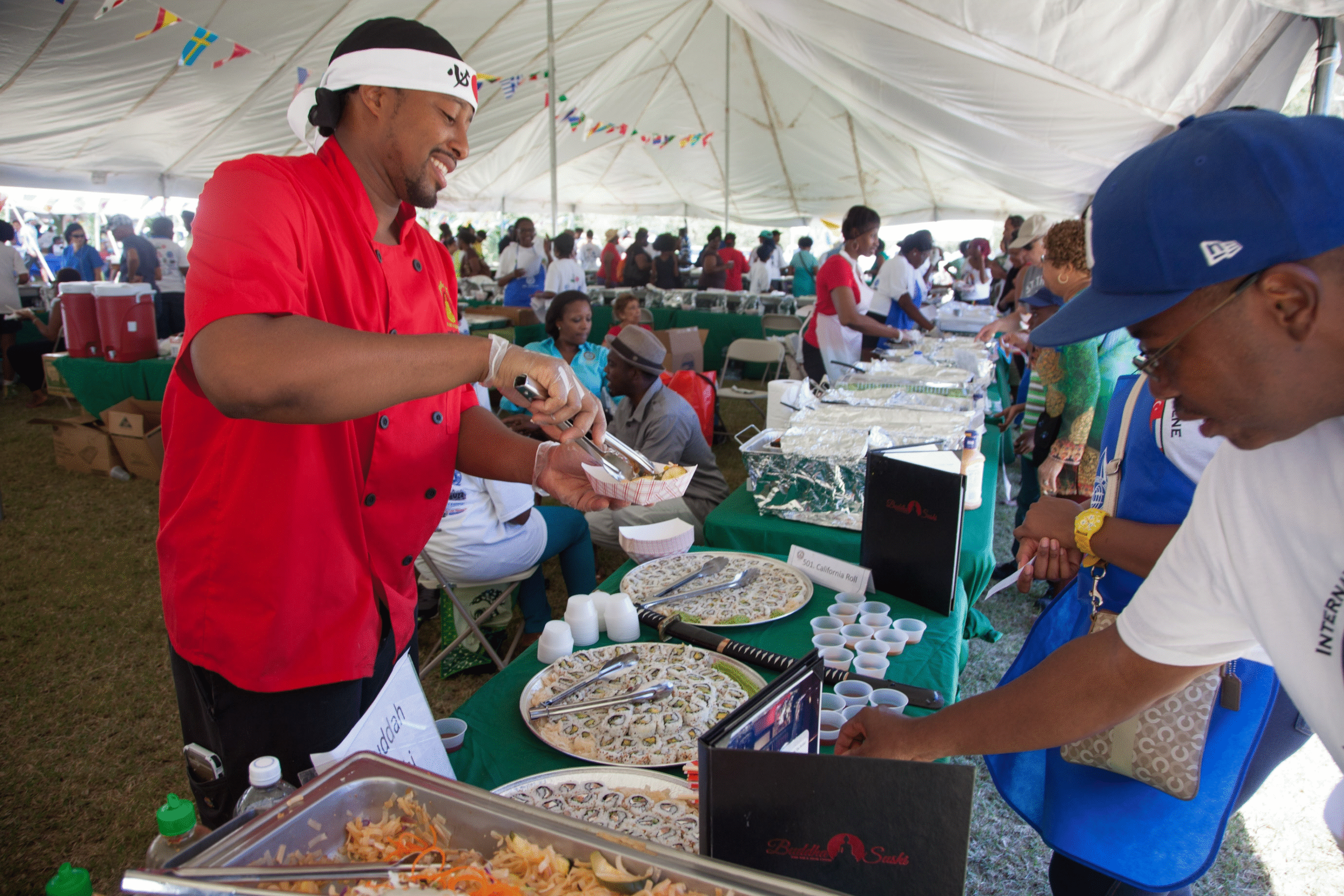
A food vendor serves samples to attendees during a previous Afternoon on the Green on the Orville E. Kean Campus on St. Thomas, where community cooks share dishes as part of the popular tasting competition. (Photo courtesy UVI)
High school seniors from Charlotte Amalie High School and Ivanna Eudora Kean High School may also apply for scholarships supported by the event. Applicants must have a minimum 2.5 GPA, demonstrate community service through volunteer hours and submit a video with their completed application to UVI for the upcoming academic year. Students should contact their guidance counselors and submit applications at aog.uvi.edu by Wedneday.
Afternoon on the Green is supported by sponsors including Indelible, the Virgin Islands Council on the Arts, the Virgin Islands Department of Tourism, One Communications, First Bank, Estate Shield VI, the UVI Research and Technology Park, the Virgin Islands National Guard, Tradewinds Chiropractic, WTJX/PBS/NPR, the Community Foundation of the Virgin Islands, the Virgin Islands Board of Education, the Virgin Islands Waste Management Authority, Department of Health Maternal and Child Health, West Indies Corporation, Bellows International, Cost U Less, AARP, the Virgin Islands Department of Public Works, DaVybe Radio, St. Thomas East End Medical Center Corporation, CC1 Wines and Spirits, Holsum, Fabien’s Trucking and Tropical Shipping, the release stated.
Entrance to the event is free. Parking costs $5 per vehicle and tasting tickets are $4 each. Attendees are encouraged to bring a lawn chair and sun protection.
For more information, visit aog.uvi.edu or call 340-693-1552.




 The virtual event will bring together faculty members, administrators and higher education leaders from public and private two- and four-year institutions nationwide to examine how artificial intelligence is transforming teaching and learning.