

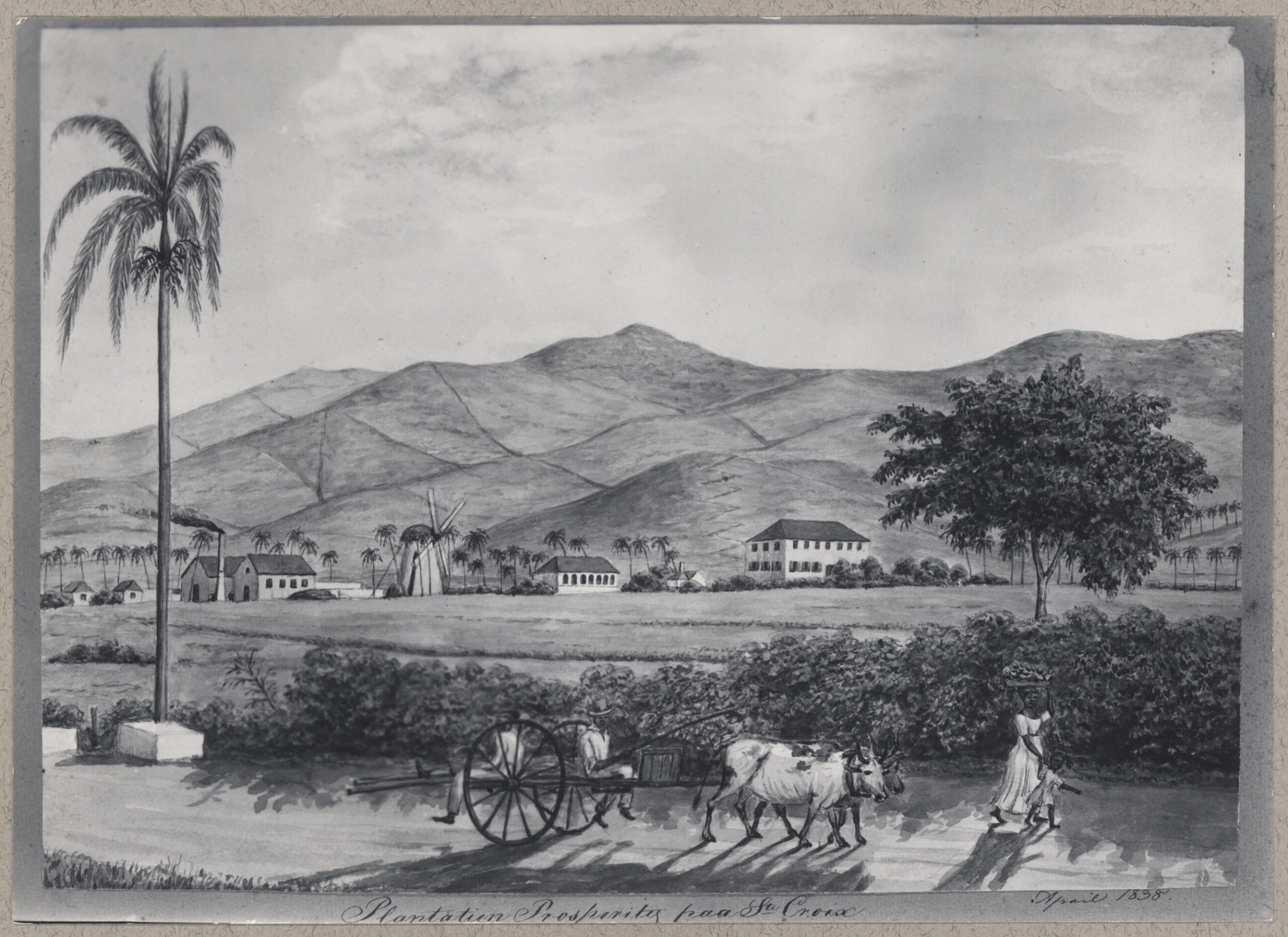
Recently, Virgin Islanders celebrated the 177th anniversary of Emancipation with parades, festival Village activities, speeches, tramping behind Stanley and the Ten Sleepless Knights, J’ouvert at the St. John Celebration, vendors selling local cuisine and drinks, and entertainment reflecting our culture. It was great to celebrate such an event as Emancipation Day in the Virgin Islands.
However, when the enslaved laborers (Africans) of the Danish West Indies took their freedom, it didn’t end on July 3, 1848. Hundreds of enslaved laborers were arrested, some were put on trial, others executed, some sentenced, testimonies were heard, interrogations took place, some were acquitted, and looting on some plantations occurred. A massacre even took place in Christiansted that day of emancipation where some slaves were killed and wounded. The aftermath of July 3, 1848 went on for days, months, even a few years.
Katheen D. Dowling’s second book, entitled “Voice Us: The 1848 Executed Eight,” gave us insight into historic documents from the Danish Archives of what happened on July 3, 1848, and after Emancipation Day. These historic documents are not in Dowling’s own words of what she thought happened. They are in the words of slaves, judges, government officials, witnesses, and those that participated in the uprising to free themselves from the physically brutal agricultural system of slavery in the Danish West Indies.
There are so many angles from which I can write about the events that took place after July 3, 1848. Who were those eight enslaved Africans Dowling spoke about in her book that gave the ultimate sacrifice for our freedom 177 years ago? I must say this, many of us take life for granted and have no idea of the great sacrifices our ancestors made for us. I will go a step further by saying the true history of the Danish West Indies has never been told to the people of Denmark. Therefore, they remain ignorant to the brutal slave system that was once managed by the Danish administration, and they remain ignorant of the true source of Danish wealth today.
Furthermore, in many ways, the people of the Virgin Islands know very little of themselves other than they are descendants of slaves, enslaved, “free blacks,” and Maroons. As Virgin Islanders, we owe a gratitude of thanks to Dowling for digging deeper into historic documents, whether it’s from a Danish perspective, or our ancestors’ written testimonies that shed light on our history today.

Two of eight enslaved Africans who were executed on July 8, 1848, were Big Robert and James Heyliger. Then we had Augustus, Decatur, Friday, and Adam, on July 11, and Martin Jim and John Simmons who were executed on July 15, 1848. From reading the historical documents of Capt. Carl Irminger, he was a heartless man. He was the one that declared martial law on St. Croix on July 5, 1848. Believe me, if he had his way, he would have killed thousands of enslaved laborers on St. Croix. He ordered the Danish soldiers to “shoot down enslaved Africans imprisoned with their hands tied behind their backs.”
Dr. Victor Prosch, the physician at that time, examined each case to verify the death of the men. Big Robert was from Mannings Bay, a south shore estate on St. Croix. Robert’s testimony explained his whereabout during July 3, 1848, and after. James Heyliger, a resident of Estate Enfield Green, also on the south shore of St. Croix and not far from Estate Mannings Bay, also explained his whereabouts during the insurrection of July 3, 1848.
Friday, another enslaved laborer, was arrested and was from Plantation Castle. “And he explained that he was not in the city last Monday, but he had been in the schoolhouse at Diamond, where Mr. McFarlane admonished him,” noted Friday in his testimony. Augustus, who was from Estate Concordia, explained in his testimony that he heard “… negroes had decided that they would not work as slaves anymore.”
Decatur was from Estate Lower Bethlehem, which is in the central plain of St. Croix. Concerning his arrest, Francis Newton said that Decatur wanted to attack Castle Plantation. When Decatur was chased away from the plantation property, he threatened to come back at night and light the place on fire. Adam, another arrestee from Estate Rose Hill on the northwest side (Maroon Country) of St. Croix, admitted setting fire to sugar cane land.
John Simmons, another arrestee from Estate Big Fountain (now Carambola Golf Course), explained under oath that he tried to organize others to help him destroy Mr. Van Brackle’s house at Estate Montpellier. Martin Jim of Estate Good Hope on the south shore of St. Croix was arrested and interrogated. He was accused of encouraging others with guns and weapons and admitted, according to his testimony, making threats saying that it should have been a “bucket of blood.” He never carried out any threats if you read his whole testimony.

None of the eight enslaved laborers ever killed anyone or carried out their threats, except for Adam of Estate Rose Hill where he burned a cane field. They didn’t commit any “capital” crime so to speak. As Virgin Islanders, we should never forget those eight slaves that paid the ultimate sacrifice for our freedom today. In fact, we owe all enslaved Africans in the Danish West Indies for our physical emancipation.
I recommend to my readers, get a copy of “Voice Us: The 1848 Executed Eight.” Believe me, history comes alive when you read this historic document that has been sitting there for over three centuries in the Danish archives. Contact Kathleen D. Dowling at dowlingkathleen@hotmail.com or 340-332-1601. The book is also on amazon.com
— Olasee Davis is a bush professor who lectures and writes about the culture, history, ecology and environment of the Virgin Islands when he is not leading hiking tours of the wild places and spaces of St. Croix and beyond.