

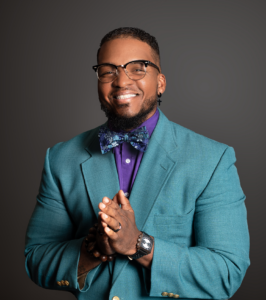
 In his biweekly column, Langley Shazor speaks to issues important to men within the territory.
“An apology without changed behavior is manipulation.” I am unsure who first said this, but it is an absolute truth. I believe that we have become so desensitized to the hurt we cause others that saying “sorry” is just something we do, not something we mean. If we are truly remorseful for something, there should be a change in how we act and think. Our choices should be indicative of this transition.
“Sorry” is more than a word. It is a statement that says, “I honestly did not mean or intend to do or say something that hurt you.” The apology’s intention is both the recognition of a boundary or line that was inadvertently crossed and the understanding of how it affected the other party. Thus, when you say that you are sorry, you are saying that you made a mistake, one that you will not make again. Additionally, a mistake is not knowing a boundary exists, whereas a choice is being fully aware of it and stepping over anyway. Hence manipulation.
Like many things we discuss in The Lounge, we also believe that an apology is a sign of weakness. However, what it actually signifies is the maturation of the individual to accept responsibility for their conduct. This is the essence of accountability. This is where we can see the transformation of someone’s character, when the apology is accompanied by the change in behavior.
In my southern slang, this is where “the rubber meets the road”. Many of us have very little interest in changing our ways. We expect people to simply deal with it. I often am reminded of people touting the phrase, “This is just who I am.” Let me be very matter of fact: this is a cop-out, an excuse not to take accountability for how others are affected and sends the message that there will be no internal work done to remedy it. Who you are is an evolutionary journey that will continue to mold and shape you as you age and as you go through different experiences. An unwillingness to adapt will leave you recycling the same types of situations. Only you can break the cycle, and that requires work.
It is easy to blame people, circumstances, environments, and other outside stimuli for our choices and behavior. As I have said previously, “everyone wants to look out the window, but no one wants to look in the mirror”. The introspective process is very uncomfortable, it challenges us to look at ourselves in a way that we typically reserve for others; judgement. Pointing the finger, we believe, somehow absolves us of the responsibility to take account for ourselves. Our words and actions are justified because it “wasn’t our fault,” “They made me do it,” “I had to say something,” “I wasn’t going to be played like that,” and the list goes on. I have used all these reasons to excuse behavior that was externally and internally destructive, as well as devolving. I didn’t realize it then, but this wasn’t the conduct of a productive and mature young man but that of a coward.
I was afraid of what I would discover about myself. I was afraid that I wouldn’t like what I found. I was afraid of the discomfort and the effort to make the adjustments. I was afraid that I wouldn’t be as well-liked or respected during the transition. I was afraid of the responsibility of becoming a role model. It was easier to live in “this is just who I am” than to operate from “how can I become better.” I let excuses override execution.
The recognition of self-control accompanied by the practice of it is true power. This power can be wielded to bring about positive change. When we take ownership of ourselves, we open the door for evolution and transformation. Here, we can convey sincere and authentic regret because we will be making the changes that keep us from repeating the actions that led to the need to be forgiven. Although an apology is extremely important, it is the adjustment that proves it to be true or just empty words.
Langley “Casual-Word” Shazor is a poet, author, publisher, entrepreneur, public speaking coach, podcast host, and pastor who is an advocate for youth and men. His goal is to enlighten, empower, and liberate those who are silenced, marginalized, and enslaved to self-destructive thoughts and behaviors.
Visit thecasualword.com.