

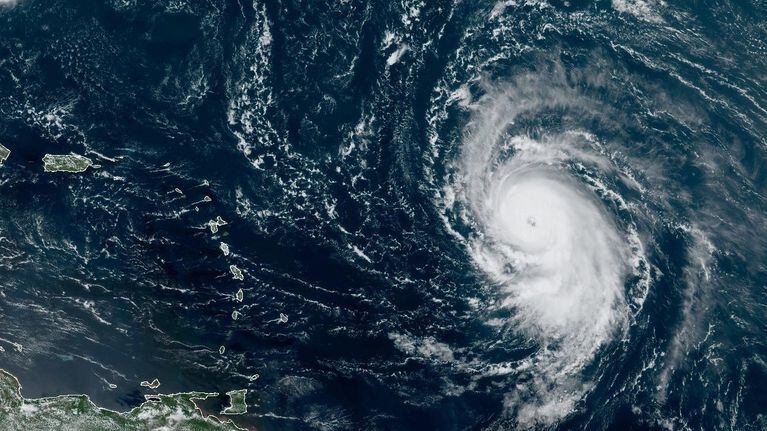
U.S. President Joe Biden proclaimed the week of May 5 through May 11 as National Hurricane Preparedness Week. The period is meant to raise awareness about the destruction that cyclones can cause and to provide information and resources for individuals to be as prepared as possible.
“Too many families know the pain of having their lives and livelihoods devastated by powerful hurricanes, tropical storms, and typhoons,” according to a statement from the White House issued by President Biden. “During National Hurricane Preparedness Week, we shed light on the dangerous impacts of hurricanes and share best practices on how to prepare and stay safe. We also show our gratitude to the first responders, volunteers, and all those who help to prepare communities in advance and rescue, recover, and rebuild in the wake of their darkest moments,” the statement continued.
With a potentially active hurricane season ahead, now is a perfect time to make arrangements to be ready for any potential storms.
As reported in a recent Source article, a busy 2024 season is possible because of several factors, including a transition from an El Niño weather pattern to La Niña, along with extraordinarily warm sea surface temperatures across the Atlantic and Caribbean. The combination of these elements may contribute to an increase in cyclones developing this year.
“Scientists call [the two opposing climate patterns of El Niño and La Niña] the ‘El Niño-Southern Oscillation’ (ENSO) cycle. El Niño and La Niña can both have global impacts on weather, wildfires, ecosystems, and economies,” according to the National Oceanic and Atmospheric Administration.
When a La Niña cycle occurs, the ocean waters across the equatorial Pacific Ocean cool significantly, affecting global weather. During La Niña, wind shear — a change in wind direction and velocity with height in the atmosphere — also typically decreases in the Atlantic Ocean. A reduction in wind shear can favor cyclone development. This pattern is the opposite of El Niño, which causes a warming of the equatorial Pacific, which normally increases wind shear in the Atlantic Ocean. The wind shear helps to tear apart developing storms and prevent hurricane formation and intensification. A neutral phase of ENSO occurs when neither El Niño nor La Niña is happening, often occurring during the transition of an El Niño to a La Niña. An ENSO-neutral phase may also result in lower wind shear across the Atlantic, which may result in more favorable conditions for cyclones to develop.
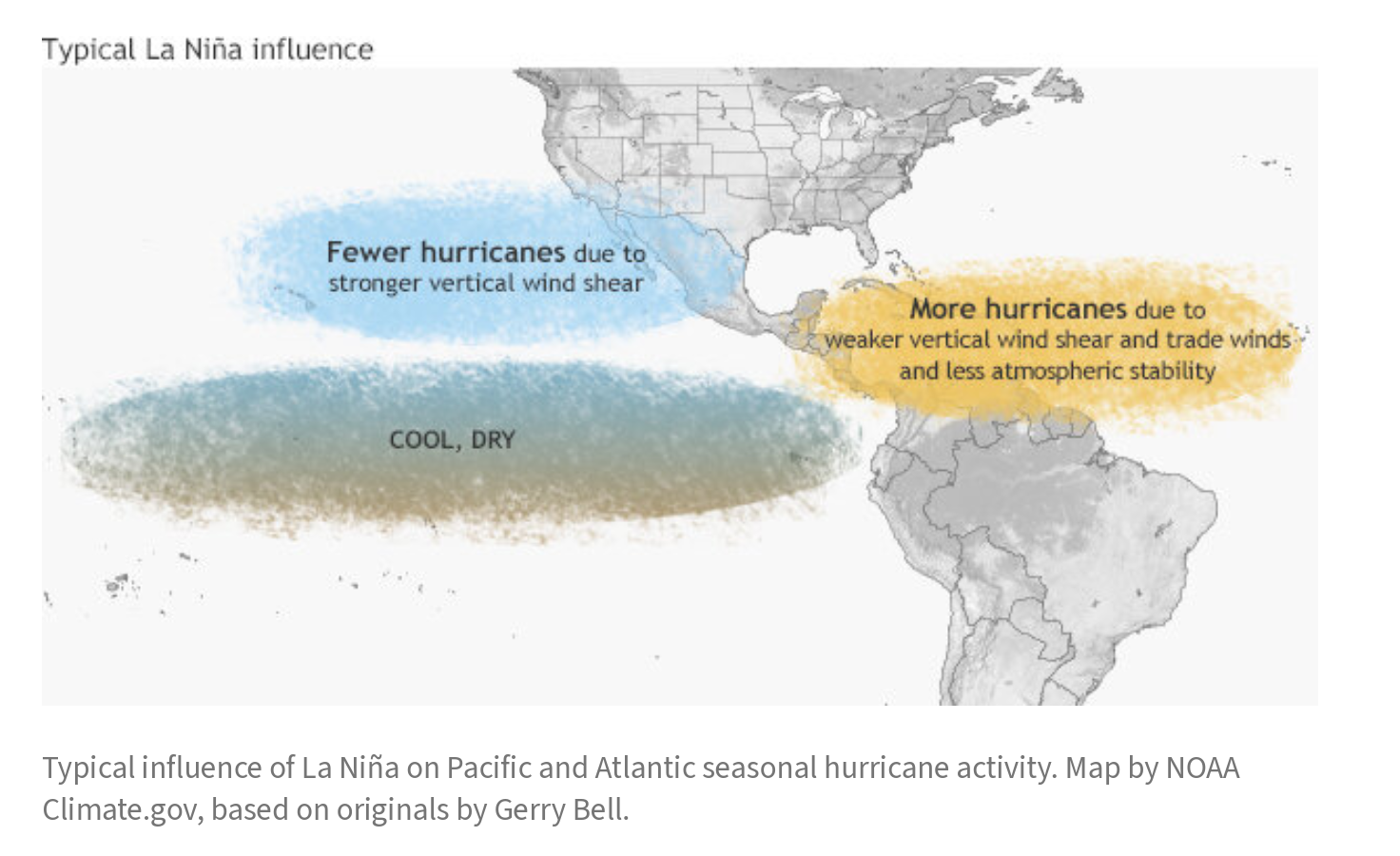
Additionally, the National Weather Service notes that warm ocean water adds fuel to a cyclone through a process of evaporation and condensation, which allows a tropical disturbance to intensify. Low wind shear combined with plentiful moisture across the ocean due to warmer sea temperatures increases the likelihood of cyclone intensification.
Preparations for Hurricane Season
The NWS and NOAA advise that individuals should be prepared before, during, and after a hurricane.
The NWS plans to release its Hurricane Season Outlook around the end of May. Matt Rosencrans, National Weather Service lead hurricane seasonal forecaster, shared advice for the U.S. Virgin Islands and Puerto Rico residents ahead of hurricane season.
“I advise everyone to start preparing now,” Rosencrans recommended. “Residents of the USVI and Puerto Rico know that supplies can take time to reach them, so please start early. Often the recovery on islands can take longer than [the U.S.] mainland areas due to transportation complications, so take the time now to have more supplies,” he continued.
Rosencrans also provided resources that individuals may find helpful for hurricane preparations.
“Ready.gov and listo.gov are great resources,” Rosencrans said. “NOAA also has step-by-step instructions, and the Virgin Islands Territorial Emergency Management Agency may also have necessary information that’s localized to the islands and island residents’ unique needs.”
Before a Hurricane
“The best time to prepare for hurricanes is before hurricane season begins,” the NWS said. “Avoid having to rush through potentially life-saving preparations by waiting until it’s too late. Get your disaster supplies while the shelves are still stocked, and get that insurance checkup early, as flood insurance requires a 30-day waiting period,” the NWS stated.
Tips to consider prior to a storm include the following. (This information was first reported in a previous Source article.)
- Compile a disaster kit, including flashlights, batteries, a first-aid kit, medications, food, and water.
- Create an evacuation plan. This can include flights off-island as well as locating emergency shelter locations.
- Review insurance documents and ask questions to an insurance agent. Remember that “flood insurance” and “hurricane/wind insurance” policies can be very different.
- Assess your home and evaluate areas in need of reinforcement or repair.
- Become familiar with hurricane/tropical storm alerts and updates. Remember that emergency services may not be available during a storm.
During a Hurricane
“Be prepared for hurricane season by knowing what to do during a storm,” the NWS noted. “Whether you’ve evacuated or are sheltering in place, know what to expect from the hazards you may face. Remain vigilant, stay up to -date with the latest forecasts and alerts, and continue to listen to local officials,” the NWS continued.
Tips to stay safe during a hurricane include the following:
- Stay away from windows.
- Keep a radio and communication device charged up and have extra batteries available.
- Be on guard against rising water. Flood waters can rise very quickly.
- Remain in a sheltered location, such as an interior bathroom, until the storm completely passes.
- Remember that if the eye of the storm passes over, the weather will temporarily improve. However, since the eye of the storm is at the center of the cyclone, it is just a matter of time before the other side of the hurricane moves over the area, the weather again deteriorates, and high winds return.
After a Hurricane
“A key part of hurricane preparedness is understanding the dangers that remain well after a storm, [and] this is not the time to put your guard down,” the NWS said. “Nearly half of hurricane fatalities occur after the storm,” the NWS warned.
Safety reminders after a hurricane include the following:
- Be alert for hazards such as downed power lines or damaged structures.
- Ensure that generators are placed away from interior areas or spaces where toxic fumes could be inhaled.
- Only drink water if it is deemed safe to do so. Contamination is possible during storms.
- Connect with neighbors and fellow islanders and assess any needs for medical treatment. (Don’t forget about pets and animals, too!)
- Stay updated on the weather and news and monitor for future developments about severe weather or additional cyclone development in the region.
USVI Weather Updates
The V.I. Human Services Department is expected to release detailed information regarding emergency storm shelters, including pet-friendly shelters and facilities equipped for individuals with special needs, in the next few weeks. In addition to weather information from the NWS and VITEMA, a daily weather forecast is also published on the Source Weather Page, where readers can view weather forecast videos and disaster preparedness video segments.