

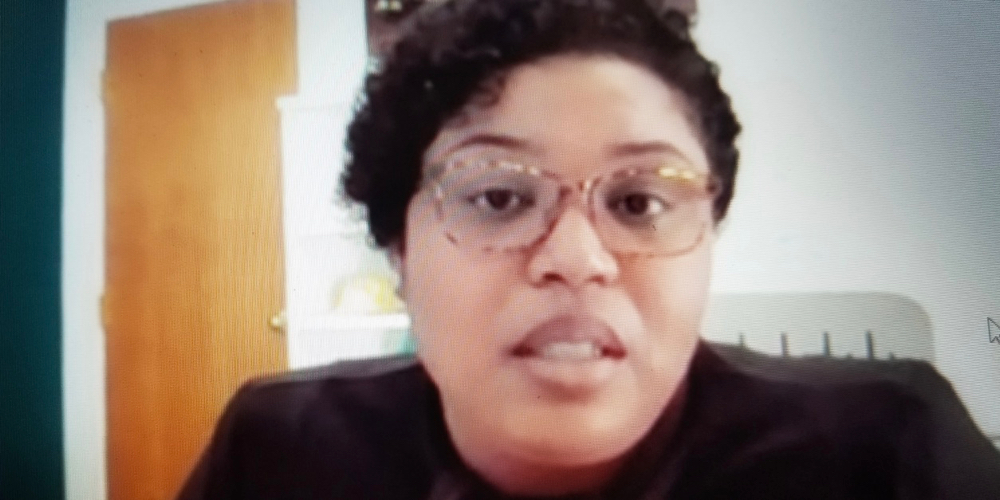
A rezoning request to change a residentially zoned property from low-density to medium-density to place more than a dozen additional rental units on the land was the source of contention during a virtual hearing held Friday by the Department of Planning and Natural Resources.
The applicants, Leal and Luz Van Beverhoudt, requested their two-acre family property, which was purchased in 1848, in Estate Sorgenfri, be permitted to construct multiple two-story buildings and a large parking lot so they can accommodate travelers. One structure would have three units downstairs and three upstairs, while the other structure would have four units both upstairs and downstairs to lodge rental and Airbnb guests.
“Those are the buildings that we have to get this zoning request for because we already have a building,” Leal Van Beverhoudt said. “So, these are the extra buildings that we would like to complete. When I say complete, it’s because the foundations and everything are already up.”
The property also has Leal Van Beverhoudt’s home, an additional apartment, and another home that his son lives in. With the addition of the requested structures, the property would consist of 20 dwellings.
That number of units has a potential for heavy amounts of street traffic, sewage disposal problems, and population density issues- all concerns raised by Leal’s neighbors during the public hearing.
“While there are positive to Airbnb, high turn-overs with that number of units will negatively impact the residents that are adjacent to that property,” nearby property owner Nicole Travis said. “The infrastructure in that neighborhood, the roads, septic, water, all of that, is impacted by having such a high density in that development.”
Travis said that the department should take into consideration that Leal has already invested in the endeavor before obtaining approval.
“He is asking for the most intense residential zoning that is not consistent with the adjacent properties nor the infrastructure of the development it surrounds,” Travis said. “Just because he has invested in his property over a period of time … he is asking to be rewarded for doing property that is outside the zoning classification. To reward that by giving him further density I think does a disservice to the people and residents in that area.”

Travis added the switch from an R-1 to R-3 classification comes with many permitted uses that “have far more entitlements” than the R-1 zoning classification.
“People who have invested in the area … they’re making investments on properties based on the zoning that is in place. Which is R-1,” Travis said. “Mr. Beverhoudt has made significant investment in his property outside of a public hearing, or due process to the neighbors that are being impacted by his continued investment.”
Neighbor to the Beverhoudts, Cuteill Young, said he was concerned about the sewage capacity.
But Leal Van Beverhoudt said, “I already have a sewage treatment system … it has three compartments, it flows from one to the next and when it gets to the last compartment … I have a septic treatment before it goes into a quarter-acre drainage area.”
Young said he wanted to know what the sewage capacity would be for the property because, “During the rainy season, the drainage from his fields actually ends up on the road.”
Young also said he was worried that should the zoning change it could cause a hike to the neighborhoods’ owed property taxes.
The public hearing ran for over an hour, with many neighbors contesting the request.
With the hearing complete, DPNR planning technician Kelly Davis said there is a 30-day period for the department to prepare a report for the Legislature. The Legislature will take into consideration the department’s report when approving or denying the zoning change request.