

The allusions often found in most Negro spirituals have, in my opinion, their roots deeply planted in the trials and tribulations of life itself. I have chosen, however, to look at the allusions found in our Negro spirituals from the perspective of Christianity and slavery.
One can safely say; Negro spirituals serve a very important factor in the lives of most people from the African Diaspora. Spirituals have served not only as a sanctuary to the faithful souls in the aspect of Christianity but, importantly, a vehicle towards the easement of the pain, the brutality, and the inhumanity of slavery.
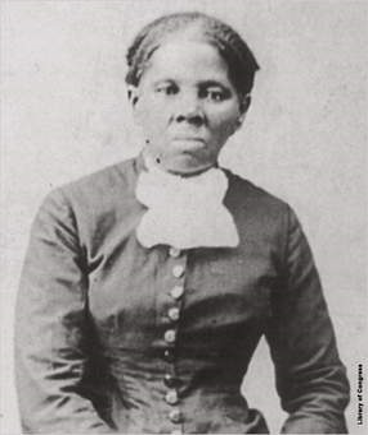
The most famous slave who mastered the allusions of the Negro spirituals was Harriet Tubman. The songs she used are called: “Songs of the Underground Railroad” or the “Underground Railroad secret code language.”
In the spirituals cited below, all speak to the aspects mentioned above—the faithful souls and the burden of slavery. In the spiritual song, “I Will Be Done,” clearly established a character hoping that death would befall him or her due to their hardship in the life of slavery itself. As the spiritual explains:
Soon I will be done with the troubles of the world,
Troubles of the world, the troubles of the world,
Soon I will be done with the troubles of the world.
Goin’ home to live with God.
This spiritual speaks of long-suffering, a person who believes in the promise of the coming of Christ as interpreted by many Western Christian religions. Although it speaks of hope, it also revealed a sense of desperation, as if life here on earth is excruciatingly unbearable. As the spiritual further illuminates:
No more weepin’ and a-wailing.
No more weepin’ and a-wailing.
No more weepin’ and a-wailing.
I’m goin’ to live with God.
The promise of going to live with God has been an introduction within the philosophy of whites during the wake of slavery. They believed that Black Africans had needed to be tamed from their savage ways.
It was, however, the very vehicle that aided many of our forefathers during slavery. In the spiritual “Steal Away To Jesus,” we can see the testimony to the clever way in which most slaves devised the method of escape. The study of Black American History testified to the fact that one courageous woman, Harriet Tubman, known as the “Moses of her people,” utilized the aspect of spirituals as the communicating vehicle for her “Underground Railroad” success.
In the spiritual, “Steal Away To Jesus,” the message of Tubman revealed itself:
Steal away, steal away, and steal away to Jesus,
Steal away, steal away home,
I ain’t got long to stay here.
By using this spiritual as a means of a code, the slaves would know when to prepare themselves for the harsh reality of escaping to freedom. “Steal Away To Jesus” was, in fact, a substitute for “escape to freedom.” The concept of “home,” in this perspective, does not speak of the Mother Land, Africa; rather, “home” in this sense was never a physical place; it was, in fact, “anywhere” except in the hands of bondage or slavery. In the following lines:
My Lord, He calls me.
He calls me by the thunder,
The trumpet sounds within-a my soul,
I ain’t got long to stay here.
Some African American historians say that the allusion of “thunder “and “trumpet,” goes back to basic biblical stories. It is the overwhelming belief in the Christian community that when the coming of the Messiah is about to manifest itself,
Angels will descend from Heaven blowing their trumpet in unison. Others speak of the destruction of the earth with thunder, lightning, brimstone, and fire.
The famous spiritual, “Swing Low, Sweet Chariot” has been a staple of black folk life for years. Unlike “Steal Away to Jesus” and “No More Auction Block,” these spiritual takes into consideration both the anticipation of freedom from slavery and the hope and faith expressed within most Christian circles. “Sweet Chariot” is the expected method by which those who served The Lord would be traveling to Heaven’s gate. Moreover, it was also how some slaves envisioned going back to Africa. In this context, one could also look at the famous story of the “Black Starliner,” the preponderance of Marcus Garvey’s Back to Africa Movement of the 1920s. According to the spiritual:
Swing low, sweet chariot,
Coming for to carry me home,
Swing low, sweet chariot,
Coming for to carry me home.
I looked over Jordan and what did I see
Coming for to carry me home,
A band of angels, coming after me,
Coming for to carry me home….
According to most African American scholars, the singing of this song is where the true emphasis lies. When sung with gusto, especially in a Revivalist Church, the effect can be electrifying. On the other hand, when sung in “Masah yard,” the effect can be threatening, not for the slaves, but the white masters. Tubman, for instance, used this song, and when a slave heard it, he knows he had to be ready to escape. In the biography: Life of Harriet Tubman, by Sarah Hopkins Bradford, “The Underground Railroad (sweet chariot) is coming south (swing low) to take the slave to the north or freedom (carry me home.”)
It is clear, in my opinion, that the dichotomy we mostly find in the exploration of biblical allusions in spirituals lies deeply not only in the interpretation of one’s religious affiliations or one’s personal life experiences but significantly, within the historical advent of slavery and the determination of a sense of freedom.
“Wade in the Water,” Bradford said, “tell salves to get in the water to avoid being seen and make it through.” This she said is an example of a map song, where directions coded into the lyrics:
Wade in the Water, wade in the water children
Wade in the water. God’s gonna trouble the water.
Who are these children dressed in Red?
God’s gonna trouble the water.
Must be the ones that Moses led.
God’s gonna trouble the water.
According to Calvin Earl in his blog: “African American Spirituals are A National Treasure,” “Wade in The Water” is one of the spirituals that has many secret codes embedded within the song apart from the lyrics referencing the Christian tradition of baptism—”often the religious rite of sprinkling water onto a person’s forehead or of the immersion of a person’s body in water, or as the Bible tells the story of John the Baptist baptized, “people in the river symbolizes purification and choosing to live your life in the Christian faith.”
For the slaves, according to Earl, in addition to their faith in God, “secret codes were used in the spirituals to give guidance to the slave as he embarked on his journey to freedom on the Underground Railroad.”
The secret code in “Wade in The Water,” God’s Gonna Trouble the Water’ for the slaves trying to escape from slavery on the Underground Railroad,” meant to be aware that one of the methods used by the slave masters to track runaway slaves down was to send their bloodhounds out to track down the slave. So, the lyrics were instruction for the runaway slave if they could hear the bloodhounds were close behind they needed to find a body of water and wade in the water because if you were in the water the bloodhounds could no longer pick up their scent and the slave would be safe from the dogs tracking them down.
Another song that speaks of escaping is the “Drinking Gourd.” This song speaks of escaping in springtime. It also speaks of the calling of “quails” referring to quails calling each other in April—nesting time:
When the Sun comes back
And the first quail calls
Follow the Drinking Gourd.
For the old man is a-waiting for to carry you to freedom
If you follow the Drinking Gourd.
The riverbank makes a very good read.
The dead trees will show you the way.
Left foot, peg foot, traveling on,
Follow the Drinking Gourd.
The river ends between two bills
Follow the Drinking Gourd.
There’s another river on the other side
Following the Drinking Gourd.
When the great big river meets the little river
Follow the Drinking Gourd.
For the old man is a-waiting for to carry you to freedom
If you follow the Drinking Gourd.
Frederick Douglas wrote of his escape from slavery this way: “We were at times the buoyant, singing hymns and making joyous exclamations, all most triumphant in their tone as if we had already reached a land of freedom and safety.”
In celebrating this Black History month, the time had come when we should embrace our slave ancestors, who like the “Soul” Singers in America, the “Reggae” singers of Jamaica or the “Calypso Singers” of Trinidad as “Jubilee Singers.”
Winston (Bobby) Nugent