

On Wednesday, lawmakers in the 36th Legislature advanced a bill requiring mental health education in all public school grades, from kindergarten through 12th, after a hearing that highlighted gaps in the territory’s care system.
The Senate Education and Workforce Development Committee voted 6-0 to move Bill 36-0133 forward. The measure would require age-appropriate mental health instruction as part of existing school health programs, covering topics such as coping skills, social connection and help-seeking behavior. The bill now heads to the Rules and Judiciary Committee.
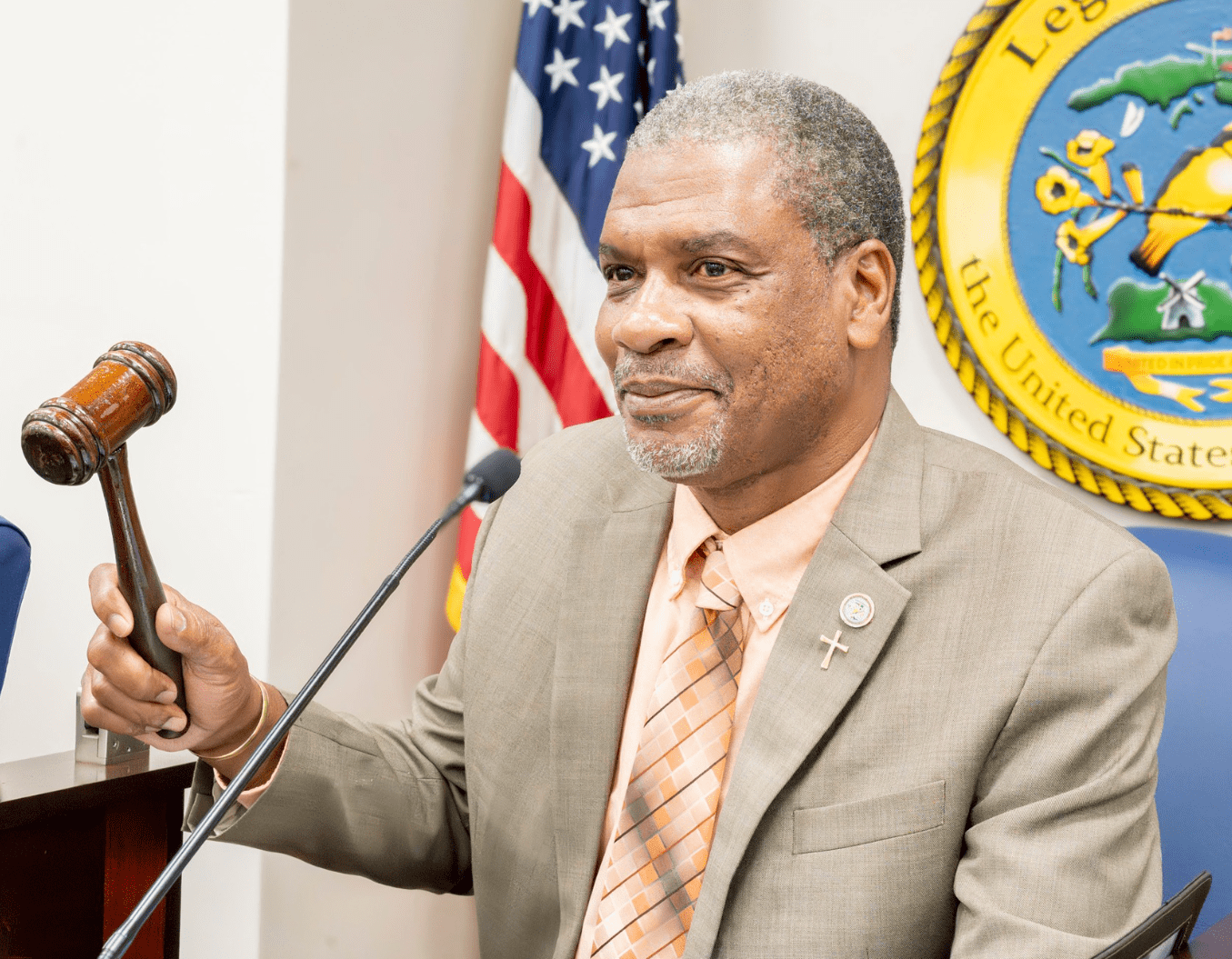
Sen. Milton E. Potter, the bill’s sponsor, described the proposal as a preventive effort to give students tools before crises emerge. He said mental health can no longer be treated as separate from “academic success, public safety, family stability or workforce development,” and framed the measure as a way to teach children that “mental health is health.”
Education and health officials supported the bill, saying it would formalize and expand work already happening in schools. Assistant Education Commissioner Victor Somme told lawmakers that mental health topics are already included in health standards and social-emotional learning programs, but also said putting the requirement into law would strengthen coordination between agencies and create clearer expectations across grade levels.
The Virgin Islands Board of Education also backed the bill’s goal but urged lawmakers to integrate the instruction into existing courses rather than create a stand-alone class. In testimony, officials from the board said that the approach would avoid straining instructional time and staffing. It also pointed to ongoing counselor shortages and called for teacher training, funding and incentives to expand the territory’s pipeline of school-based mental health professionals.
Some lawmakers questioned whether the bill would significantly change classroom instruction, noting that many of its components are already in place. Others raised broader concerns about whether the territory’s behavioral health system can meet increased demand if more students begin identifying and reporting mental health needs.
Witnesses and lawmakers pointed to long-standing gaps in care, including limited treatment capacity and challenges connecting people to services. Somme acknowledged that education alone is not enough, saying the territory can expand instruction but still lacks sufficient resources to treat those in need. “We can provide education and instruction in mental health ad nauseam,” Somme said. “The issue is, how do we treat? Ultimately, that’s what we want … so I would say that is a gap.”
Potter echoed that the bill is not a complete fix. “I see this bill as just one tool in the toolbox,” he said. “It’s not going to fix our mental health problem, but it’s an opportunity to start with our young people.” Potter added that reducing stigma will require early intervention and open discussion. “If change is going to take place, it’s going to take place among our young people … with us normalizing the discussion of mental health.”
Dr. Gesil Ramos, director of behavioral health at the Health Department, emphasized the need for a broader, coordinated approach. “We can’t do it alone. We have to include everyone in mental health,” Ramos said. “If we can continue like this, we will be able to make that impact that you guys are looking for.”
Mental health advocate Dr. Yassin Hall, who supports the bill, cautioned that schools must be prepared to respond when students open up about trauma. Hall said classroom discussions can be “lifesaving” when paired with counseling and community support, but warned that students may be left vulnerable if disclosures do not lead to care.
Despite those concerns, lawmakers broadly agreed that mental health education belongs in schools and could help reduce stigma and encourage early intervention. Several emphasized, however, that the measure’s impact will depend on whether the territory can strengthen its treatment system alongside classroom instruction.