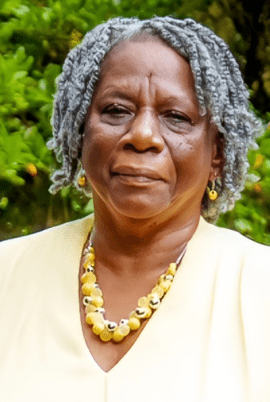

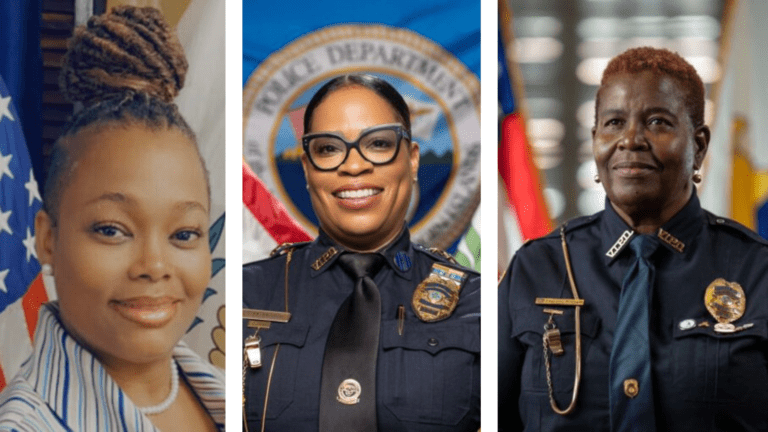
Profiles of Carolyn Wattley, Deborah Hodge, and Naomi Joseph and their powerful paths to leadership
In a field long dominated by tradition and hierarchy, three women within the Virgin Islands Police Department are helping reshape the future of law enforcement — not by demanding attention, but by leading with consistency, courage, and heart.
Carolyn Wattley, Deborah Hodge, and Naomi Joseph each took different paths into public service, but today they share a common goal: making the department stronger, more accountable, and better prepared for the future. Their stories, marked by perseverance and purpose, are reminders that true leadership doesn’t always announce itself loudly. Sometimes it looks like steady change, day after day.

Carolyn Wattley: Finding Her Voice Behind the Scenes
For Wattley, public service wasn’t the original plan, but once she found her place, she never looked back. She started in the field of law enforcement while working at and attending the University of the Virgin Islands, gaining firsthand experience in public safety and administration. That foundation led her to the Virgin Islands Territorial Emergency Management Agency, where she found herself deeply involved as the 911 emergency response director during the devastating Hurricanes Irma and Maria in 2017.
“It was a lot,” Wattley recalled. “But it showed me how important it is to stay organized, stay calm, and find solutions under pressure.”
When an opportunity came to join the Virgin Islands Police Department, she embraced it as a new challenge. Moving into policy and crime analysis — especially in the middle of the department’s work to comply with a federal consent decree — stretched her skills even further.
“I’d worked on policies before,” she said, “but never at this magnitude. I treated it like a puzzle: you take your time, you stay patient, and eventually it all fits together.”
Now, as VIPD’s deputy commissioner for Support Services, Wattley leads VIPD’s civilian operations — managing everything from payroll processing to fleet maintenance — and chairs the department’s internal policy committee, helping streamline practices and improve accountability across divisions.
“Without our civilians, VIPD couldn’t function,” she said. “They are just as essential as anyone in uniform.”
Her goals for the months ahead are clear: improve working conditions, boost morale, and modernize the department’s technology systems. But her long-term vision is even broader — building a department where every employee feels seen and valued.
Her advice to women eyeing leadership roles: “If you want it, go for it. Don’t look at a job as male or female. Consistency is key, accountability is key — and if it’s truly on your heart, you’ll find a way to make it happen.”
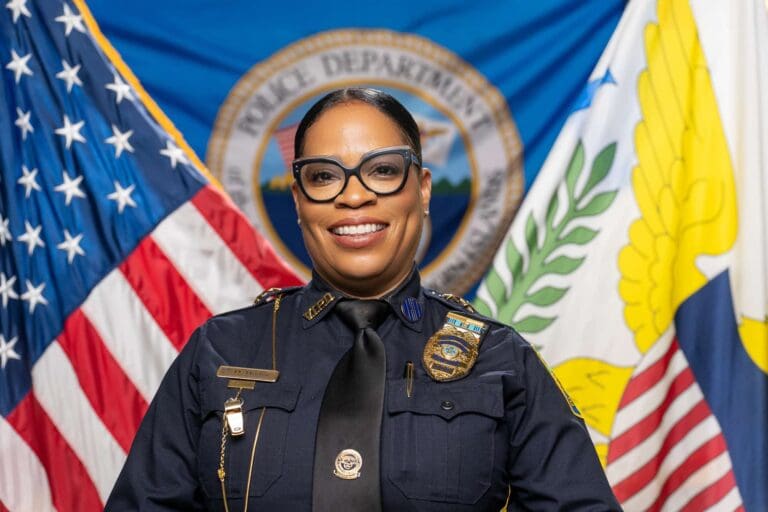
Deborah Hodge: Breaking New Ground
Deborah Hodge never set out to make history. When she first joined the Virgin Islands Police Department, her focus was simple: to be a steady voice for those who didn’t have one.
“I didn’t necessarily have dreams of being in law enforcement,” Hodge said. “I had dreams of helping people. I wanted to be the person who showed up when others couldn’t speak for themselves.”
That early calling carried her through the ranks, leading her into some of the most demanding divisions in policing. Hodge spent much of her career working in domestic violence, sexual assault, and economic crimes – fields that require not just investigative skill, but emotional resilience.
“You see the unimaginable in this line of work,” she said. “If you don’t find a way to balance it, it will follow you everywhere.”
Early on, she developed what she calls an “invisible off-switch,” allowing her to compartmentalize the emotional weight of her job and be fully present for her family at home.
But it wasn’t just the cases Hodge handled that made an impact. She became a quiet but determined force for change inside the system itself. Working with legislators and attorneys, Hodge helped drive reforms to strengthen the territory’s sexual assault laws, closing loopholes and ensuring survivors had a clearer path to justice.
“Those changes don’t happen overnight,” she said. “They happen because someone keeps showing up, case after case, conversation after conversation, refusing to let the issues be ignored.”
In March 2025, Hodge’s years of steady leadership culminated in her historic appointment as the first woman to serve as chief of police for the St. Thomas-St. John district. For many in the community, it was a powerful moment of progress. For Hodge, it was a reminder of the responsibility she had carried all along.
“My job isn’t to make friends,” she said. “It’s to make sure justice is done — fairly, compassionately, and without fear. Leadership means making the hard calls, standing up when it would be easier to stay quiet, and never forgetting who you’re supposed to be serving.”
Today, Hodge is focused not just on daily operations, but on mentoring the next generation of officers, especially young women who may question whether there’s a place for them at the leadership table. She believes strongly that building a better police department starts with building better leaders.
“You need heart,” she said. “You need the courage to stand up for what’s right, even when it’s hard — even when it’s with the people you care about.”
Her advice to women looking to break into male-dominated fields is clear and confident: “Be passionate. Be fearless about your values. You’re going to bring a balance that the world needs — and the only thing that can stop you is you.”

Naomi Joseph: A Dream that Started Early
By the time she was 14 years old, Naomi Joseph already knew where she belonged — in law enforcement.
Growing up around career police officers, she saw firsthand the power of service and the impact of standing up for those who needed it most. It was never about chasing a title or a badge. It was about having the courage to do right by others.
“I didn’t necessarily think about it as being law enforcement at first,” Joseph said. “I thought about it as helping people who couldn’t speak for themselves.”
Joseph’s career took her through some of the toughest areas in policing: domestic violence investigations, sexual assault cases, and later, economic crimes. Through it all, she developed what she called an “invisible switch” — a way of balancing the emotional toll of the work with her life at home.
“You have to find that balance,” she said. “If you carry it all with you, it will break you.”
One case, in particular, left a lasting impact. Joseph worked with a young woman who had been sexually assaulted as a child but whose case went cold when her abuser fled the island. Over a decade later, when the man returned and targeted younger siblings, Joseph helped bring the case back to light. It wasn’t easy — at the time, certain body parts weren’t even covered under the unlawful sexual contact laws. But working alongside then-attorney Charlotte Poole, Joseph helped secure a successful prosecution and pushed for the laws to be amended to better protect future victims.
“That partnership mattered,” Joseph said. “To work with another woman, fighting for justice together — it showed me what was possible.”
Now, as deputy chief of police for St. Croix, Joseph is focused on building a stronger, more unified department — one that reflects the community’s highest ideals.
“We have incredible officers who just need someone to believe in them,” she said. “I want to be that person.”
Her advice to young women considering policing, or any male-dominated field: “Lead by example. Be passionate. Stand firm in your values. If you do that, there’s no limit to what you can accomplish.”