 In her biweekly column, “State of the Territory,” former Sen. Janelle K. Sarauw delves deeper into issues of concern for V.I. residents.
“Come home,” they say.
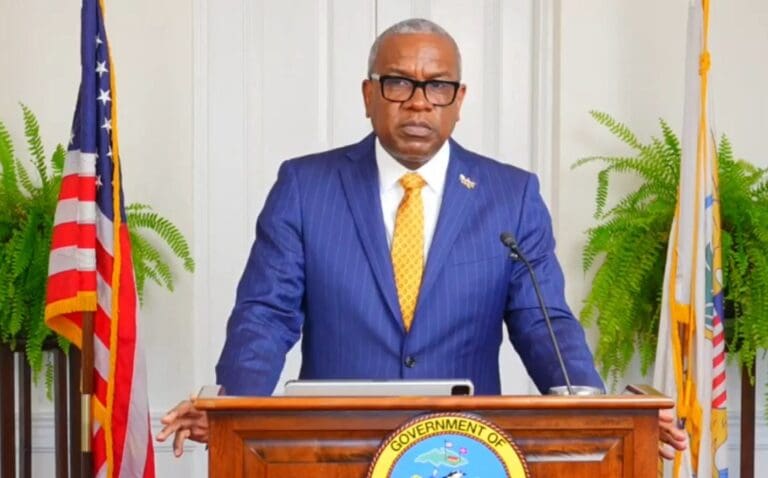
First, it was a genuine call to action by Senator O’Reilly. Then the Governor echoed it from the podium at a press conference, urging Virgin Islanders living abroad to return and help build the Territory. On the surface, it sounds noble. Who wouldn’t want their own people to return, invest, and give back to the place that raised them?
But the eruption on social media tells a deeper story — one of frustration, longing, contradiction, and truth.
Many Virgin Islanders want nothing more than to return to the islands they love. To rub their children down with cocoa butter, bathe them in Dettol, march them proudly into assembly singing the Virgin Islands March, Sly Mongoose, or La Bega Carousel, consume a “lindy”, “special”, fraco and milk, or take Sunday beach days like we used to. They want their kids to know what mispel, sugar apple, golden apple, kenips, “tarmon” or “tambrand” are, learn to play pan, dance like a Mocko Jumbee, graduate from the same schools their parents and grandparents did, and feel the magic in the wind when climbing Black Point, Skyline, or cruising down Queen Mary Highway or Centerline Road on St. John.
But that nostalgia crashes into a hard wall of reality. Jobs they’re qualified for go unanswered. Emails are ignored. Phones ring endlessly. Year after year, while I served in the Senate, we continued to fund positions that remain vacant, and yet we treat qualified Virgin Islanders abroad as strangers to their own soil.
I’ve heard the cries of our people in the diaspora. Journalists who begged for a chance back home and got silence, only to thrive in major media markets. Educators, engineers, and public servants who returned home only to be devoured by toxic politics, locked out by networks of power and favoritism. One person said it plainly: “You want us to come home? Give us jobs. Give us opportunities.”
This is where the call to come home starts to feel disingenuous. You can’t ask people to return while nothing has changed. Not the housing crisis. Not the stagnating wages. Not the internal sabotage, complacency, or gatekeeping that pushes our brightest minds away. We have families sharing bedrooms, young people fleeing for mental health support, and a cost of living that makes $30,000 salaries feel like cruel jokes in an economy where rent for a one-bedroom apartment easily tops $2,000.
Don’t guilt people into returning when what you’re really offering is a downgrade wrapped in patriotism. As one commenter put it: “You’re asking people to give up their homes to pay rent in someone else’s house.” That’s not a call to community — it’s a call to sacrifice.
And let’s be honest: the problem isn’t just structural — it’s cultural. We, the people, carry blame too. We elevate leaders who fail us, demonize those who speak the truth, and cling to the same “sons of the soil” who helped erode the very systems we now claim to rebuild.
What’s worse is when suffering is weaponized as a badge of pride. “Be grateful,” they say, “we used to have to fetch water in buckets.” As if progress is defined by barely clearing the bar of modern expectations. That’s not progress. That’s conditioning.
Meanwhile, those who do come home do so with sacrifice. They do it with love. And often, they do it alone. They face rumors, resistance, professional jealousy, and systemic dysfunction. Some thrive. Many leave again — burnt out, disillusioned, or silenced.
To come home, there must be something worth coming home to. A livable wage. Affordable housing. A school system built on equity. A government that doesn’t punish you for being passionate. A community that doesn’t eat its young. A culture that values innovation as much as it values tradition.
The debate sparked online wasn’t just noise — it was necessary. It was a mirror. A wake-up call to stop romanticizing repatriation and start addressing the very reasons people left in the first place.
Because the truth is — migration is human. Globalization is real. People move where they are watered. They go where they can breathe.
So to those of us in leadership: Before calling Virgin Islanders to return, ask honestly— what are we inviting them back to? Is there infrastructure, opportunity, and support waiting for them, or are we simply offering nostalgia wrapped in obligation?
To those living at home: What have we chosen to accept, and who have we chosen to revere? Are we building a community worth sustaining — or simply surviving in systems that no longer serve us?
And to those in the diaspora: What would it take for you to return — not just physically, but fully? Is the love of home enough to outweigh the realities that once drove you away?
These are the conversations we must have — not in whispers or on trending threads, but out loud, with intention. We must stop pretending that the call to “come home” is enough on its own. It must be paired with action, investment, and accountability.
Because in the end, the question isn’t just if people will come home — but whether home is being shaped into a place worth returning to.
And that brings us to the timeless words of Governor Cyril E. King — a question we should all still be asking today:
“Prosperity for whom — and at what cost?”
Editor’s Note: Opinion articles do not represent the views of the Virgin Islands Source newsroom and are the sole expressed opinion of the writer. Submissions can be made to visource@gmail.com.