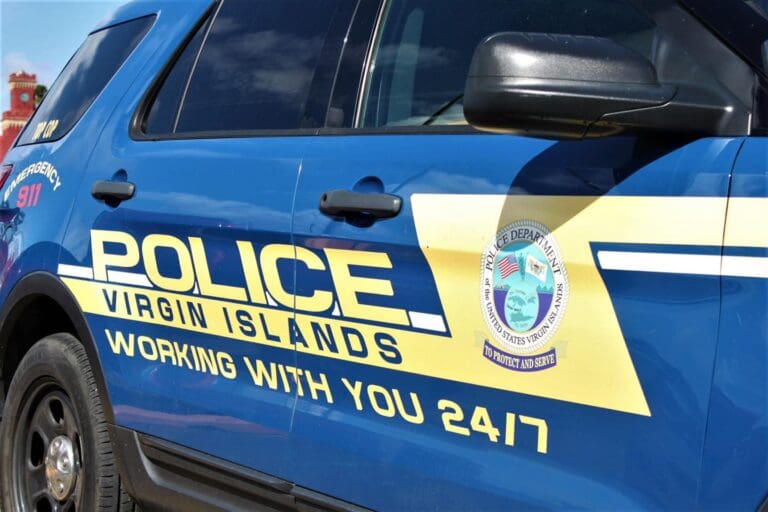
The Virgin Islands Police Department is investigating a stabbing incident that occurred in the early morning hours of Saturday, Oct. 25, on Store Tver Gade, in the vicinity of Bliss Night Club.
According to the police report, at approximately 4 a.m., the 911 Emergency Call Center notified officers of a possible stabbing victim being treated at the Roy Lester Schneider Hospital. Upon arrival, investigators made contact with the victim, a 37-year-old female, who reported that she was injured while attempting to intervene in an altercation outside the Bliss Night Club.
Preliminary investigation revealed that the victim sustained a laceration to her left palm during the incident. She was transported to the hospital by private vehicle and is currently listed in stable condition, according to the report.
Anyone with information about this case can contact the VIPD at (340) 774-2211, or submit an anonymous tip to Crime Stoppers USVI by calling 1-800-222-TIPS (8477).
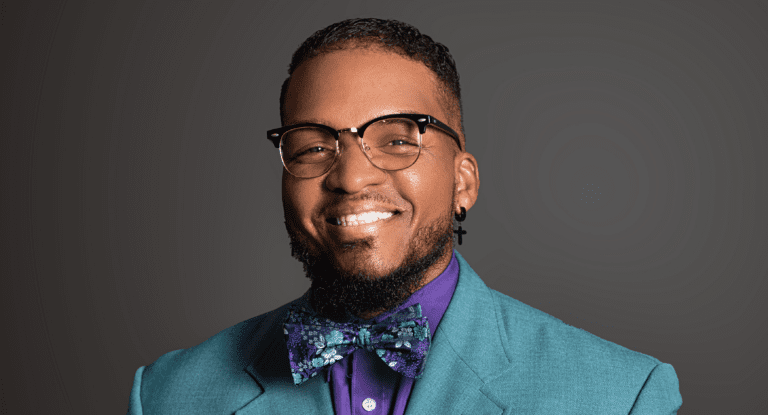
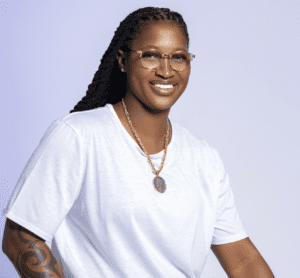
In his biweekly column, Langley Shazor speaks to issues important to men within the territory.
You can lead well. You can love well. You can serve well. But if you do not learn how to manage yourself well, it will all eventually catch up with you. That is the truth about growth—it is not about what you do in public, it is about how honest and accountable you are in private. The real work begins and ends with you.
It is easy to focus on who needs you, what you are building, or how you show up for everyone else. But emotional intelligence always turns the question inward first. How do you speak to yourself? How do you handle your own triggers when nobody else is around? Are you self-aware or just self-critical? Do you manage your emotions, or do you just explain them away? This is not surface-level talk. This is the kind of internal examination that reveals whether your growth is sustainable or just performative.
I have learned that accountability with yourself is the hardest kind to maintain. Because there are no cheers. No recognition. No applause. Just you and the choice to do what is right when doing what is comfortable would be easier. That choice shows up in your habits, your self-talk, your morning routine, your moments of quiet. It shows up when nobody is watching and when nobody will know if you slip. But you know. And that is what separates people who grow from people who pretend.
You can fake a lot of things, but you cannot fake emotional discipline with yourself. You either have it or you are working on it. And if you are not working on it, you are probably bleeding on people who have nothing to do with your wounds. That is what happens when we avoid the mirror. We project. We perform. We push forward while falling apart. But at some point, your lack of self-accountability will leak—and it will leak into your decisions, your relationships, your leadership, your faith, your health.
Emotional Intelligence 2.0 reminded me that growth is not automatic. Just because time passes does not mean maturity happens. You can be older and still emotionally immature. You can be successful and still self-sabotaging. You can be spiritual and still emotionally unavailable. That is why self-awareness and self-management matter. They give you the tools to actually grow—not just in your performance, but in your peace.
So what does accountability with yourself look like? It looks like honesty about your patterns. It looks like owning when you procrastinate, deflect, or overextend. It looks like making time for rest and not waiting for burnout to force your hand. It looks like going to therapy, setting boundaries, praying without pretending, and building structure around the areas where you tend to fall short. It is not glamorous. But it is the real work.
It also looks like holding space for your humanity. Accountability is not about beating yourself up. It is about telling yourself the truth and then walking in that truth with grace. You do not grow by shaming yourself into change. You grow by being honest about what needs to change and then taking daily steps to do something about it. That kind of honesty requires courage. Because it means admitting that the version of you that got you this far is not the same version that will take you to the next level. It means letting go of your excuses. It means forgiving yourself. And it means rebuilding with better tools.
You do not owe anyone perfection. But you owe yourself progress. You owe yourself peace. You owe yourself emotional freedom. And that begins with a decision to stop waiting on external motivation and start holding yourself accountable internally. Every day is a chance to do the work. To check your attitude. To shift your mindset. To catch your tone. To speak kindly to yourself. To get up when you fall. To pause before you react. To rest without guilt. That is the real work.
So here is the question: Can you trust yourself to grow? Can you trust yourself to show up? Can you trust yourself to be honest about where you are and brave enough to go where you need to be? Because when you become someone you can trust, everything else starts to change. Your leadership gets stronger. Your relationships get healthier. Your faith gets deeper. Your decisions get clearer. Why? Because you are no longer fighting against yourself in secret.
You will never outgrow the need to manage you. And you will never regret becoming someone who does that work with consistency. You are your own first project. And if you do the work, you will not just get results—you will get peace.
So let’s stop performing. Let’s stop waiting for a wake-up call. Let’s start the real work. The mirror is already here.
Editor’s Note: Opinion articles do not represent the views of the Virgin Islands Source newsroom and are the sole expressed opinion of the writer. Submissions can be made to visource@gmail.com.
In her biweekly column, “State of the Territory,” former Sen. Janelle K. Sarauw delves deeper into issues of concern for V.I. residents.
If the Legislature is the people’s house and the Executive the hands and feet of government, then the Judiciary is its conscience. It is the branch that interprets the law, protects individual rights, and ensures that both citizens and government remain bound by the rule of law.
The authority of the Judiciary in the Virgin Islands is rooted in Section 21 of the Revised Organic Act of 1954 and in Title 4 of the Virgin Islands Code, which lays out the structure and duties of the courts. For decades after transfer from Denmark, the Virgin Islands had no independent judicial branch. Federal judges appointed by the President of the United States presided over the courts of the territory, often from afar, and local matters were funneled through federal authority.
Over time, the system slowly evolved. For much of the twentieth century, justice was handled by the Municipal Courts of St. Thomas and St. John and of St. Croix. In 1976, these courts were consolidated into the Territorial Court of the Virgin Islands, which for the first time gave the islands a unified local judiciary. In 2004, the Territorial Court was renamed the Superior Court of the Virgin Islands to reflect its expanded authority over civil, criminal, family, and probate matters.
For years, however, the absence of a local supreme court meant that appeals from the Superior Court had to be taken to the U.S. District Court of the Virgin Islands. This made our system unlike any state, since federal judges were effectively serving as appellate judges in local matters. The creation of the Supreme Court of the Virgin Islands in 2004 finally completed the judicial branch and gave Virgin Islanders a court of last resort of their own. This was more than a legal reform. It was an act of self-determination, securing the ability to interpret local law in local courts without first seeking review by federal judges.
The Virgin Islands Supreme Court is also unique in the broader American system. It was the last Supreme Court in the United States to be created, established in 2004, and it is directly subject to review by the U.S. Supreme Court under 48 U.S.C. § 1613. While state supreme courts have the final say on matters of state law, with U.S. Supreme Court review limited only to federal questions, decisions of the Virgin Islands Supreme Court may be appealed directly to the nation’s highest court, even on questions of territorial law. This appellate pathway ties our highest local court directly to the U.S. Supreme Court, creating a judicial structure unlike that of any state and underscoring both our autonomy and our territorial status.
Today, the Judiciary is composed of the Supreme Court of the Virgin Islands, the Superior Court, and specialized divisions that handle probate, family, civil, and criminal cases. Together they form a coequal branch of government, insulated from political pressure and dedicated to upholding justice. Unlike senators or governors, judges are not tasked with pleasing the public or balancing budgets. Their charge is to apply the law as written, protect constitutional rights, and serve as the ultimate check when either the Legislature or the Executive exceeds its authority.
This independence is vital in a small community. In the Virgin Islands, everyone knows everyone, and pressures to bend rules or favor friends can be immense. The Judiciary stands as the safeguard that personal relationships, political influence, or economic power cannot outweigh the law. The bench is designed to be impartial, ensuring that justice is blind, even when the parties involved are well-known or politically powerful.
The Judiciary also carries an educational role that is often overlooked. Through its decisions, the courts clarify what laws mean and how they should be applied. For example, when a statute passed by the Legislature is challenged, it is the courts that determine its constitutionality and give it life through interpretation. In this way, judges do not make law, but their rulings shape how the law is lived.
Yet the role of the Judiciary is often misunderstood. Many residents expect judges to solve community problems in ways that are beyond the court’s authority. Judges cannot pass budgets, hire teachers, or pave roads. What they can do is ensure that contracts are honored, that property rights are respected, that criminal defendants receive fair trials, and that the rights of every Virgin Islander are protected against abuse. Expecting judges to fix political or administrative failures is like blaming a referee for the poor performance of a team. The referee cannot score the points, but he ensures the game is fair.
The Judiciary’s importance is magnified by history. In colonized societies, courts were often instruments of empire, used to enforce foreign rule and suppress local voices. The Virgin Islands was no exception. The creation of the Supreme Court was therefore a remarkable milestone, giving Virgin Islanders not only the power to interpret their own laws but also a symbol of judicial maturity and autonomy within the American system.
In a system of checks and balances, each branch has its lane. The Legislature makes the laws and appropriates funds. The Executive enforces and administers those laws. The Judiciary, under Section 21 of the Revised Organic Act and Title 4 of the Virgin Islands Code, interprets the laws and ensures that justice prevails. Only when all three branches respect one another’s role does democracy function at its best.
The Judiciary is not perfect, no branch is, but it remains the guardian of fairness and the shield of rights in the Virgin Islands. It may not fill potholes or pass budgets, but it ensures that every citizen, regardless of status, stands equal before the law. To weaken the Judiciary is to weaken the very foundation of justice itself.
Editor’s Note: Opinion articles do not represent the views of the Virgin Islands Source newsroom and are the sole expressed opinion of the writer. Submissions can be made to visource@gmail.com.
The family of Mayrose Smith sadly announces her passing Oct. 8, 2025 and invites friends and loved ones to celebrate her life.
Mayrose Smith
A viewing will be held on Monday, Nov. 3, from viewing 9 to 10 a.m. at Wesley Methodist Church, followed by a homegoing service from 10 to 11 a.m.
Burial will take place at Eastern Smith bay Cemetery.
Mayrose Smith will be remembered for her kindness, strength, and the love she shared with everyone who knew her.
She leaves to cherish her memory her daughter, Jan Trotman; her three grandsons, Rashied Chesterfield, Jaheel Lawrence, and Jahsheem Lawrence; and four great-grandchildren, along with a host of other relatives and friends who will miss her dearly.
The family welcomes all who wish to honor her memory and say their goodbyes.
Funeral Arrangement by Turnbull’s Funeral Home and Crematory Services
The University of the Virgin Islands Homecoming Planning Committee invites alumni, students, families, and the wider Virgin Islands community to join in celebrating Homecoming 2025, a four-day event from Oct. 30 – Nov. 2, showcasing Buccaneer pride, Virgin Islands culture, and meaningful connections across both campuses.
“As we welcome our alumni, students, families, and the community to our campuses, Homecoming 2025 is about renewed connection, celebrating UVI’s legacy, and engaging everyone in our ‘Grand Momentum’ blueprint for the future,” said UVI President Dr. Safiya George, who is also a proud UVI alumna. “We invite everyone to join us for a weekend of celebration that embodies the heart and soul of UVI.”
“Homecoming 2025 promises to be an unforgettable experience,” said Michael Morsberger, UVI Vice President for Institutional Advancement. “We’ve planned an exciting lineup of events that will appeal to everyone — from children and families to food lovers, culture bearers, alumni philanthropists, partygoers, and sports fans. We welcome the entire community to come out and enjoy festivities on both our St. Thomas and St. Croix campuses.”
“This year’s celebration will open with a vibrant Homecoming Kick-Off Parade and Beach Bash on the Orville E. Kean Campus,” said Sophia Johnson, UVI Homecoming Committee Chair and Director of Alumni Affairs and Constituent Relations. “We invite the community to attend, enjoy the music, cheer for UVI’s Royal Court, and take in performances by our dancers and student groups. The parade will end at Brewer’s Bay Beach, where everyone will be treated to a Buccaneer-style Beach Bash.”
Homecoming 2025 will also feature a variety of other signature events, including the Halloween Trunk or Treat, Homecoming Games, and Ultimate Wet Fete; Alumni Marketplace Showout, and Alumni/Students/Staff/Divine Nine Basketball Battles; and the Soca & Sunrise Breakfast Sail. Each event offers opportunities for alumni, students, and supporters to connect, celebrate school spirit, and embrace the vibrancy of Virgin Islands culture.
“Homecoming will conclude on a high note with its very first ‘Homecoming on the Yard 2025’ on the Albert A. Sheen Campus,” Johnson added. “It’s a family-friendly festival that truly captures the UVI spirit — filled with food vendors, music, a children’s play zone, alumni vendors, and Greek life showcases. We are truly excited to bring generations of Buccaneers together to celebrate our shared legacy, reconnect, and experience the energy of our UVI community.”
Schedule of Events
Thursday, October 30 – Orville E. Kean Campus, St. Thomas
2:00 p.m. – Homecoming Kick-Off Parade & Beach Bash (Free) (From the Herman E. Moore Golf Course to Brewer’s Bay Beach)
Kick off Homecoming with a lively parade uniting dignitaries, UVI leadership, students, alumni, faculty, staff, and community partners in a one-of-a-kind display of excellence, culture, and unity.
4:30 p.m. – MacLean Marine Science Center Open House (Free)
Tour UVI’s labs and meet the incredible MMES team.
6:00 p.m. – Women’s Basketball Game ($5.00)
UVI Women’s vs Ozark Christian College Basketball Game
Support your Lady Buccaneers!
Friday, October 31 – Orville E. Kean Campus, St. Thomas
4:30 p.m. – Halloween Trunk or Treat (Free until 5:30 p.m.) (Elridge W. Blake Sports & Fitness Center)
Children in costumes enjoy treats while families participate in a safe, festive Halloween celebration on campus.
6:00 p.m. – Homecoming Games ($5.00)
Cheer on the Men’s & Women’s Basketball team to Homecoming victory!
6:00 p.m. – Alumni Marketplace Showout ($5.00)
Support your Buccaneers and shop alumni vendors for exclusive merch.
10:00 p.m. – The Ultimate Halloween Wet Fete ($20)
Dance the night away at the Ultimate Halloween Wet Fete — a neon, water-soaked celebration of island energy.
Saturday, November 1 – Albert A. Sheen Campus, St. Croix
5:00 p.m. – Homecoming 2025 Basketball Battle (Free)
Students, alumni, and staff compete in a spirited showdown.
9:00 p.m. – The Ultimate Wet Fete – St. Croix Edition ($20.00)
The excitement continues with DJs, water fun, and vibrant entertainment on campus.
Sunday, November 2 – Albert A. Sheen Campus, St. Croix
8 a.m. – Soca & Sunrise Breakfast Sail ($50 – Limited Spots) (Departs Frederiksted Pier)
Start the day aboard a scenic sail with soca rhythms, sunrise views, and Buccaneer spirit.
1:00 p.m. – Homecoming on the Yard 2025 (Free)
A family-friendly festival featuring food trucks, live music, children’s play zone, alumni vendors, and Greek life showcases.
Throughout the Day – Alumni Marketplace & Class Year Challenge
Shop local crafts, fashion, and cuisine while alumni classes compete for Buccaneer bragging rights in the Battle of the Class Years.
Alumni are encouraged to update their contact information to receive the latest Homecoming 2025 updates by contacting Sophia Johnson, Director of Alumni Affairs & Constituent Relations, at alumni@uvi.edu or (340) 692-4023.
The Virgin Islands Water and Power Authority announces a scheduled power outage on Saturday, Oct. 25, impacting Feeders 8B and 10B on St. Croix. VI Paving will be removing several trees that are impeding power lines in the Kmart West area, while WAPA line crews trim additional trees in the area and repair damaged main wire. Approximately 5,241 customers on Feeder 8B will experience a two-hour outage, and 1,644 customers on Feeder 10B will experience a one-hour outage between 7 a.m. and 2 p.m.
Customers in the following areas will be impacted on Feeder 8B for two (2) hours:
Breezewood Villas
Brook’s Hill
Butler Bay
Campo Rico
Cane
Cane Carlton
Canebrake Apts.
Carlton
Concordia
Diamond
Enfield Green
Frederiksted
Frederikhaab
Goodhope
Prosperity
Smithfield
Sprat Hall
St. Georges
Stoney Ground
Two Brothers
Two Williams
Waldberggard
Walter I.M. Hodge
Wheel of Fortune
Whim
White Bay
White Lady
Williams Delight
Ham’s Bay
Hannah’s Rest
Henry Rohlsen Airport
Hogensborg
Hope
La Grange
Little La Grange
Manning Bay
Marley Additions
Mar’s Hill
Mountain
Mt. Washington
Northside
Prospect Hill
Customers in the following areas will be impacted on Feeder 10B for one (1) hour:
The Virgin Islands Water and Power Authority Governing Board unanimously approved several infrastructure initiatives aimed at improving reliability, resilience, and efficiency across the Territory’s power system. These investments strengthen the grid and bring lasting benefits to Virgin Islands residents and businesses.
“These approvals are part of WAPA’s ongoing commitment to deliver reliable, affordable, and sustainable power to every community we serve,” said WAPA Chief Executive Officer/Executive Director Karl Knight. “Each project contributes to building a modern and resilient utility system—one that better withstands storms, operates more efficiently, and provides better service to our customers.”
Feeder 9A Underground Project – St. Thomas
The Board approved a new contract with Haugland Virgin Islands LLC (HVI) in an amount not to exceed $12.8 million for the Feeder 9A Underground Electrical Construction Project on St. Thomas. Funded 98% by FEMA with a 2% local match provided by the Office of Disaster Recovery (ODR) through the HUD Community Development Block Grant (CDBG) program, this project represents a major initiative to move vulnerable overhead lines underground from the Randolph Harley Substation to Strand Gade. By placing power lines underground in downtown Charlotte Amalie, WAPA is improving safety, reducing storm-related outages, and helping local businesses recover more quickly after severe weather.
Composite Pole and Debris Removal Expansion – Territory-Wide
The Board also approved a $10 million increase and contract extension through June 2026 for Haugland VI’s Disaster Debris Removal and Disposal Services (Contract SC-38-19).
This change order ensures WAPA can continue replacing older wooden poles with strong, durable composite poles and dispose of old materials in compliance with federal and local environmental regulations. To date, 9,949 composite poles have been installed across the Territory — 4,849 on St. Croix, 3,202 on St. Thomas, 1,711 on St. John, and 187 on Water Island.
Successful Negotiations for the 2026 Employee Health Insurance Benefits
The Authority’s management, supported by Ghering Group, negotiated the proposed insurance rate down from an initial 17.5% increase to 6%, achieving significant savings for the organization and its employees. The Board unanimously approved the 6% increase in WAPA’s 2026 employee benefits plan following successful negotiations with CIGNA and New York Life. Most notably as part of the negotiations, retirees will have an additional opportunity to participate in open enrollment for life insurance.
“This outcome reflects strong collaboration and a disciplined approach to fiscal management,” said WAPA CEO/Executive Director, Karl Knight. “We are grateful to our partners and employees for working together to secure cost savings while maintaining the level of care our team deserves.”
CEO Report Out Notes Monthly Shortfall Reduction & Request for Appropriate PSC Accounting of Deferred Fuel
During the executive report, the CEO provided updates on regulatory and operational matters, including steps taken to address deferred fuel balance accounting and current proceedings before the Public Services Commission (PSC). Knight also commended team members for their participation in recent hearings and disaster recovery updates presented to the Legislature.
Additional reports highlighted continued financial improvements, with monthly shortfalls reduced from approximately $8 million to $1 million, thanks to payment arrangements with vendors and improved cash flow management with key strategic actions. The Authority also continues to invest in rebuilding its vehicle fleet, including plans for the acquisition of additional hybrid bucket trucks.
The Virgin Islands Water and Power Authority Communication’s Department is committed to reaching, informing, and connecting with the youngest members of the community to the eldest, through meaningful, transparent and effective communication.
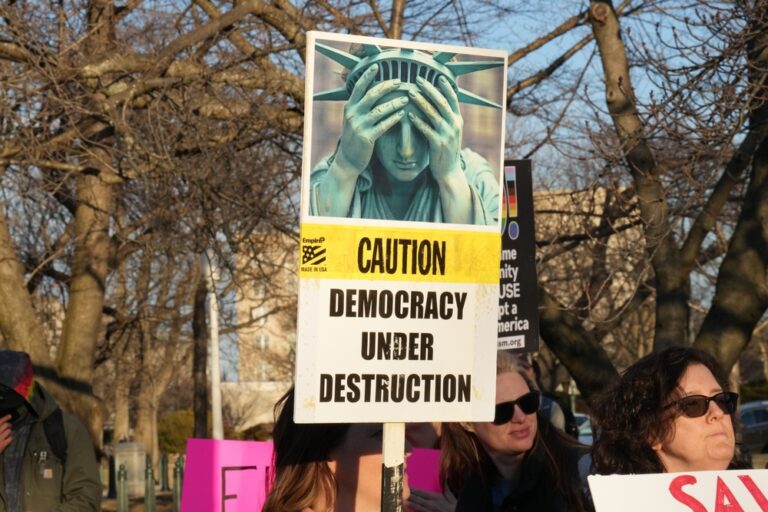
Authoritarian rulers frequently oppress minorities, attack the press, crush opposition, and use intimidation to escape responsibility. (Shutterstock image)
In 2025, I found myself talking with more young people than ever before in my community, all wondering if the United States was now under a dictatorship. I explained that the country has never actually had a dictatorship. Still, some presidents have been accused of acting like dictators, especially during crises or when they used their power forcefully. For instance, during the Civil War, Abraham Lincoln allowed arrests without quick trials, including for political opponents and those suspected of supporting the Confederacy. He also put the military in charge of certain areas, used military courts for civilians, called up state militias, and blocked Southern ports, sometimes without first getting Congress’s approval. Franklin D. Roosevelt, during the Great Depression, launched the New Deal and often used executive orders and emergency powers to act quickly. In World War II, Franklin Roosevelt made major wartime decisions, such as putting Japanese Americans in camps and making military plans, sometimes without Congress’s approval.
Otis D. Alexander
Dictatorship, a forceful style of rule with roots in Europe, has shaped history in dramatic ways. In ancient Rome, leaders were granted sweeping authority during emergencies, revealing how concentrated power can swiftly change the course of events. Ortega y Gasset, the influential Spanish philosopher, believed that when society is led by the “mass man,” someone who follows rather than questions, people often crave a commanding leader. In such times, the desire for stability and safety can tempt citizens to trade away their freedoms for the illusion of order.
Modern dictators stand alone at the top, wielding immense authority and making decisions without input from others. Often, their pursuit of power is personal, not driven by any grand vision. This unchecked control allows them to create laws at will, impose severe punishments, and command both government and military forces.
Such leaders skillfully manipulate public emotions and perceptions to tighten their grip on power. They mold beliefs, spread fear, and often disregard the well-being of others. By examining their tactics, we gain insight into the dangers of unchecked authority and are reminded why defending democracy and encouraging civic engagement are so vital.
Authoritarian rulers frequently oppress minorities, attack the press, crush opposition, and use intimidation to escape responsibility. In contrast, constitutional monarchies typically operate with restricted, inherited authority.
Benito Mussolini, founder of Italian Fascism, ruled Italy from 1922. He ended democracy in 1925 and became dictator. He promoted racism, especially against Jews, and used propaganda to support his policies. Mussolini’s regime expelled thousands of Jews and pushed for strict racial boundaries and colonial expansion.
From 1935 to 1939, chemical weapons were used in Libya and Ethiopia despite international bans. Around 250,000 Ethiopians died, showing the horrors of chemical warfare and the need for international agreements.
In 1939, Mussolini and Hitler signed the Pact of Steel, agreeing that Italy and Germany would help each other in war, showing their shared goals of expansion by force.
Adolf Hitler, born in Austria in 1889, wanted to unite all German-speaking people. He gained support by appealing to German anger and hopes, became Nazi Party leader, and rose to power as chancellor in 1933 and later as Führer in 1934. Hitler was grandiose, sought admiration, and lacked empathy. He pushed for territorial expansion and racial supremacy, held grudges, and rejected criticism. He led the persecution and murder of over six million Jews, Roma, homosexuals, and people with disabilities. Hitler reportedly had psychological disorders. He died by suicide in 1945, after which the Nazi movement quickly collapsed.
Joseph Stalin was born in 1878 in the Republic of Georgia. He became known for both the fear and admiration he inspired. Stalin often put his own interests first, controlled those around him, and changed historical records to make himself look better. As General Secretary, he gathered power, ordered mass arrests, and silenced his opponents. He was known for being suspicious and distant, and he often threatened those he saw as rivals. Propaganda made him appear flawless. Between the 1920s and his death in 1953, he pushed aside many ethnic groups. Stalin died at the age of 74.
Mao Zedong was born in 1893 and led China from 1949 until 1976. His Great Leap Forward resulted in a major famine and the deaths of millions. The Cultural Revolution, which aimed to strengthen communism, caused many people to be targeted, led to violence, and destroyed cultural traditions. Mao favored the Han Chinese, which caused harm to minority groups.
Hugo Chávez was born in 1954 and became a leader in Venezuela after a failed coup and time in prison. He started the Fifth Republic Movement and won the presidency in 1998 by promising change. Chávez was reelected in 2000, survived a coup attempt in 2002, and won a recall vote in 2004. He died of cancer in 2013 at the age of 58.
Nicolás Maduro was born in 1962 and became Venezuela’s president in 2013 after Chávez. Early in his time as president, the opposition won back parliament and tried to remove him, but they did not succeed. His second term started in 2019 after an election that many boycotted. Maduro has faced accusations of harming democracy and violating rights. He later apologized for using homophobic language against opposition activists.
When colonial rule ended, dictatorships began to spread in many parts of the world. In Africa, leaders such as Gnassingbe Eyadema, Charles Taylor, Sani Abacha, José Eduardo dos Santos, and Teodoro Obiang Nguema Mbasogo came to power.
Dictatorships take away people’s rights and create fear that lasts for generations. These leaders prioritize their own interests, silence anyone who disagrees, and target people who are vulnerable. People often believe promises of national pride and safety, but as these leaders gain more control, they break trust and hurt people’s mental health.
Many people stick with dictators because they are afraid and because these rulers tightly control what people know and learn. Yet, Jose Ortega y Gasset reveals that dictators thrive when their followers do not question them and are willing to give up their freedom for what seems like order. He believed most people go through life stuck in routines and rarely question how things are. Ortega y Gasset saw little hope in a world led by people who do not care, warning that without the guidance of scientists and thinkers, society would fall into darkness.
— Otis D. Alexander, PhD, a retired music teacher at St. Croix Central High School, has taught at the Sprauve and Guy Benjamin schools on St. John. He is an alum of the Harvard Graduate School of Education Leadership for Academic Librarians. He can be reached at od.alex1972@gmail.com.
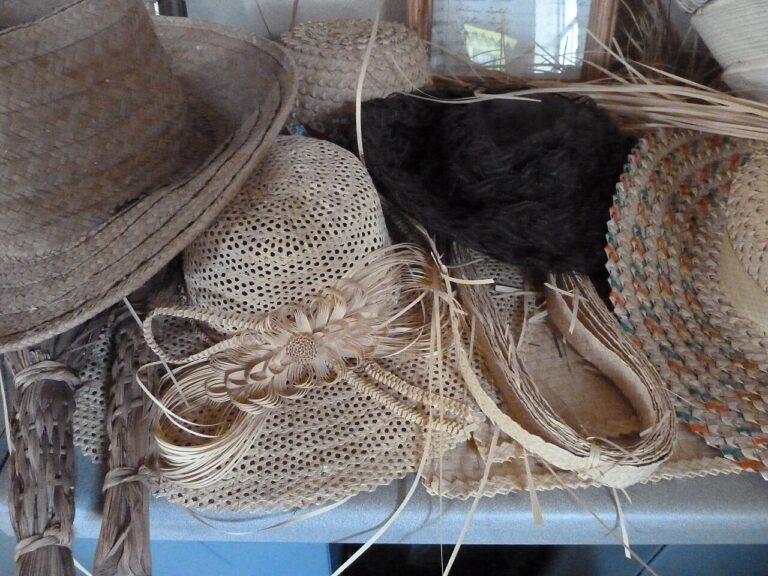
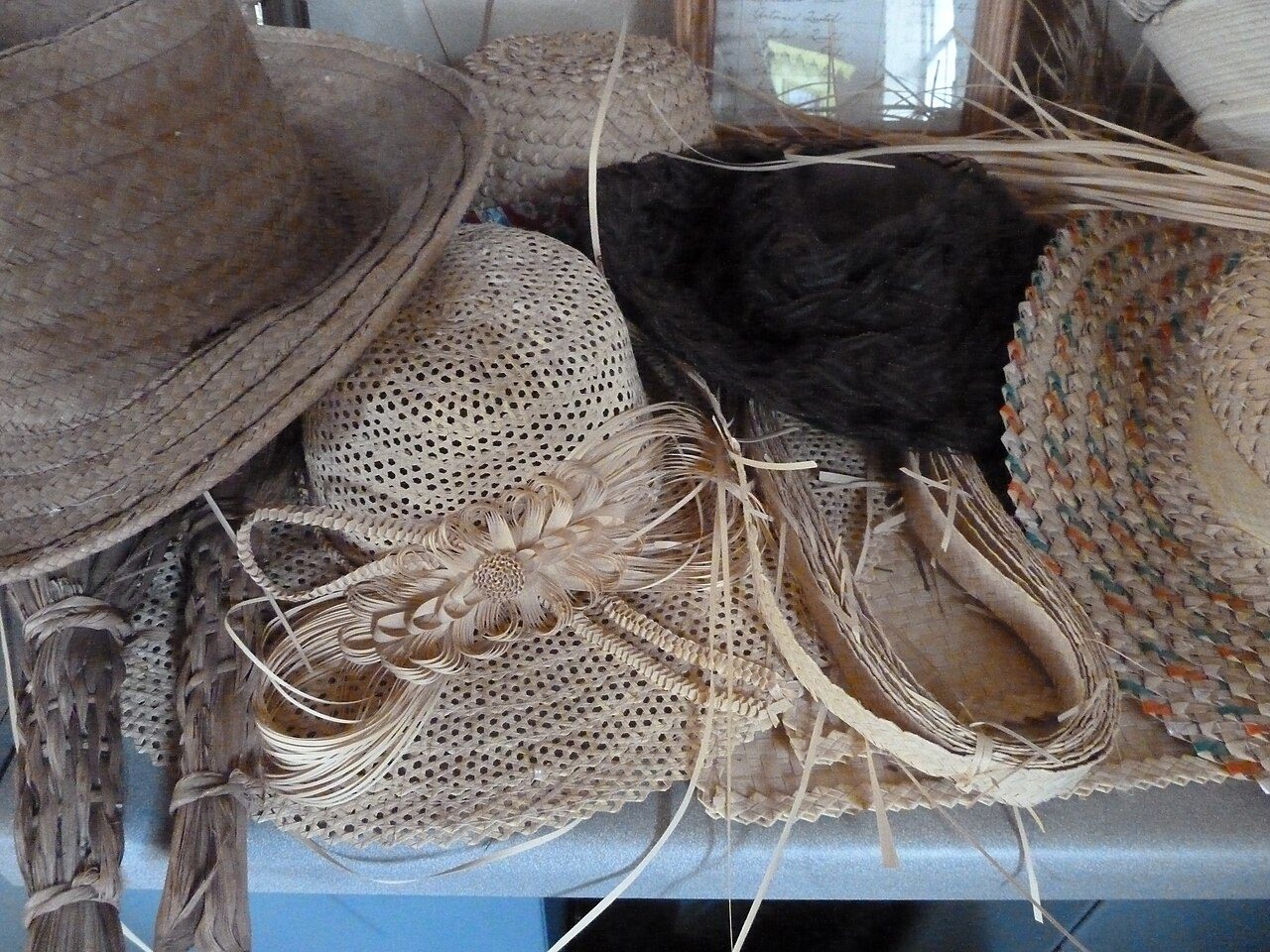
As a child, I remember the French women weaving our native palm tree fronds into bags, hats, placemats, and other culturally unique craft items. (Photo courtesy French Heritage Museum)
As a youngster, I loved traveling on the North Side roads of St. Thomas and smelling the thyme, parsley, celery, sweet marjoram, and other seasonal crops the French farmers grew. I remember visiting the farmer’s market in downtown Charlotte Amalie, or what is known culturally as “Round the Field” where you will see French and other farmers selling their produce and fish. Don’t talk about the North Side’s lovely mangoes, hanging down on the trees like Christmas lights! Oh my God! Just thinking about the French farmers brought back memories of my childhood.
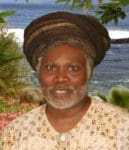
Olasee Davis (Submitted photo)
Then, we have Frenchtown where the fishermen would pull up their boats on the shore and sell fresh fish. In those days, St. Thomas was so different culturally, where one would help others in need, strangers, or just by being a kind person to others. The French people play such a major role in our history and culture of these islands. I went to school with many French natives of St. Thomas. Such names were Berry, Greaux, and LaPlace.
In this second and final series on the French history of St. Thomas, I will briefly talk about Carenage, where most of the French dialect was spoken historically, according to Dr. Arnold R. Highfield, who was a professor of linguistics and Social Sciences at the University of the Virgin Islands. Also, briefly, I will talk on the economy, education, religion, culture, music, dancing, courtship practices, and folklore of French descendants on St. Thomas. According to Highfield’s survey research in the late 1970s, the Carenageois, who lived in Frenchtown, were mainly “Caucasian apparent of French extraction.”
Other French said they are of Norman descent. When I was growing up on St. Thomas, the local Black population refered to our French citizens as “Frenchies,” “Frenchmen,” or “Chachas.” However, “Chachas” could be an offensive term to some French people, depending on the circumstances. How the term “Chachas” came about is uncertain. According to Highfield’s research findings, “Informants replied that it derives from the practice of Carenage fishermen who walked through the streets of town selling their catch and calling out the names of specific fish as they went along.”
I found this saying “Chachas” very interesting. On St. Croix, culturally speaking for donkey years, Crucian fishermen would blow their conch shells with a different sound indicating what type of fish they had to sell when they came to shore. If it was a yellow tail fish, the conch shell would have a particular sound for that species of fish. Although we are one Virgin Islands, we have some differences in the practice of our unique culture of the Caribbean region. On St. Thomas, “Chachas” was applied to a small fish caught by the French fishermen in the Carenage community in Frenchtown. As time went on, the term “Chachas” came to be applied to all Carenageois on St. Thomas.
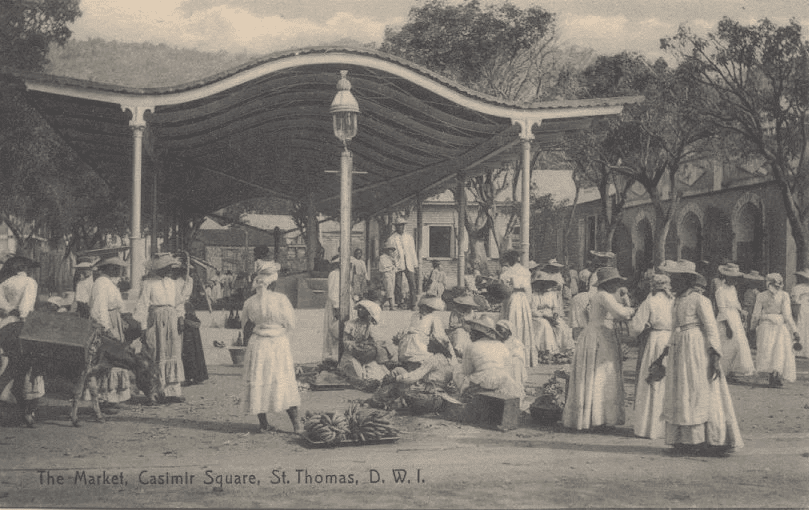
I remember visiting the farmer’s market in downtown Charlotte Amalie, St. Thomas, or what is known culturally as “Round the Field” where you would see French and other farmers selling their produce and fish. (Image courtesy St. Thomas Historical Trust)
Culturally speaking, the French in Carenage society in Frenchtown were a nuclear family. The men and women knew their roles, where men were the breadwinners whereas the women would take care of the house, such as cooking, etc. This uniqueness among the Carenageois in Frenchtown kept the cultural French dialect intact, passing it down to the next generations of native French Virgin Islanders. The Carenage community in Frenchtown has always loved the sea. Thus, many of the men were fishermen or seamen aboard ocean vessels.
Although fishing was a major part of the Carenageois economy back then, today it is different where many of them have their own restaurants, businesses, and are working in the private and public sector of Virgin Islands society. Some French serve as our senators. Nonetheless, when the French first arrived on St. Thomas from St. Barts, there was no former public education for their children.
In Highfield’s research of French education, he spoke about the challenges and difficulties French children encountered. This also impacted the children’s cultural ability to speak their native tongue. In both private and public school alike, English was the language of instruction. Spanish was the second language, and nothing was taught in French. In fact, French native children of the Virgin Islands were discouraged to use French in school.
As with education, worship was another challenge for the French in the early to mid-19th century on St. Thomas. Carenageois on St. Thomas became Catholics by religious persuasion. Without getting into further detail, Father Guillo, who was the Catholic priest for the downtown Catholic church, with his leadership helped to establish the St. Anne’s Chapel on top of Gallows Hill for the French communities. He spoke fluent French well and was very sympathetic to the Carenage community in Frenchtown.
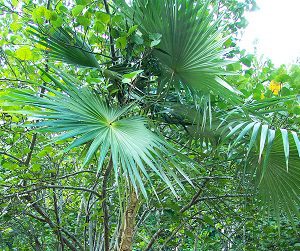
Tyre Palm (Coccothrinax alta) is native to the Virgin Islands. The palm is more abundant on St. Thomas and St. John and extremely rare on Croix. Traditionally, it was used for making hats, baskets, fish traps and brooms, just to mention a few items. (Photo by Dan Clark/Virgin Islands National Park)
Those of us who grew up on St. Thomas knew that fishing and farming were a major part of the French community. As a child, I remember the French women weaving our native palm tree fronds into bags, hats, placemats, and other culturally unique craft items. As times changed, so did many of the cultural events once prominent in the French community on St. Thomas .
Music and dancing were also a major part of the French tradition, especially during certain festival events, such as weddings and Bastille Day. The French music had a distinctive flavor. Some of the instruments were accordion, harmonica, violin, a drum, a metal triangle, and guitar, which were incorporated into the local scratch band sound, or quelbe music.
The courtship practices of the French long ago were like that of other cultures in the Caribbean. According to Highfield, who interviewed with Carenage in French town, the young man was only allowed to see the young girl in her parents’ home. Wednesdays and Saturdays were set aside for this. The young couple sat in the living room of the girl’s parents’ home under the watchful eye of a member of the family.
On the other hand, intermarriage between French and non-French was generally frowned upon, according to Highfield’s reserach. This happens usually with a French man and Black woman. However, the children of such unions were usually accepted by the French community if the couple remained in Carenage village. From what Highfield gathered in his research of the French on St. Thomas, indigenous folklore among the Carenageois was almost absent.
In his note he stated, “There are no stories or accounts dealing with the origin of the French community in St. Barts. Very few can relate anything at all specific about the immigration of the community to St. Thomas.” Highfield went on to explain why folklore was not a major element of the French culture on St. Thomas. Nevertheless, the French community has contributed greatly to the Virgin Islands history and culture. Therefore, the French community is part of the authentic kallaloo pot of the Virgin Islands history. In other word, we are one Virgin Islands!
— Olasee Davis is a bush professor who lectures and writes about the culture, history, ecology and environment of the Virgin Islands when he is not leading hiking tours of the wild places and spaces of St. Croix and beyond.
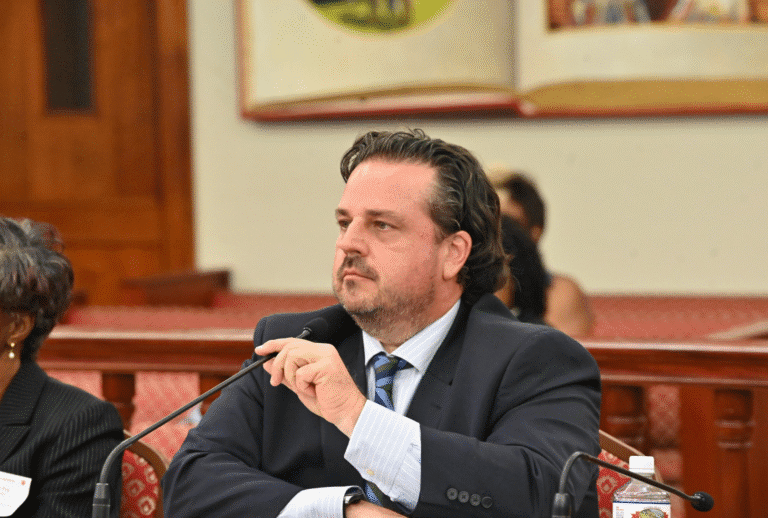
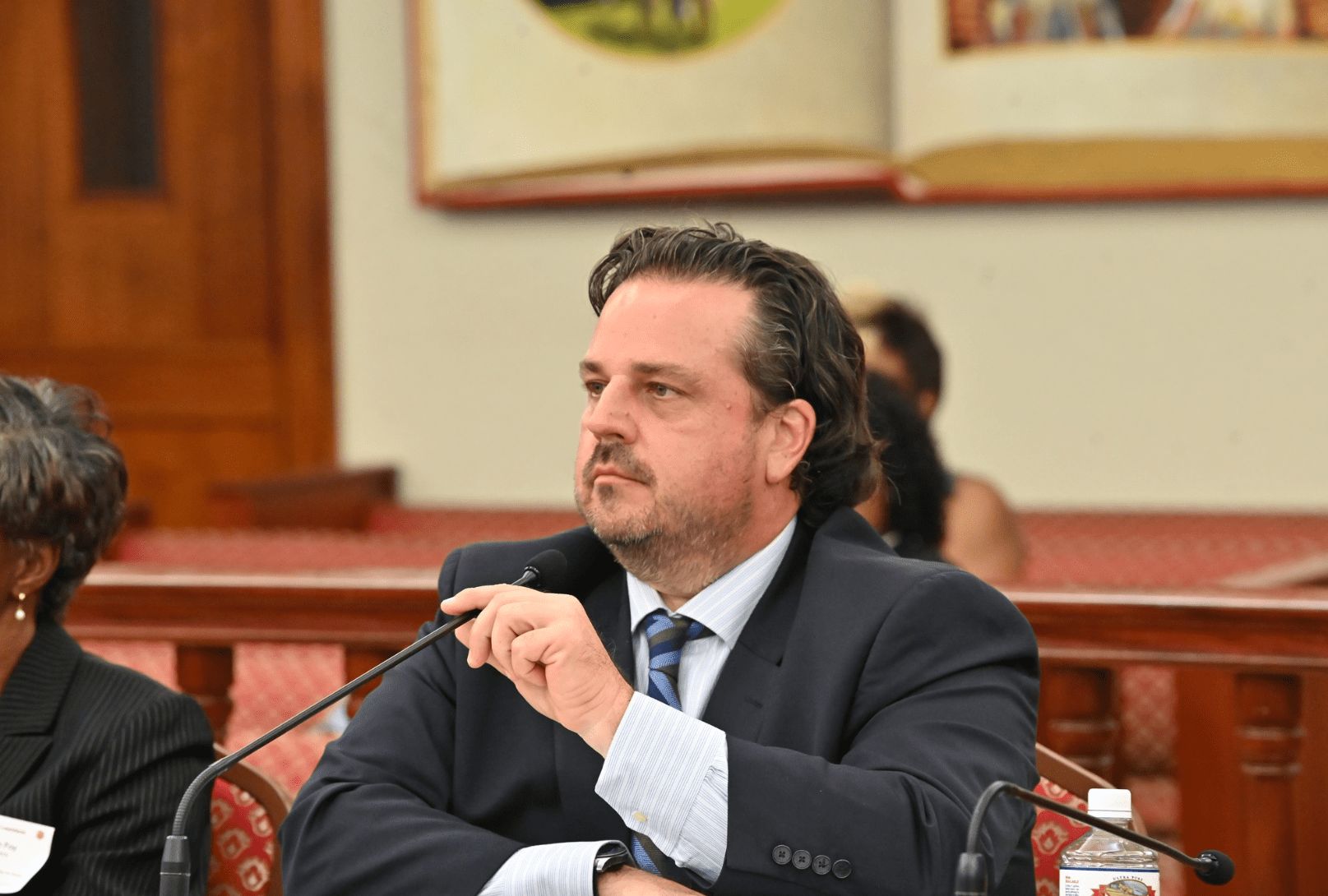
Mark M. Wiechnik, governor’s nominee to the Virgin Islands Historic Preservation Commission, testifies before the Senate Rules and Judiciary Committee on Thursday. (Photo courtesy Legislature)
The Senate Rules and Judiciary Committee met Thursday to review the governor’s nomination to the Virgin Islands Historic Preservation Commission and discuss a bill clarifying members’ term lengths.
During the hearing, committee members reviewed Mark M. Wiechnik’s extensive background in construction litigation and historic preservation, noting his work on restoration projects on St. Thomas, including the historic Hotel 1829, as well as two historic homes in New Jersey.
He cited his familiarity with local preservation regulations and emphasized his practical experience interpreting building codes and restoration standards. “Being involved in construction litigation will teach you what not to do,” Wiechnik said, explaining that his work has involved reading architectural plans, communicating with contractors, and ensuring projects comply with regulatory guidelines.
Senators pressed Wiechnik on persistent challenges, including high renovation costs, difficulty securing qualified contractors and financing, and the perception that commission processes can delay projects. Committee members urged the HPC to offer clearer guidance and hands-on support, especially for residents with limited resources, stressing the importance of developing support mechanisms for low and middle-income families.
Sen. Alma Francis Heyliger noted, “The public has a disconnect with this commission. That’s just the reality. They see it as bad, like anything to do with historic preservation is going to cost us money. We’re never going to get this thing done. They’re going to block me from getting projects.”
In response, the nominee’s proposals for proactive outreach, public education, and greater flexibility in preservation standards received broad support from the committee. “I think our goal should be to work with members of the public … and renovate some of these damaged and derelict properties, and to help them make the right choices, both for historic preservation and for their own budgets,” Wiechnik said.
The committee voted to advance Wiechnik’s nomination to the full Legislature for final confirmation.
Later in the session, lawmakers discussed a bill designed to clarify and unify the length of service for members of the Historic Preservation Commission.
Bill Number 36-0140 is a “straightforward measure,” said bill sponsor Sen. Avery L Lewis, describing it as a simple but necessary fix to ensure that “all members of the commission shall serve a term of two years.” He said the change would bring consistency and strengthen the commission’s ability to protect the territory’s historic and cultural resources.
Sean Krigger, director of the State Historic Preservation Office for DPNR, testified in support of the bill, explaining that the current mix of one and two-year appointments has caused administrative confusion. “The law isn’t very clear about the term of service for members of the Commission, and that has caused some confusion,” he said.
Senators asked how the new two-year term structure would be implemented, particularly whether current members would start new terms or continue their existing appointments. Krigger recommended that all sitting and future members begin fresh two-year terms when the measure takes effect. He said this “reset” would eliminate confusion and ensure all members serve under the same rules moving forward.
The committee also discussed maintaining full membership and avoiding vacancies during the transition. Lawmakers suggested extending terms to three or four years to improve continuity, but Krigger noted that two-year terms remain practical because current law allows members to continue serving until replacements are confirmed.
After final questions and minor technical adjustments, the committee voted to advance the bill. With their approval, both the bill and the nomination now head to the full Legislature, with Krigger noting, “We are working to preserve and protect our architectural and cultural heritage. It’s an honor to do so, and I thank you.”


 In his biweekly column, Langley Shazor speaks to issues important to men within the territory.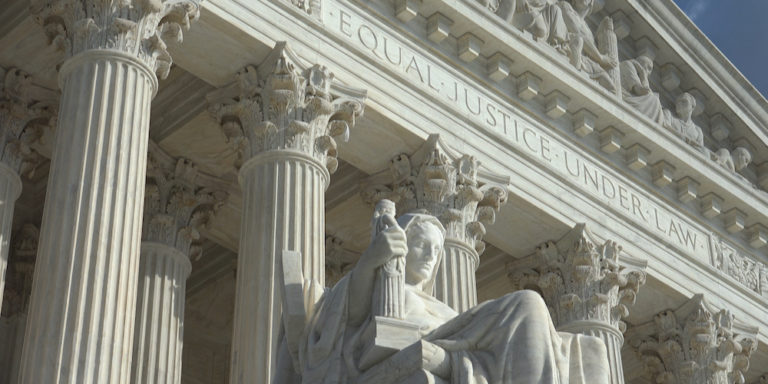
 In her biweekly column, “State of the Territory,” former Sen. Janelle K. Sarauw delves deeper into issues of concern for V.I. residents.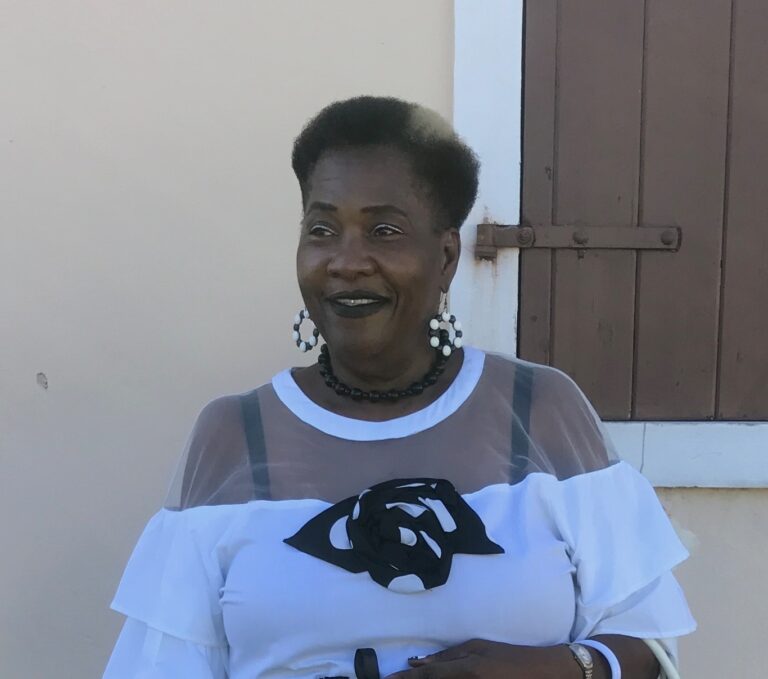
 “As we welcome our alumni, students, families, and the community to our campuses, Homecoming 2025 is about renewed connection, celebrating UVI’s legacy, and engaging everyone in our ‘Grand Momentum’ blueprint for the future,” said UVI President Dr. Safiya George, who is also a proud UVI alumna. “We invite everyone to join us for a weekend of celebration that embodies the heart and soul of UVI.”