The Virgin Islands Casino Control Commission announces that it has received an unmodified (unqualified) financial audit report from Bert Smith & Co., nationally recognized independent auditors, for the fiscal year ended September 30, 2023. This achievement marks the third consecutive year the Commission has received an unmodified audit opinion, reflecting its continued commitment to fiscal discipline, transparency, and sound financial management.
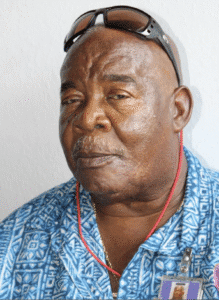
U.S. Virgin Islands Casino Control Commission (Submitted photo)
An unmodified audit opinion represents the highest level of assurance regarding an organization’s financial statements and speaks to its integrity and accountability.
Chairman and Chief Executive Officer Marvin L. Pickering praised the Commission’s staff for this accomplishment, stating: “Receiving an unmodified audit report for three consecutive fiscal years is a testament to the dedication, professionalism, consistency and the exceptional efforts of all employed at the Commission. The Commission’s team, consisting of our Executive Staff and Casino Inspectors, has taken full responsibility for transforming a once-troubled agency into one that is restoring and sustaining public trust and confidence.”
For Fiscal Year 2023, the Commission’s audit identified a single finding related to the absence of a formal written policy for the review and approval of certain transactions. Auditors noted, however, that the Commission is actively addressing this matter and confirmed that no improper or unauthorized transactions were identified.
Chairman Pickering further noted that this achievement coincides with the conclusion of the Commission’s 30th Anniversary celebration, marking three decades since its establishment in November 1995.
“This unmodified audit report is a fitting milestone as we conclude our 30th anniversary year. It reinforces our rededication to casino regulatory excellence—honoring our legacy while shaping our future. The results demonstrate that the Virgin Islands Casino Control Commission is fulfilling its mandate and is fully capable of providing honest, effective, and accountable regulation of the casino industry in the U.S. Virgin Islands.”
The complete Fiscal Year 2023 audit report can be found on the Commission’s website at www.casinocontrolcommission.vi.
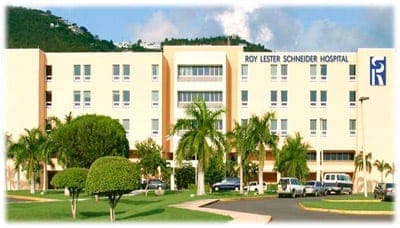
Schneider Regional Medical Center proudly announces that it has received full accreditation from the Joint Commission, following a comprehensive review of the organization’s clinical services and operations. SRMCofficially received its Letter of Accreditation on Jan. 9, confirming that the organization meets nationally recognized standards for healthcare quality, patient safety, and performance improvement.
Schneider Regional Medical Center (File Photo)
Joint Commission accreditation is widely regarded as the gold standard in healthcare. SRMC’s successful accreditation affirms that its clinical systems, infection prevention practices, leadership, and performance improvement processes align with-and in several areas exceed national benchmarks.
“Like many hospitals serving remote and island communities, Schneider Regional Medical Center operates under unique and very real challenges,” said Tina M. Comissiong, Esq., MPA, FACHE – Chief Executive Officer. “We are the sole acute-care hospital for our community, and we manage high patient volumes, workforce shortages, and limited resources-while still showing up every day and providing high-quality care to the people who depend on us. This full accreditation confirms that, even with the constraints, our systems, our clinical practices, and our standards of care meet-and in many areas exceed-national standards for quality and patient safety.”
SRMC acknowledges occasional extended wait times in our Emergency Department which are driven by periods of unusually high patient volume and volume surges. These delays are further compounded by a high number of inpatient boarders (currently 13), which limits available inpatient beds and prevents admitted patients from moving out of the Emergency Department, thereby restricting bed availability for patients awaiting evaluation and care. However, the community should be assured that SRMC provides excellent care.
“The challenges are real,” Comissiong added. “But what this accreditation affirms is that our teams are doing the very best possible work with the resources available-guided by evidence based standards and an unwavering commitment to patient care. I am incredibly proud of our physicians, nurses, clinical teams, and support staff-many of whom are from this community who serve with professionalism, compassion, and resilience,” Comissiong said.
“This recognition belongs to them, and it reinforces our commitment to strengthening care delivery and continuously improving services for the people of the Virgin Islands.”
SRMC extends special recognition to its Quality and Performance Improvement and Infection Control Departments, whose oversight, expertise, and diligence were instrumental in achieving accreditation. SRMC proudly congratulates Dr. Delphine Olivacce – Chief Nursing Officer, Venetta Winston, Dawn Grell, Sharmaine Stapleton. and Tanicia Penn-for their leadership, commitment to excellence, and unwavering focus on quality and patient safety.
As the primary healthcare provider for the St. Thomas-St. John district, Schneider Regional Medical Center remains committed to advancing quality, enhancing the patient experience, and building capacity to meet the evolving healthcare needs of the community.
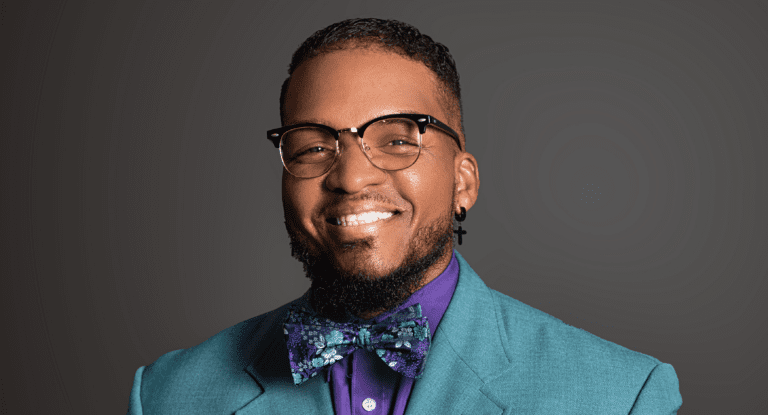
In his biweekly column, Langley Shazor speaks to issues important to men within the territory.
When we started talking about manhood last year, the goal was never to blame men for what they had become. The goal was to help us see what we had inherited and decide what was still worth carrying. The Myth Cracker Series pulled back the layers on ideas that sounded noble but quietly suffocated us. We faced the lies that told us real men do not need help, that our worth lives in our wallets, that leadership means dominance, that we must always have the answers, and that fatherhood ends when the bills are paid.
For many, that conversation was uncomfortable but necessary. We cracked myths that had been passed down like scripture, only to find that they were built more on fear than on faith. They were rules meant to protect us from vulnerability, but they ended up keeping us from connection. The work we began in those essays was demolition, pulling down the walls that kept us from becoming whole. But breaking something down is only half the story. The next step is building something better in its place.
That is what this new series, Breaking the Cycle, is about. It is not about pointing fingers or reliving pain. It is about reconstruction. It is about learning to live differently after unlearning what almost destroyed us. It is about healing the places those myths damaged, not just in our minds but in our relationships, our leadership, and our sense of self. The myths may have been cracked, but the rebuilding requires honesty, patience, and daily practice.
Many men know the exhaustion of trying to live up to outdated definitions of strength. We learned early that to be a man was to endure, to fix, to provide, and to never fall apart. When that became impossible, we did what men are taught to do best, we hid. We learned to perform stability even when peace was missing. We smiled through confusion. We numbed through pressure. We got good at functioning and terrible at feeling. By the time life demanded something deeper from us, we had already learned how to survive without connection.
That survival mode became a cycle, a loop of pride, fear, and silence passed from father to son. We loved in limited ways because that was all we saw. We led from control because it was safer than admitting we were unsure. We provided as a substitute for presence because we thought that was enough. Each of us became a mirror of what we were taught until someone decided to see differently. Breaking that cycle is not rebellion against our fathers. It is redemption for them and for ourselves.
To move from myth to manhood, we first have to confront the grief that comes with unlearning. There is loss in realizing that some of what shaped us was not true. There is sadness in recognizing that the men who raised us often did the best they could with what they had. There is frustration in discovering that we carried pain that did not belong to us but still lived in us. Healing requires us to acknowledge that the cycle is not just external, it lives in our behaviors, our responses, our fears, and our relationships. Breaking it starts when we stop pretending those patterns do not exist.
The truth is that real manhood does not begin with achievement. It begins with awareness. Awareness of who you are, what you believe, and why. Awareness of the places that still hurt and the ones that need forgiveness. Awareness of how your presence affects the people around you. Awareness is what separates boys from men, and men from leaders. Once you see the pattern, you can change it. You can choose healing over hardness, honesty over performance, peace over pretense.
As we move through this new series, each essay will explore what it means to build beyond the myths. We will talk about healing the father wound, that quiet ache many men carry from growing up without the emotional presence of their fathers. We will talk about leadership and what it means to guide others without losing ourselves in the process. We will explore the idea of emotional wealth, the kind of abundance that money cannot buy. We will talk about love, the kind that requires courage instead of control. And we will close with what it looks like to raise sons and daughters who see a version of manhood that is whole, honest, and balanced.
Breaking the cycle is not about perfection. It is about participation. It is about showing up differently, one decision at a time. It is about being willing to have hard conversations, to ask for help, to rest, and to reflect. It is about learning to lead from within instead of performing from without. It is about building a life that feels real, not just one that looks right.
Men who commit to this work will discover that freedom is not found in dominance or control but in self-mastery. It is the quiet power of knowing who you are and choosing not to be ruled by fear, pride, or the need for approval. That kind of strength does not need validation. It shows up as presence, integrity, and peace. It allows a man to love deeply, lead wisely, and live fully without losing himself in the process.
The next version of manhood will not be written by men who cling to myths. It will be built by men who are brave enough to heal. The cycle breaks when awareness turns into action, when accountability becomes culture, and when love becomes language. It breaks when we stop using survival as our story and start using healing as our foundation.
We have cracked the myths. Now it is time to build the men.
Editor’s Note: Opinion articles do not represent the views of the Virgin Islands Source newsroom and are the sole expressed opinion of the writer. Submissions can be made to visource@gmail.com.
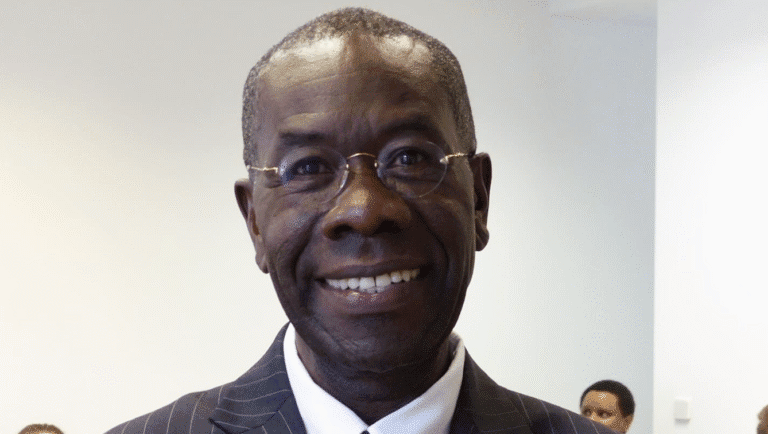
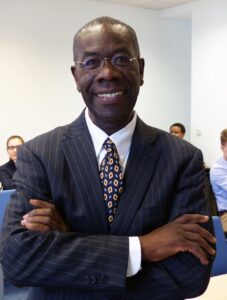
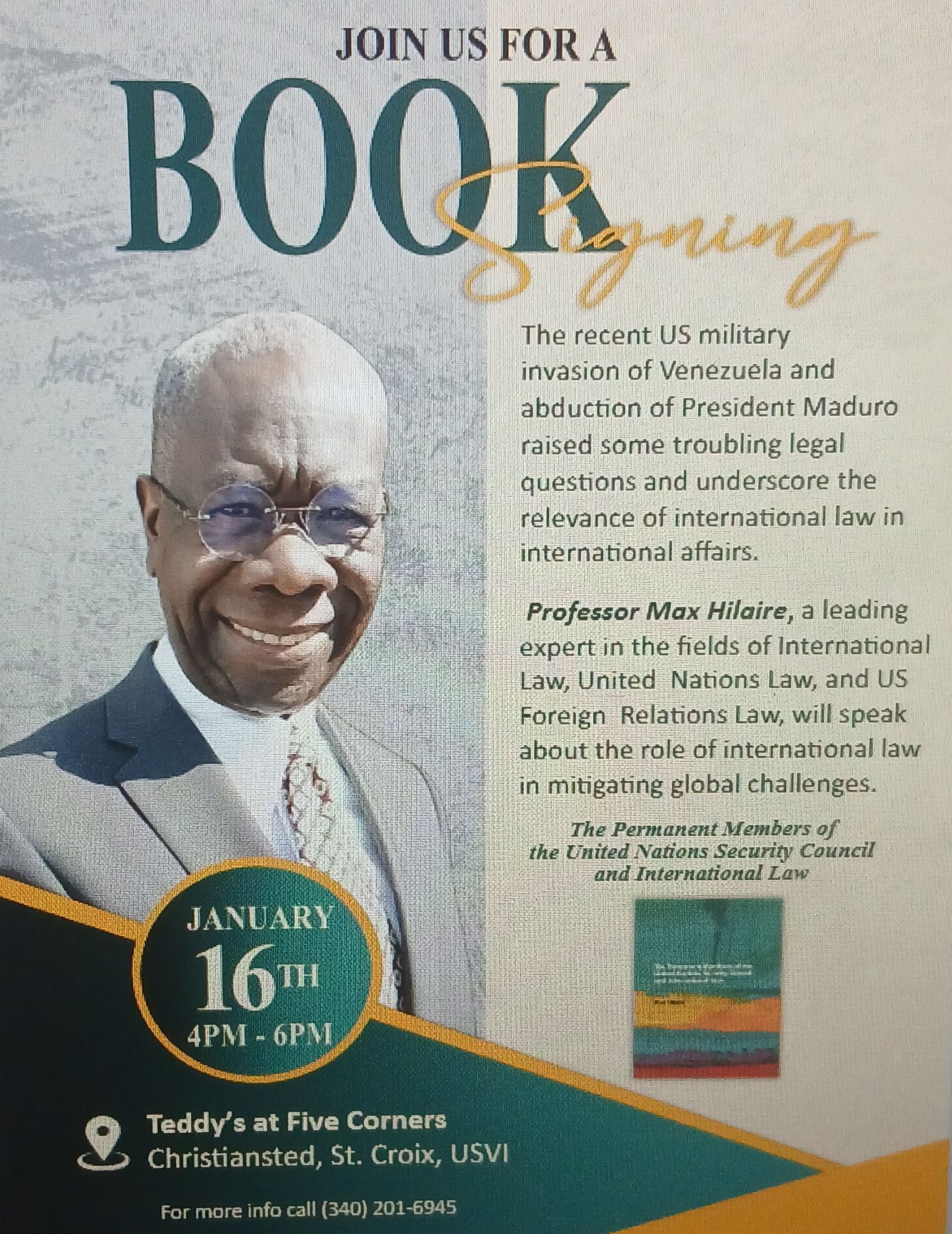
Leading expert in the field of International Law, Max Hillaire, PhD, who will be sharing his vast knowledge from 4 to 6 p.m. Friday at Teddy’s at Five Corners in Christiansted, said this week the U.S. Virgin Islands has little say in military maneuvers in and around the territory.
Hillare, who has spent the last week on phone calls with other experts discussing the situation in Venezuela, is expected to share his insights at Friday’s lecture and book signing.
Meanwhile, in an interview Saturday, he was clear, “The U.S. Virgin Islands doesn’t have much to say” in how the ports may be used for ongoing military operations in the region. “We are a colony.”
Referring to the U.S. warship dockings on St. Thomas and St. Croix, dubbed as “shore leave” by the territory’s administration and which caused consternation in some residents in recent months, Hillaire said, “The governor has cozied up to the president for whatever reasons.”
Of greater concern, Hilaire said, was the closure of airspace over the region on and around Jan. 3, the day of the invasion of Venezuela by the United States. “People could and may have died,” he said, due to medical emergencies that would have routinely seen them airlifted to larger medical facilities better equipped to handle their specific physical condition.
Less lethal, but equally concerning, Hilaire pointed to the obvious economic “chaos” born of the invasion, irrefutably breaching all international law agreements.
His chapter on Venezuela from his 2024 book “International Law and Contemporary Global Challenges” might be considered prescient by those less studied in Hilaire’s areas of expertise.
A few sentences from the book, which is a compilation of Hilaire’s lectures, that seem particularly prophetic are as follows:
“The political crisis in Venezuela has been brewing for more than five years; in fact, since the death of Hugo Chavez. It came to a head when the newly elected president of the National Assembly, Juan Guaidó, declared himself the interim president of Venezuela at a rally in Caracas. The whole matter appeared to have been staged, as Guiadó was in secret talks with the Trump administration and a few other Latin American governments to win their support.”
Hilaire goes on to say, “the Venezuela crisis raises several important international law concerns, and it has implication for other states and for international law in general.”
“Those concerns include how and if the humanitarian crisis in Venezuela might justify “the use of military force: and the legality of the use of force to oust the Maduro regime, unilaterally or collectively without the authorization of the [Unted Nations] Security Council.”
Closer to home, Hilaire could not say why military aircraft took off from St. Croix, thus invading the airspace closed to medical emergencies and tourists and others on the day of the invasion, but he did say with certainty, “We really don’t know where this … is going.”
Hundreds of mourners filled the Nazareth Lutheran Church in Cruz Bay Saturday to remember the life of Capt. Clifton Ashley Boynes. Boynes — a former vocational teacher and military veteran — joined his family doing business in the marine transportation industry and later started his own ferry services.
Boynes was 83 years old at the time of his death at the Roy Lester Schneider Hospital on Dec. 15, 2025. Funeral services took place steps away from the Cruz Bay ferry terminal, named after Loredon Lorence Boynes, his father.
The Boynes family, alongside the family of the late St. John business owner Rodney Varlack, pioneered ferry service between St. Thomas and St. John starting in the 1960s. Dozens of boat captains donned their formal dress uniforms to honor the man many viewed as a relative and a mentor.
His duties as operations manager once led to controversy, as Boynes became the subject of a federal trial in the mid 1990s, accused of polluting Cruz Bay Harbor. The case ended in an acquittal.
On the evening after the last rites, daughter Laurie Boynes spoke about a stern but loving father who shared his love of the sea with those who meant the most to him. “He taught many captains — Camile Parris, the former administrator; Clifton Boynes, Jr — his son, Calvin Thomas. My dad’s legacy and history is deeply rooted on St. John,” she said.
And although she was too young to study for her captain’s license, two-year-old granddaughter Chardonnay was also welcomed aboard, Laurie said. The daughter told the story of a toddler who insisted she could go along for the ride.
“Can she go to the bathroom by herself?” the grandfather asked. When told that she could, Boynes told his daughter, “Well, then put on her shoes — let’s go.”
The pair became regular partners at sea, Laurie said, and the child would be upset on the days when she could not go.
Ashley worked for Transportation Services — the family business — from the 1970s until 2004, and founded Inter Island Ferry Service in 1981. When failing health set in, family members stepped in to run the business.
And in his final days, the captain grew less talkative, Laurie said, but when he did speak, he told stories of his days at sea, “and he talked about his involvement in the marine industry.”
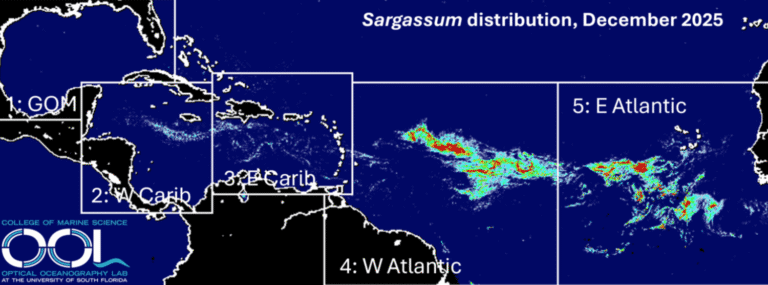
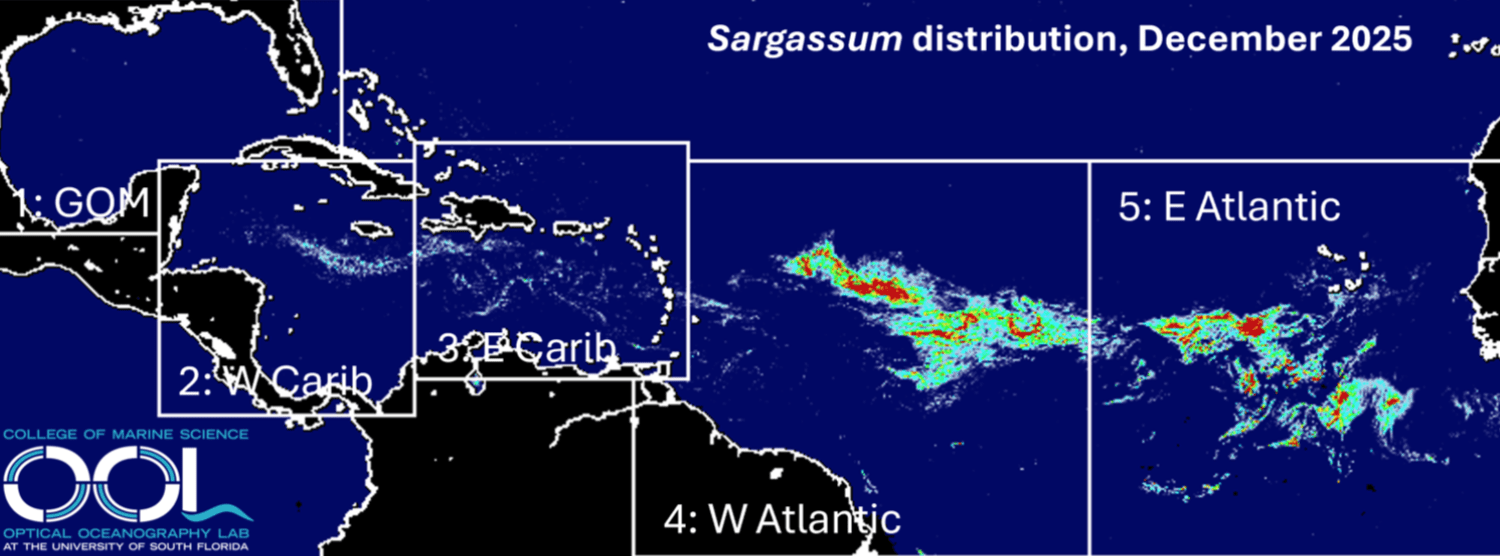
A satellite-based map of sargassum observed in December 2025. Darker red areas indicate higher concentrations. The University of South Florida’s Optical Oceanography Lab reported large sargassum masses in both the western and eastern Atlantic. (Photo courtesy University of South Florida Optical Oceanography Lab)
Sargassum levels across the Atlantic and Caribbean jumped sharply in December 2025, a wintertime surge that could set the stage for another major sargassum year in 2026. Unusually early beaching events are already possible in parts of the region, according to a recent report from the University of South Florida’s Optical Oceanography Lab.
“Compared to November 2025, a substantially increased sargassum amount was found in every region except the Gulf,” USF said. “In particular, the sharp increases in the eastern Caribbean Sea and western Atlantic led to record-high sargassum in December. The western Caribbean Sea also saw rapid increases, although the absolute amount was still low,” USF continued.
Why the December Increase Matters
For the U.S. Virgin Islands, the update is a notable early warning. USF researchers said that the seaweed will likely continue to increase, potentially leading to beaching events in parts of the Lesser Antilles in the coming months.
In the December bulletin, USF researchers noted that the Atlantic currently contains two separated large masses of algae — one in the western Atlantic and one in the eastern Atlantic — both attributed to local growth.
“The most striking result is that there are two separated large masses in the western and eastern Atlantic, both due to local growth and thus contributing to the record-high sargassum amount in December for the entire Atlantic,” USF explained.
USF also cautioned that some beaching may already have occurred, calling that timing “unusual” for this time of year and adding that early beaching could continue in the months ahead.
“Although the amount of sargassum in the Gulf will remain negligible, sargassum in the Caribbean will likely continue to grow, leading to beaching events along the Mexican Caribbean coast and some of the Lesser Antilles islands,” USF warned.
“Some beaching events may already have occurred. Such early beaching events are unusual but will likely continue in the coming months. Because of the rapid growth from November to December 2025 and because of the high sargassum amount in most regions, 2026 is likely to be another major sargassum year, with sargassum amounts possibly exceeding 75% of the historical values,” stated USF.
USF Researcher’s Perspective
The Source connected with Brian Barnes, an assistant research professor at USF, who provided additional information about the increase in sargassum and what it might mean for the USVI.
Barnes explained that, while the amount of seaweed reached record highs in December, the risk of beaching events across the USVI is still limited.
“The risk of near-term beaching events is still pretty low for the USVI,” Barnes confirmed. “Sargassum is the highest we’ve ever seen for this time of year in the eastern Caribbean at 0.3 million metric tons, but it’s still much lower than what we typically see during midsummer, which is about one million tons on average and can reach up to eight million, which occurred in 2025,” he said.
Speaking to the cause of early beaching events, Barnes offered the following details:
“The more sargassum in an area, particularly nearshore, the more likely that a portion of that will be transported inshore,” Barnes stated. “There’s more sargassum than normal in the eastern Caribbean for this time of year, and therefore, inundations have happened that are unusual for this time of year. Currently, there is not much sargassum near the USVI or in directly upstream regions that would imminently impact the islands.”
As the USF bulletin noted, there are currently two large sargassum masses in the western and eastern Atlantic. Barnes said that “The western Atlantic mat is more likely to impact the USVI,” and this could potentially occur in the coming months.
Sharpening the “Why” Behind Sargassum’s Big Years
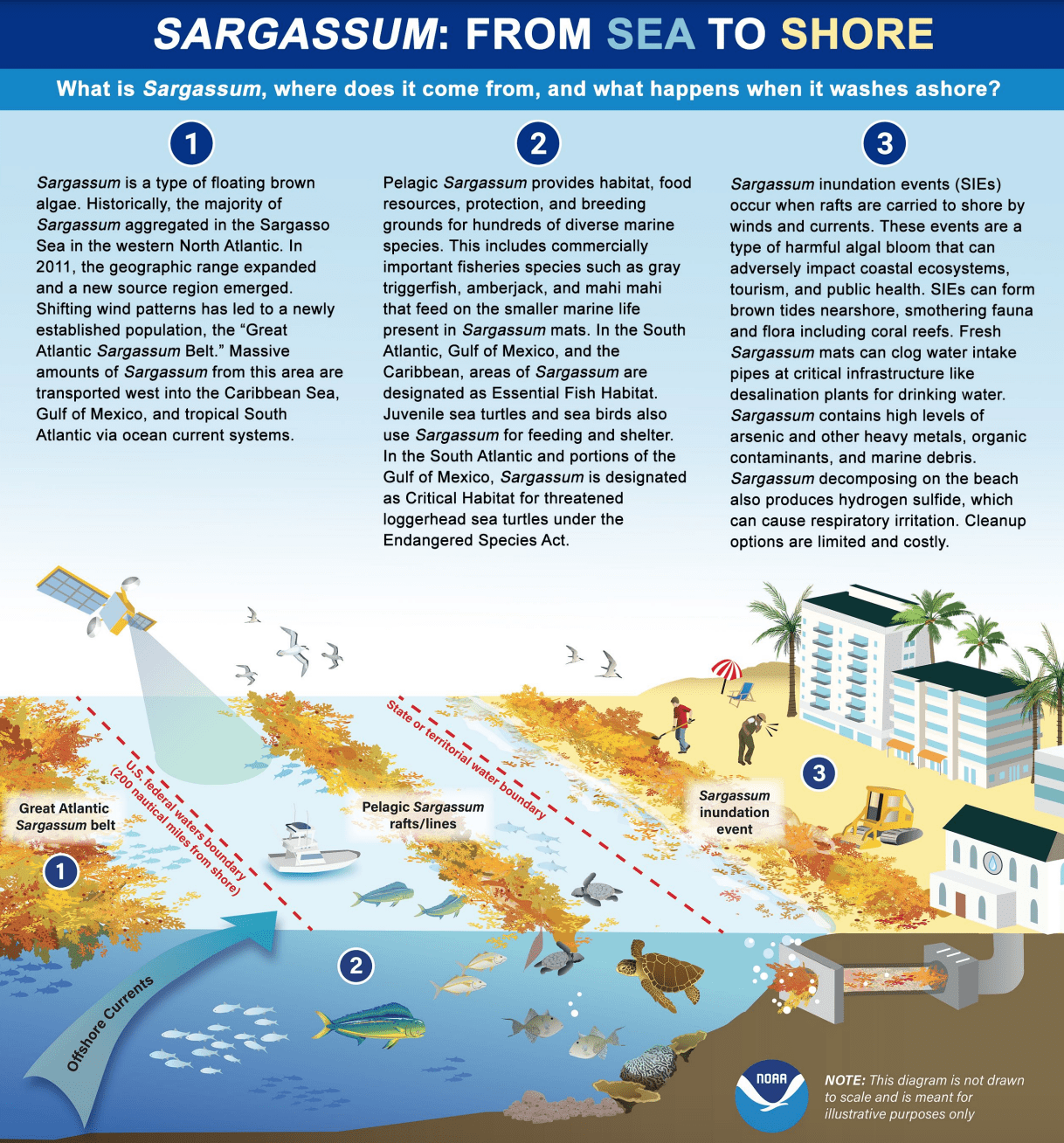
NOAA explanation about sargassum and inundation events. (Photo courtesy NOAA)
In addition to its December outlook, the USF team pointed to two recent Nature Geoscience studies that help explain what may be driving recent extremes in the amount of seaweed.
One research paper, titled “Equatorial Upwelling of Phosphorus Drives Atlantic N2 Fixation and Sargassum Blooms,” published in November 2025, noted that equatorial Atlantic upwelling can deliver “excess” phosphorus. The report explains that this can fuel nitrogen fixation, effectively boosting the nutrient supply in a way that helps support major sargassum blooms in the tropical Atlantic and Caribbean.
That same study also connects sargassum variability to climate patterns, including signals that could help improve year-to-year predictability of bloom intensity.
A second Nature Geoscience paper shared by USF, “Dramatic Decline of Sargassum in the North Sargasso Sea Since 2015,” published in December 2025, highlights a different Atlantic shift. In the report, the researchers found a dramatic decline of sargassum in the north Sargasso Sea since 2015, alongside changes in seasonal growth patterns. They suggest these basin-scale changes in abundance and transport may indicate a broader “regime shift” in how sargassum is distributed across the Atlantic.
“We posit that the north Sargasso Sea decline is due to reduced sargassum supply from a historical Gulf source region, possibly attributable to increasing sea surface temperatures and more frequent marine heat waves in the Gulf,” according to the paper. “Together, proliferation in the Great Atlantic Sargassum Belt and decline in the north Sargasso Sea may represent the beginnings of a regime shift in sargassum distribution.”
Follow Sargassum Updates and the Weather Forecast
Sugar Beach, located along the north shore of St. Croix, USVI, showed minimal sargassum on Jan. 9, 2025. (Source photo by Jesse Daley)
USF emphasized that the amount of the algae in the Gulf should remain small, but growth in the Caribbean is expected to continue, meaning beaching remains possible, particularly along the Mexican Caribbean coast and parts of the Lesser Antilles in the months ahead.
Finally, in addition to tracking the occurrence of sargassum, residents and visitors across the U.S. Virgin Islands are encouraged to continue monitoring the local weather forecast.
An 18-year-old man was arrested Friday after police found a firearm during a traffic stop on Main Street, the Virgin Islands Police Department reported.
Special Operations Bureau officers stopped a Honda Civic traveling westbound on Dronningens Gade Friday after observing the vehicle did not have a front license plate, police said. When officers approached the vehicle, they detected the odor of marijuana and ordered the occupants to exit, according to the police report.
During a search of the vehicle, officers found a firearm inside a bag, police said. Robert Guerrero, 18, who was a passenger in the vehicle, claimed ownership of the bag, the police report stated.
Guerrero was arrested on charges of possession of an unlicensed firearm and possession of ammunition. Bail was set at $75,000, police said.
Congresswoman Stacey E. Plaskett released the following statement after the U.S. House of Representatives voted to extend for three years the Affordable Care Act (ACA) enhanced premium tax credits that expired on Jan. 1:
Del. Stacey Plaskett
“Yesterday, as a member of the House Committee on Ways and Means, I spoke on the House floor in defense of affordable healthcare for all Americans during debate on the three-year extension of ACA enhanced premium tax credits (view remarks here). The Virgin Islands and other territories, which have never had access to ACA Exchanges, reveal a clear picture of what happens without these critical benefits.
“The Virgin Islands healthcare system is in crisis. Our hospitals operate under outdated Medicare formulas from 1982 and 1996, and face chronic shortages of supplies, medications, equipment, and staff—forcing patients to bring their own sheets and diapers to the hospital and doctors to pool personal funds to pay vendors. Hospital funding gaps exceed $34 million annually. More than 3,000 Virgin Islanders lost Medicaid coverage when supplemental funding ended, dramatically increasing the uncompensated care burden on our already struggling system. In Puerto Rico, similar Medicaid funding caps forced reliance on borrowing and debt that contributed to their 2017 bankruptcy. These territorial healthcare crises stem directly from inadequate federal support.
“Nationally, the expiration of enhanced premium tax credits has already doubled healthcare costs for 20 million Americans. When millions lose affordable coverage, the impact ripples across the entire healthcare system. Uninsured individuals turn to emergency rooms for basic care, driving up costs that are absorbed through higher premiums and hospital charges for everyone—even those with employer-sponsored insurance. This system-wide strain means all Americans pay more for healthcare, regardless of where they get their coverage.
“Seventeen House Republicans joined Democrats in voting for this extension yesterday, demonstrating bipartisan recognition that this is a healthcare crisis, not a partisan issue. More than 90% of Marketplace enrollees rely on these enhanced premium tax credits—without the extension, families across America are forced to choose between seeing a doctor or paying rent, between filling prescriptions or putting food on the table. The Senate must now prioritize the well-being of the American people over partisan politics and send this commonsense, bipartisan extension to the President’s desk.
“My commitment to ensuring healthcare equity for the Virgin Islands and all U.S. territories in federal programs, including Medicaid, Medicare, and SSI, remains unwavering. When the Affordable Care Act was enacted, the U.S. Virgin Islands elected to receive a lump sum Medicaid allotment rather than establish an ACA health exchange, a decision driven by the prohibitively high cost and overwhelming administrative and regulatory burdens that made marketplace creation unfeasible for all U.S. territories. I continue to advocate for policy changes that would allow territorial residents without employer-provided health insurance to access coverage through the Washington, DC Exchange (DC Health Link), with standard reimbursement for premium tax credits. This critical option would ensure access to comprehensive healthcare coverage where ACA Marketplaces do not exist and address a critical gap in the U.S. territories’ healthcare system.”
Virgin Islands Sports Ambassador Michelle Smith delivered a spectacular performance at the 2026 Clemson Invitational, rewriting the national record books and adding another major milestone to her rising career.
Michelle Smith
Smith shattered the Virgin Islands Indoor 800m record, clocking an impressive 2:06.72, a time that surpassed the previous national mark held by her sister, Mikaela Smith, who ran 2:12.62 on February 24, 2022. The achievement adds a powerful new chapter to the Smith family’s legacy in Virgin Islands track and field.
Smith’s success didn’t end with the 800m. She returned to the track as the third leg of her team’s 4×400m relay, contributing a strong split that helped secure the relay victory in 3:28.16. Breaking a national record is always special—but breaking one held by your own sister adds a unique emotional layer. Mikaela Smith’s 2022 record stood as a benchmark for Virgin Islands middle‑distance athletes, and Michelle’s performance shows the continued upward trajectory of the Smith family’s impact on the sport.
The Virgin Islands Track & Field community celebrates Michelle’s accomplishments and looks forward to what promises to be an exciting 2026 season.
The Virgin Islands shone brightly on the global stage as athletes Ayden Cintron and Rachel Conhoff delivered exceptional performances at the 2026 World Athletics Cross Country Championships held in Tallahassee, Florida. Competing against elite runners from around the world, both athletes rose to the occasion—each setting major milestones for themselves and for the territory.
Ayden Cintron
Competing in the U20 Men’s 8K, Ayden Cintron powered through the challenging course to finish in 28:21, establishing a new Virgin Islands U20 national record. His performance reflects not only his growing strength in distance running but also the steady rise of Virgin Islands athletes on the international scene.
In the Senior Women’s 10K, Rachel Conhoff delivered a standout performance of her own, clocking a personal record of 42:25. Conhoff’s PR reflects her ability to rise to the challenge on one of the sport’s most demanding stages. Her result adds another strong chapter to her career and reinforces her role as a key representative for the Virgin Islands in global competition.
The World Athletics Cross Country Championships is one of the most prestigious events in distance running, drawing top athletes from across the globe. Cintron and Conhoff’s achievements highlight the dedication of the athletes, their coaches, and the Virgin Islands Track & Field Federation in building a pathway for success on the world stage.
Rachel Conhoff
The territory celebrates their accomplishments and looks forward to what comes next for these rising stars. Their performances in Tallahassee will inspire the next generation of Virgin Islands distance runners.



 In his biweekly column, Langley Shazor speaks to issues important to men within the territory.