

Editor’s note: This is the second part of a continuing series about the redevelopment of Caneel Bay Resort. Part 1 can be seen by clicking here.
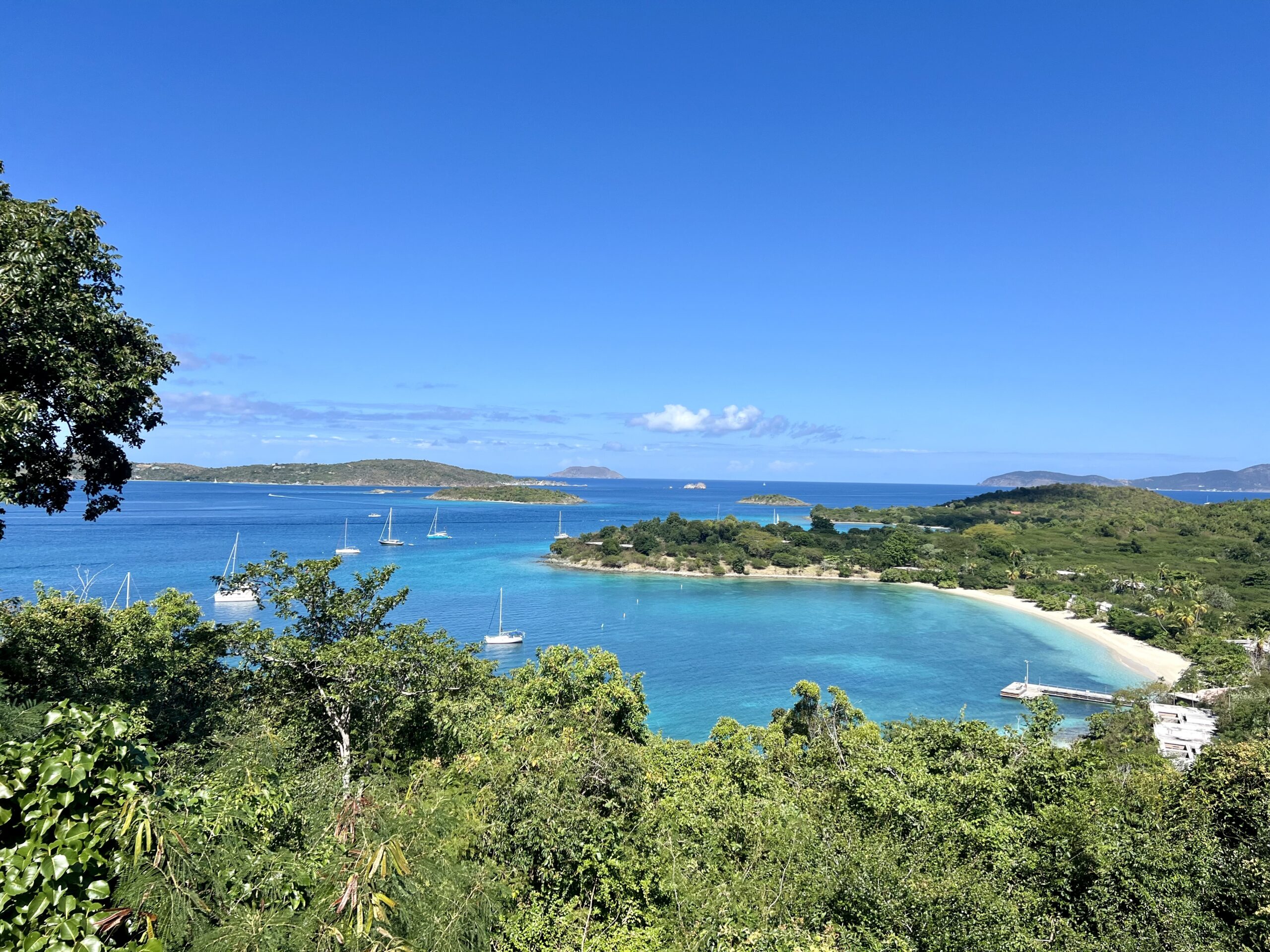
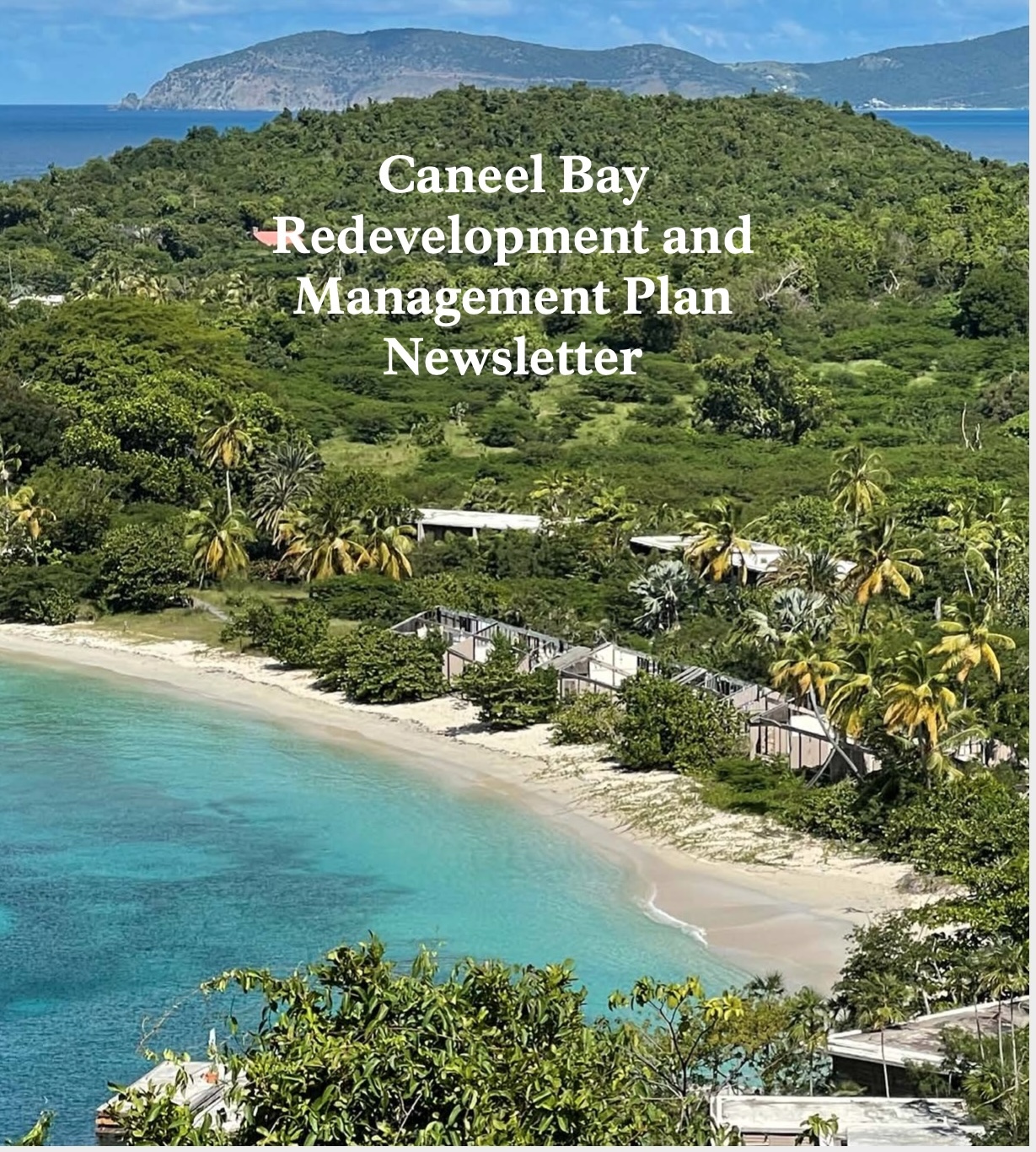
In May, the National Park Service changed its guidelines for rebuilding Caneel Bay Resort in the heart of the Virgin Islands National Park on St. John.
Under a former lease plan developed in 2023, half of the 150-acre property would remain in the hands of the National Park Service for conservation, recreation, and public education. The other half of the property would be developed as an eco-resort with restrictions on size and scope.
But with the current plan published in May 2026, the entire property would be under the control of a selected resort developer; the plan (in the form of a Request for Proposals) does not set restrictions regarding density or height of the buildings.
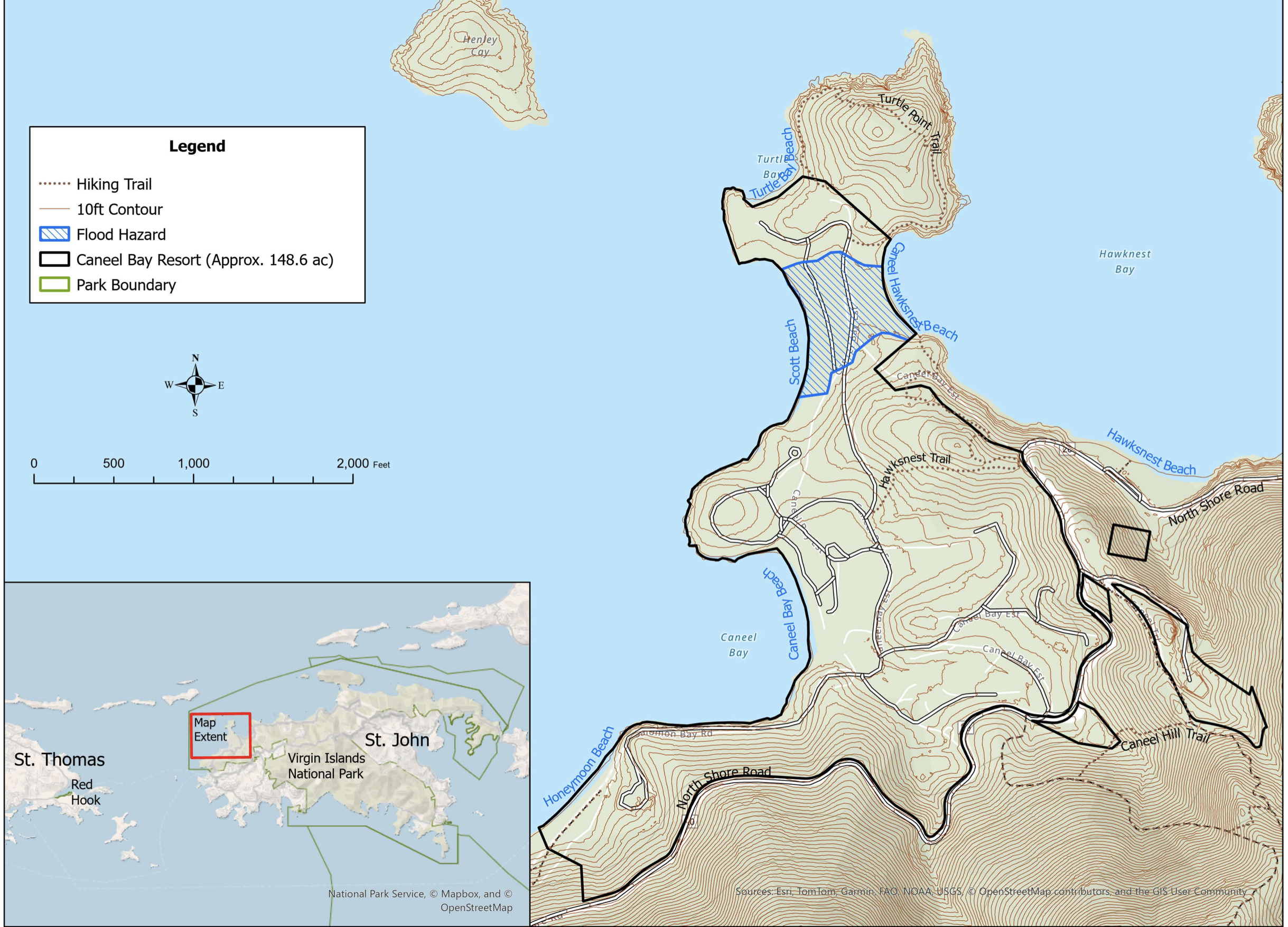
Under the plan developed in 2023, five acres would be available for day use by the public. The lease agreement would require the developer to provide public access to three of the property’s seven beaches; access to the other beaches was negotiable.
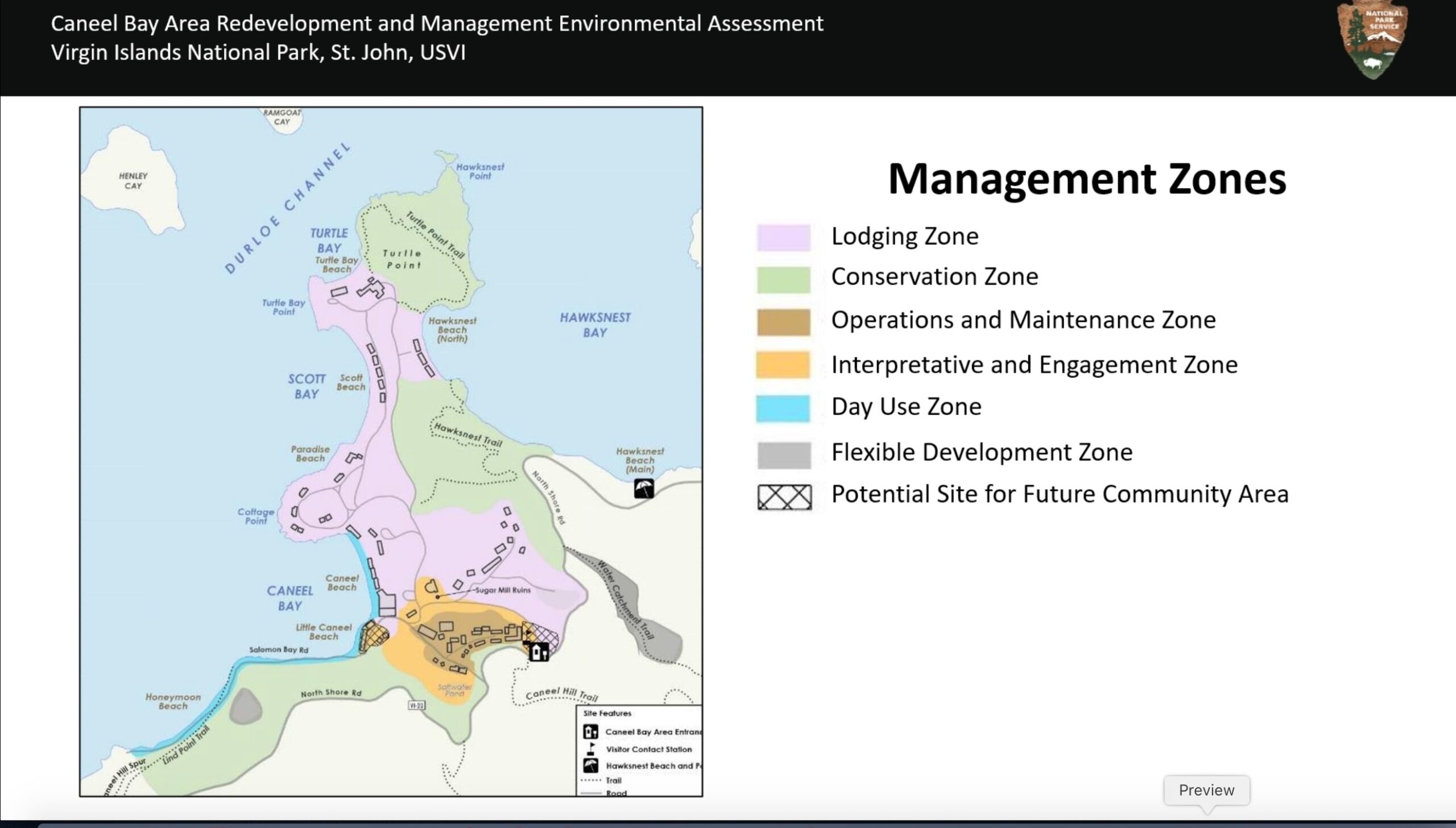
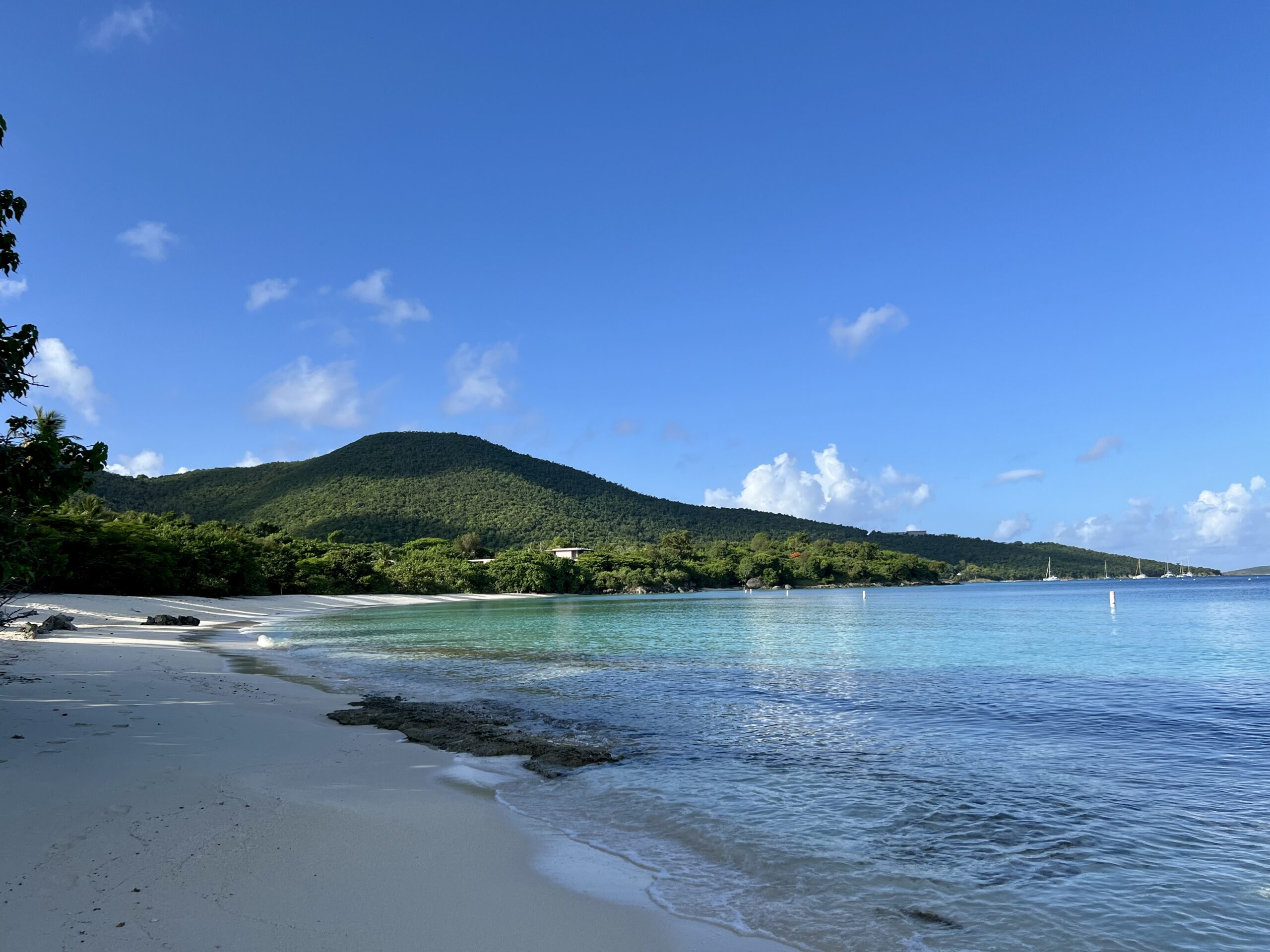
But the current plan includes no provision for public access to any beach or facility on the property. Virgin Islands residents and national park visitors might be restricted from all but the wet sand of a beach — the minimum requirement under territorial law.
What has caused the National Park Service to change the guidelines for development? How have some local leaders responded to the new plan? What can the public do to affect the future of Caneel Bay? This series begins to address these questions.
The Change in Plans for Caneel’s Development Is Part of a Much Vaster Change in Federal Priorities.
In recent weeks, some members of the public have criticized officials at the Virgin Islands National Park for withdrawing the 2023 plan. Their remarks are misdirected. The change of plans is part of a much wider pattern resulting from the 2024 election.
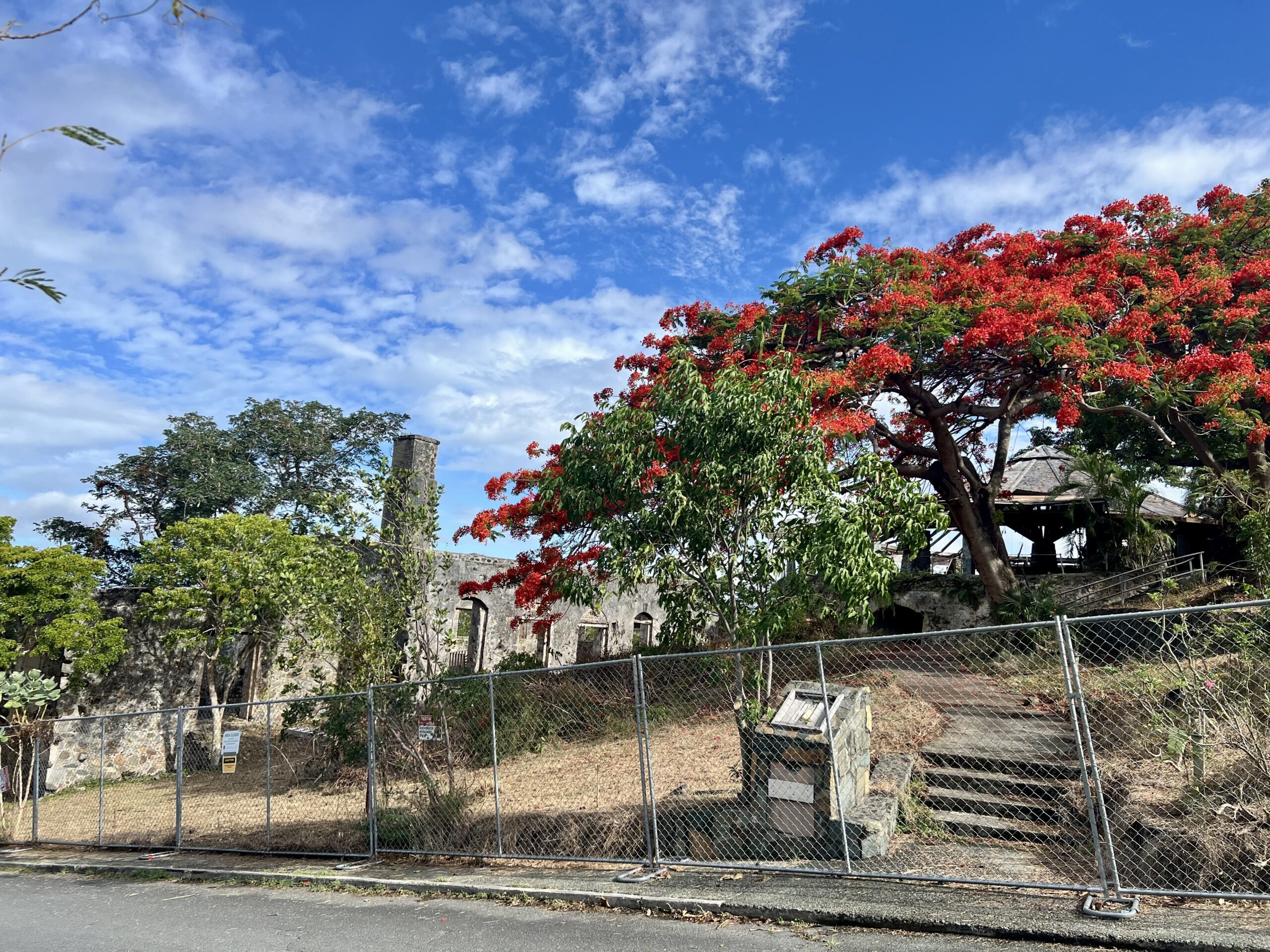
When Hurricane Irma destroyed most of Caneel Bay Resort in 2017 (during Trump’s first term), VINP officials denied having an influence over the resort’s future. Acting superintendents repeated the same phrase, “It’s above my pay grade.” But when information did become available from the Dept. of the Interior or the NPS regional office, VINP officials willingly shared it with the public.
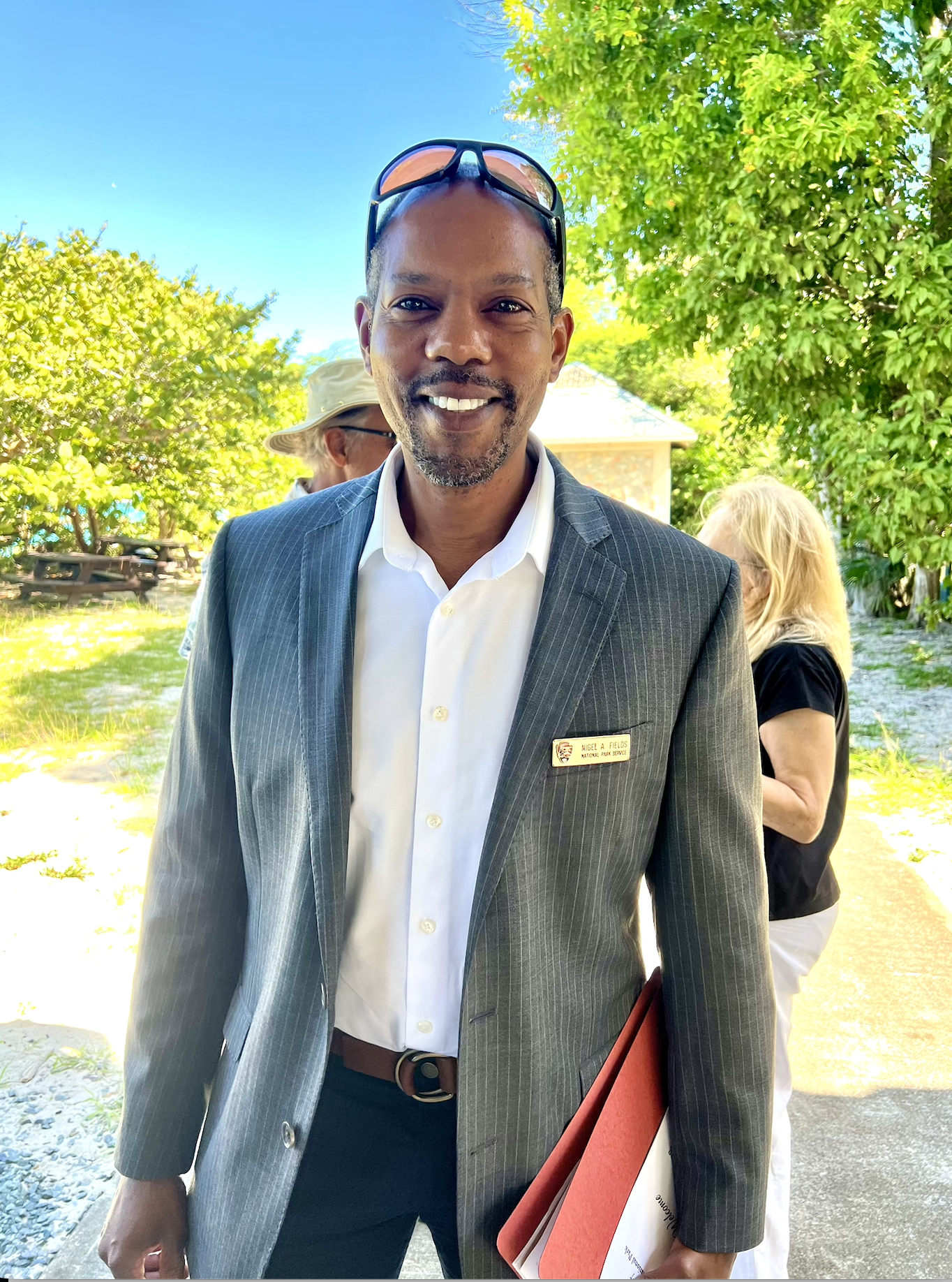
In 202O, the federal administration changed. Nigel Fields was appointed as the superintendent of the VINP, and information began to flow over the next several years as the NPS began a formal process for charting Caneel’s future.
Those days are gone.
National Park officials are now under new restrictions regarding communications with the public. (Most recently, they have even been prohibited from giving out information about fatalities that occur in parks without first getting clearance from the Department of the Interior.
Under recent guidelines set by the Trump administration, questions from the media concerning the Virgin Islands National Park must be sent directly to a communications office of the Department of the Interior.
Too often, queries go unanswered. Even a benign question about migrating birds did not receive a response.
In May, the Source did not receive a requested explanation for the decision to replace the 2023 Caneel plan. But National Parks Traveler did receive a response to a similar query in June.
The Department of the Interior’s response to them is printed in its entirety at the end of this article. Here is the opening sentence:
“Since July 2025, the National Park Service has worked with leaders from gateway communities in the U.S. Virgin Islands and reviewed the project to ensure consistency with Executive Orders, Secretary’s Orders and Department priorities focused on enhancing visitor experiences and expanding competitive investment opportunities.”
The keywords here are “consistency with Executive Orders” and “expanding competitive investment opportunities.”
Under the Trump administration, federal agencies are now seeking to monetize federal lands.
Conservation of public lands is no longer a priority. The Trump administration has sought to reverse a Biden-era “effort to elevate conservation as a use on par with oil and gas drilling, mining, and recreation”
This month, the government has sought to lease portions of the Arctic National Wildlife Refuge for oil drilling.
The National Park Service has been forced to relinquish property — including visitor centers, archives, museums, and law enforcement offices — to cut costs. As of March 2025, “the National Parks Conservation Association has assembled a list of 34 leases that the White House is unilaterally terminating, without having first obtained Congressional approval and without consulting experts who oversee local operations of the affected parks.”
The NPS faces budget cuts and staffing shortages. According to the National Parks Conservation Association, the NPS has lost 25% of its permanent workforce – more than 4,000 positions – since 2025.
In 2025, the Trump administration called for cutting the National Park Service’s budget by 25%, but a bipartisan bill passed in June limited cuts to 13%.
In its latest effort to prioritize commercial development over conservation, the Trump administration has removed federal protections under the Endangered Species Act.
So it’s important to see that what’s going on with Caneel Bay’s redevelopment is part of a much bigger pattern: conservation is being superseded by commercialization under the Trump administration.
Regarding the change in plans for Caneel, it is possible that the NPS/DOI was dissatisfied with the response from potential developers to the Request for Qualifications issued in 2024. The Park Service has never revealed how many responses it received or commented on the ability of the applicants to meet the project’s objectives.
It is also possible that the NPS has reevaluated the investment needed to develop the property, given present and future political, economic, and environmental conditions. The 2026 Request for Proposals is frank about the declining state of the infrastructure and a minimum investment of $100 million required to rebuild the resort.
Nigel Fields, who served as VINP’s superintendent when the 2023 Caneel plan was developed, said representatives from Washington and the regional office met with Virgin Islanders in 2022 as part of the planning process.
Their goal was to select a commercial operation that was profitable but also provided visitors with a deeper connection to a unique cultural and natural landscape.
“To what extent market and political forces changed and contributed to a different vision, I don’t know. At the time, we felt we had struck the right balance,” Fields said.
“There was no guarantee of ultimate success, but it put us on a path,” he continued. “There’s the potential to bring on risk if (the Park Service) doesn’t develop a plan with the community they will depend on.”
The Department of the Interior’s complete response to National Parks Traveler’s query about Caneel Bay:
From: Press, Interior <Interior_Press@ios.doi.gov>
Date: Mon, Jun 29, 2026 at 6:52 AM
Subject: Re: [EXTERNAL] Caneel Bay RFP questions
To: Kurt Repanshek <kurt@nationalparkstraveler.org>
Since July 2025, the National Park Service has worked with leaders from gateway communities in the U.S. Virgin Islands and reviewed the project to ensure consistency with Executive Orders, Secretary’s Orders and Department priorities focused on enhancing visitor experiences and expanding competitive investment opportunities. As a result, the National Park Service decided to cancel the Request for Qualifications process and resolicit the redevelopment of Caneel Bay through a broader Request for Proposals process. To accelerate redevelopment, the National Park Service did not issue a new Request for Qualifications and instead released the Request for Proposals without limiting eligibility to firms that participated in the earlier qualifications process.
Because the Request for Proposals process is ongoing, many project-specific details and redevelopment plans will be evaluated as proposals are received and reviewed. The National Park Service will assess all submissions in accordance with applicable procurement requirements and project objectives.
Office of Communications
U.S. Department of the Interior
NOTE: Part 3 summarizes responses from several public officials to queries about Caneel Bay’s redevelopment.