

Facing looming federal rebuilding deadlines, Virgin Islands lawmakers on Monday sharply questioned a proposal to build a 450-bed workforce housing complex in the St. Thomas neighborhood of Estate Bakkero, as residents warned the project would permanently alter their community.
Bill 36-0287 would rezone about 14 acres above the Frenchman’s Reef corridor from R-1 low-density residential to R-3 medium-density to allow “temporary” workforce housing, potentially for 10 to 15 years, for contractors working on schools, hospitals, roads and utility projects tied to billions of dollars in federal disaster recovery funding, which supporters say are already being delayed by the lack of dedicated worker housing.
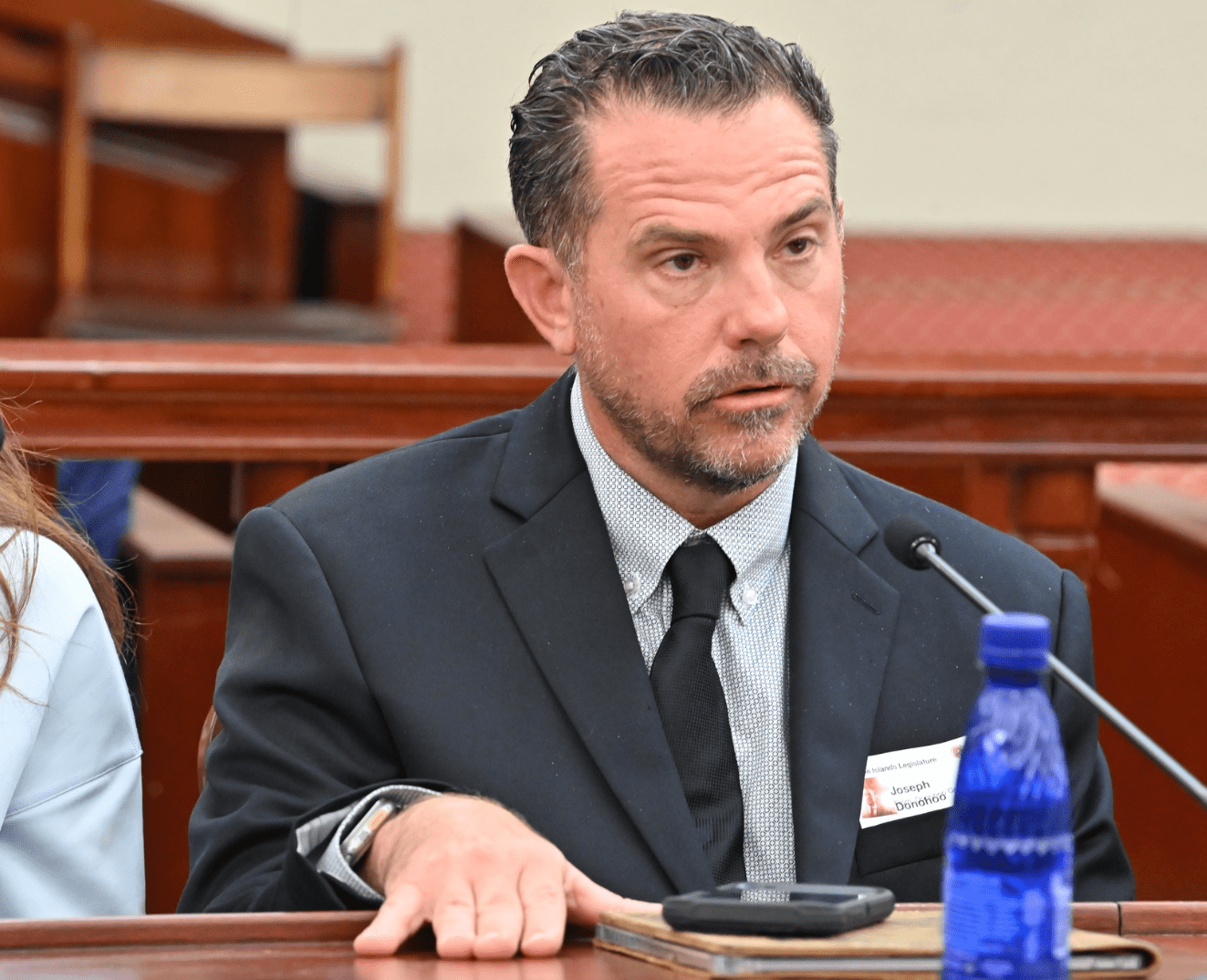
Developer Joseph Todd Donohoo and former Sen. Roosevelt David argued the territory risks falling further behind on recovery projects without housing for off‑island workers. But residents, backed by a recommendation from the Department of Planning and Natural Resources to deny the rezoning, said the proposal would place what some called an “industrial man camp” inside a long‑standing residential subdivision.
The proposal, filed by Sweetgrass Valley Properties LLC, calls for 18 one‑story buildings, including 15 housing buildings, 30 modular units and shared dining, laundry and fitness facilities to house approximately 450 workers involved in major public reconstruction projects.
Opposition came largely from residents of the surrounding subdivision, who argued the development would permanently change the character of the area and worsen existing traffic and parking problems tied to nearby resort activity.
Resident Kurell Sheridan told senators the trailer-style workforce housing would be “fundamentally incompatible” with the surrounding “low-density single-family residential” neighborhood.
Residents also pointed to subdivision covenants dating back to the 1970s that prohibit trailers and temporary residential structures.
“This is not about opposing progress, workforce housing or economic development, and it’s certainly not simply about property value,” Attorney Alia Felix-Blyden told senators, adding that “established residential communities should not become the default location for cost‑saving workforce housing solutions, simply because doing so may be cheaper or more convenient.”
Supporters of the proposal said the territory cannot afford further delays in rebuilding hospitals, schools and basic infrastructure while it searches for a permanent workforce housing solution. Donohoo told lawmakers that “currently, these projects are delayed due to the lack of workforce housing,” and said “none of the major contractors involved in the GVI rebuild have a housing component secured.”
He cast the camp as a temporary stopgap rather than his intended long-term use for the 14 acres. “My permanent intent once I bought the property was for housing for local residents,” Donohoo said. “In light of the delays in major capital projects, I decided to assist the territory and government by assisting in providing workforce housing … to preserve the federal funds appropriated to the Virgin Islands.”
He told senators he has “no intention” of keeping the workforce units once recovery work is finished and said he would support writing a removal requirement into law, adding that he eventually hopes to redevelop the land as a mixed-use housing community for residents.
David, serving as a consultant on the project, urged lawmakers to weigh neighborhood concerns against the risk of stalled recovery work and lost federal funding. “This is more than a housing shortage. It is a housing crisis,” he said. “Lawmakers have an opportunity of a lifetime to fix this and fix it now.” He called the proposal an example of serving “the greater good of the community,” warning that without timely progress, the territory could miss its chance to rebuild modern hospitals and other essential facilities with federal dollars.
Despite those arguments, DPNR recommended denying the rezoning request, saying the project could instead proceed through a Planned Area Development process under the site’s existing R‑1 zoning designation.
Some residents, however, argued that moving the project into a PAD process would not fix the underlying conflict and could be used to push it through with less scrutiny. “A PAD should not become a mechanism to accomplish indirectly what cannot be justified directly through rezoning,” Felix‑Blyden told senators.
Territorial planner Leia LaPlace-Matthew also warned lawmakers that zoning changes cannot override private neighborhood covenants and said the dispute could ultimately end up in court. “The zoning law cannot be used to abrogate or annul covenants,” LaPlace-Matthew said. “This may end up being a court matter.”
Several senators signaled opposition to placing the workforce housing complex in Estate Bakkero even while acknowledging the territory’s broader housing shortage.
Sen. Franklin D. Johnson said the project did not fit the area’s residential scale. “I really can’t support this,” he said. “It just don’t feel right … People spend a lifetime building these homes.”
Sen. Kurt Vialet also rejected the proposal, warning that “temporary” projects often become permanent in the Virgin Islands. “In the Virgin Islands, temporary becomes permanent,” he said, citing a decades-old “temporary” housing facility he said was never removed. He urged officials to consider government land or existing facilities instead of rezoning an established subdivision.
Sen. Avery Lewis did not endorse the Bakkero project but stressed that reconstruction will bring disruptions across the territory. “With this rebuilding, we are going to feel some pain,” Lewis said. “We’re going to have to make some tough, unpopular decisions.”
Despite those concerns, lawmakers broadly agreed the territory must find ways to house both residents and the off-island workers needed to rebuild hospitals, schools, roads and utilities.
No votes were taken during Monday’s Committee of the Whole hearing. Bill 36-0287 will move to a future legislative session, where lawmakers will weigh neighborhood protections against the need for housing tied to billions of dollars in federal recovery projects.