

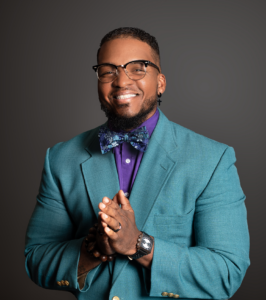
 In his biweekly column, Langley Shazor speaks to issues important to men within the territory.
For generations, men have been told that asking for help is a sign of weakness. From childhood, we are taught to stand on our own, solve our own problems, and hold our emotions in check. We are praised for endurance, not expression, and told that independence defines our worth. That lesson becomes so deeply ingrained that by adulthood, many men would rather struggle in silence than risk being seen as incapable. But the truth is that this belief has done more harm than good. It has left too many men tired, lonely, and disconnected from the very people who want to see them win. The myth that real men do not need help has robbed us of the freedom to be human.
The origins of this myth are easy to trace. It came from a time when survival depended on resilience. Men were expected to be providers and protectors in a world that offered little room for vulnerability. Asking for help was a luxury few could afford. Over time, that survival mindset became a badge of honor. Men began to measure their worth by how much they could carry alone. The more they endured, the stronger they believed themselves to be. But somewhere along the way, strength and isolation became confused. We forgot that even warriors need rest, even leaders need counsel, and even the strongest shoulders can break under too much weight.
The world we live in today no longer requires men to suffer to prove their value, yet many still do. The pressure to appear capable has turned into quiet misery for countless men who carry burdens in silence. They lead families, manage businesses, and show up for others, all while ignoring the cracks forming inside. They say they are fine because it feels safer than saying they are not. They bury stress, grief, and exhaustion beneath a smile because vulnerability feels like exposure. But pretending to be unbreakable is not strength, instead it is survival dressed as pride. And it keeps too many men from experiencing the peace that comes with connection.
Asking for help is not weakness; it is wisdom. It takes maturity to recognize when you have reached your limit and humility to reach for support. The man who asks for help is not saying he cannot handle life but he is saying he values himself enough to want better. Help can look like therapy, conversation, mentorship, or even community. It can be the brother who checks in, the pastor who listens, or the partner who refuses to let you disappear behind your silence. Every man needs a place where he can lay down the weight without feeling judged for it. Strength is not the ability to carry everything, it is the courage to know what should not be carried alone.
The truth is, independence without connection becomes emptiness. A man who isolates himself in the name of strength eventually finds that there is no one left to witness his effort or share in his success. We were not designed to live disconnected. We were built for brotherhood, for family, for community. Even the strongest men in history, from kings to revolutionaries, had someone they leaned on. Help is not a threat to masculinity; it is a companion to wisdom. It reminds us that no one grows in isolation.
The refusal to seek help also costs us emotionally. When men deny themselves vulnerability, they deny others intimacy. Relationships begin to suffer when pride stands between two hearts trying to connect. Women interpret silence as indifference, children interpret distance as disinterest, and friends interpret withdrawal as arrogance. In reality, many men are simply overwhelmed but afraid to say so. The myth of self-sufficiency convinces men that emotion is weakness and dependence is failure. But what if we changed that narrative? What if strength included the courage to be honest about what hurts?
Healing starts with honesty. Saying “I need help” is not an admission of failure but the doorway to freedom. It breaks the illusion that men must be invincible and replaces it with the truth that we are all evolving. Every man who chooses to seek help teaches the next generation that strength can coexist with softness. He models what real courage looks like instead of the kind that hides pain, but the kind that faces it. When boys grow up seeing men talk through struggles, seek advice, and care for their mental health, they learn that manhood is not measured by how much you can carry, but by how wisely you carry it.
We have to stop glorifying isolation and start celebrating vulnerability. It is time to normalize conversations about stress, burnout, and mental wellness among men. It is time for us to redefine what being “strong” really means. A man who prays, cries, and reaches out is no less masculine than one who grits his teeth and pushes through. In fact, he is healthier. He is more balanced. He is more whole. Because he understands that self-reliance is powerful, but self-awareness is transformative.
The myth that real men do not need help keeps too many of us trapped in cycles of exhaustion. It convinces us that silence equals strength when, in truth, it often signals pain. The world does not need more men pretending to be fine; it needs more men willing to be real. We are at our strongest when we are honest, supported, and connected. Asking for help does not make you less of a man. It makes you a man who has nothing left to prove and everything still to build.
So, let us lay this myth to rest. Let us teach our sons that asking for help is not surrender, it is strategy. Let us remind ourselves that needing support does not make us broken; it makes us human. Real men do not stand alone to prove strength. Real men build bridges, form brotherhoods, and lead by example. And the ones who ask for help? They are the ones strong enough to make it farther, wiser enough to bring others with them, and humble enough to know that none of us were ever meant to do this alone.
Editor’s Note: Opinion articles do not represent the views of the Virgin Islands Source newsroom and are the sole expressed opinion of the writer. Submissions can be made to visource@gmail.com.