

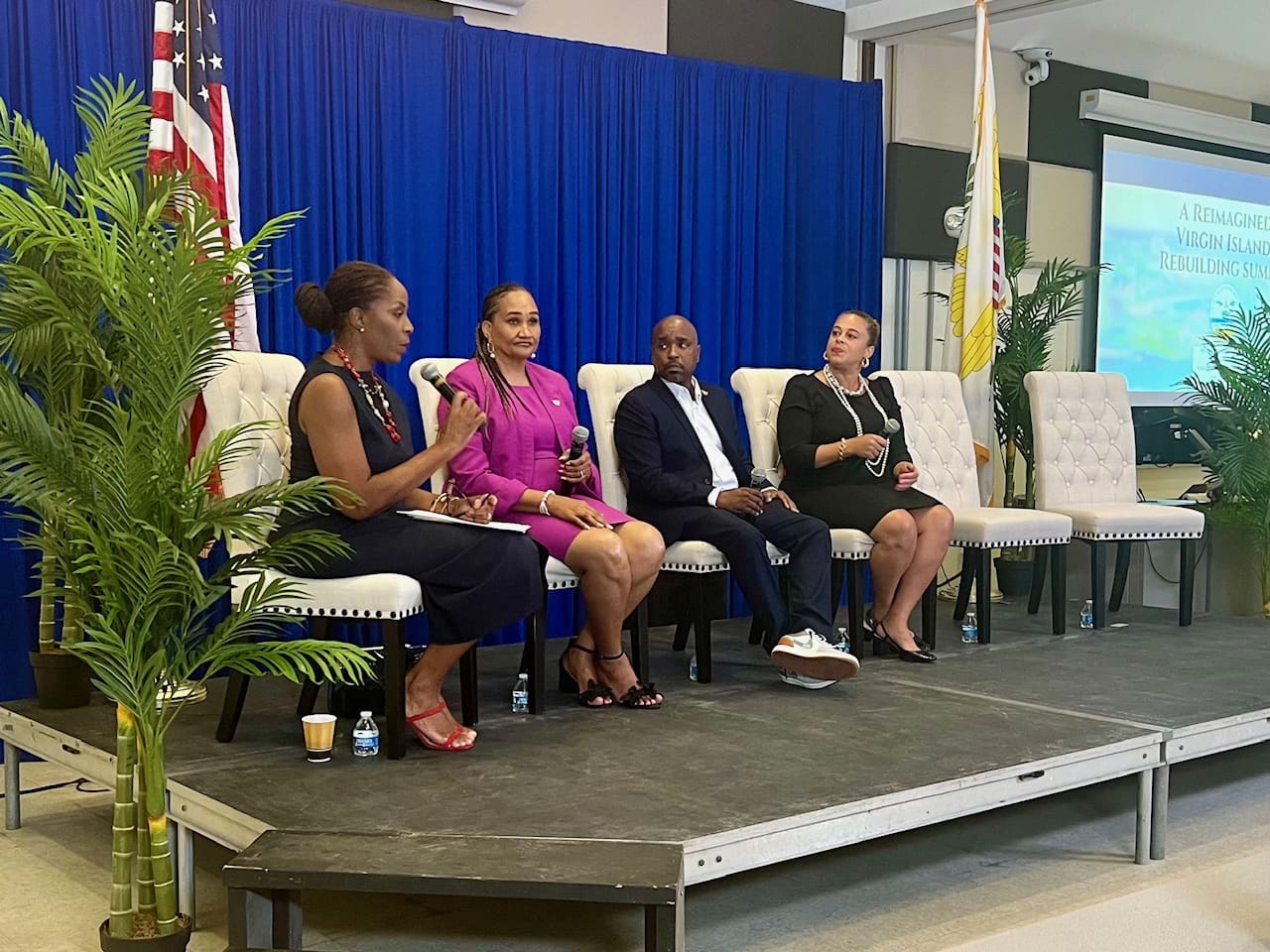
This week’s discussions between local and federal stakeholders on the recovery progress nearly seven years after hurricanes Irma and Maria highlighted a stark reality: the efforts are impacted by a lack of communication, collaboration and time.
The dialogue took center stage at a stakeholder summit on St. Croix hosted Wednesday by Delegate Stacey Plaskett, who, a day earlier, accompanied U.S. Secretary of Energy Jennifer Granholm on a tour of the V.I. Water and Power Authority’s Randolph Harley Plant on St. Thomas. Granholm stressed the necessity of a long-term plan, while Plaskett emphasized the importance of adhering to that plan to ensure energy reliability in the territory. Developing a comprehensive strategy for ongoing recovery was also a focal point of Wednesday’s panel, which also brought to light significant capacity issues, as many federal recovery projects are being managed by the same personnel tasked with daily operations.
“While we’re doing the rebuilding, we still have to sustain the same infrastructure,” Education Commissioner Dionne Wells-Hedrington said during the first of three panels Wednesday. “The employees are doing all this work at the same time, which can cause lags in productivity or workflow, and we’re looking at how to speed up that process internally.”
Public Works Commissioner Derek Gabriel also highlighted a significant challenge in the recovery efforts: various departments are competing for the same resources, such as contractors and developers. Despite this setback, Gabriel acknowledged that the new “bundling” approach by the Office of Disaster Recovery has been a game-changer, saving time and efficiently pooling resources.
Gabriel emphasized that the key issue now is improving collaboration with the federal government. He explained that projects funded by multiple federal grants face differing compliance and reporting requirements, complicating the process.
“The conversation has to be elevated to a higher level to address challenges that can’t be resolved two or three tiers down,” Gabriel stated.
Federal Relationships and Deadlines
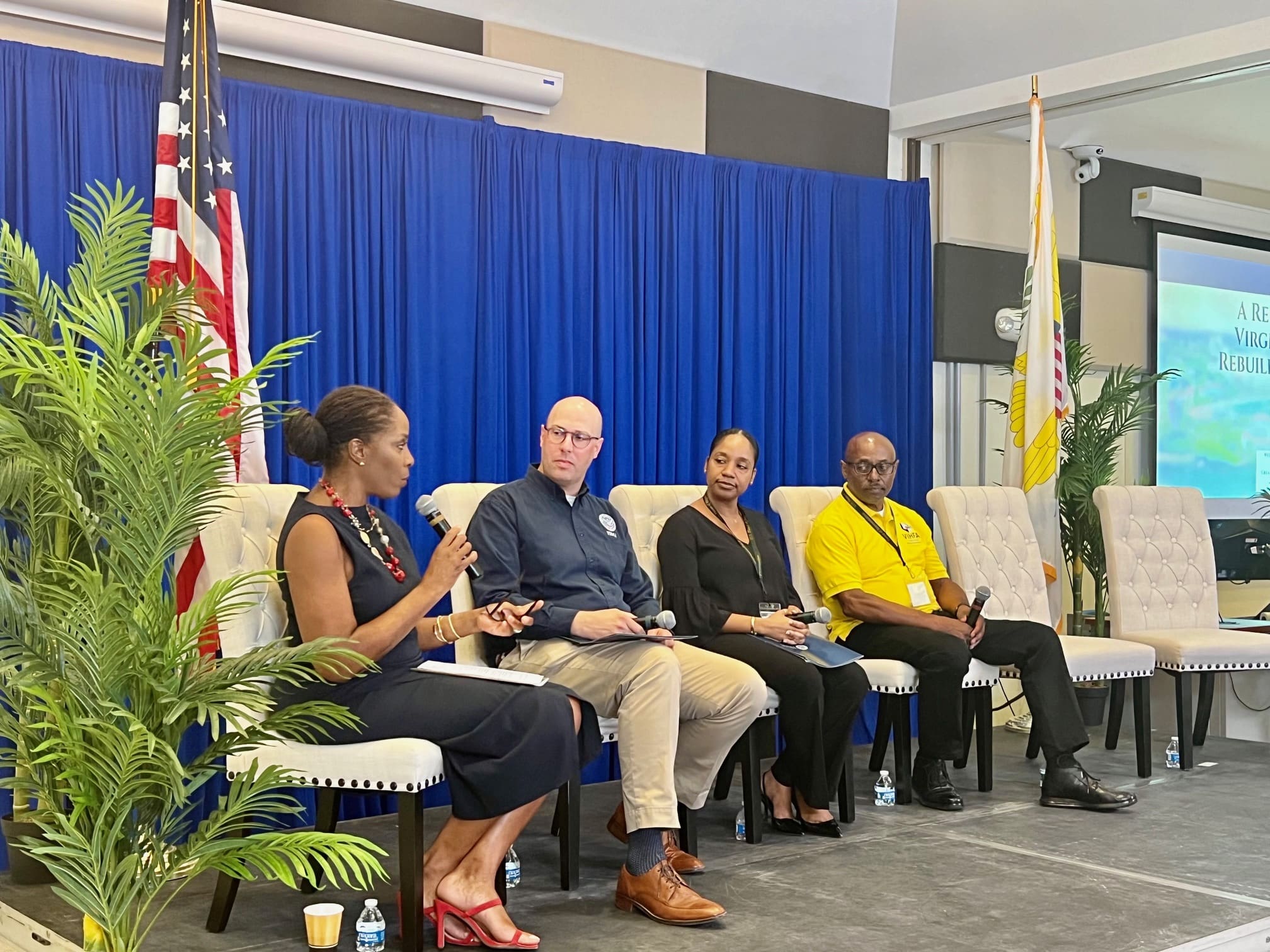
Federal representatives on a second panel emphasized that technical assistance is one of the greatest resources available to the territory, but it’s only effective if sought out. “Time isn’t a luxury, especially when facing funding deadlines,” said Robert Pesapane, director of FEMA’s Public Assistance Division. He highlighted the importance of using best practices from other states and territories and asking for help when needed. “The last thing we want to do is recoup the funds,” he added.
However, V.I. Housing Finance Authority Executive Director Eugene Jones Jr. warned that timely decisions are crucial to prevent losing these funds. Jones, who is in his third month at VIHFA, noted a reluctance to make decisions, with officials often hesitating over interpretations of federal rules and regulations. “We get bogged down by a ‘may’ versus a ‘should,'” he said. “Everyone wants to work in black and white, but no one is trying to navigate the gray area for the territory’s best interest.”
Plaskett added that the federal government aims to be “hands-off” with the territories to avoid appearing “parochial or colonial,” but shared that one of the most common complaints from both local and federal levels is the frustration with multi-tiered processes involving multiple agencies, permits, and potentially unnecessary steps.
Plaskett stressed that streamlining and effective communication are key, along with having the flexibility to discuss and request waivers and adaptations to funding requirements and deadlines when necessary.
Spending Funds in a Way That “Makes Sense”
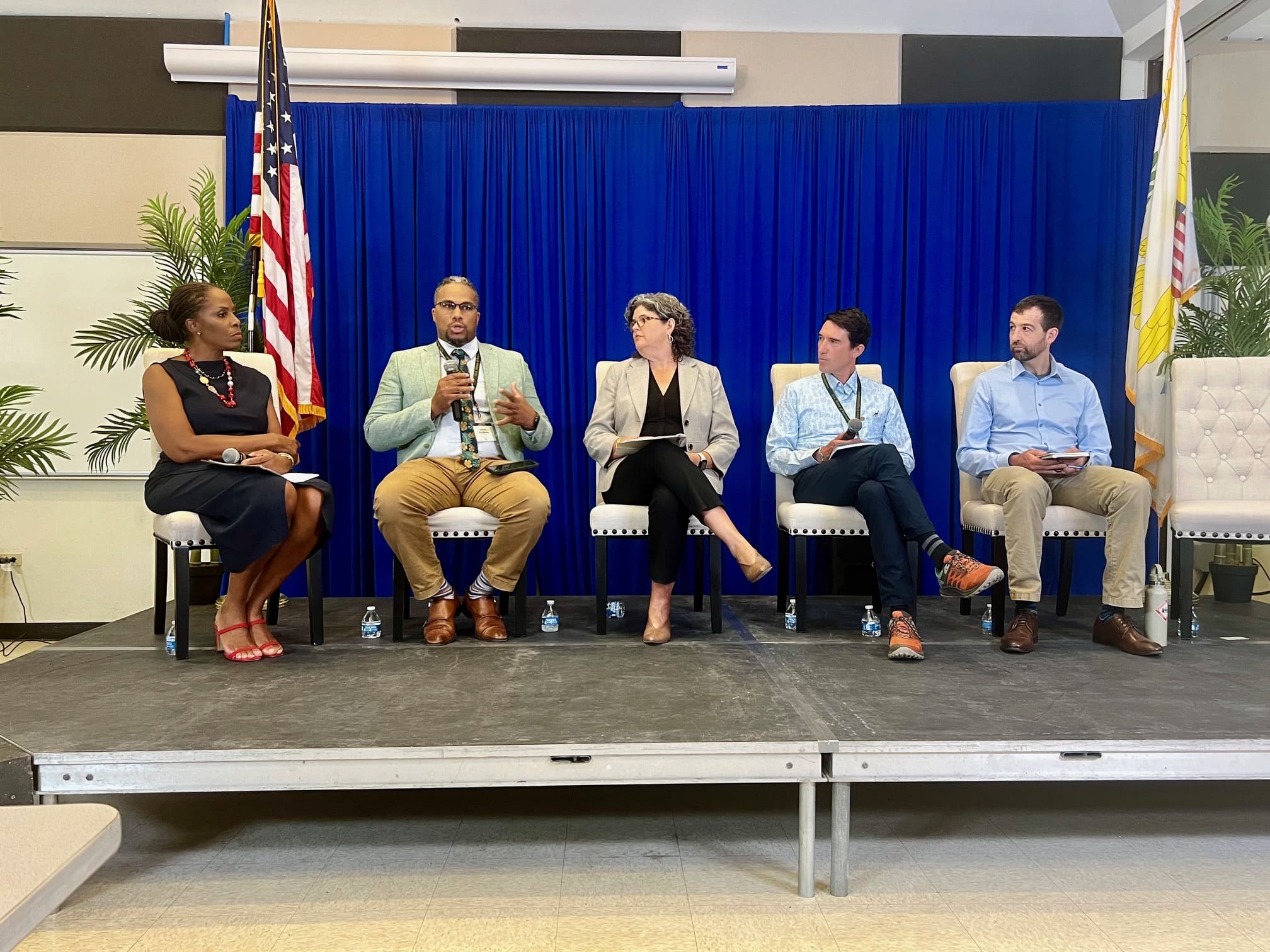
During a final panel on energy initiatives, V.I. Energy Office Director Kyle Fleming emphasized that a crucial aspect of the recovery is finding a sensible way to spend federal funding, underscoring the importance of proper guidance.
Pete Gingrass from the U.S. Department of Energy elaborated on this point, explaining that much of the DOE’s engagement has been through interagency work, particularly with FEMA partners, providing targeted assistance to stakeholders such as WAPA. He highlighted the focus on stabilizing the system as the utility integrates renewable energy technologies.
“We’ve reached a collaborative process with ongoing weekly conversations, where consultants support the technical analysis needed by WAPA,” Gingrass said. “It’s a challenge for the utility to operate the grid on a daily basis while executing on the billions provided by federal agencies. We support the underlying technical and feasibility analysis needed for their investments.”
Gingrass also stressed the importance of equipping WAPA with the data and analysis required to make informed decisions about new resources and technologies, ensuring that investments are both strategic and effective.
One way, Fleming added, is moving towards a distributed energy model.
“We are looking at the value of energy storage for the entire Caribbean. Discussions with the DOE focus on how energy storage can enhance grid resilience, similar to initiatives in Puerto Rico and other states,” he said. “Virtual power plants are another promising concept. By aggregating batteries from homes and businesses connected to the grid, we can avoid turning on new generators, thereby reducing strain on the system.”
Fleming also highlighted the Energy Star program through the U.S. Environmental Protection Agency, which can help reduce energy demand across the territory. “This program supports energy conservation, providing guidelines for equipment in public buildings and residences tailored for the Caribbean. It’s about making the most of the energy we have available,” Fleming said.