

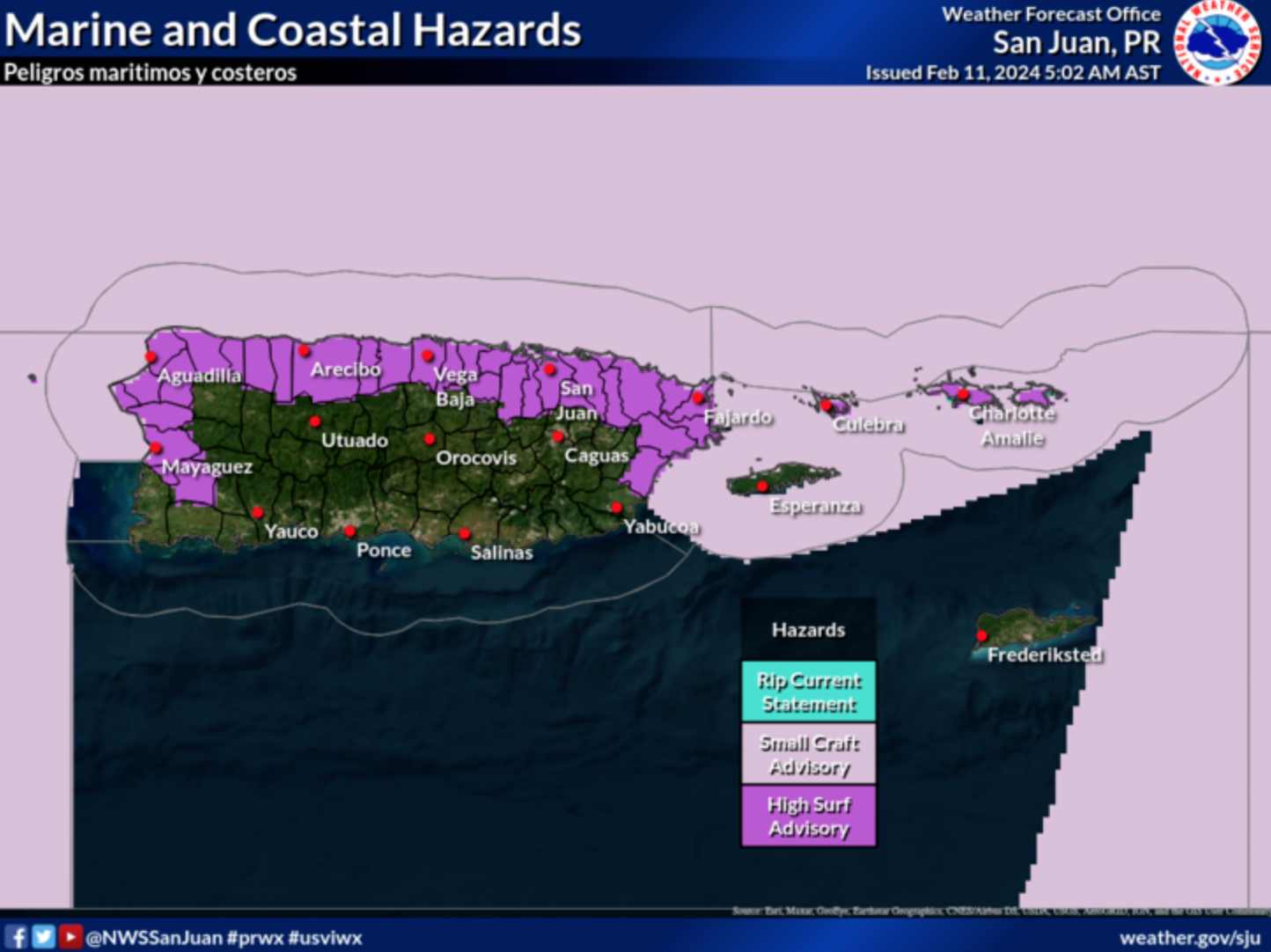
Hazardous seas and gusty winds are forecast for Puerto Rico and the U.S. Virgin Islands through the first half of this week. Marine weather alerts are currently in effect.
Separate high-pressure and low-pressure systems in the Atlantic will help create a hazardous marine weather pattern across the local region. While the sun is expected to shine throughout the week, the seas will be choppy until at least Tuesday.
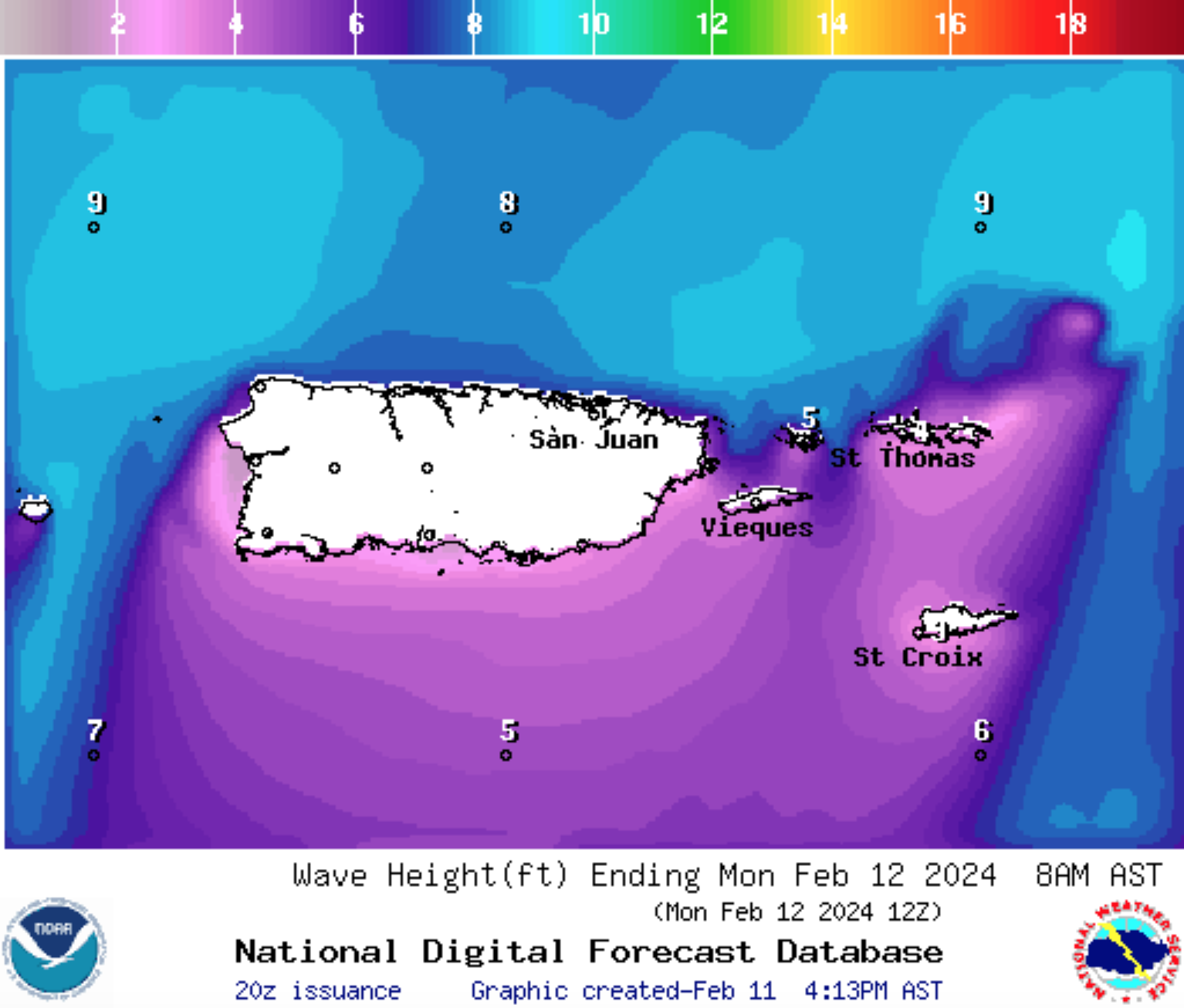
“Pulses of a long-period northerly swell will result in seas between six and 10 feet [possibly up to 11 feet] across the Atlantic Waters and Caribbean Passages through the middle of next week,” according to an update on Sunday from the National Weather Service (NWS) in San Juan, Puerto Rico. (A period of a swell refers to the time between breaking waves.)
“The long-period northerly swell will also create life-threatening rip current and large breaking waves along the north and east facing beaches. Additionally, expect breezy conditions through at least Tuesday, [resulting in wind-driven, choppy seas],” the NWS said.
Marine Warnings
Marine weather alerts are in effect for portions of Puerto Rico and the U.S. Virgin Islands through midweek, including a High Rip Current Risk, a High Surf Advisory, and a Small Craft Advisory. Minor localized beach erosion is also possible during the swell event.
Beachgoers must recognize the dangers of high surf and an elevated risk of rip currents. Rip currents, which are strong currents of water that flow very quickly away from the shore, may occur without warning and can quickly become extremely dangerous and even life-threatening for the most proficient swimmers.
“Rip currents can sweep even the best swimmers away from shore into deeper water where it becomes difficult to return to safety,” the NWS warned. “High waves can wash over jetties and sweep people and pets onto jagged rocks,” the NWS added.
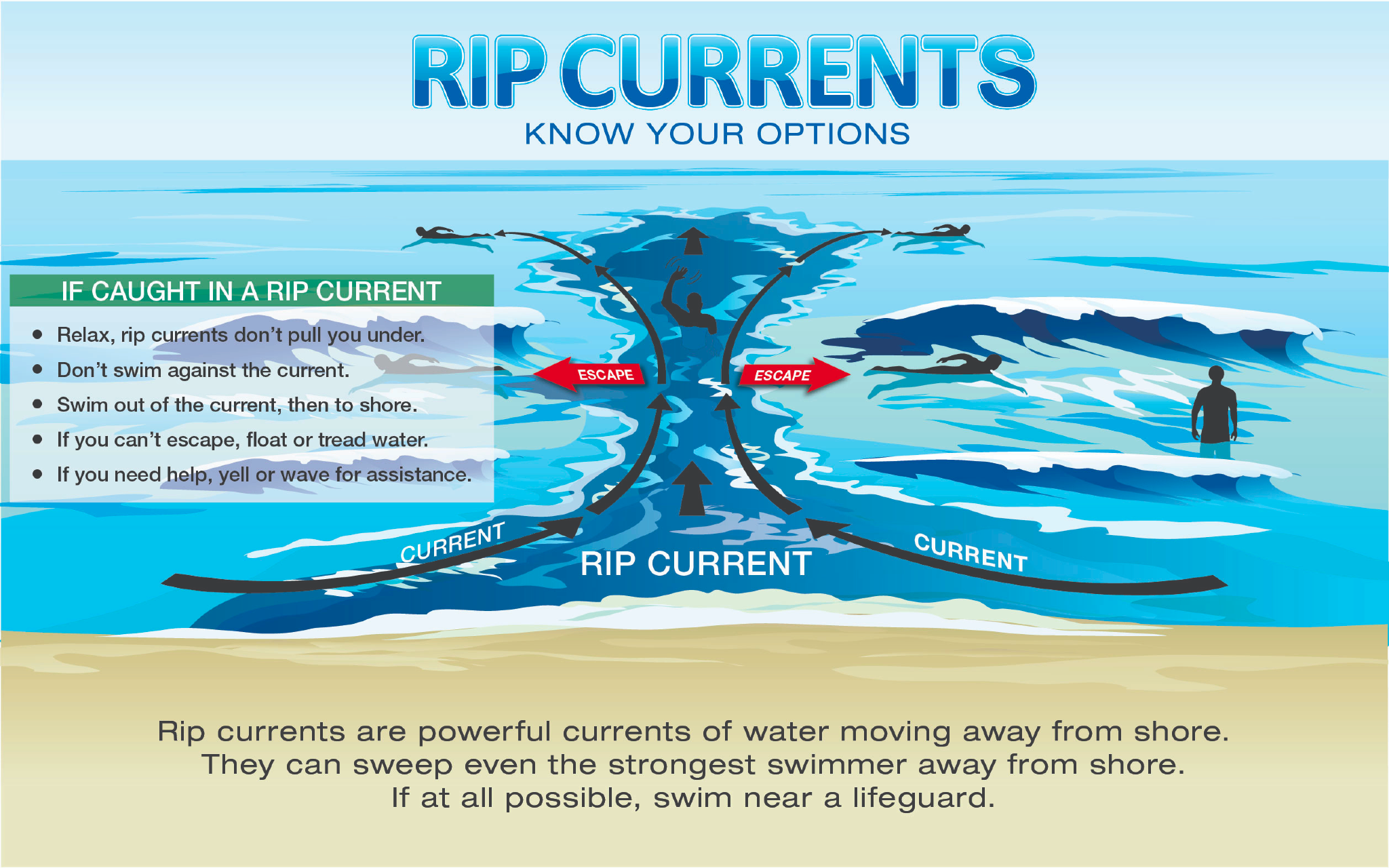
“If you become caught in a rip current, yell for help. Remain calm, do not exhaust yourself, and stay afloat while waiting for help,” the NWS advised. “If you have to swim out of a rip current, swim parallel to shore and back toward the beach when possible. Do not attempt to swim directly against a rip current, as you will tire quickly.”
Remain Informed on the Weather
Residents and visitors can locate weather information and obtain alerts, including marine weather updates, from the Virgin Islands Territorial Emergency Management Agency website and the National Weather Service.
A daily weather post is also published on the Source Weather Page, where weather forecast videos are available to view.