

“Wild Nights: How Taming Sleep Created Our Restless World,” by Benjamin Reiss. © 2017, Basic Books, $28.00 / $36.50 Canada, 320 pages
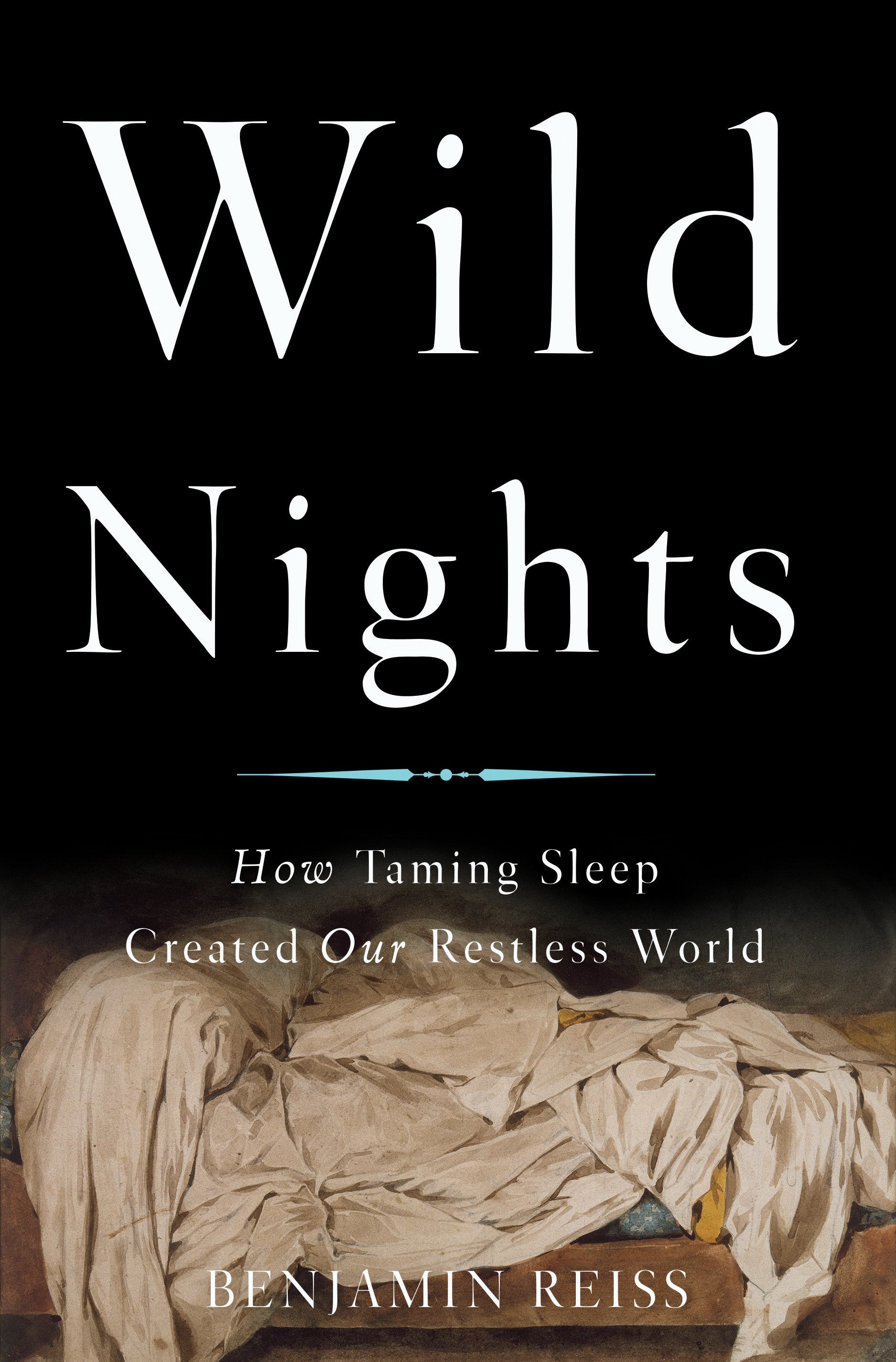
Covers on. Covers off.
That was you all last night: too hot, not warm enough. The pillow was hard, the mattress was soft, the neighbors were loud, the room was stuffy, you were thirsty, and something was tickling the back of your neck. You couldn’t sleep, maybe due to insomnia.
Or maybe you were just following your ancestors, and in “Wild Nights” by Benjamin Reiss, you’ll see how.
Eight hours.
In a perfect world, that’s how much sleep you’d get every single night, uninterrupted, though that it never happens that way. Instead, you toss, turn, and spend the entire next day feeling as if you’re on the set of “The Walking Dead.”
No worries: that sleep-awake cycle you’ve got there might be perfectly normal.
Some 200 years ago, it would’ve been, for sure. Back when folks had less-defined time, before noisy neighbors, electricity, alarm clocks, and factories, people kept hours with the sun, slumbering and rising with natural light. It was common then to have a two-cycle sleep pattern broken up by an hour or so of gentle wakefulness and, because sleep was more of a social thing, it was common for entire families to sleep together.
Though you can still find places in the world where it’s good hospitality to share beds with guests, in the 19th century, missionaries spread across the globe and made it shameful to slumber without privacy. By the earliest part of the 20th century, and surely by the time electricity reached most households, the majority of First World citizens slept alone or in coupled pairs, in rooms specifically meant for sleeping. That included children, who were taught to sleep separately in a room away from their parents.
And as if civilization didn’t affect sleep-wake patterns enough, well, 24/7 entertainment, shift-work, better hygiene, electronics, and widespread availability of coffee sure don’t help any.
Therefore, it’s advisable, says Reiss, to wake up to this “global weirding of sleep” and recognize that further changes could be more than just a dream.
The alarm went off awfully early this morning. And yesterday morning. And every day last week, but why? The reason may be inside Reiss’s book.
And then again, it may not: readers searching for sleep-advice will go away frustrated, because “Wild Nights” isn’t that kind of book. Instead, Reiss explains how biology and conditioning make us sleep as we do. Readers get a glimpse of classic literature’s examination of the subject, how slavemasters used sleep to control slave – and how that led to a stereotype, why it’s so hard to get kids to go to bed, and what a few z’s might look like in the future. That’s great for anyone with wide-eyed curiosity, while a blanket full of comfort-through-research will help those who are wide awake.

Don’t take this book to bed with you. It’s too much fun, a lot of fascination, and it might just keep you up
all night, reading. You’ll like it because, when it comes to learning about the big snooze, “Wild Nights” has you covered.
—
The Bookworm is Terri Schlichenmeyer. Terri has been reading since she was 3 years old and never goes anywhere without a book. Her self-syndicated book reviews appear in more than 260 newspapers.