

March is Virgin Islands History Month. Thanks to former Sen. Shawn-Michael Malone for his foresight in sponsoring Act 6802 that established March as Virgin Islands History Month. Every year, I receive email messages and phone calls from private and public schools, businesses and others, inviting me to participate in Virgin Islands History Month events. Whether I am giving a lecture at one of our local schools on Virgin Islands historical, natural, cultural, and marine history or taking children hiking on one of the many trails on St. Croix, history is always the talk of the day.
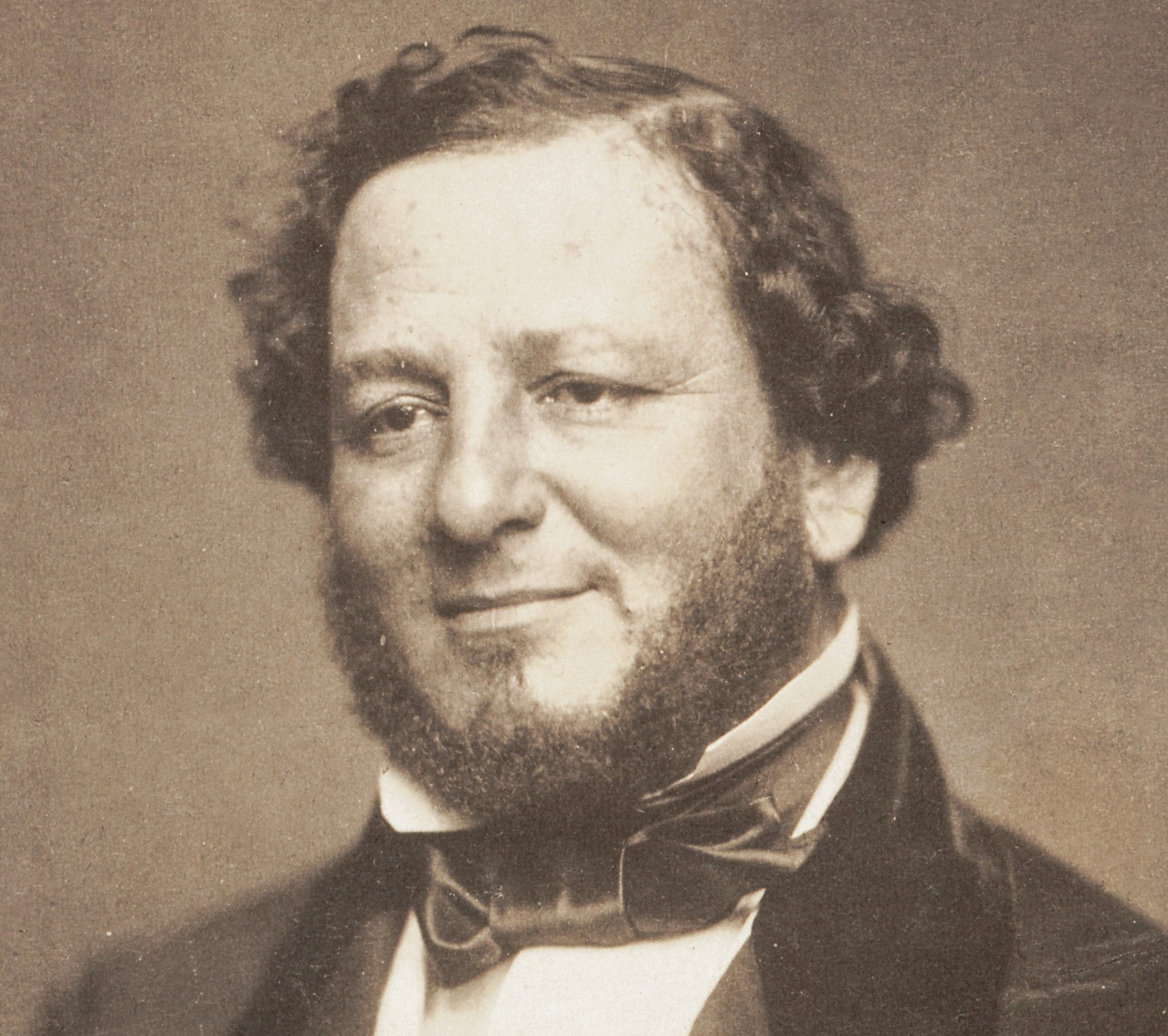
As small as these Virgin Islands are, they had a major impact and still do today on the world stage. When I was in college, I learned about the confederacy in American history. The Confederate states were 11 Southern states that seceded from the United States (1861-1865) and broke away from the Republic, to protect the institution of slavery. These Southern states also promoted states’ rights, which led to the American Civil War.
Judah P. Benjamin, a native Virgin Islander, was a Confederate in the United States during the 19th century. He was born to Sephardic Jewish parents Phillip Benjamin and Rebecca de Mendes. His given name was Judah Philip. Benjamin was born on Aug. 11, 1811, on St. Croix when the British occupied the Danish West Indies from 1807 to 1815. The takeover of the Danish West Indies by the British was an act of hostility during the Napoleonic Wars era. Judah’s ancestors, particularly his maternal grandfather, escaped from Spain to Portugal following the Expulsion Edict of 1492, also known as the Alhambra Decree.
The Expulsion Edict was issued by Spain’s Catholic monarchs, Ferdinand II and Isabella. It was a mandate that all Jews in the kingdoms of Aragon and Castile convert to Catholicism or leave the country. Many generations later, his father and mother met in London and got married. Eventually, they found themselves in the Danish West Indies. At that period in Virgin Islands history, there were many Sephardics in the Danish West Indies, especially on the island of St. Thomas, with names such as De Castro, Da Costa, and Sasso.
Reimert Haagensen, a Dane who ventured to the Danish West Indies in the 1730s, mentioned several nationalities including Danish, French, Dutch, English and few Jews who all established plantations in the Virgin Islands and had slaves. Today, the second oldest synagogue in the Western Hemisphere is located on the island of St. Thomas. Judah’s parents had seven children, four of whom were born on St. Croix. According to Danish historical records, in 1812 the Benjamins resided at 8-B and C on Company Street in Christiansted town.
The following year, the Benjamin family left the island by boat and sailed to Wilmington, North Carolina. The occupation of the British troops on St. Croix, according to historic documents, made it difficult for the Benjamin family to make a living. It was Judah’s mother’s uncle, Jacob Levy, who encouraged the Benjamin family to move from St. Croix to the United States. In 1813, the Benjamin family moved to Fayetteville, North Carolina. That city had one of the largest Jewish communities in the United States and had a reputation of religious tolerance.
Young Judah attended Fayetteville Academy where his intellect began to develop and he was known to be immaculately attired. At age 14 in 1825, he attended Yale College, an institution popular among white Southerners. He was successful as a student at Yale, but for some unknown reason he left school in 1827 without graduating. He then moved to New Orleans, where he read law and passed the bar exam. At age 21 in 1832, Benjamin was admitted to the bar. He rapidly rose in politics, becoming a wealthy slave owner.
He was elected to serve in both houses of the Louisiana legislature, and as a member of the Confederate State Cabinet. In 1852, he was elected to the U.S. Senate, making him one of the first Jewish senators in U.S. history. There he was, and became, a vocal advocate of slavery. He served in the senate from 1853 to 1861. In 1861, he resigned from the senate and was appointed by Confederate President Jefferson Davis as Attorney General.
Thus, he became the first Confederate States Attorney General. Later on, he was appointed as Secretary of War and then promoted as Secretary of State in March in 1862, due to his loyalty to the president of the United States. President Millard Fillmore offered to nominate Judah P. Benjamin to the U.S. Supreme Court, which would have made him the first Jewish American justice, but he declined the position to be judge.
President Franklin Pierce also offered Benjamin a U.S. Supreme Court position, which he turned down as well. Benjamin was a brilliant, exceptionally talented, and skillful lawyer. Nevertheless, as the American Civil War ended in 1865, there was a mass exodus of politicians from the Confederate capital running for their lives. Many Confederates were captured, like President Jefferson Davis, while some were able to escape with the help of local people throughout the South.
Benjamin was able to escape to Britain following the Confederacy’s collapse to avoid political indictment or end up in prison. In Britain, he became a barrister where he rose again to the top of his professional career as a great lawyer. In his young years, Benjamin viewed slavery based on his belief that citizens had the right to their property as guaranteed by the U.S Constitution. Slaves were considered property owned by their masters. This ideologic view was widespread among white Southerners, that African Americans were not ready for emancipation — or if ever.
White Southerners had the fear that freeing slaves would lead to murders and rapes of their former mistresses and masters. Such massacres had been feared by Southerners since the Haitian Revolution that took place between 1791 and 1804. However, Benjamin reversed many of his positions about slaves while in the United States. “His advocacy of the total population, including slaves, as the basis for representation and voting was thought to be the most flagrant,” noted Axel C. Hansen, a native Virgin Islander and medical doctor who wrote the book, “From These Shores.”
Benjamin’s health began to decline over the years. He couldn’t return to the U.S. because he was the key target for federal prosecution as a top Confederate official. He died on May 6, 1884, and was buried in the Pere Lachaise cemetery in Paris, France. In history, he was remembered for being hated by his opponents, an aggressive yet charming person, adored by his friends, egotistical and brilliant. However, his contribution to American history remains impactful, especially in today’s political climate.
— Olasee Davis is a bush professor who lectures and writes about the culture, history, ecology and environment of the Virgin Islands when he is not leading hiking tours of the wild places and spaces of St. Croix and beyond.
Editor’s Note: Opinion articles do not represent the views of the Virgin Islands Source newsroom and are the sole expressed opinion of the writer. Submissions can be made to visource@gmail.com.