

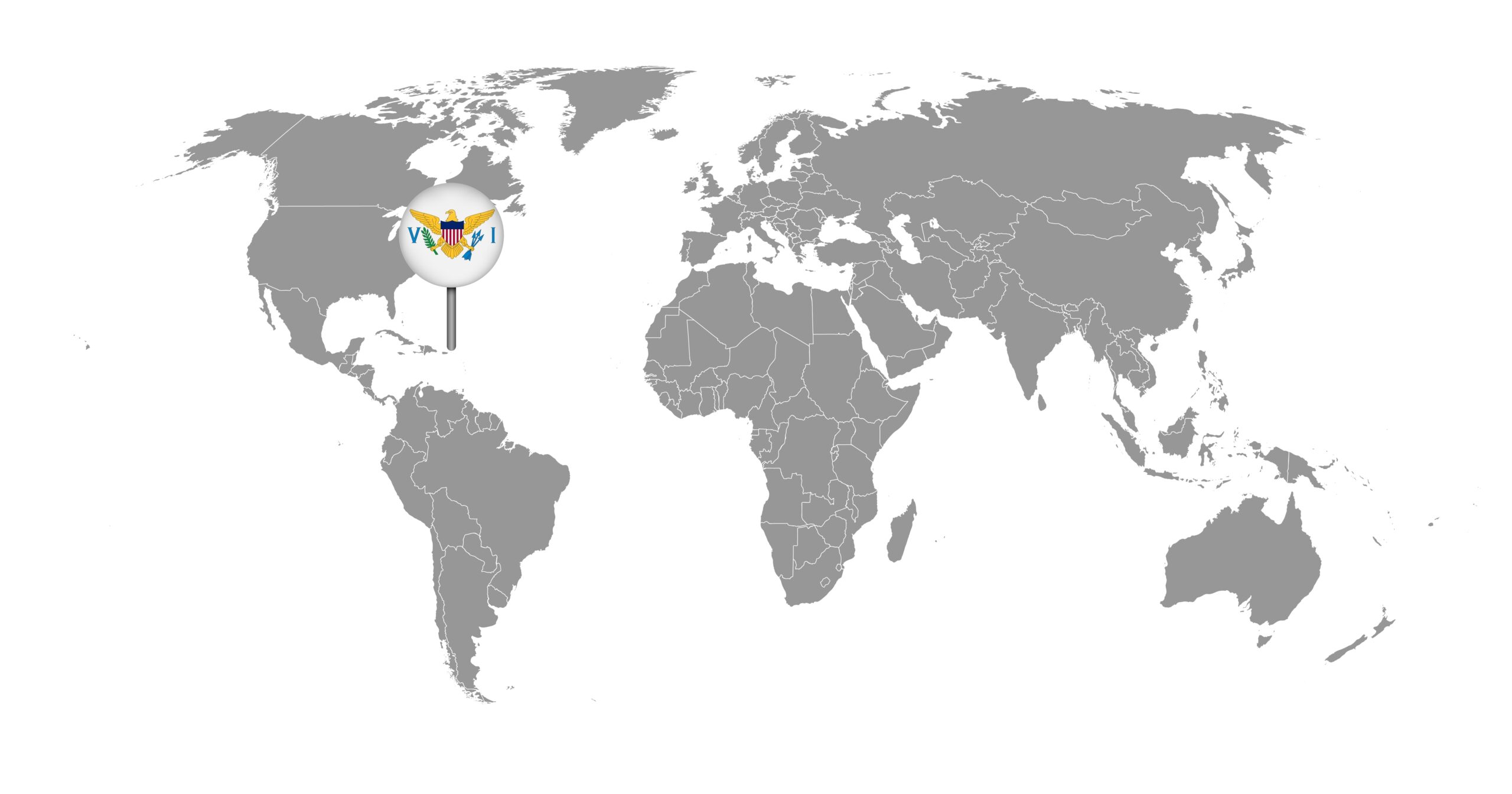
Every society has a defining strength that shapes its place in the world. For the U.S. Virgin Islands, that defining strength has always been our location. It is our superpower. At the crossroads of the Americas, the Caribbean Sea, and the Atlantic Ocean, our islands occupy one of the most strategically significant positions on the planet. That advantage shaped why the United States acquired the Virgin Islands more than a century ago, and today it is the foundation of a new opportunity that we cannot afford to ignore.
As global markets shift, supply chains reorganize, and nations compete for technological leadership, the strategic value of the Virgin Islands is more relevant than ever in our history. The world is being rewired, and our geographic position places us at the center of that transformation.
A Strategic Advantage Recognized Since 1917
In 1917, the United States purchased the Virgin Islands from Denmark for $25 million in gold. This was no accident of history. It was a deliberate response to two defining strategic concerns.
1. Protecting the Panama Canal
The Panama Canal, opened just three years earlier, had instantly become the backbone of American military mobility and global trade. The United States recognized that securing the surrounding Caribbean region was crucial to its defense and commercial interests. St. Thomas, with its deep and naturally protected harbor, offered an ideal location for refueling, naval operations, and maritime surveillance.
2. Preventing German Expansion in the Caribbean
During World War I, U.S. leaders feared that Germany might acquire the Virgin Islands from Denmark and establish a base dangerously close to both the Panama Canal and the U.S. East Coast. Purchasing the Virgin Islands eliminated that risk and strengthened America’s presence in the Western Hemisphere.
This history makes one point clear. Our geographic position has always been our most valuable asset.
Why Our Strategic Location Matters Even More Today
What made the Virgin Islands valuable in 1917 makes us even more valuable in 2025. The global marketplace is being reshaped by forces such as digital connectivity, energy security, supply chain consolidation, and geopolitical competition. Our location gives us a front-row seat to all of them.
1. A Maritime Crossroads for Modern Trade
The Virgin Islands sit along major shipping routes that connect the Gulf Coast, the Eastern Seaboard, the Panama Canal, and South America. As companies nearshore and reshore supply chains to reduce risks and shorten delivery times, our Territory can emerge as a logistics, storage, and maritime services hub within a U.S. jurisdiction.
2. A Growing Digital Gateway
The modern economy flows through fiber-optic cables rather than shipping containers. The Caribbean is becoming an essential digital corridor that connects the Americas, Europe, and West Africa. With deep-water conditions and U.S. regulatory stability, the Virgin Islands are well-positioned to host subsea cable landings, data centers, cloud connectivity, and cybersecurity operations.
This creates a pathway to high-wage technology careers and a new pillar of economic development.
3. A Platform for Clean Energy Leadership
The Territory has abundant solar resources and is receiving significant federal investment. This combination creates an opportunity to build one of the most reliable and resilient clean energy systems in the Caribbean. A modern power grid strengthens economic competitiveness and supports technology-driven industries.
4. A Forward Position for U.S. Interests in a Competitive Region
Even without a large naval base today, the U.S. Virgin Islands remain an important location for maritime domain awareness, border security, disaster response, and the protection of telecommunications and energy infrastructure. As global powers increase their influence in the Caribbean, the Virgin Islands anchors American presence and regional stability.
Turning Strategic Value Into Economic Growth
The superpower of the Virgin Islands opens the door to real economic transformation through:
- Digital infrastructure and cloud services
- Subsea cable landings and data center development
- Renewable energy and microgrid innovation
- Logistics and nearshoring support
- Workforce training in artificial intelligence, cybersecurity, and clean technology
- Tourism diversification based on culture, sustainability, and innovation
These opportunities can help the Virgin Islands evolve from a tourism-dependent economy into a diversified and globally connected hub.
Conclusion: A Moment We Cannot Miss
The superpower of the U.S. Virgin Islands has always been our location. It shaped why the United States acquired our islands in 1917, and it explains why our value today is extraordinary. In a global marketplace defined by data flows, energy transition, and supply chain realignment, the Virgin Islands are not a remote outpost. We are a gateway to the future.
The question we face is not whether we possess strategic value. It is whether we will use this superpower to build a resilient, competitive, and prosperous economy for generations to come.
The opportunity is here. The world is changing. The Virgin Islands are again at a crossroads.
This piece is part of the “Virgin Islands at a Crossroads” series, which invites Virgin Islanders at home and abroad to join the conversation on building a resilient, diversified future.
Read the first four parts of the series here:
Op-ed: Virgin Islands at a Crossroads: Act Now or Miss the Next Global Economic Wave
— Bernard Dyer is a Virgin Islander in the diaspora, technologist, and strategist with more than 25 years of public-sector experience, including 17 years with Booz Allen Hamilton supporting large-scale digital transformation and system consolidation initiatives in the U.S. Food and Drug Administration. He is also a monthly co-host on WSTX AM 970 radio’s Community Digest, where he has been for the last 16 years, highlighting new ideas and best practices to help build a more diversified and sustainable Virgin Islands economy.
Editor’s Note: Opinion articles do not represent the views of the Virgin Islands Source newsroom and are the sole expressed opinion of the writer. Submissions can be made to visource@gmail.com.