


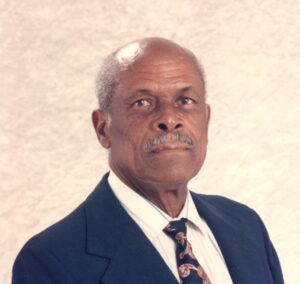
George A. Seaman, Harry A. Beatty, and Earl G. Roebuck, all native Virgin Islanders now deceased, are well known in our history as ornithologists. The study of birds is called ornithology, from the Greek word ornis, bird, and logos, study. I believe it was 2023 when I got an email message from Dr. Jake Subryan Richards, an assistant professor in the Department of International History at the London School of Economics and Political Science.
If I remember the conversation correctly, we were talking about birds and how enslaved laborers in the Danish West Indies didn’t get credit for their contributions in ornithology. Richards enlightened me about how enslaved and “free slaves” made great contributions to the ornithology history of the Virgin Islands as well as the world and did not get credit for the work of what he called the “invisible technicians.”
He forwarded me a scientific paper he wrote, entitled “Black Ornithology: Ecology, Emancipation, and the Birth of a Professional Scientific Discipline between the Caribbean and Britain.” In the world of ornithology, Alfred Newton and his brother Edward Newton are well known worldwide as ornithologists. Alfred was the founding member of the British Ornithologists Union in 1858 and its journal. His brother Edward was a British colonial administrator.
In 1857, the Newton brothers visited the Danish West Indies and conducted ornithological observation on the island of St. Croix. In Richards’ scientific research paper about birds, he mentioned the interaction of birds with Black people on St. Croix and the understanding of the island ecology among enslaved and runaway slaves known as Maroons, in relation to ornithology. In other words, Blacks in the Danish West Indies during slavery and post- emancipation, had an understanding of wildlife behavior in the natural world of birds on the islands.
Richard argues in his scientific paper that “… Black people were not simply invisible technicians but rather developed a specific post-emancipation practical knowledge about organisms and their environment which included a flexible familiarization with birds.” He further stated, “The knowledge draws on ecological understanding among both Indigenous Kalinago and maritime maroon groups.” The Newton brothers recorded the knowledge of Black people, which helped them gather traditional knowledge about birds that they documented in their field notebooks.
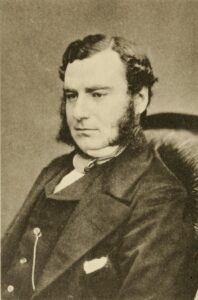
However, the Newton brothers erased the role of Black Crucian ornithologists when they published their findings of birds on St. Croix. This was the first professional ornithologist journal in Britain. Believe me, the publication on the Black Crucian ornithology is fascinating, by Richards scientific research. It is a pity, however, that I can’t go into detail on the research of birds by Richards and the history of 1857 when the Newton brothers visited St. Croix due to space in this article.
However, I will try to summarize an episode where Alfred Newton reported in his field notebook about a Black Crucian woman. This is one of many notes where Alfred Newton wrote about his encounters with local people between 1857 and 1858 on St. Croix. In April 1857, Newton stated in his notebook that a Black woman was walking on a mountain dirt road north of Estate Castle Burke where she spotted a Zenaida dove (Zenaida amabilis). He reported that the woman had given two eggs and the bird nest to her doctor, Dr. Cardin, who brought them to Alfred Newton.
In his field notebook, Newton reported that the woman found the eggs in a cashew tree in the vicinity of Blue Mountain. He had little or no doubt that the eggs are rightly named by her because of her practical knowledge of birds on the island and the habit of her taking the same route to the mountain to see her doctor. According to Newton’s notebook, he evaluated the veracity of the Black woman’s observational narrative and the specimen she collected, which was the Zenaida dove eggs and nest.
Then, he decided that the Black woman was trustworthy based on her frequent route or pathway for medical care from her doctor. The post-emancipation era interaction between former slaves and white former slave owners must have raised questions of truth and trust in Newton’s mind. In his field notebook, Alfred considered himself as a neutral arbiter person. He was the one who decided on the validity of each person’s testimonies, as part of his professional scientific research.
In Alfred’s ornithology research on St. Croix, he seems to accept Black knowledge and testimonies of birds and discounted white testimonies, although he relied upon a racialized social structure to support his research. As an interlocutor or go-between person, it seemed not to affect him gathering information from Black Crucians about birds on St. Croix.
When he interacted with Black Crucians, he didn’t label them as untrustworthy as was the case with Thomas Catchure and William Macintosh, both white men. He labelled those men “remarkable for not adhering to the truth,” according to his field notebook documentation on birds of St. Croix. However, if you read Alfred Newton’s notebook, it seems contradictory with some of the things he said as he interacted with people on St. Croix, while conducting his research on birds.
Nevertheless, regardless of trustworthiness based on the social status of people that Alfred Newton encountered, he believed the Black woman was truthful based on her practical knowledge of birds, yet he didn’t see her account as trustworthy enough to record her name in the publication, but mentioned William Macintosh, also known as Dobbo, and Thomas Catchure, both of whom he considered to be untrustworthy.
In the appendix of Richards’ bird scientific research paper, he listed Estate Castle Burk 1850 census with Black participation in ornithological research on St. Croix. I would say this, bird watching worldwide is a billion-dollar industry. Even today, with systemic barriers for Black ornithologists to participate in the industry of birders, they are thriving and making their contributions to science, education, and conservation in so many ways that benefit the world community.
Believe me, I appreciate Richards’ sharing with me the history of Black ornithologists during the Danish era of the Virgin Islands.
— Olasee Davis is a bush professor who lectures and writes about the culture, history, ecology and environment of the Virgin Islands when he is not leading hiking tours of the wild places and spaces of St. Croix and beyond.