

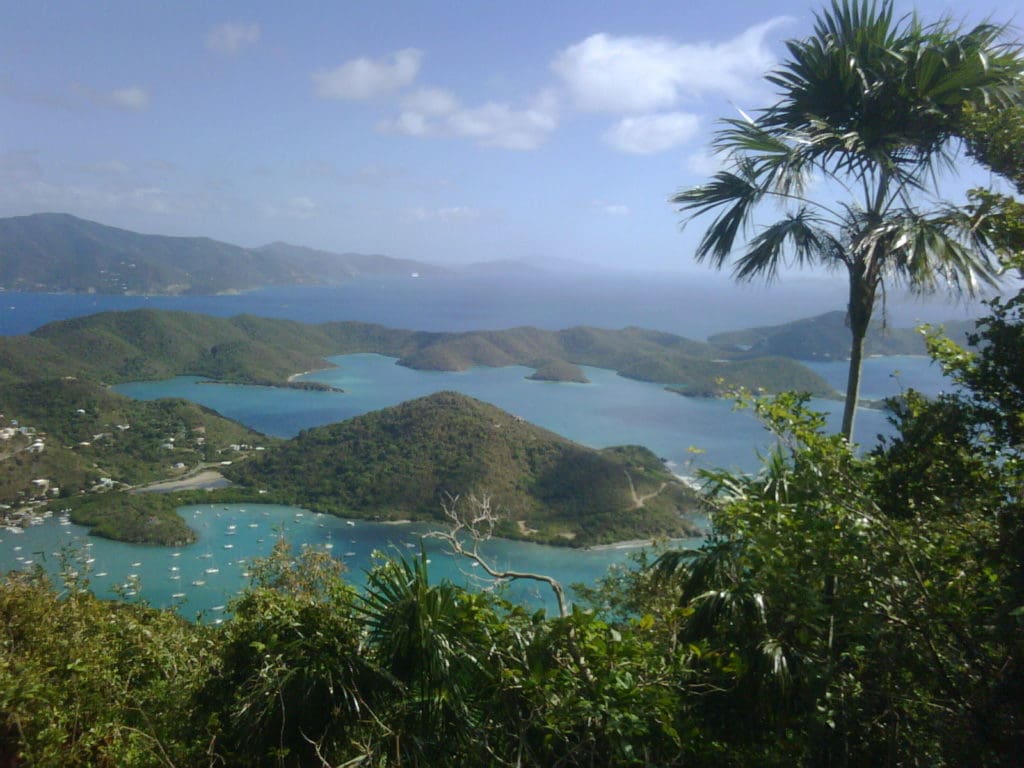
This is the third in a three-part series on St. Johnians’ views on the future of development on their home island. The first two installments in the series focused on St. Johnians’ thoughts on infrastructure improvement and environmental preservation in Coral Bay – where two large marina developments have been proposed – and on economic opportunities that could come with a marina development. In the third and final part of this series, St. Johnians reflect on long-standing land ownership and cultural preservation issues on St. John and how they relate to proposed developments.
St. Johnians Reflect on the Reality of Property Ownership
The majority of land surrounding the harbor in Coral Bay is owned by 14 property owners, most of whom are from families who have owned their land for generations, according to data gathered by the Coral Bay Community Council.
This would suggest that there are many opportunities for St. Johnians to move forward on business enterprises, but community activist Theodora Moorehead says, “No matter how you look at it, there are obstacles on all sides. You have to have a lot of intestinal fortitude. The people who get things done have money and influence.”
“Our government gives big hotels Economic Development Commission benefits,” she said, but sufficient opportunities for local people don’t trickle down. “When you go to hotels and start at the top, who do you see? Caribbean people? Not usually. The Caribbean people supervise laundry, housekeeping, maybe the bar.”
“EDC programs privilege investors from outside the territory instead of mom-and-pop shops that have been the backbone of the island here,” said Hadiya Sewer, a St. Johnian who received her doctorate in Africana studies from Brown University and now is a research fellow at Stanford University.
For the situation to change, “It has to be a conscious effort,” said Moorehead. “The Small Business Administration would have to get involved. Bank requirements would need to change. We’d need to call meetings for Caribbean people who want to do business. St. Johnians are in the minority. We have to think of ourselves as Caribbean people and include the children of immigrants who are invested in the island. It’s a long process.”
“We need a political will that allows us to prioritize the vulnerable people of the Virgin Islands,” said Sewer. She sees the possibility of local people “addressing political status and pooling their resources to collectively fund development by and for ancestral populations.”
Moorehead said, “I’d like to see indigenous people getting the money to do whatever business they do,” then added, “The banks have not been forthcoming.” For many St. Johnians, their wealth is tied up in undivided land, “and banks don’t loan money for that.”
Families are tasked with dividing up land among 50 or 60 people through two or three generations, Moorehead continued, and “Probating is costly. Then there’s a danger, “the minute it’s divided, it would get sold. Kids who moved abroad don’t have a sense of the importance of land.”
Moriah Jacobs said the complexities of dividing land among multiple heirs has led to long, drawn-out court proceedings; these frustrating delays sometimes result in tension between ancestral St. Johnians and cash-ready continentals who arrive on the island looking to buy property. “A lot of St. Johnians are struggling because we’re still in probate. We see others move down, build their homes and it increases tension. We ask, ‘What about us?’”
The influx of continentals has resulted in the construction of hundreds of upscale villas on St. John. This trend toward gentrification has led to rising property values and, in some cases alarming increases in property tax bills. Ancestral St. Johnians sometimes find it necessary to sell some of their land to pay property taxes or keep up with the rising cost of living.
At a Senate hearing on the Summer’s End Marina in October 2019 several senators warned ancestral St. Johnians to hold on to their property. Among them was Sen. Athniel Thomas, who said, “One thing has always been true. ‘Land don’t spoil.’ We want to make sure [development] benefits those families whose grandparents made sure that their [descendants] would benefit from such a development.”
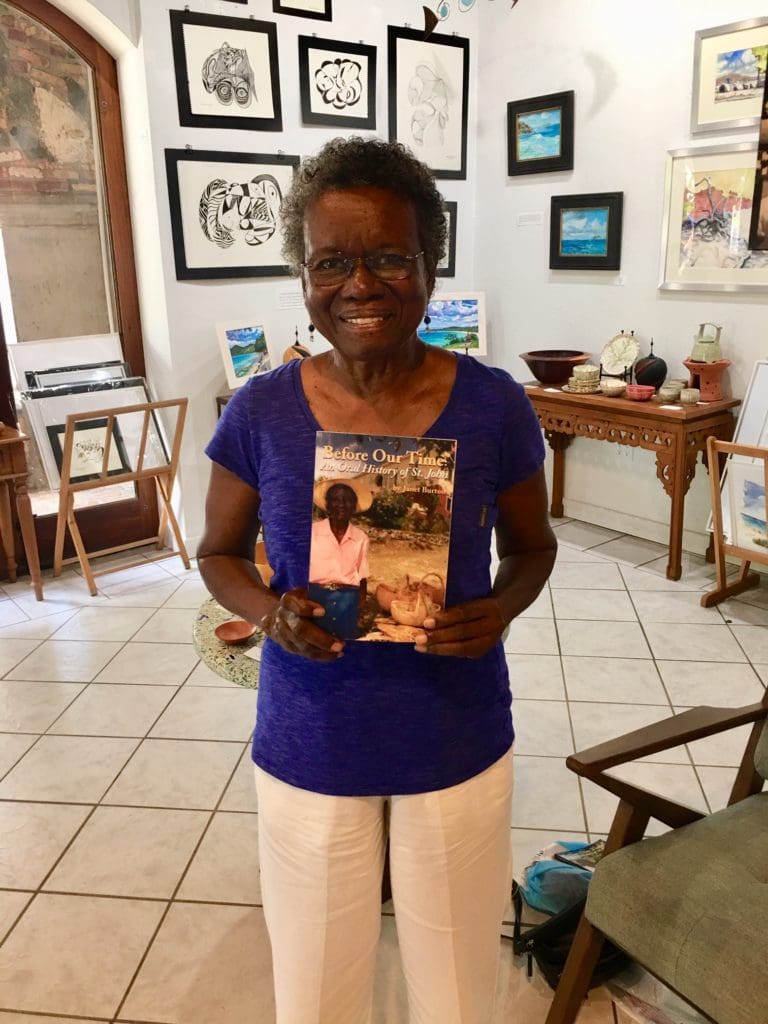
In response, retired librarian and educator Janet Burton said, “To the senators who advise St. Johnians to hold on to their land, please find out how our tax rate can be lowered. It is the highest in the Virgin Islands and not everyone has property in an area where it can be easily leased, nor the wherewithal for its development.”
Moorehead, who owns a residence with a spacious backyard in the heart of Cruz Bay, said, “Our property taxes are sky high. I’m trying to keep my place as it was, but I’m screwed if I want to keep it because the property is being assessed based on what’s going on around me.”
Moorehead blames the government for capitalizing on the high property values on St. John. “Our government is aiding and abetting this; they’re using our property values on the bond market and contributing to our dispossession. I don’t mind paying [taxes based on] the value of my property, but I don’t think that should be based on the value of my neighbors’ [properties]. St. John is so small, how can we escape our multimillion-dollar neighbors?”
The high property taxes force St. Johnians who own commercial properties to raise rents to the point where local people, especially those starting new businesses, can’t afford to lease space. Moorehead said the majority of buildings in Cruz Bay are still owned by ancestral St. Johnians, but the businesses within these buildings are largely owned by continentals.
The pattern of development in Cruz Bay does not necessarily have to be replicated in Coral Bay, according to several St. Johnians. “Coral Bay hasn’t had the same level of luxury tourism dominance,” said Sewer.
“Ancestral St. Johnians have to ask what they want in their neighborhood,” said Lorelei Monsanto. “We have to consider our wants versus our needs.” As part of a move forward on developing a comprehensive land and water use plan, she’d like community leaders to call together families who have owned land for generations via Skype or Zoom, to include those living abroad in the conversation.
For the community to truly grow and thrive, Sewer believes, “There has to be some type of economical balance that makes natives have a sense of growth and viability. Slavery and colonialism impose an economic model of predatory capitalism, which is racialized, so we have a hard time planning for the welfare of the community,” she said.
As the economic consequences of the COVID-19 pandemic reverberate through financial markets, it’s probable that the construction of major new projects will be delayed for some time. The developing downturn in the economy will be especially painful to St. John, a community that depends on tourism as its economic base.
However, the pause may provide St. Johnians with the time to reach a consensus about what they’d like to see in terms of development for Coral Bay.
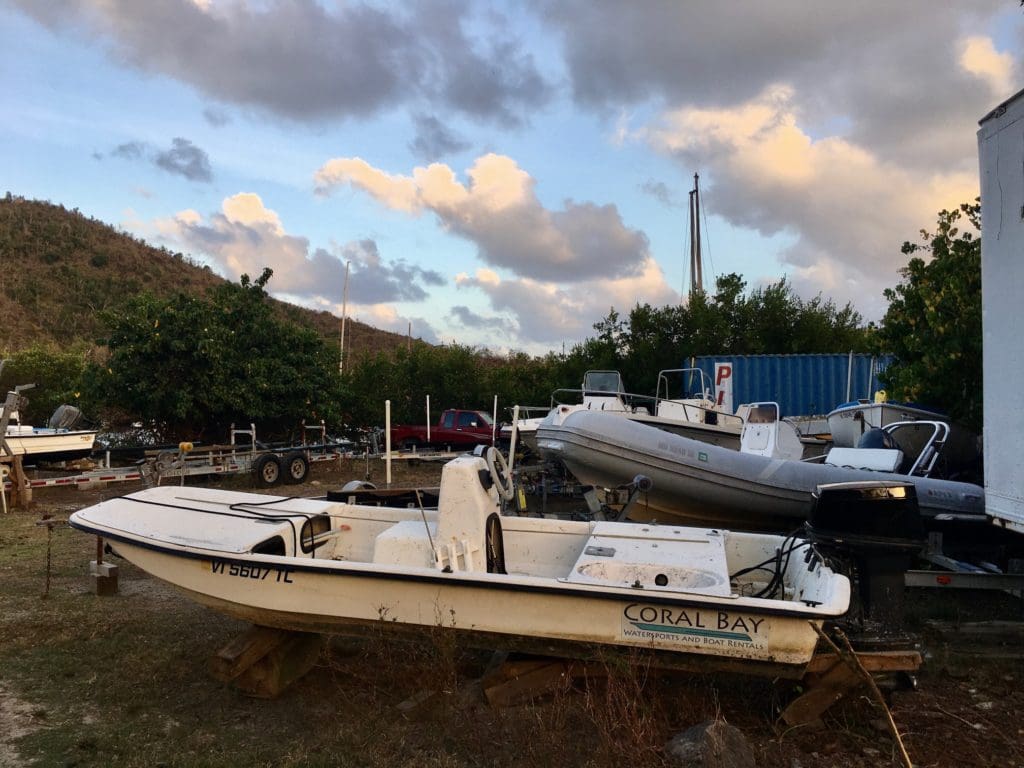
Questions Regarding Land Ownership, Culture and Opportunity Through the Generations
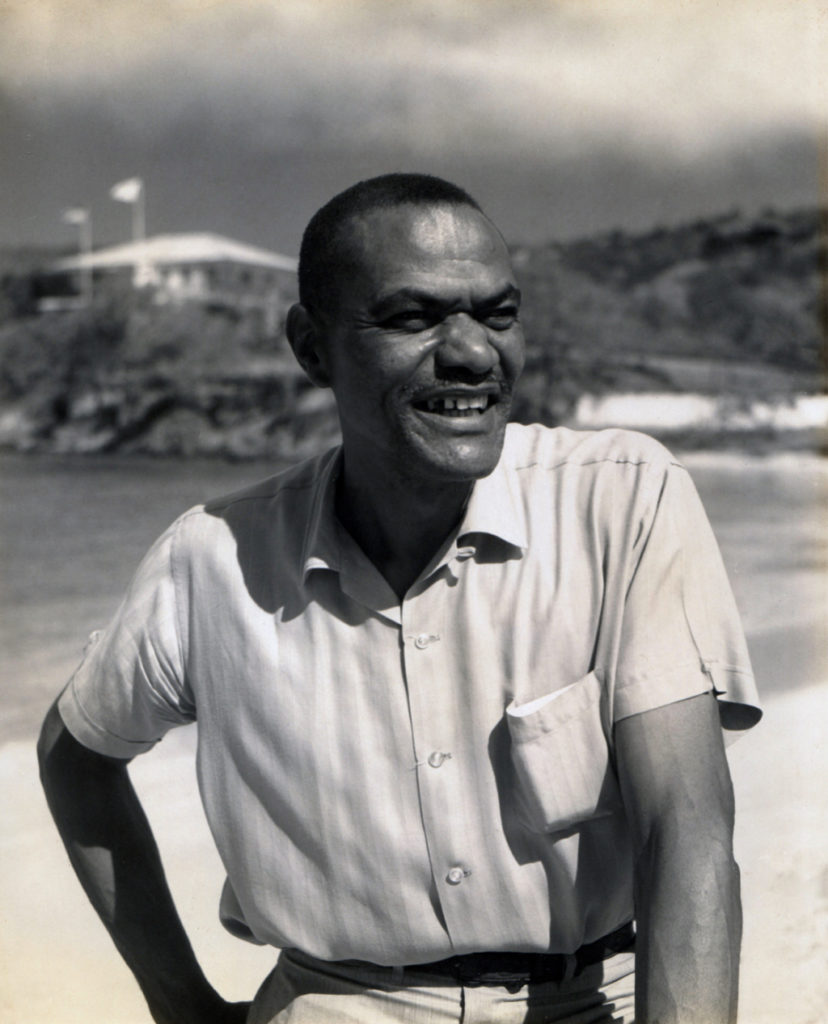
“My father said, ‘Land is heritage,’” said Moorehead, whose father, Sen. Theovald “Mooie” Moorehead, led a successful fight to prevent the federal government from seizing land owned by St. Johnians to expand the boundaries of the Virgin Islands National Park in the 1950s.
The struggle is well documented in the 2019 film “Our Island, Our Home.” This political battle, which began with the efforts by Laurance Rockefeller and others to establish the park (and the iconic Caneel Bay Resort within its borders) still resonates among the population of St. Johnians whose families go back for generations.
As documented in the film, in 1958, two years after the opening of the park and the resort, Sen. Moorehead wrote, “We can no longer believe that we, the people of St. John, are considered of any importance … and we no longer believe much of what we’re told by Laurance Rockefeller. We believe that 750 Virgin Islanders do matter. We like tourists, but we will not sacrifice ourselves to make this a happy place for tourists. What we want is a happy island for everyone, including ourselves. It is not headed that way.”
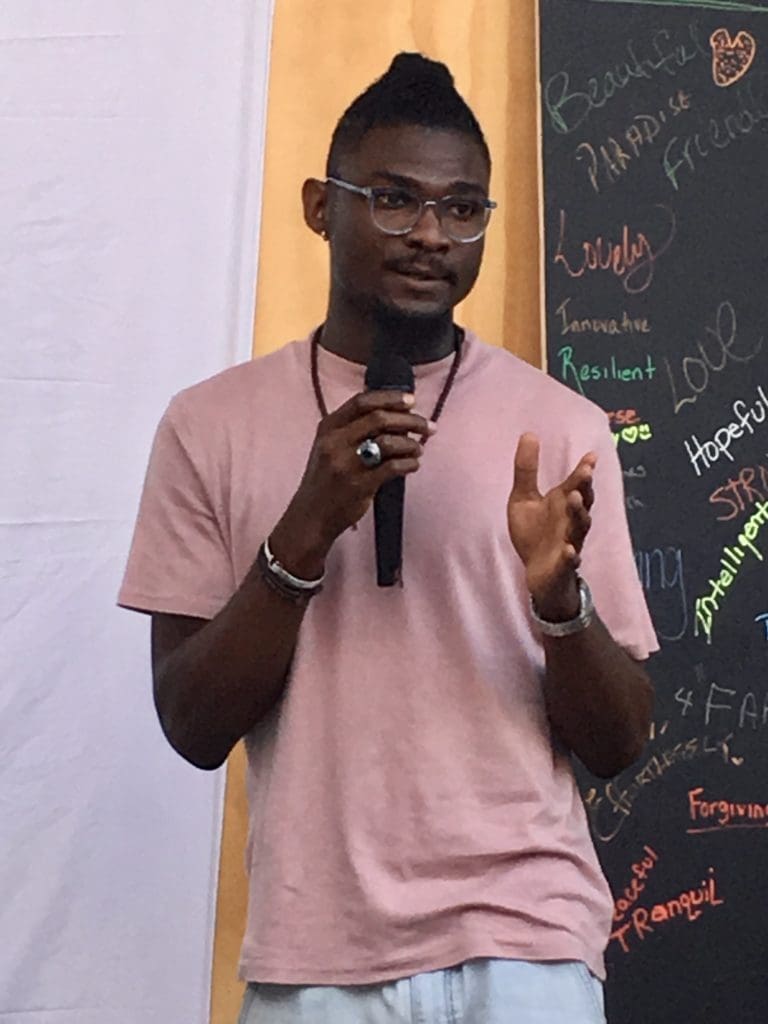
Kurt Marsh Jr. is one of several younger St. Johnians who is bringing to the forefront conversations about the changing character of the island. Marsh, Sewer and several others from their generation have formed St. JanCo, a collective whose mission is to preserve the land, history and culture of St. John. “The ancestral native experience has been compromised; we’re existing in a space that’s losing its soul,” Marsh said in the recent documentary about Sen. Moorehead’s earlier activism.
Sewer has described a sense of “jarring displacement” she first experienced as a child more than twenty years ago as tourists arrived in droves during one of the island’s growth spurts. In addition to the influx of tourists, “St. John experienced a population boom that included significant demographic shifts in the form of an increasing white population moving to the island primarily from the mainland U.S. I asked, ‘Who are all these people? What are they doing here? Why do I feel displaced?’” she said.
Another younger member of the community who grapples with issues of culture, identity and politics is Jessica Samuel, a doctoral candidate at Boston University. Though not a St. Johnian by birth, Samuel attended school on St. John and now lives on St. John; her ancestry spans the islands of the Lesser Antilles.
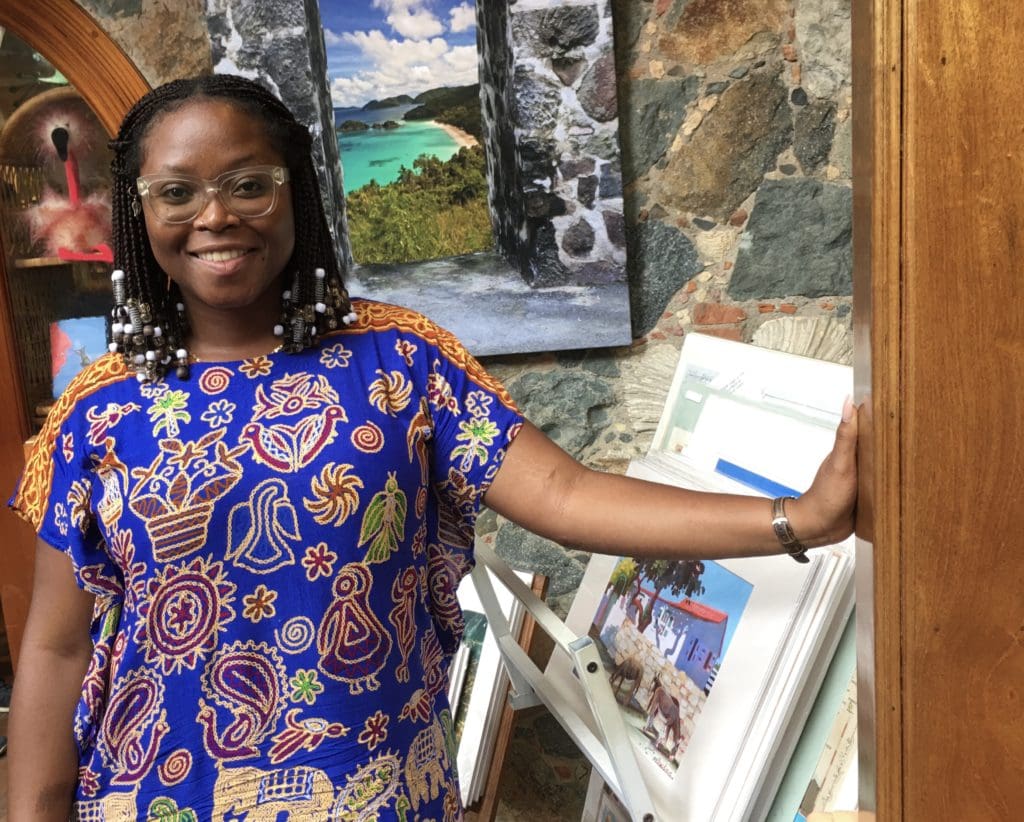
“There’s a difficult predicament as an island paradise, a space and place where people who call it home must also package and sell it, commodifying and objectifying it, in order to make a living. … How do you live and thrive in a place that is constantly being consumed by strangers?” Samuel asked.
“We’re a nature island with a park,” Samuel continued. “It’s wildly difficult to navigate the concerns and intentions of various coalitions and alliances within St. John, including native/ancestral people; those who come who have an investment in the island; and those who come for commercial development who couldn’t give a damn about the islands.”
Samuel doesn’t provide any easy answers as to how to find a balance among competing social and economic forces, but she does see the necessity of posing further questions.
“When we look at proposed developments, we need to ask, ‘Who stands to benefit the least, rather than the most, from these projects?’ We must keep in mind that the people who are the most vulnerable are the least likely to be represented. It’s easy to say, ‘Well, they don’t come to meetings,’ but we have to ask, ‘Why don’t they come?’ We might find out that generational Virgin Islanders feel most disconnected from this place they call home. There’s cultural erasure happening throughout these islands.”
Samuel notes that cultural erasure is not unique to the Virgin Islands, “but what makes it a bit more challenging is our status as a U.S. colony/territory. It’s the lack of self-determination that makes it more difficult to pursue being a tourist economy.”
Those in favor of enhanced rights for ancestral Virgin Islanders point to the British Virgin Islands, which does afford enhanced rights to Belongers – generally those who were born in the BVI or are descendants of BVI natives.
Throughout the years, various factions within the territory have come together to try to enact a constitution that would result in more self-determination for native people. The most recent draft, which included enhanced rights for native Virgin Islanders, failed in 2012.
According to an article in the Source in 2012, the most controversial section of the draft were provisions stating “only native-born Virgin Islanders [and their descendants] can run for governor or lieutenant governor, and that ‘ancestral Virgin Islanders’ [those who had family in the territory in or prior to 1932] would be exempt from property tax. The [Federal Department of Justice] found that these provisions violate the 14th Amendment [of the U.S. Constitution] which guarantees all citizens equal rights under the law.”
Defining who truly is a Virgin Islander is complicated, according to Sewer. “As colonial subjects, we don’t have a right to self-definition. Because we’re a U.S. territory and because of the way the census is set up, it’s hard to capture who’s a ‘native,’” she said.
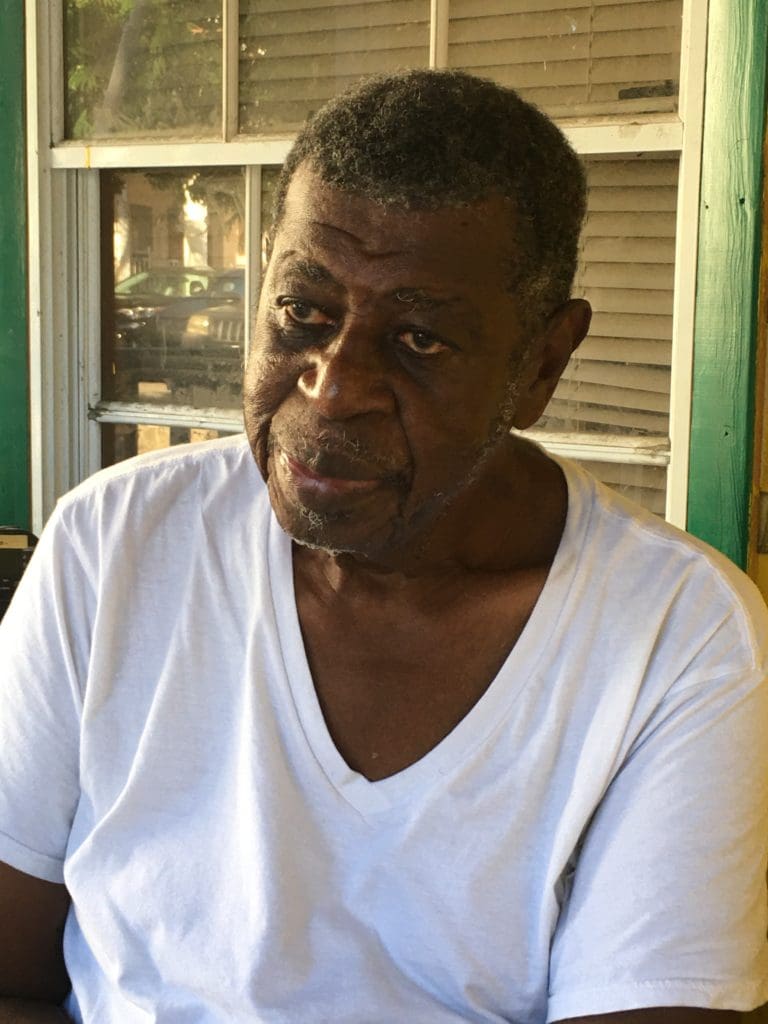
Gilbert Sprauve, a retired professor at the University of the Virgin Islands, sees the push to develop Coral Bay as “a result [of] what I’m sure were well-meaning policies by the Democratic machine at that time [1960s] – Earle B. Ottley, Ralph Paiewonsky.”
According to Sprauve, “Things have happened so fast in terms of the survival of our culture that it’s likely to be a continuing tension between people who feel entitled by birth at the beginning of the 20th century and those that came largely around the 1950s and 1960s. People are aware of the disparities in the nature of citizenship, which is not first class … It is so convoluted trying to find a path as to what St. Johnians want … Virgin Islanders are still hoping that we can resolve among ourselves these conflicting interests.”