

With 22 active K-12 public schools and a dozen or so private schools in the Virgin Islands attempting to do a complete revamp of how students are taught, there are as many experiences as there are students, teachers and administrators.
And, in a jurisdiction with a gaping economic divide, a one-size-fits-all approach is not realistic and not in place.
It’s nearly impossible to get a comprehensive picture of how different schools, teachers, parents and administrators in the territory are moving forward in the age of COVID-19, with its institutional shutdowns and accompanying digital divides.
The Source spoke with public and private school parents and students, as well as administrators, in an attempt to at least clarify some of the picture.
Thelca Bedminster, principal of Jane E. Tuitt Elementary School on St. Thomas, expressed grave concern for many of her students who she said are already behind. She couldn’t say how many of the 227 students enrolled in the school in Savan have access to the internet or cell phones. Bedminster said the school gathered data before schools officially closed on March 18 and turned the information over to the Education Department per their request. As of Tuesday she had not been able to get the survey information back from the department, despite several requests.
Meanwhile, her students were all given printed packets that included workbooks and assignments before they left the campus for no one knows how long.
“I am worried,” she said, “Too many of them do not have the kind of support they need.” She said long before the pandemic separated them from the teachers who are able to help them, their homework “didn’t come back the way we would like.”
One of the ways she had filled in the gaps was with a learning system called “i Ready.” Described on an education website as a comprehensive assessment and instruction program that empowers educators with the resources they need to help all students succeed, it can be used as a way to fill in gaps in students’ learning or to push some learners to the next level.
“It’s a pretty decent system,” she said, “but it’s not getting enough use.”
The system allows administrators and teachers to track which students are using it and when. She said almost all those using it are part of Tuitt’s after school program, meaning the teachers were there assisting them, not parents.
The observation is aligned with what several students in the public school system said is the biggest problem for them in being distanced from their school campuses.
“Sometimes when I don’t know stuff, I have to research,“ said 15-year-old Shiine George, a ninth-grader at Charlotte Amalie High School, “when at school, my teacher would be answering my questions and helping me.”
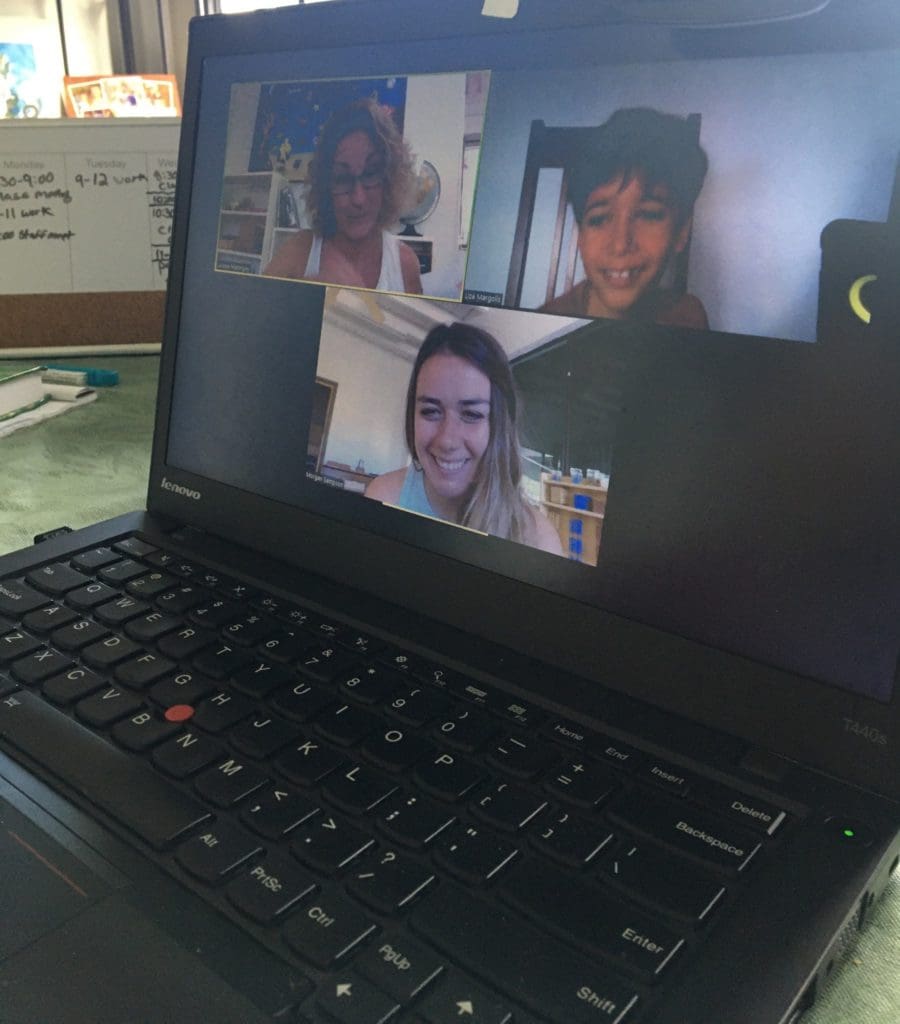
That response was no different from one given by a student the same age attending V.I. Montessori School & International Academy, who said his biggest challenge was “not being near the teacher,” and her white board. “Zoom isn’t the best for drawing,” he said.
“It’s a lot like our regular school, but we have more freedom,” said one 15-year-old private high school student, who preferred not to be identified, adding, “I’m not sure if that’s good for some people.” The other difference, he said, is not being with the teachers for subjects like math where you can ask questions.
Eight-year-old Jacob Kalloo, also at Montessori, said he misses his friends, but thanks to parents who were able to provide a tent on his front porch where he has been sleeping, and a new bicycle that his dad helped him assemble, he is happy “sleeping in my tent, and playing with the dogs.”
While most of the students interviewed had few complaints, the parents were struggling at best and tearing their hair out at worst.
“The hardest adjustment has been trying to balance the work schedule with a full school schedule in a home environment,” said Liza Margolis, Jacob’s mother. But she said having expanded curriculum that arrived this week from the school and teachers back online after spring break has made a huge difference.“They create instructional learning videos and provide other materials for the kids and provide guidance to the parents.”
The challenges for parents not working from home are different.
Catherine Jules works from 11 p.m. to 7 a.m. as a security guard. Her 8-year-old son Ja’Ven is a second grader at Tuitt Elementary. When she gets home in the morning, after breakfast and the usual morning routine – including some play time – she starts helping Ja’Ven with his class work.
“My biggest challenge,” she said, “is being tired.” Fortunately she has three older boys at home to help her, she said. Often they take over in the afternoon so that Jules can take a nap before dinnertime and heading off to work again.
For teachers and administrators, challenges vary.
Head of School Liz Morrison at Antilles School said fortunately because the school is part of a large network of independent schools that have already established systems that work for remote teaching, they were poised and ready to go. Also, she said, she was prepared the week before the school’s spring break for the possibility that the students would not be returning.
What, she said, seemed “very far away and theoretical on March 9, got a little more real by mid-week.”
Tuitt school principal Bedminster had two days to get anecdotal information from a third grade class to ascertain who might have internet access at her school. “It’s safe to say not all of them.” Her informal survey turned up half who had internet at home. But some were tethering with hot spots.
As for teacher preparation, there is a wide gap. “Not all teachers are good at it,” Bedminster said of the online platforms.
Ninth grade math teacher Weslyn Harry at Eudora Kean High School said she is good at it, and so are most of her students.
Because she was using the platforms before the crisis, COVID-19 has not changed anything for her. “I told people a long time ago, ‘get ready for the zombie apocalypse.’”
Using Excelmathmatics.com, she and her students have everything they need, she said. The program does everything from providing their lesson plan to grading them. “They only need me if they don’t understand something.”
She also said it makes it almost impossible for them to cheat.
But the program is not free. The only reason she has it is a grant from Community Foundation of the Virgin Islands mostly paid for by private resident Judith Grybowski, whose husband Kirk taught at the school, even in his retirement years. Kirk died unexpectedly in 2002.
Harry, who has been at Eudora Kean for 20 years said not all teachers are keen on the technology, but the kids are. She said they all have cell phones that work with the online math program. And she and the students can log in from anywhere to see who’s online.
“Everybody pops in because they want to,” she said.
Tuitt principal Bedminster is in a different position as an elementary school administrator. She has to rely on the parents to make the connections. “Getting parents to sign up has been hard,” she said. “The numbers have been ridiculously low.”
She is confident that some of her students will catch up. But for others who she said are already as much as two years behind grade level, “it’s not going to be easy,” she said. “But it shouldn’t be because we didn’t try.”