A man was arrested Friday, Feb. 27after telling officers he was carrying a firearm without a license during a traffic stop on Veterans Drive, the Virgin Islands Police Department reported.
Members of the Special Operations Bureau were patrolling near Vendors Plaza at about 9:51 a.m. Feb. 27 when they observed a vehicle without a license plate affixed to the front, according to the police report.
Officers initiated a traffic stop and detected a strong odor of marijuana coming from the vehicle. The driver and passenger, identified as Jalanie Daniel, were asked to exit the vehicle and complied. Officers advised both individuals that the vehicle would be searched for illegal contraband and that they would be patted down for officer safety, the police report stated.
Before the pat-down, Daniel informed officers that he was in possession of a firearm and did not have a license to carry it, the report stated.
Daniel was arrested and charged with unlawful possession of a firearm and unlawful possession of ammunition. Bail was set at $60,000, the report stated.
Police arrested a 31-year-old man following a reported robbery early Monday at La Terreza Bar & Restaurant in Estate Castle Coakley on St. Croix, the Virgin Islands Police Department reported.
At about 1:47 a.m. Monday, the 911 Emergency Call Center received several reports of a robbery at the business, according to the police report.
Responding officers made contact with the victim, who reported she had been robbed. Detectives assigned to the case met with the victim, who identified Jeffry Escanio as the suspect. She told police Escanio grabbed a gold chain from her neck and began to strangle her, restricting her airway. The victim sustained injuries during the encounter. Witnesses corroborated the victim’s account, the police report stated.
Police made contact with Escanio, who was advised of his Miranda rights and declined to provide a statement, the report stated.
Escanio was arrested and charged with robbery in the first degree and assault first. Bail was set at $75,000. He was unable to post bail and was transported to the John Bell Adult Correctional Facility pending an advice of rights hearing scheduled for Tuesday, the report stated.
It is with heavy hearts that the beloved partner and family of Bernard Ulysses “The Blade” Prince announce his passing on Feb. 14, 2026, at his residence.
Bernard Ulysses Prince
Bernard was a significantly loved partner of Barbara Holder, son, brother, uncle, adopted father, grandfather, and great-grandfather. He will be greatly missed by his loving family and friends. He worked at Zinke Smith Concrete Plant, now known as Heavy Materials, for close to 40 years as the Batch Plant Manager.
He leaves behind cherished memories that will live on in the hearts of Barbara Holder (loving partner of 30 years); Sister: Sonia Prince; Brother: Wayne Prince (Cheryl); Brother-in-Law, Louis Vialet; Nephews: Kenneth Vialet (Tracey), Craig Vialet, Allen Vialet; Nieces: Donna Rojas Thompson (John), Keshia Prince Anderson (Troy), Kishma Prince (Jerry Wilson); Great Great Nephews: Kameron Miller and Nathaniel Isaac; Great Nieces: Juanita Mitcham, Asia Anderson, Amber Vial et; Great Great Nephews: Kameron Miller and Nathaniel Isaac; Great Great Nieces: Rhythm Green and Mylah Green; Adopted Children: Mario Lanclos (Ann Marie), Calvert White, Chanda Russell (Ashley), Ivan Foy; Adopted Grandchildren: Justice Lanclos, Zahnae’ Laplace James, Lanclos, Sky Lanclos, Mario Lanclos, III, Calaen White, Caleb White, Cassidy White, Te’Moy Singletary, Cheynne Greaves, Paris Jones; Adopted Great Grandchildren: Ivy Singletary, Yolani Singletary; Adopted Nieces and Nephews: Angela, Amy, Alex, Alva, and Wrigbie Archibald, Jr.; Special Friends: Danny Abendego, Calvin Charleswell, Elroy Donovan, Kevin Fenner, Elroy “Fever” Fleming, Reynald Frazer, Jerome “Peewee” Gerald Louie Harrigan, Adelia (Queenie) Henneman, Peter Jeremy, Sherman Letang, Jennifer Lettsome, Wayne Moorehead, Ashley Ritter, Glen Shillingford, Rudolph Smith, Viola Smith and a host of other family members and friends too numerous to mention.
Viewing and tributes will be held on Saturday, March 7, at the Lutheran Church of the Reformation, Annas Retreat, St. Thomas, U.S. Virgin Islands, from 10 a.m.-11 a.m.,with services following immediately. Interment will be private. Funeral arrangements are under the care of Dan Hurley Homes for Funerals and Cremation Centers of St. Thomas, St. John, and St. Croix. For online condolences or to share a special memory, visit www.hurleydavisfuneralhome.com
Ms. Holder has asked that, in lieu of flowers, donations be sent to the Heart and Lung of SRMC using the QR code below, or to SRMC -Administration, 9048 Sugar Estate, St.Thomas, VI 00802. Please be sure to type Heart & Lung in memory of Bernard Prince.
Shevon Krystal Johnson, aka Big Von, of St. Croix, passed away on Feb. 2. She was 41 years old.
Shevon Krystal Johnson
She is survived by her special companion, Rondall Knight, Jr.; mother, Juanita Eastman Joseph; father, The Honorable Senator Franklin D. Johnson; daughters, Rashae Knight, Rashai Knight; grandmother, Elenor Sealey; great uncle, Ronald Allick; sisters, Shamika Johnson, Tia Richards, Thandie “Mandy” Masilela; brother, Dimitri Joseph; niece, Zariah Jones; nephew, Malcolm Woodard; aunt, Mabeline Marshall, Isabel Lopez, Edna Abramson, Tricia Johnson, Alice Payne Roach, Theresa Hendrickson-Thomas, Delores English Edwards, Christie, Mercedes, Annette and Denise Eastman, Myrna Payne; uncles, Larry Johnson, Kervin Johnson, Thomas Johnson, Antonio Sealey, Maxwell McIntosh, Wayne Payne, Beresford Edwards, Kingsley Roberts, Christopher Eastman, Lyndon Eastman, Clive Eastman, Glen Eastman, Joseph Eastman, Larry Joshua, Eustace Roach, Trevor Bowers, Melvin Boodie; great aunts, Bernice Allick, Gisbatine Houston, Majorie Peterson, Holly Eastman, Glenda Eastman, Judith Eastman, Anna Johannes; godparent, Dawn Bruce, Rita Dawson, Delores Edwards, Arlene Griffin, Alyssa Newton, Marion Simmonds, Sheryl Watkin and Danny Watkins Sr., Rudy Ross; godchildren, Akaizah Smith, Azinirah Libert; special friends, Latina Graham, Nadia Thomson; precious friends and other relatives too numerous to mention.
Funeral service will be held on March 13 at St. Patrick Catholic Church. Viewing begins at 9 a.m., with service at 10 a.m. Interment will be held at Frederiksted Cemetery.
Funeral arrangements are entrusted to James Memorial Funeral Home, Inc.
They built it in heat and in rain. They built it in classrooms and clinics, in construction sites and small shops, in churches and on fishing boats. They survived storms that tore off roofs and recessions that tore at dignity. They raised children who stayed and children who left. They kept culture alive when it would have been easier to let it bend.
Now we have to ask ourselves something that is uncomfortable but necessary.
Are they aging with dignity in the Virgin Islands, or are they simply aging and hoping nothing goes wrong?
The numbers already tell a story we can no longer ignore. According to the 2020 Census, more than 21 percent of the population of the Virgin Islands is 65 years or older. Our median age is 45.9, which means we are not a particularly young territory anymore. At the same time, more than two in five households consist of a single person living alone. That combination should make all of us pause. Aging plus isolation is where vulnerability lives. That is where a fall becomes a crisis. That is where medication mistakes go unnoticed. That is where loneliness turns into quiet decline.
Within the last five years, the Legislature enacted a senior registry focused on disaster preparedness for older adults and individuals with disabilities who live alone. It was a necessary step. Hurricanes taught us hard lessons about who is left behind when systems fail. But disaster season is not the only season that threatens our elders. A registry that activates when a storm is approaching does not address what happens on an ordinary Tuesday afternoon when someone cannot get to dialysis, or on a Thursday night when dementia makes a home unsafe.
The Department of Human Services has publicly acknowledged that the territory faces a worsening long-term care crisis. There are not enough nursing home beds. There are not enough assisted living options. There are not enough adult day care slots. As a result, some elders who have nowhere appropriate to go become boarders in our hospitals. That is not sustainable for the health care system, and it is not dignified for the individual. Others are placed off island at significant cost, separating them from their families, their church communities, and the familiar rhythms of home.
We must also be honest about safety. Recent legislative efforts strengthened protections for older and dependent adults, including the creation of an elder abuse registry. That is progress. But laws on paper do not automatically translate into protection in practice. Elder abuse thrives in silence and in isolation. When seniors live alone, when caregivers are overwhelmed, when families are stretched thin, vulnerability increases.
Too many families in the Virgin Islands are forced into impossible choices. They keep an aging parent at home alone and pray nothing happens. They sacrifice income and mental health to become full time caregivers with little support. Or they send their loved one off island because there is no viable local alternative. None of those options reflect the dignity our elders deserve.
This is not about luxury. It is about infrastructure. If more than one fifth of our population is 65 or older, then aging is not a niche issue. It is central to our social and economic future. An aging population without adequate support places strain on hospitals, on families, on social services, and on the economy as a whole. But an aging population supported by thoughtful planning can remain active, engaged, and woven into community life.
We cannot continue to treat senior care as an afterthought or a line item that is adjusted only in crisis. If we say we value culture, then we must value the people who carried it. If we say we respect our history, then we must respect those who lived it.
Solutions
First, the existing senior registry should be expanded beyond disaster response into a year round voluntary support system. A protected database coordinated through Senior Citizen Affairs and partner agencies could include emergency contacts, mobility limitations, medical vulnerabilities, and caregiving arrangements. The purpose would not be surveillance, but support. Regular wellness checks, especially for those living alone, could prevent small issues from becoming emergencies.
Second, the territory should commission and publish a comprehensive senior needs assessment every two years. We need clear data island by island on housing needs, dementia prevalence, caregiver capacity, transportation gaps, and waitlists for services. Policy decisions and budget allocations should be tied to measurable need rather than anecdote.
Third, we must treat hospital boarding of seniors as a system failure to be reduced with urgency. Elders who no longer require acute medical care but have nowhere appropriate to be discharged should not linger in hospital beds. The territory should establish a target for reducing such cases and align funding and planning accordingly.
Fourth, the Virgin Islands needs a true senior living ecosystem that includes independent senior housing, assisted living, memory care, and respite services. This can be achieved through a public private partnership model that sets clear standards for affordability, staffing, and quality of care. Government can contribute land leases or incentives, but accountability and oversight must be built into the structure. Every major island district should have access to such options so that families are not forced to choose between separation and stagnation.
Fifth, adult day care and caregiver support programs must be expanded and treated as economic policy. When caregivers can work while their loved ones are safely engaged during the day, families remain financially stable and elders remain socially connected. Caregiver training and mental health support should be incorporated into these programs to prevent burnout.
Sixth, elder abuse prevention must move beyond statute into active public education. Training for mandated reporters, simple reporting pathways, and community awareness campaigns are essential. Protection cannot rely solely on victims to speak up. It must be built into the fabric of the community.
Finally, senior centers across the territory should evolve into hubs for comprehensive support. Beyond recreational programming, they can provide benefits navigation, health screenings, technology assistance for telehealth, and regular outreach to those who stop showing up. A senior who disappears from community life should trigger concern, not silence.
The measure of a society is not found in its slogans or in its campaign seasons. It is found in how it treats those who can no longer fight for themselves. Our elders are not a burden. They are living testimony. They are repositories of memory, resilience, and faith.
Every one of us is either caring for an elder, becoming one, or mourning one. Aging with dignity in the Virgin Islands should not depend on luck, family wealth, or proximity to services. It should be a given. And if we are honest, building that system now is not just about them. It is about the future version of ourselves.
Editor’s Note: Opinion articles do not represent the views of the Virgin Islands Source newsroom and are the sole expressed opinion of the writer. Submissions can be made to visource@gmail.com.
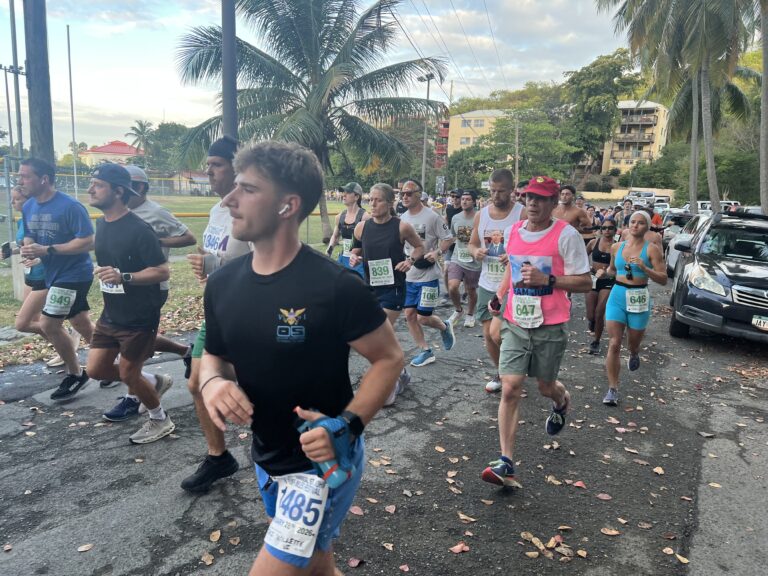
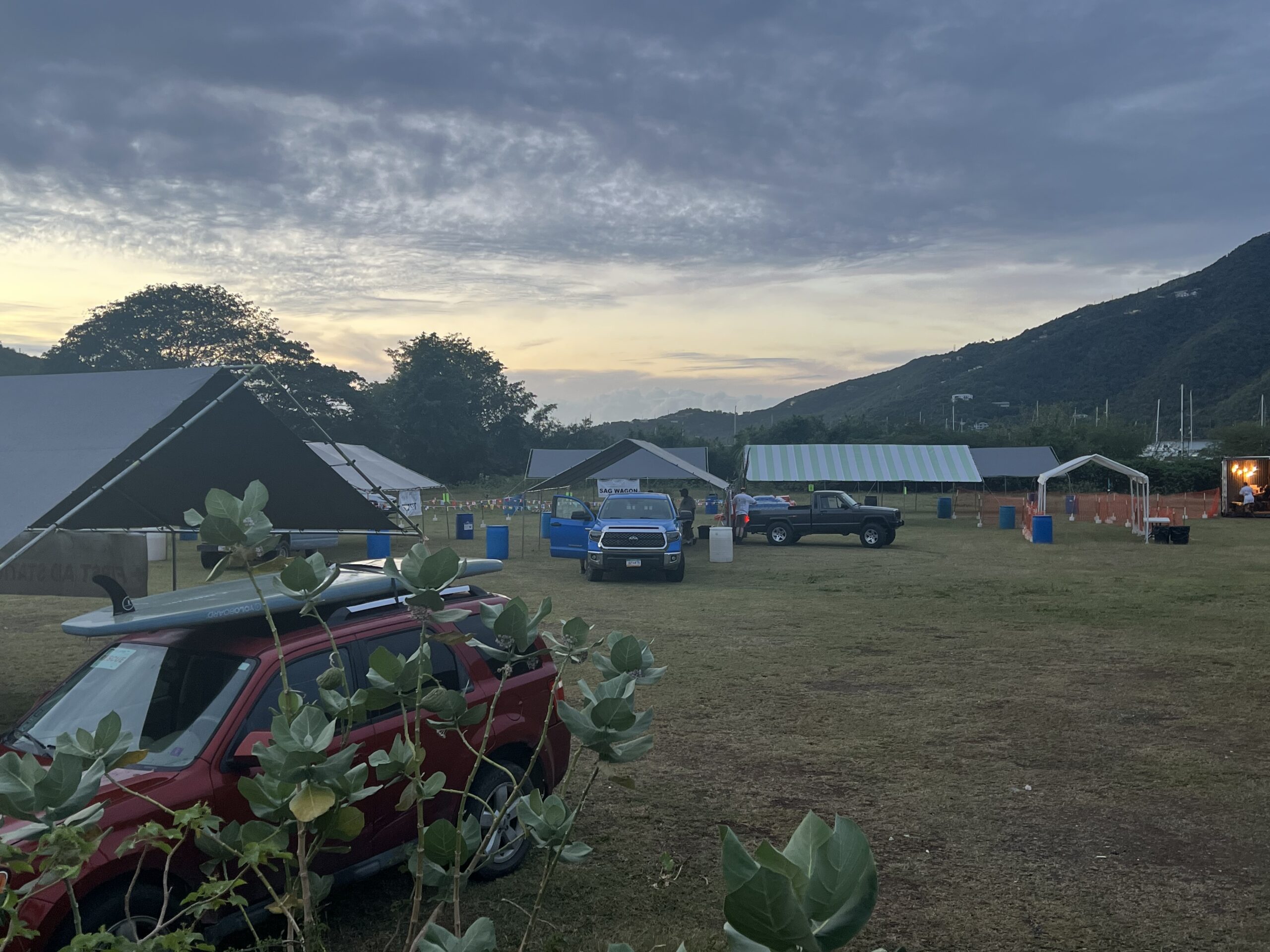
At daybreak on the last day of February, activity stirs along the road from Cruz Bay to Coral Bay. It’s the day of the 27th 8 Tuff Miles race.
Day breaks on a busy scene. (Source photo by Judi Shimel)
Moments from then, the race begins.
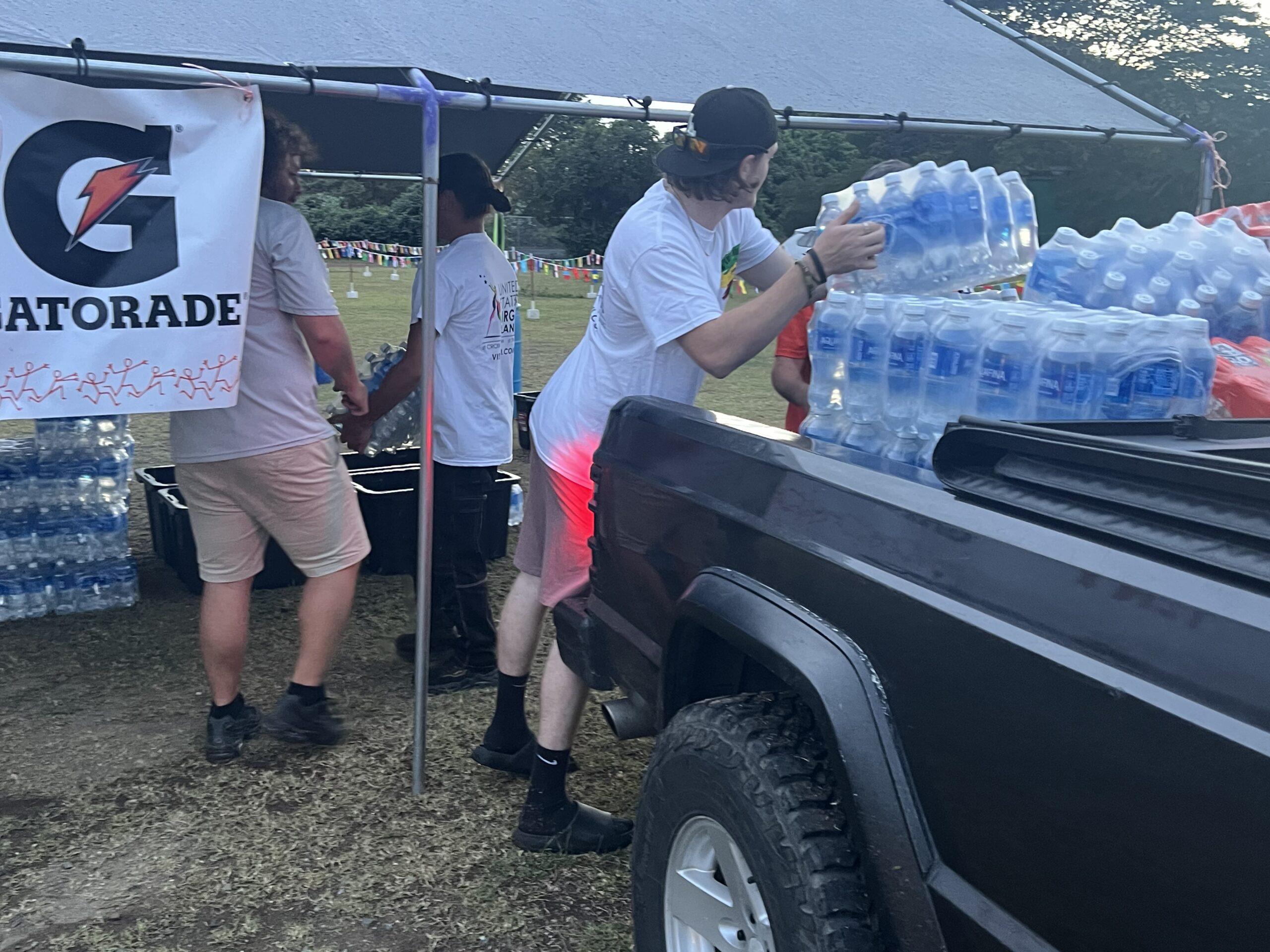
At the finish point, cases of water shift hand-to-hand from the back of a pickup truck.
Offloading essentials. (Source photo by Judi Shimel)
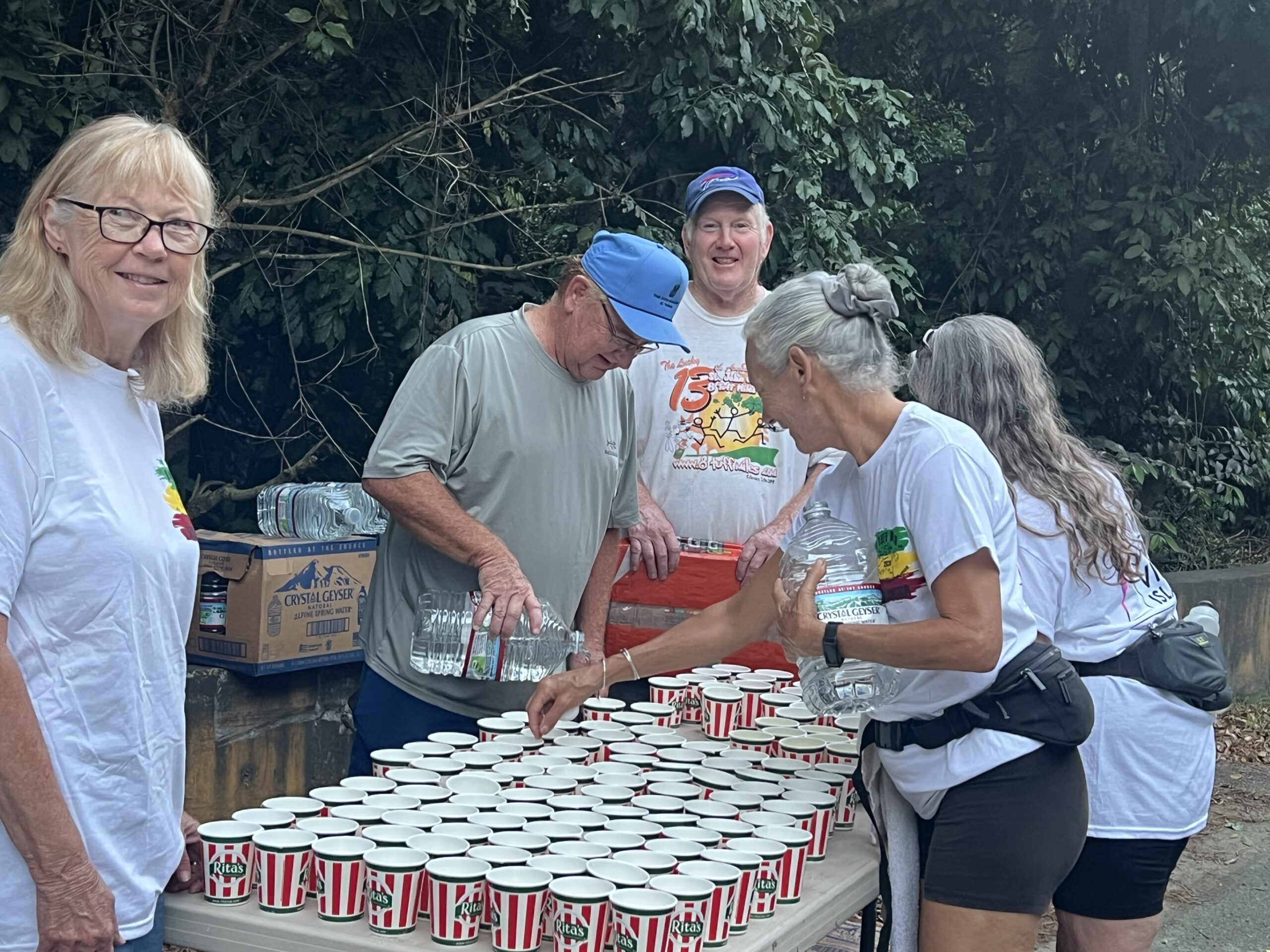
Water for hydration, joint health, and cramp relief. Volunteers set up tables to accommodate those along Centerline Road. Near the Catherineberg turnoff, Jeanette and Bruce Beckwith join members of Fish Bay Walkers as they prepare for duty.
Fish Bay Walkers supporting runners. (Source photo by Judi Shimel)
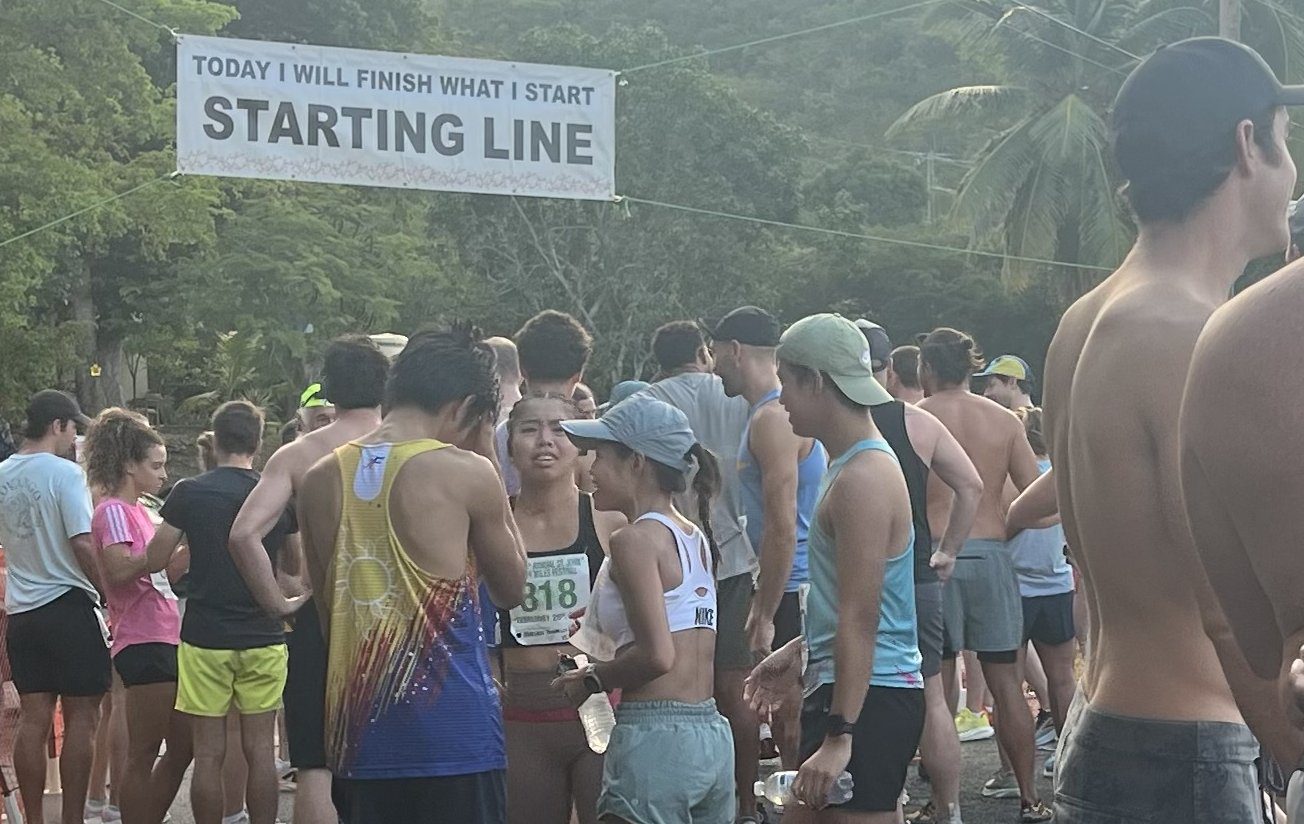
The time is 6:43 am — in less than half an hour, 1,500 registered runners and walkers would take off from the road behind the National Park Ballfield.
A sign and a pledge to go the distance. (Source photo by Judi Shimel)
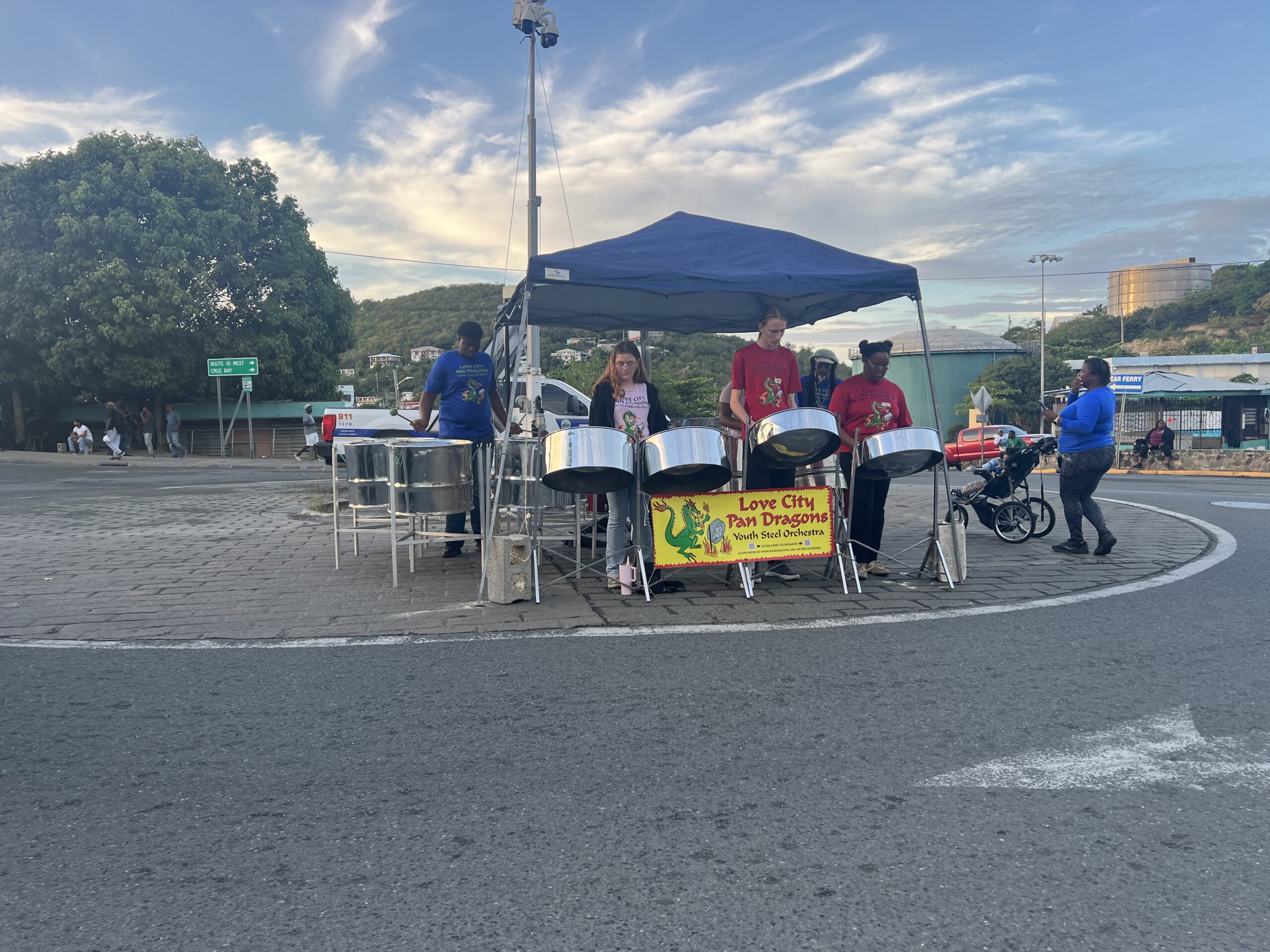
Within a few yards, they quickly hit the steep slope to the Veteran’s Circle where the Love City Pan Dragons waited to greet them.
Pan Dragons prepare. (Source photo by Judi Shimel)
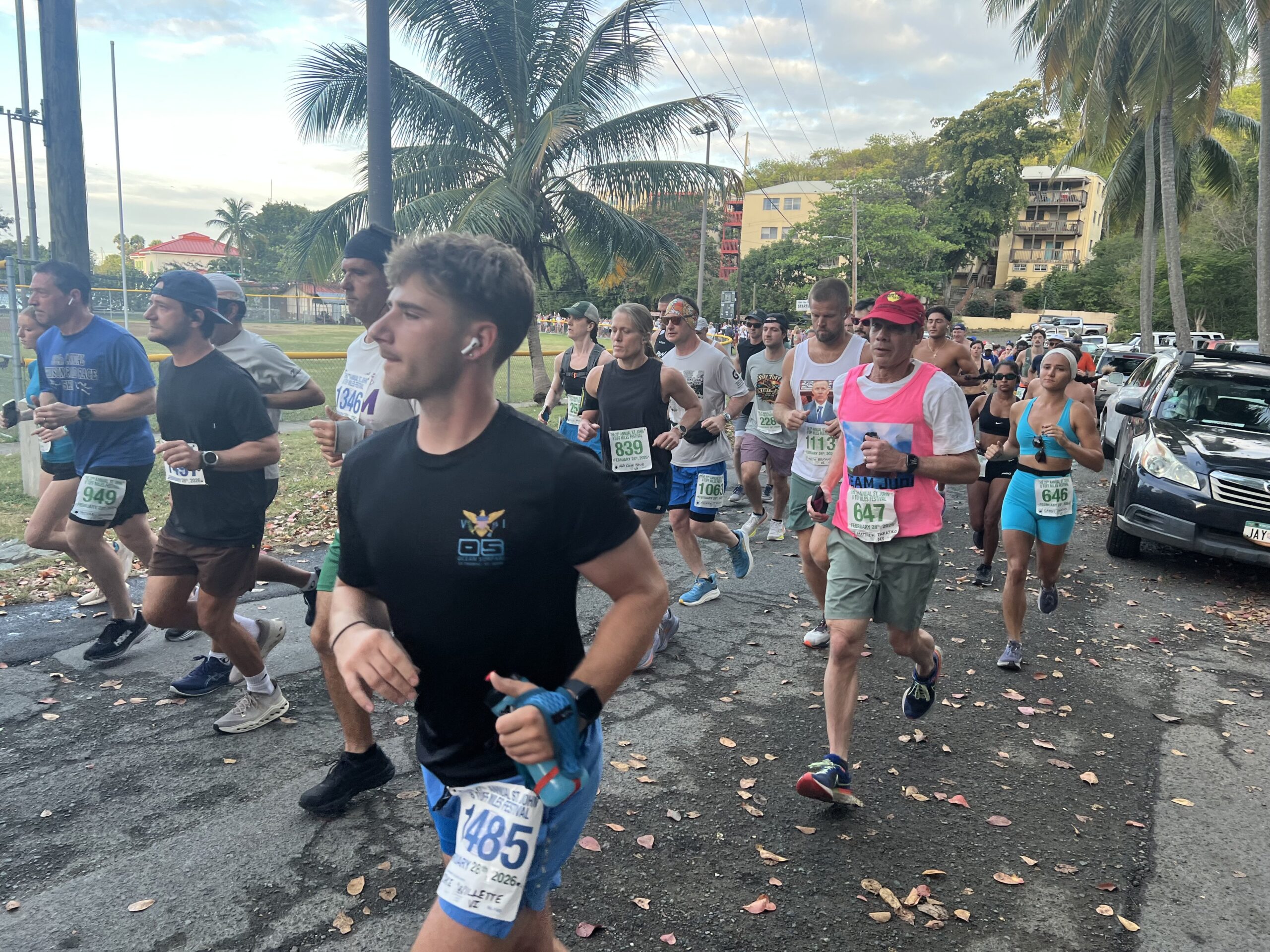
Then it was up, up, up the road all the way to Coral Bay. A group made up of the top 100 finishers of the 2025 race led the charge with an eager set of challengers hot on their heels, given some lag time at the starting line.
“Up de Road!”(Source photo by Judi Shimel))
Along the way, some of those in the lead pack would lose their place among the first 100 finishers to their competitors.
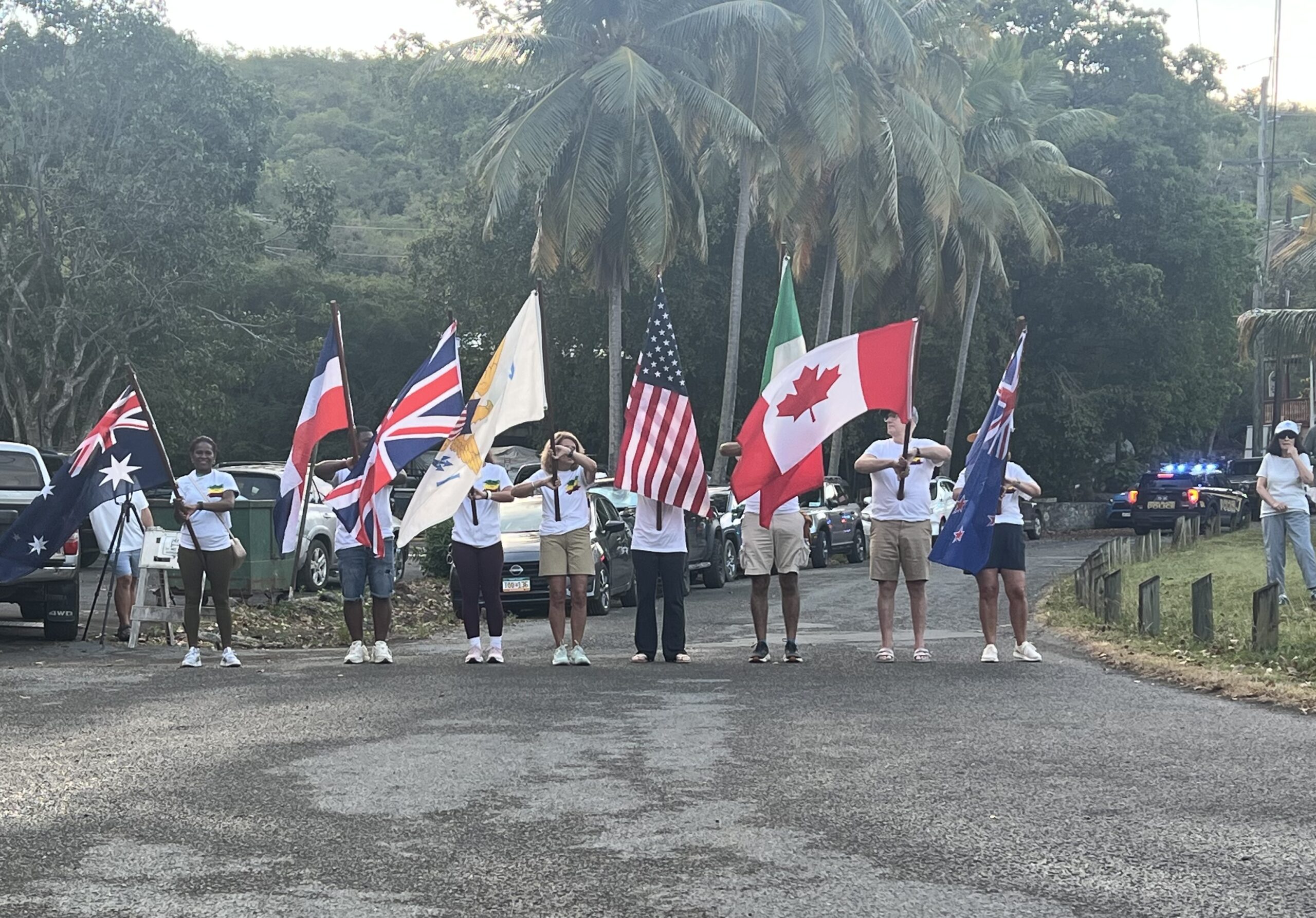
But before it all began, a moment to honor the nations represented by runners taking part in the race.
Flags to honor and to represent. (Source photo by Judi Shimel)
First across the finish line for the men’s division was Matias Porporato with a time of 51 minutes, 54 seconds; Elise Yoshioka clinched it in the women’s division in 58 minutes, 26 seconds.
The Gypsy Troupe table, whose members came out to cheer on Lillian Garfield, were one of many in high spirits Saturday (Submitted photo)
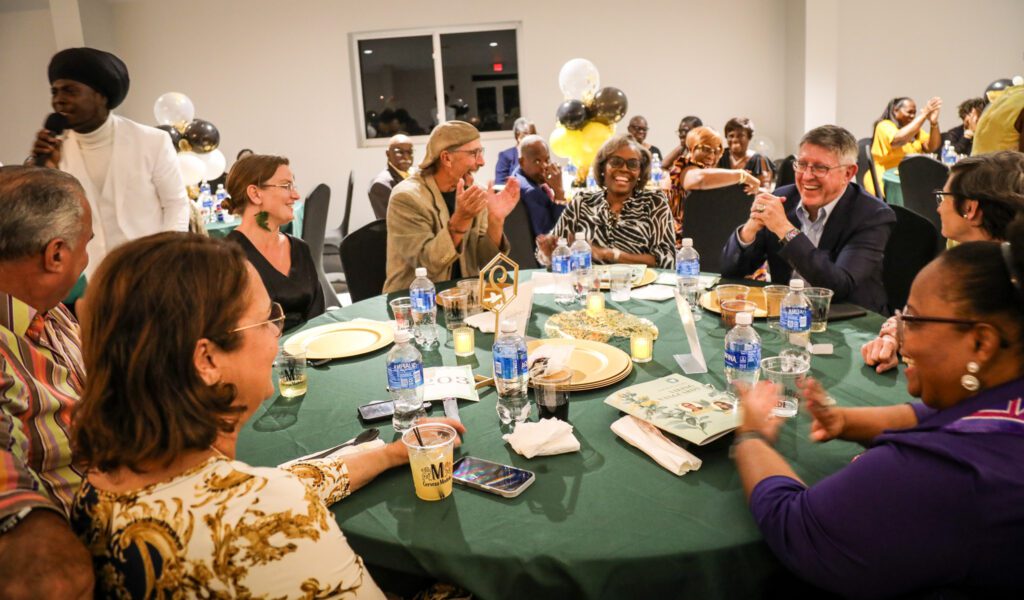
Nearly a century of faith, scholarship and leadership took center stage Saturday night as All Saints Cathedral School hosted its 2026 Annual Gala, “Viking Vanguards: Honoring Our Legacy, Charting the Future,” at My Brother’s Workshop Event Hall.
“98 years — isn’t that great?” host Mary Rhymer told the crowd, drawing applause for a school that has shaped generations of Virgin Islanders. She described the Viking community as one built on faith, compassion and a shared commitment to nurturing the whole child — mind, body and spirit. A gala like this, she said, is more than a celebration. It is a moment to pause and reflect on the impact All Saints has had on children, families and the wider community — and to rally around sustaining that mission for the years ahead.
Head of School Carla Sarauw and Board Chair Jimez Ashby Jr., a 2013 graduate, welcomed supporters and underscored that the evening’s fundraising efforts directly support academic programs, teachers and campus improvements. Sarauw said tuition alone does not cover the true cost of educating a student, noting that the school bridges a financial gap each year to ensure access. She added that fundraising helps prevent families from being priced out while maintaining strong academic standards. Professional development for teachers also remains a priority, she added, along with ensuring students learn to use emerging tools like artificial intelligence responsibly and effectively.
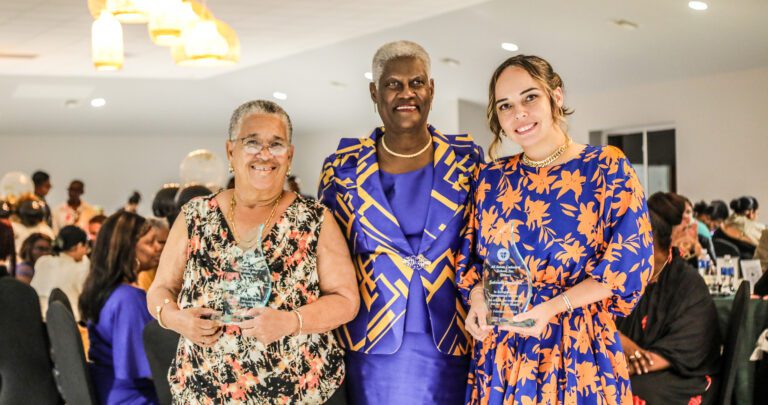
The evening also honored two women whose lives reflect the school’s values in action.
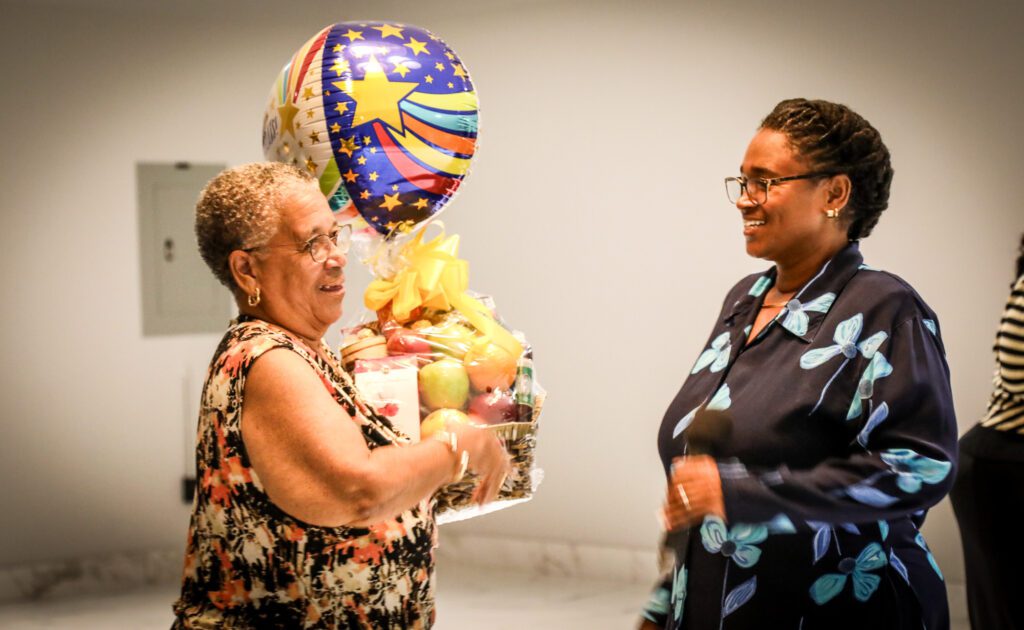
Honoree Lillian Garfield (left) receives a gift from daughter Dionne Donadelle (submitted photo)
Lillian Garfield received the 2026 Steward of Service Award in recognition of decades of public service, church leadership and community advocacy. A lifelong Virgin Islander, Garfield spent 35 years with the Government of the Virgin Islands in the Office of the Lieutenant Governor’s Division of Banking and Insurance and served as a shop steward for Local 8249 of the United Steelworkers. Her service extends well beyond government — from leadership roles at Cathedral Church of All Saints to the Charlotte Amalie High School Band Boosters, United Way and neighborhood associations. Known affectionately around campus as “Miss Carnival,” she continues to support cultural initiatives across the territory.
Accepting the award, Garfield reflected on what the institution has meant to the community. “I take pride in this award, of service above self,” she said, looking out over the audience. “This institution has been in this community for 98 years. Much has been given and much has been received.” She spoke of the generations of graduates who now serve as nurses, doctors, attorneys, judges, ministers and educators. “You know what All Saints means to this community and the world,” she said. “The service in education — these students have a great purpose.”
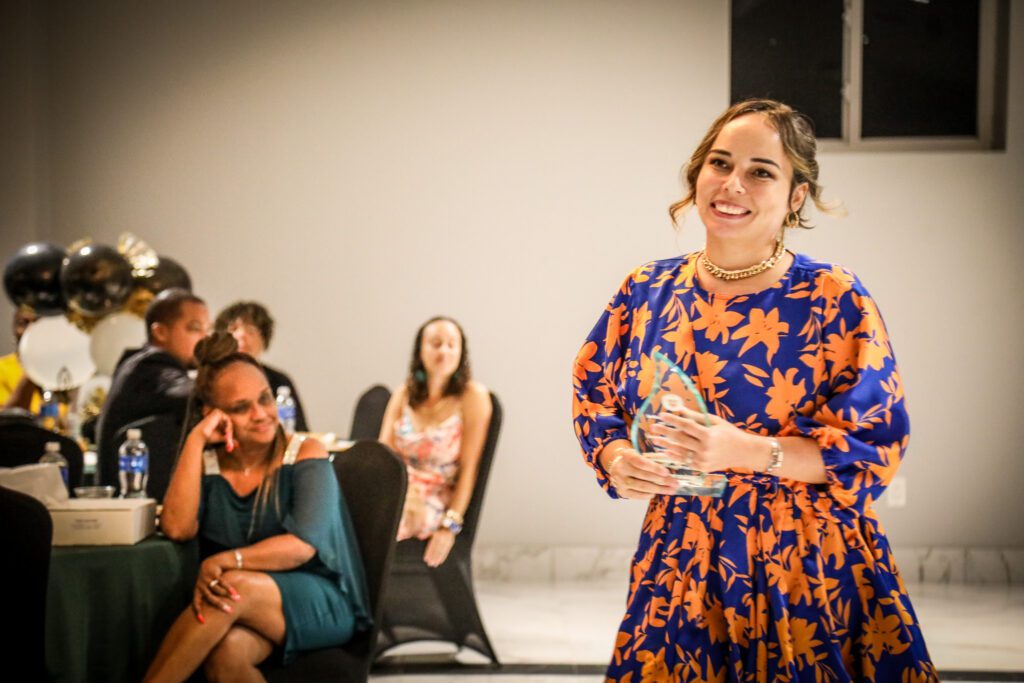
All Saints alumna and honoree Gabrielle Querrard spoke about how the school prepared her for the world (Submitted photo)
Also honored was alumna Gabrielle Querrard, recipient of the Viking Legacy Award. A correspondent with the Virgin Islands Source, Querrard has built a digital platform reaching more than 60,000 followers through content centered on Caribbean culture and history and co-hosts the Caribbean Mystics Podcast, which has surpassed 80,000 downloads. She has worked in creative direction with Mango Media Marketing, contributed to a Roc Nation artist shoot and co-hosted Season 3 of Tempo Networks’ “Hot Ones Caribbean.” Still, she credits All Saints with laying the foundation long before those opportunities emerged.
“I think one of the special parts about All Saints is that it focuses on the whole child,” Querrard said. “It’s not just about academic excellence, but moral fiber.” She described how daily prayer and the school’s connection to the church shaped her sense of discipline and discernment. “All Saints prepared me for the world that I would meet,” she said — a world that demands punctuality, integrity and vigilance. “It’s almost impossible to walk away from an upbringing like that and not carry prayer and God and miracles with you for the rest of your life.”
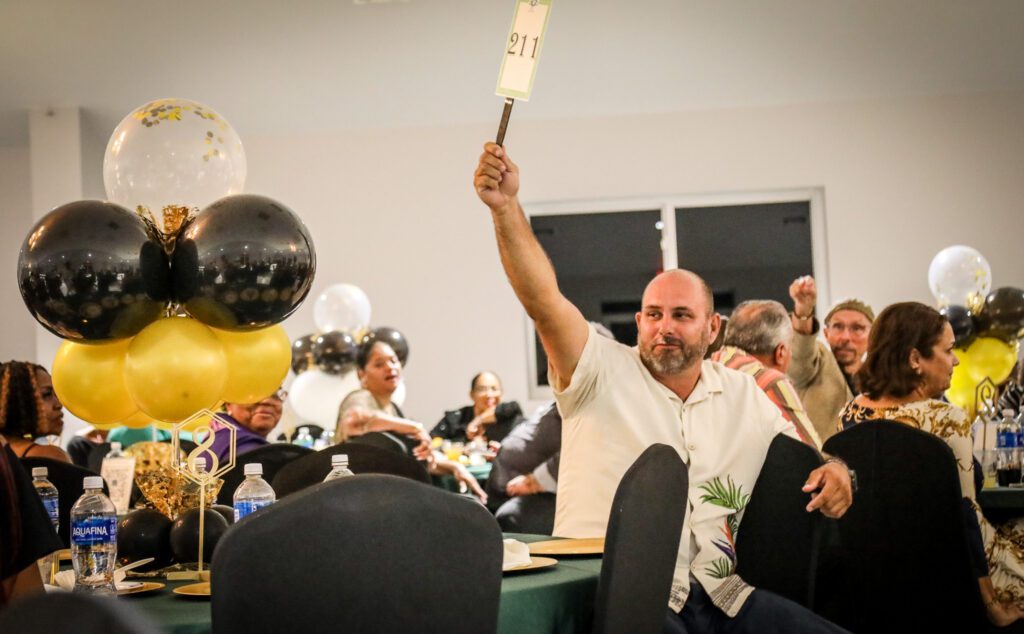
All Saints Athletic Director Joseph Limeburner raises his paddle for a pool day at Lovango as a gift for his volunteer coaches (Submitted photo)
The celebration also carried its share of lively moments. Live auctioneer George Silcott Jr. stirred the crowd, igniting a bidding war over a “staycation” package featuring a stay at At Home in the Tropics and dinner at Café Amalia. The highest live auction bid of the night came from All Saints Athletic Director Joseph Limeburner, who won a six-person poolside cabana day for the school’s volunteer coaches. “They do so much for our young athletes,” he said. “I hope they’ll enjoy it.”
As the school approaches its centennial, Sarauw said the school’s focus remains steady: strengthening academic programs, continuing meaningful professional development and drawing alumni back into the life of the school. “We built you,” she said of graduates who live within the community. “Come back. Give your ideas. Help us continue the work.”
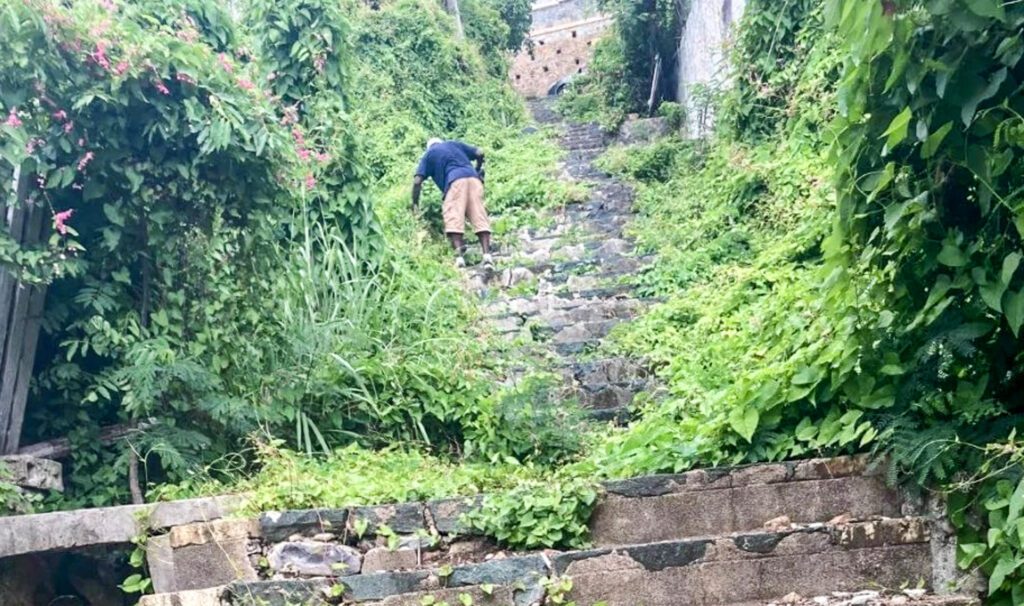
A historic step street is overrun by the fast-growing invasive coralita vine. (Photo courtesy of the St. Thomas Historical Trust)
Volunteers gathered Friday on St. Thomas to clear vegetation and debris from a step street above Charlotte Amalie as part of a monthly community effort to restore historic step streets.
The cleanup was organized through the St. Thomas Historical Trust as part of its Step Street Project, which brings residents together to maintain and preserve the stone stairways that connect neighborhoods throughout the town. According to Anna Monica Villa, a board member of the Historical Trust and chair of the project, volunteers meet once a month, with cleanups planned for the last Friday of each month.
Step streets are narrow stone stairways that climb the hills of Charlotte Amalie, connecting streets and homes first laid out during the Danish colonial period. Some, like the well-known 99 Steps, are carefully maintained and widely used, while others face challenges from wear, overgrowth, and aging infrastructure. Villa said historians believe the stairways grew out of town plans drawn in Denmark, where streets were designed as straight lines on flat ground.
“It’s a Danish plan adapted to a St. Thomas reality,” she said. “You have a design that’s made in a place where they have no hills, and then to adapt that plan to the reality of an island that has primarily hills and very little flat space, you have to build steps.” Many of those stairways, she added, were built by local artisans,
Villa said the project is about more than clearing vegetation from stairways. “As we’re fixing the infrastructure, we are also repairing the things that are damaging in the fabric of our community,” she said.
Villa said maintaining the step streets helps preserve the walkable character of Charlotte Amalie, which she said has increasingly shifted toward car-focused design.
“When you walk up the hill, it makes you go slower. You say hello to somebody, you find out what’s going on with them…because we took the time to stop and greet each other on the step street, you knew what was going on with your neighbor. You were in a position to be of help.”
She said the larger goal of the project is to reconnect residents with both the town’s history and with one another. “The project is to reconnect us with our history and with each other,” Villa said, “while reconnecting our community in new, meaningful and healthy ways.”
Many step streets are cared for by the Department of Public works and residents who live along them, with people sweeping, trimming plants, and making small repairs as part of their daily routine. The Step Street Project, Villa said, aims to support that work and extend it to stairways that have been harder to maintain.
Villa said last week’s cleanup was “awesome,” with volunteers working together to clear debris and cut back vines. “It was so satisfying that we accomplished so much in such a short period of time, and I think we can all feel good about that.”
The next Step Street cleanup is set for the last Friday of the month, from 8-10 a.m. Volunteers are encouraged to bring shovels, clippers, or other gardening tools, and donations of topsoil or plants are welcome to help restore areas overtaken by invasive coralita vines.
“It’s fixable. We can do this,” Villa said. To donate or find more information on the step street project, Villa encouraged residents to visit the project section of the St. Thomas Historical Trust website.
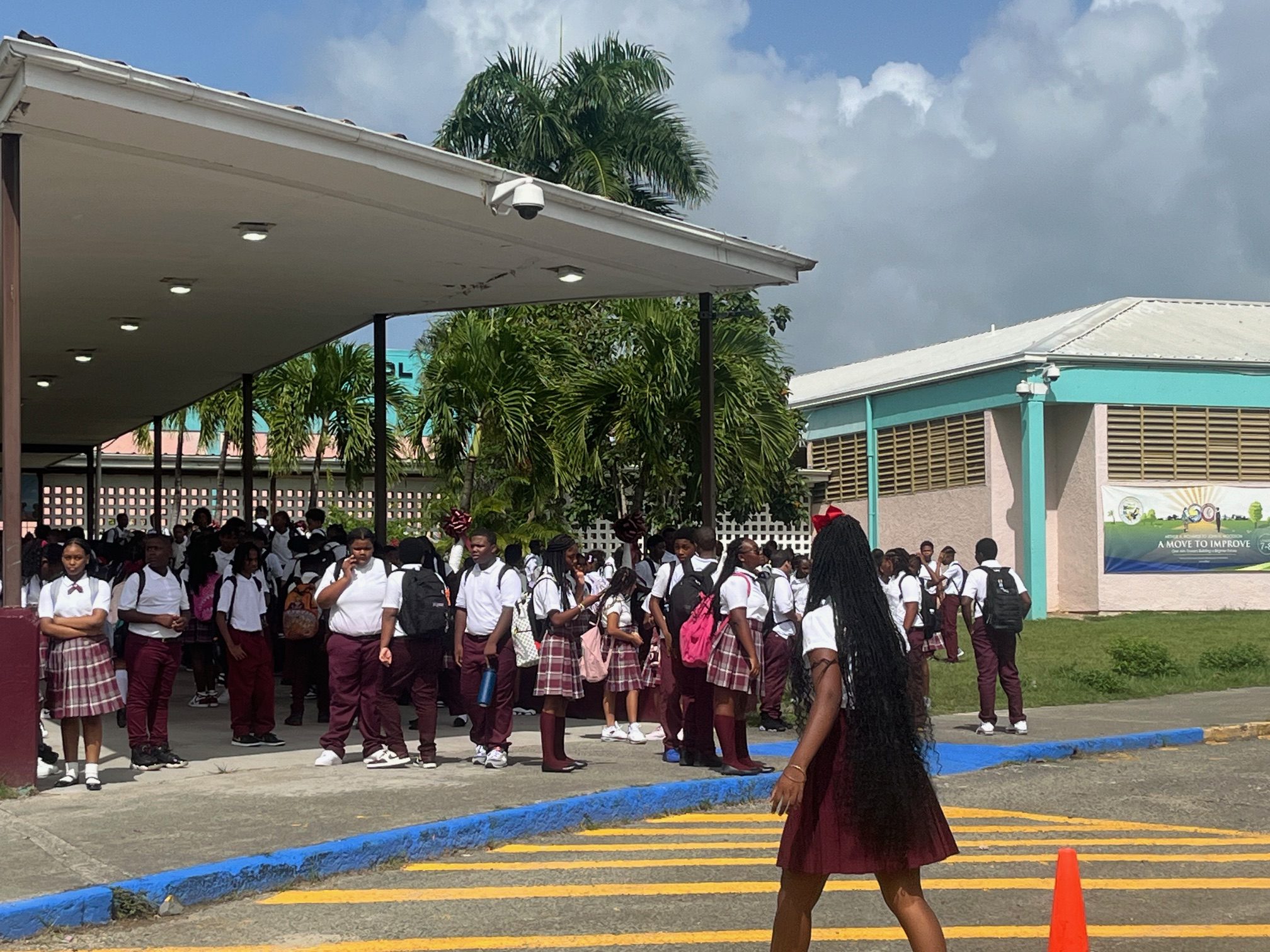
John H. Woodson Junior High School (Source photo by Diana Dias)
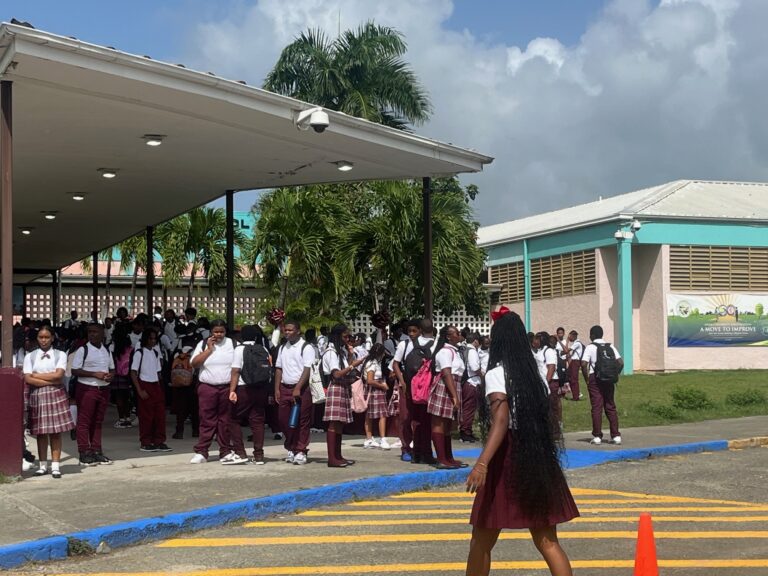
With tensions rising over the future of John H. Woodson Junior High School students, the Virgin Islands Board of Education convened an emergency meeting Thursday evening via Microsoft Teams to confront growing concerns about a proposed campus relocation and broader redistricting plans.
Board members engaged in a detailed and, at times, pointed discussion over the proposed relocation of seventh and eighth-grade students from John H. Woodson Junior High School to the Eulalie Rivera K-8 School. Several members placed their concerns directly on the record, questioning both the decision-making process and the readiness of the receiving campus.
Member Winona Hendricks opened the discussion by referencing what administrators shared during a recent school visit.
“When we visited Woodson, the administration indicated that they did not want to be removed and relocated to an elementary school setting,” she said. “They felt it was inappropriate for a junior high school, especially given their strong involvement with sports and other community activities.”
Chairman Kyza Callwood then questioned whether those concerns had formally reached the Department of Education.
“Do you know if the principal spoke with the superintendent or the commissioner?” Callwood asked.
The response indicated that school leadership had raised their objections at the commissioner level. Callwood emphasized the need for clarity before drawing conclusions.
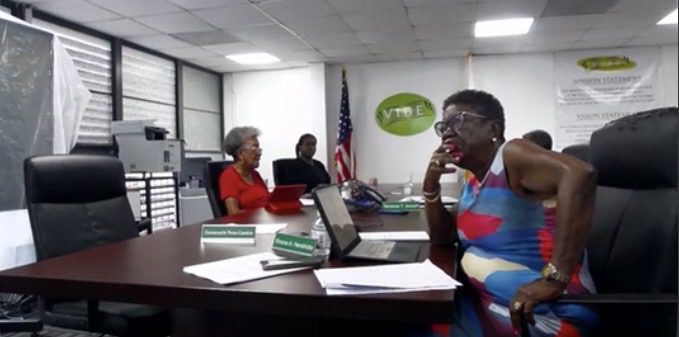
Virgin Islands Board of Education (St. Croix members). (Screenshot via Microsoft Teams)
“We need to find out from the commissioner exactly what was discussed,” he said. “Why was that school selected over another school? How was the decision made? Is it already set in stone?”
Vice Chair Emmanuella Perez-Cassius stressed the importance of transparency and inclusion in the decision-making process.
“When I saw the concerns raised in the email, I felt it was important for us to look into this collectively,” she said. “We’re hearing from teachers while we walk through the schools about their challenges, but we don’t have information to share with them. We, as board members, also need to be informed.”
Member Mary Moorhead clarified her reasoning for supporting the special meeting request.
“My intention in signing the request was that this is a time-sensitive decision,” she said. “Parents have to prepare uniforms. They have to understand where their children are going. We should have a position as a body on what is best for the seventh and eighth grade students.”
Moorhead also questioned what she described as a shift in prior expectations.
“It was always my understanding that the Woodson students would be enrolled in the new Arthur Richards school,” she said. “If you have a new school designed to accommodate those students, why move them to a campus that lacks a gymnasium, cafeteria, and auditorium?”
Member Abigail Hendricks Cagan echoed those concerns.
“You’re putting middle schoolers into a school that was designed for elementary students. It just doesn’t fit,” she said. “We’re moving them from one bad situation to what could be worse.”
Callwood noted that he listened to a Feb. 5 Senate hearing where Commissioner Dionne Wells-Hedrington outlined plans to accommodate 441 seventh and eighth-grade students, along with 76 faculty and staff members, one dean of students, and two school administrators. According to Callwood, the commissioner cited environmental concerns at Woodson as the primary reason for relocation and stated that Eulalie Rivera had sufficient capacity to absorb the students.
As debate intensified, Moorhead introduced a motion objecting to the relocation.
“Given the lack of appropriate facilities for seventh and eighth graders at Eulalie Rivera, the board objects to the relocation,” she stated.
The motion faced immediate resistance.
“I think it’s premature because we don’t have all the information,” Callwood said. “We have a meeting coming up with the department. Once the commissioner officially tells us that this is their decision, then this motion would be appropriate.”
Perez-Cassius agreed.
“We did write a letter to the commissioner. We asked her to come before us,” she said. “I think we ought to allow both the commissioner and the Bureau of School Construction to present and then make an informed decision.”
Following a roll call vote, the motion failed.
The conversation then shifted to broader redistricting concerns. Hendricks emphasized the importance of timely communication with families.
“Parents need early notification,” she said. “They need to know where their children will attend so they can get the correct uniforms and prepare for the school year.”
She also linked redistricting decisions to attendance and student support services.
“We’re hearing about students who are chronically absent because of transportation,” Hendricks said. “Redistricting isn’t just about where you live. It has to take into account attendance, services, and student needs.”
Perez-Cassius raised concerns about potential impacts on high school seniors.
“We have seniors who have been in their schools for three years,” she said. “Are we going to separate classes of 2026 or 2027? We need to know if that’s being considered.”
Moorhead added that department employees could also be affected.
“There are department employees who rely on waivers to keep their children near their work locations,” she said. “Eliminating waivers creates serious challenges.”
Throughout the discussion, Callwood underscored the need for verified information before the board adopts a formal position.
“We need to hear from the commissioner,” he said. “We need clear, factual information so the board can make an informed decision.”
The board confirmed that Commissioner Wells-Hedrington will appear before members on March 12 at 2 p.m. to present details on the proposed relocation and redistricting plans. At that time, the board is expected to determine its formal position moving forward.
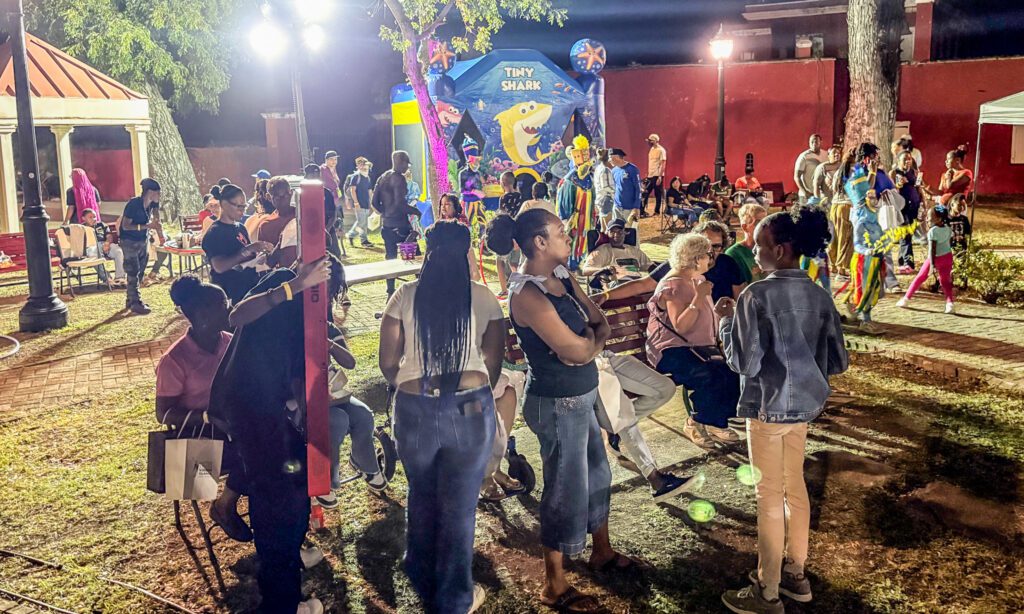
Families gather at Buddhoe Park in Frederiksted to enjoy the evening’s festivities, with children lining up for the bounce house and live entertainment filling the air. (Source photo by Diana Dias)
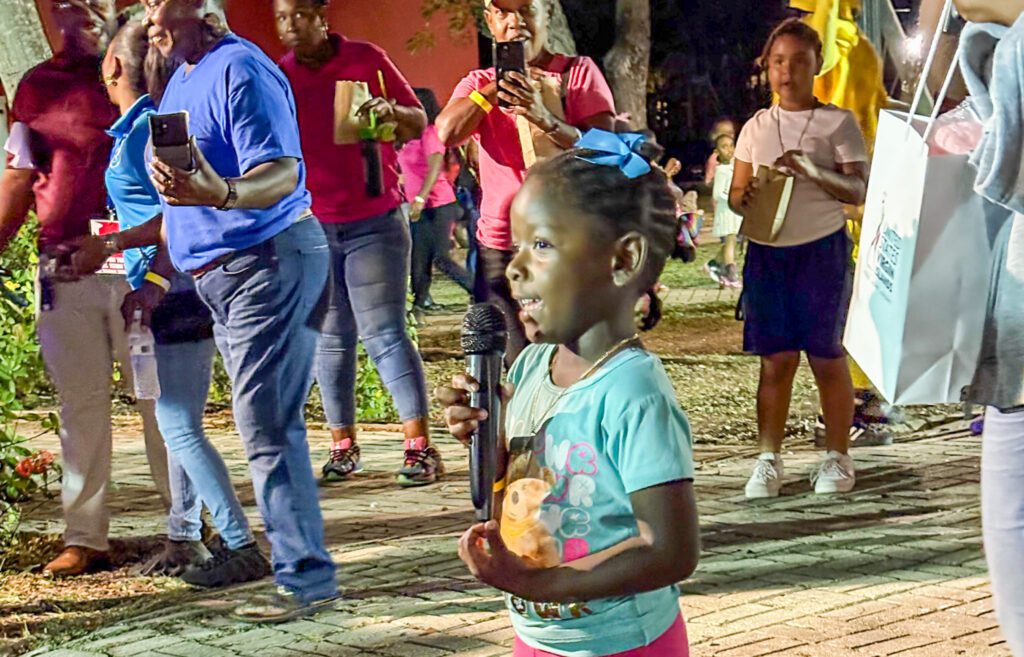
Families filled Buddhoe Park in Frederiksted with laughter, music, and community spirit Friday evening as the Virgin Islands Department of Education hosted its first-ever Family Night Out, a high-energy kickoff to a weekend focused on strengthening parent engagement across the territory.
The inaugural event transformed the waterfront park into a vibrant hub of activity, drawing parents, students, and caregivers together for an evening designed to celebrate family connection. Children raced between bounce houses, tried their skills at double dutch, and joined in friendly games spread across the park grounds. A live band kept the atmosphere lively, while karaoke gave participants a chance to take center stage and entertain the crowd.
Families gather at Buddhoe Park in Frederiksted to enjoy the evening’s festivities, with children lining up for the bounce house and live entertainment filling the air. (Source photo by Diana Dias)
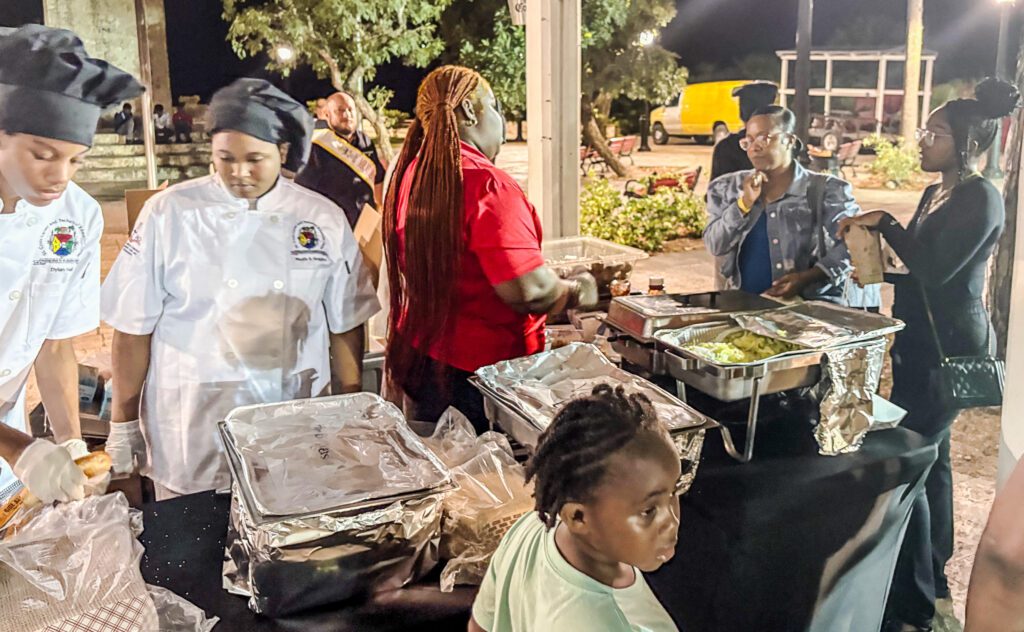
Free food and refreshments were provided throughout the evening, with the Central High School Culinary Arts program serving up crowd-pleasing bites and treats. Organizers also distributed prizes and giveaways, adding to the festive energy of the night.
More than just entertainment, the event underscored the department’s commitment to creating spaces where families feel welcomed and connected to the education system. Parents mingled with educators and staff in a relaxed setting, reinforcing the message that strong schools begin with strong family partnerships.
The celebration continued the following day with a Parent Retreat held Saturday at Carambola Beach Resort. While Friday night was centered on fun and fellowship, the retreat focused on empowerment and renewal.
Photo 3 – Confident and full of joy, singing “Let It Go” from the movie “Frozen,” students took the mic and sung their hearts out during karaoke, captivating the crowd with fearless performances. (Source photo by Diana Dias)
Under the theme “Bloom Where You Are Planted: Cultivating Parent Power,” the retreat was designed to create a special space where parents and caregivers felt valued, supported, and equipped with tools to advocate for their children’s success.
The day included opportunities for connection, reflection, and learning, encouraging participants to share experiences, build networks, and strengthen their role in their children’s educational journey. Organizers described the retreat as a chance for parents to pause, recharge, and return to their communities empowered with knowledge and renewed purpose.
Together, the two events reflected the department’s broader effort to engage families not only as supporters of education, but as essential partners in shaping student achievement and school culture.