

What if these delicate beauties are really deceitful posers?
Stopping for a moment to notice the local flowers always makes me smile, even though I know that they are not really showing off for my benefit. The shapes and colors and fragrances of flowers are mostly meant to attract insects and birds that can transfer pollen from one flower to another, thereby enabling the plants to gain the advantages of cross-pollination. The evolutionary deal is supposed to be a mutually beneficial relationship, with the pollinators getting food in exchange for reproductive services. However, nothing is ever so simple.
Recently I reported on some of the birds and bees that get food from flowers for free by poking holes directly into the nectar sacs, without going inside the flowers and providing pollination services in exchange.
Now I am getting some feedback from pollinators about the cheating behaviors of the flowers themselves. The biggest complaint is that some flowers look good, and smell sweet, but don’t have any nectar inside.
From the plant’s perspective, it takes a lot of effort to produce nectar to feed the pollinators. The chlorophyl-containing cells in their leaves can produce sugars through photosynthesis, absorbing sunlight to provide the energy needed to break down water and carbon dioxide and then synthesize glucose. That’s a complicated procedure, though.
If an energy-conserving plant really needs cross-pollination to reproduce successfully, it might try to save its strength by relying on flashy colors and cheap scents rather than nectar to draw in the pollinators, thereby tricking them into doing the work without any food in exchange. The energy the plants save by not having to make nectar for pollinators can otherwise be spent on plant growth and maintenance, seed production, and other important activities.
The no-nectar deception generally works best on young ‘naive’ pollinators, because eventually most hungry pollinators will catch on and avoid those cheating flowers.
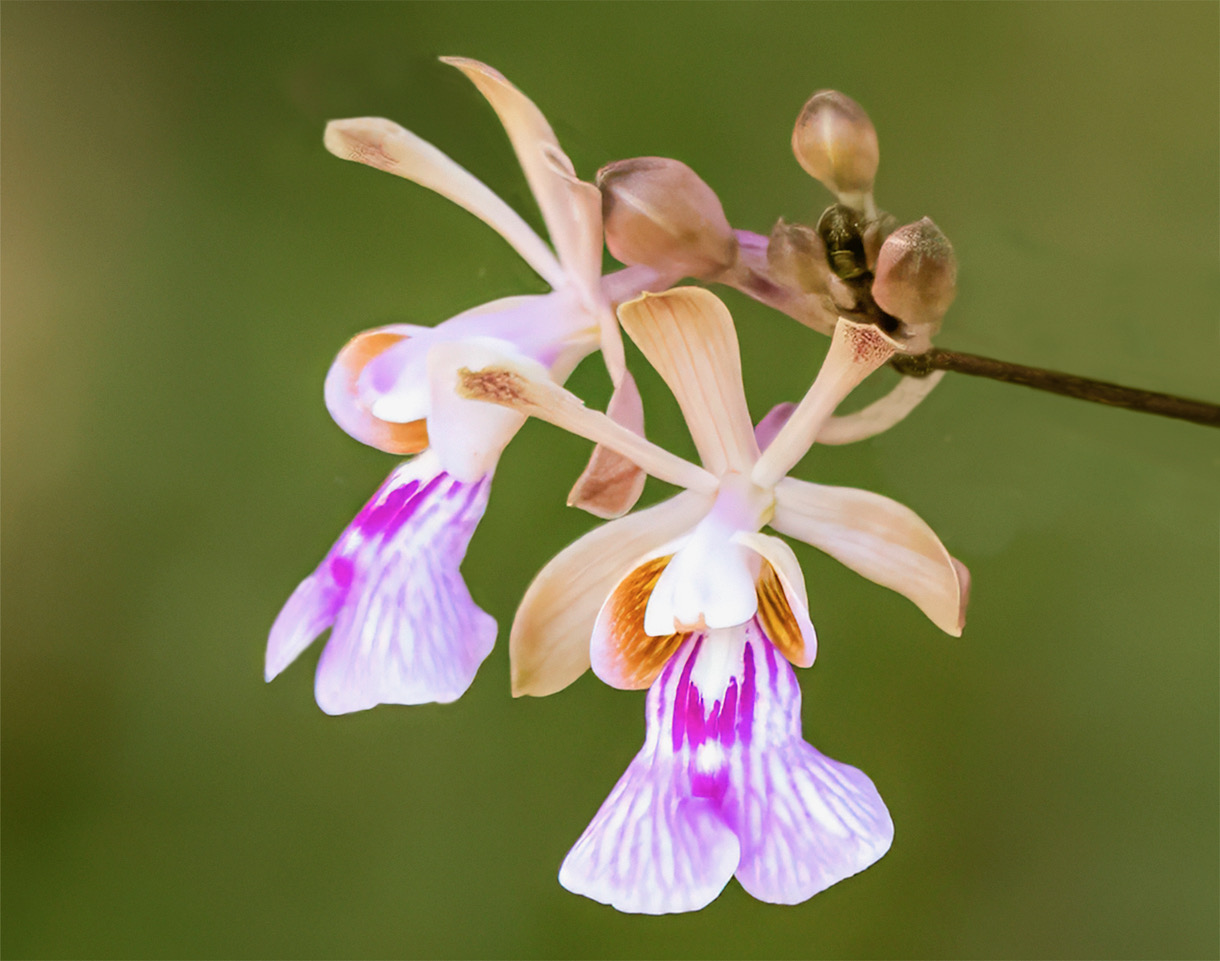
One deceitful type of flower in my yard is the delicate Psychilis macconnelliae, which is native only to the Virgin Islands and Puerto Rico. They are variously called Butterfly Orchids, Island Peacock Orchids or Sandy Point Orchids. Their flowers last for months, so I enjoy having them around.
The bright colors and protruding petals of the Psychilis macconnelliae are designed to attract bees and butterflies – but there is no nectar there. As a result, they don’t get very many repeat visitors.
These plants seem to be resigned to the low-pollinator situation. Their energy-saving adaptation is a trade-off that makes it possible for the plants to grow in a dry environment and survive drought conditions. Their flowers, when they come, last a long time. Eventually a naive bee will probably stop by. Then if pollination occurs, the fertilized plant will have enough energy to produce and throw off large numbers of tiny seeds in hopes of expanding its population.
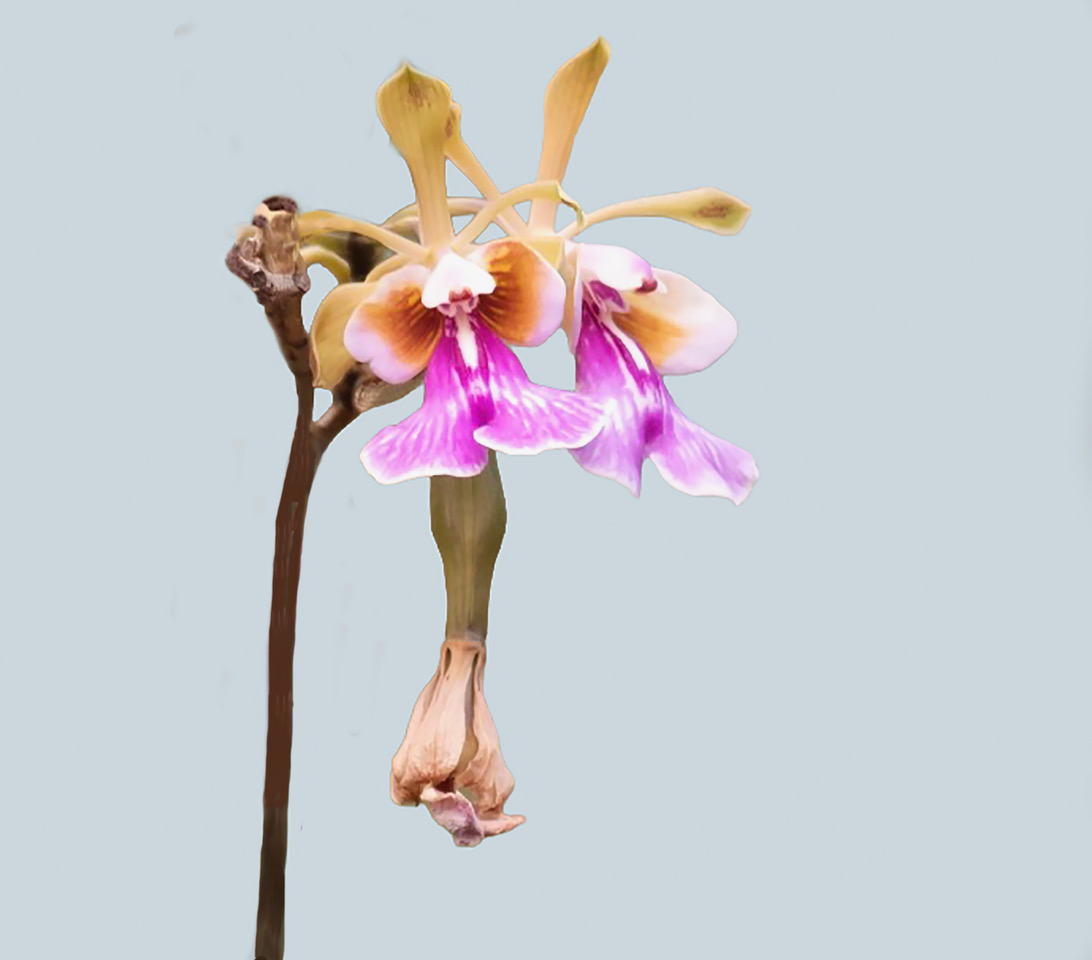
I don’t actually think it’s fair to conclude that the Butterfly Orchids are being lazy or unethical. The no-nectar decision may be critical for their survival under precarious living conditions. Still, you can understand that the pollinators feel cheated and won’t be coming back once they catch on.
Another no-rewards native flower, Tolumnia prionochila, is commonly known as the Dancing Lady Orchid. As epiphytes, they get nutrients and water just from the air. They attach themselves to thin tree branches using hairy, white roots.
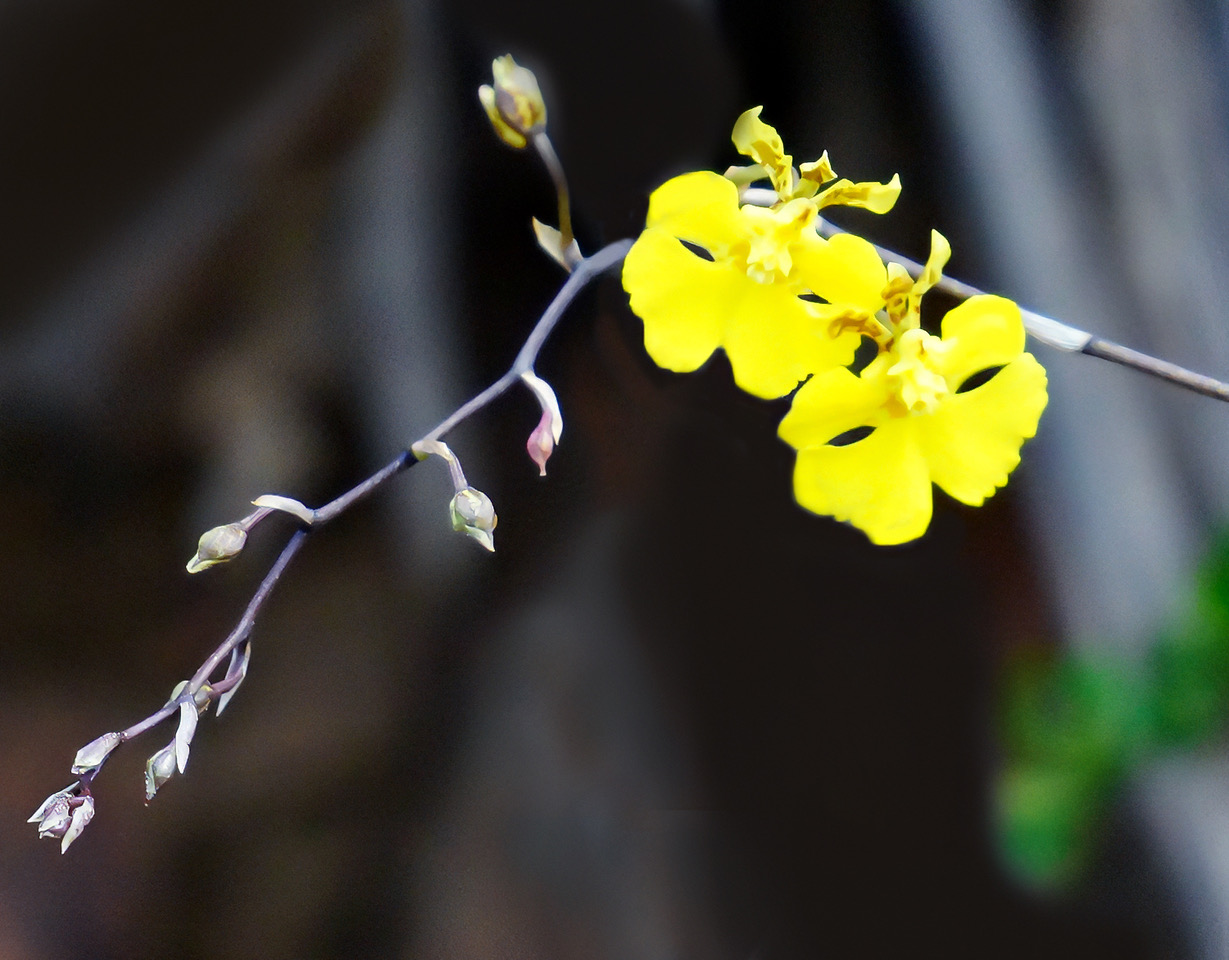
These orchids, too, are only found in the Virgin Islands and Puerto Rico. They have small, crinkly upper petals (forming the head and waving arms) and much larger lower petals (the swirling skirts of the dancer).
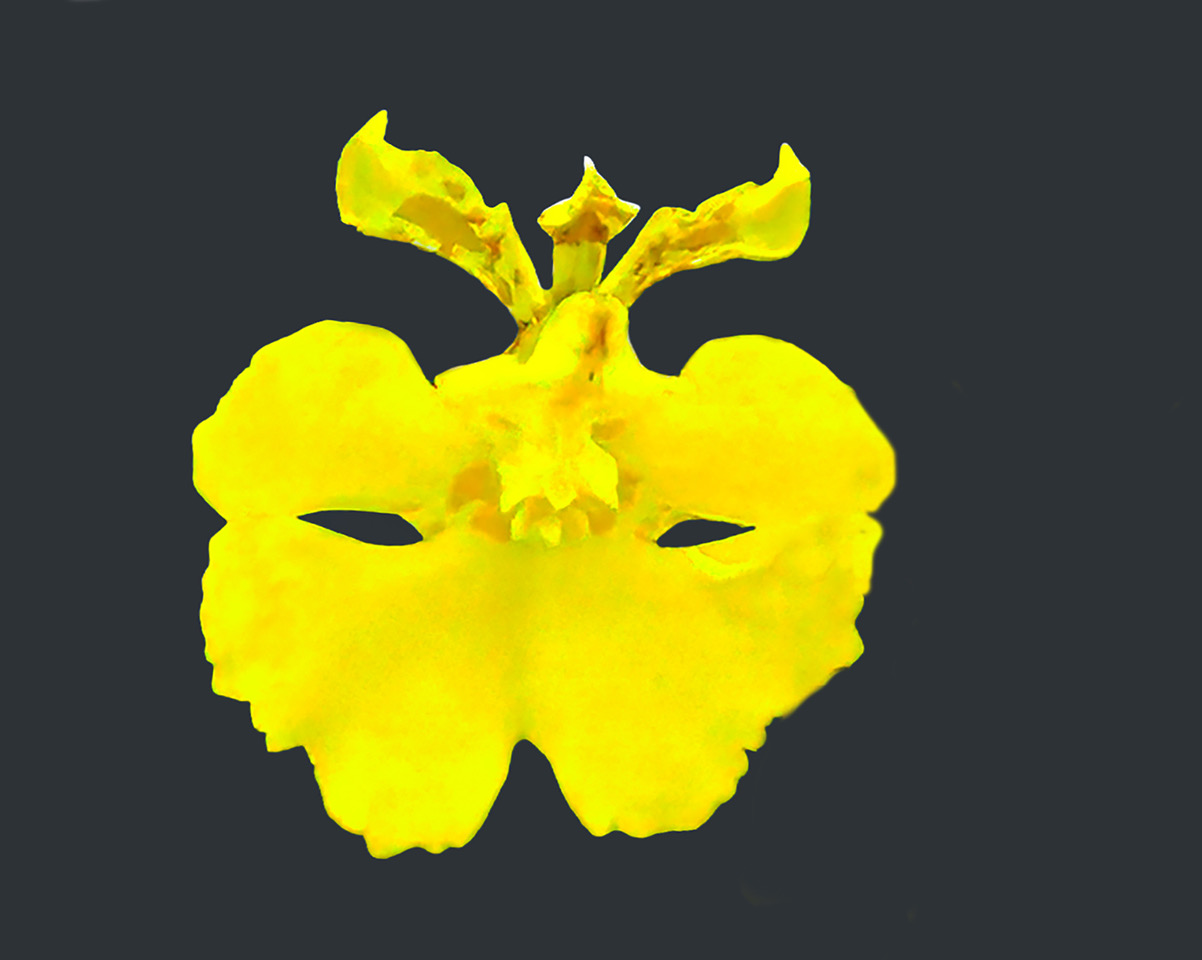
The deception here involves luring pollinators by impersonating another type of flower. The Dancing Lady flowers look a lot like those of the Stigmaphyllon emarginatum vine (Yellow Wiss, Monarch Amazonvine, or Goat Bush), which has developed a special evolutionary relationship with oil-collecting Centris bees.
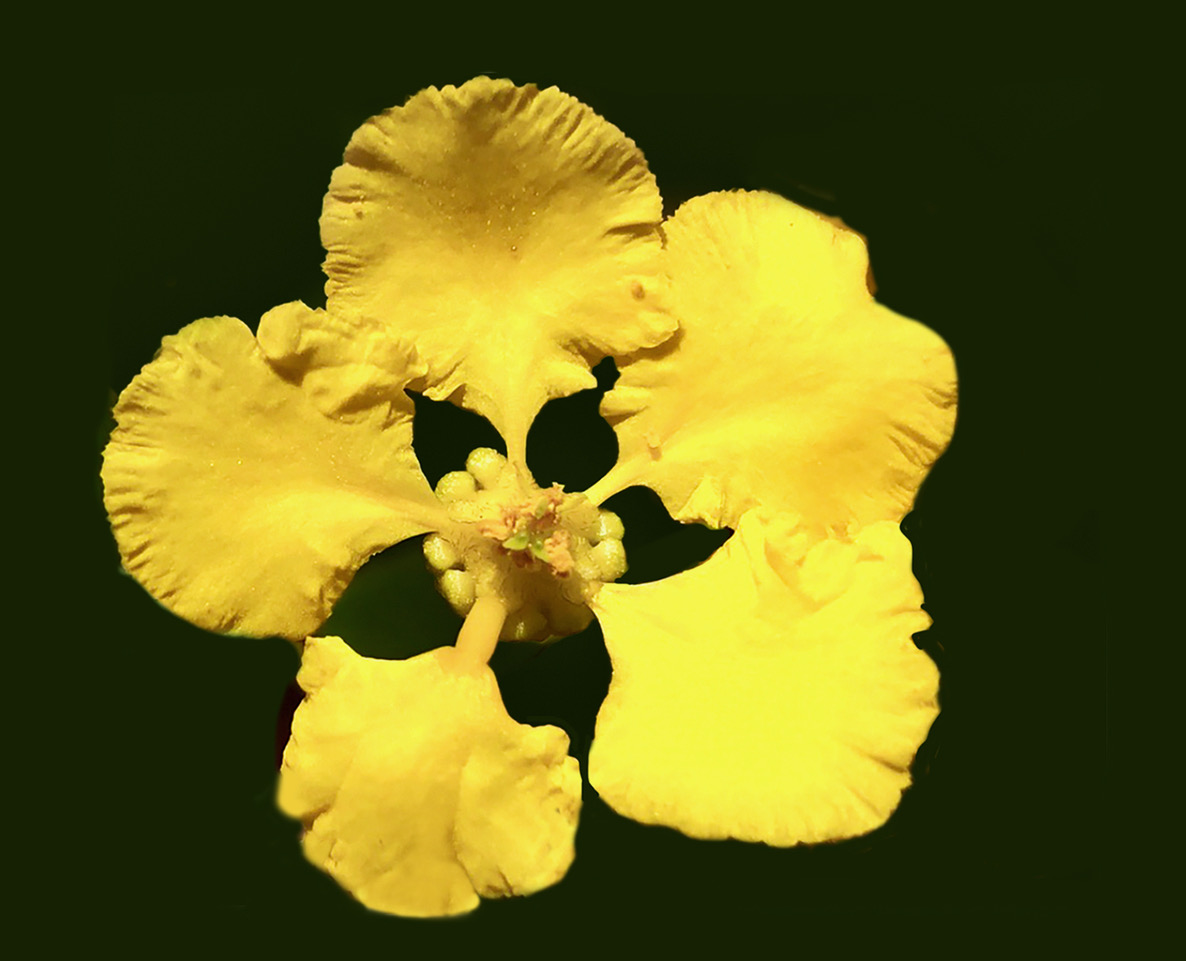
Centris bees are solitary bees that make nests underground. Female Centris bees are attracted to flowers like the Yellow Wiss that produce fatty floral oils instead of nectar, which the bees collect to form energy-rich food for their larvae, and to waterproof their nests. In the process of collecting the oils, the bees pollinate the flowers.
Because of the similar flowers, the bees come to the similar Dancing Lady Orchids as well, and pollinate them while they hunt for oil – but they are wasting their time because they don’t get any oil in return.
Maybe the Dancing Lady Orchids feel challenged as epiphytes, living on air and water, without having roots in the ground like the Yellow Wiss. So because of their precarious circumstances, they might feel justified in tricking the bees and not paying for their pollination. Or they might just do it because they can get away with it.
Meanwhile, it’s not just orchids that practice deception.
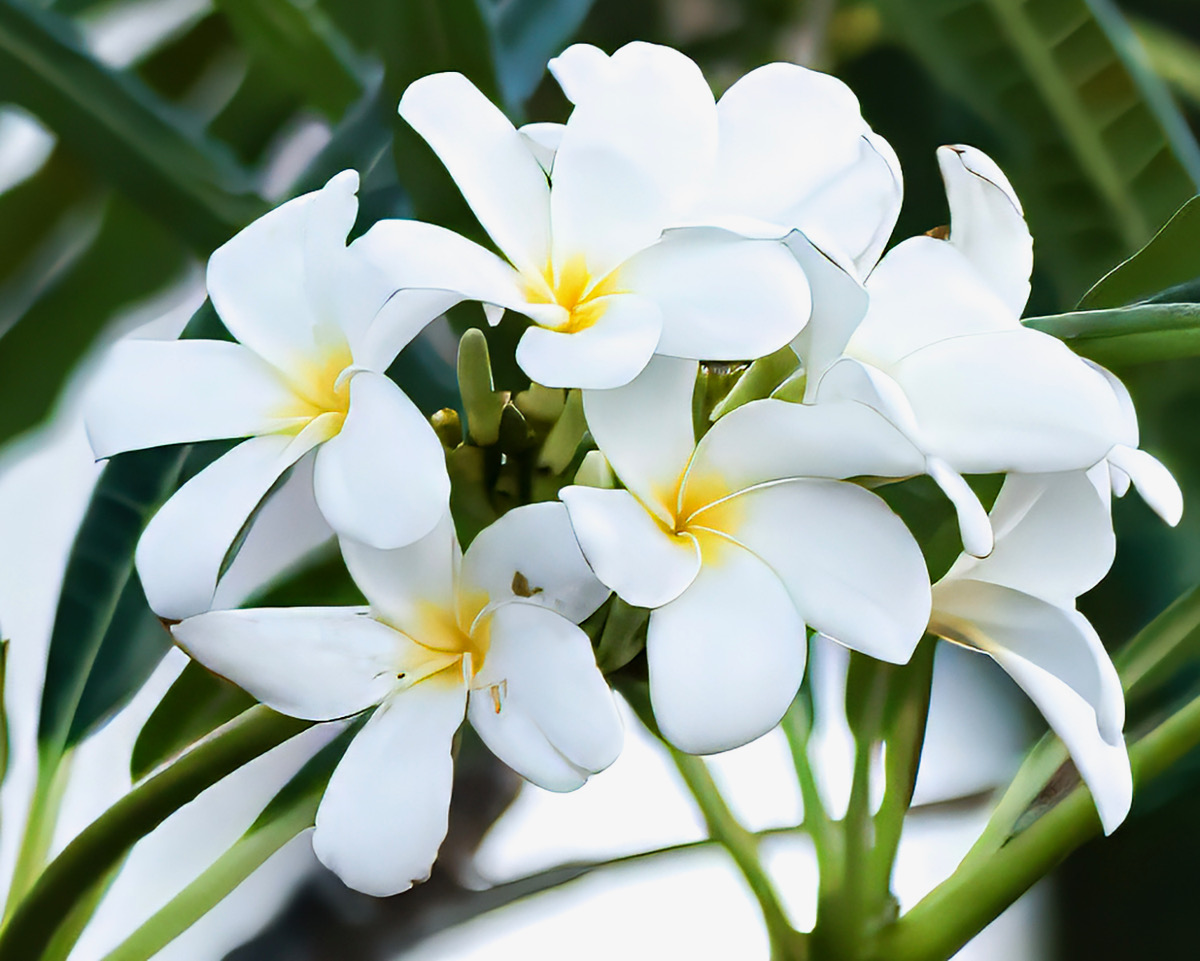
The native frangipani trees (Plumeria alba) primarily target nighttime pollinators like sphinx moths. Their fragrance is strongest at night, and their pale petals glow in the moonlight. The large, hairy moths come to investigate, and pick up pollen when they land. They then transfer the pollen to other frangipani flowers as they unsuccessfully search around for the expected nectar.
During the day, bees and butterflies might also be drawn to the scent, and the bright yellow centers, of the frangipani flowers. However, all of the potential pollinators will leave hungry and possibly feeling used.
One type of moth, the female Pseudosphinx tetrio, seems to get back at the no-nectar frangipani tree by laying 50-100 eggs on its leaves.
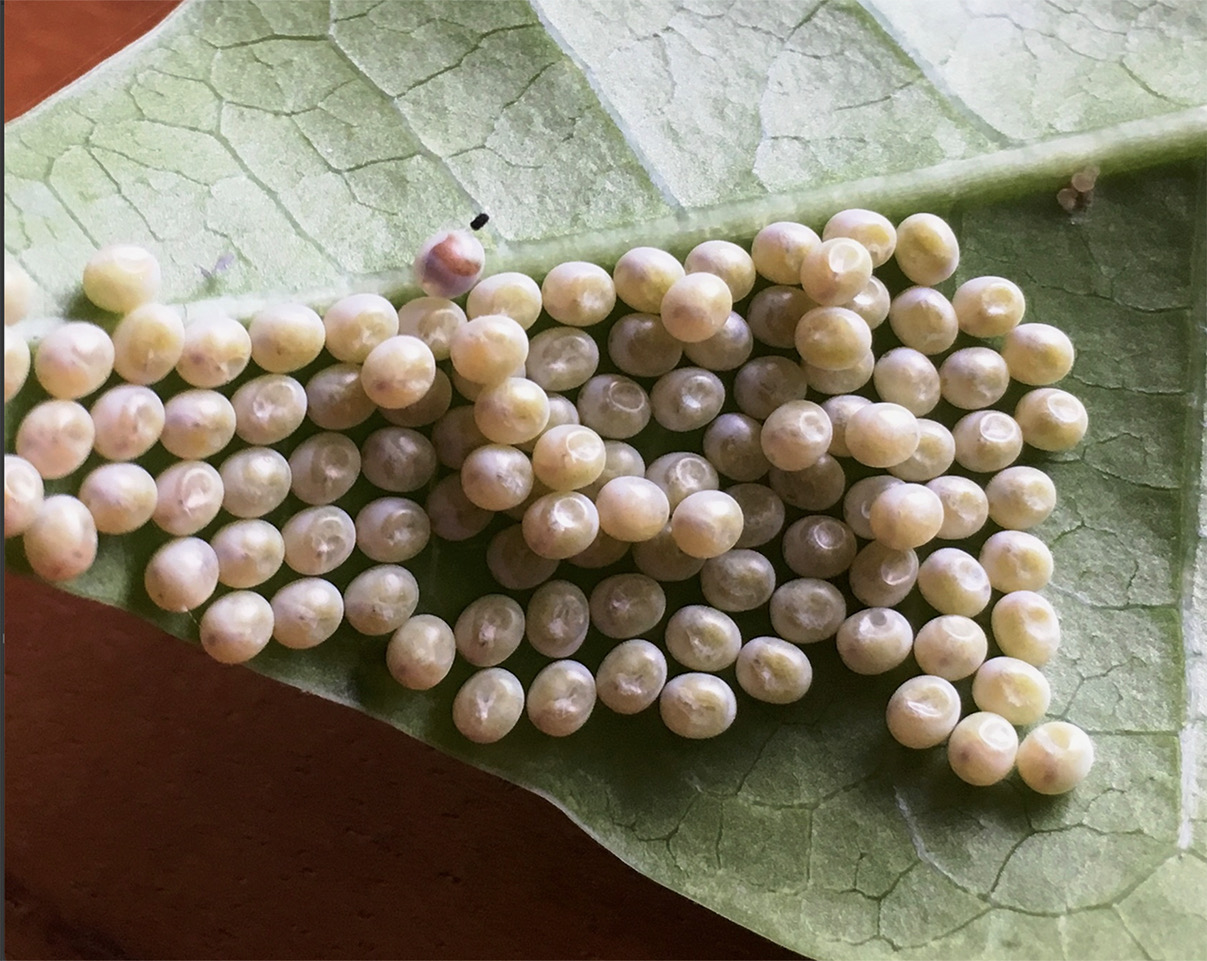
Those eggs grow into huge hungry caterpillars that can end up eating almost all of the leaves on the tree before they change into their cocoon forms and later emerge as new moths.
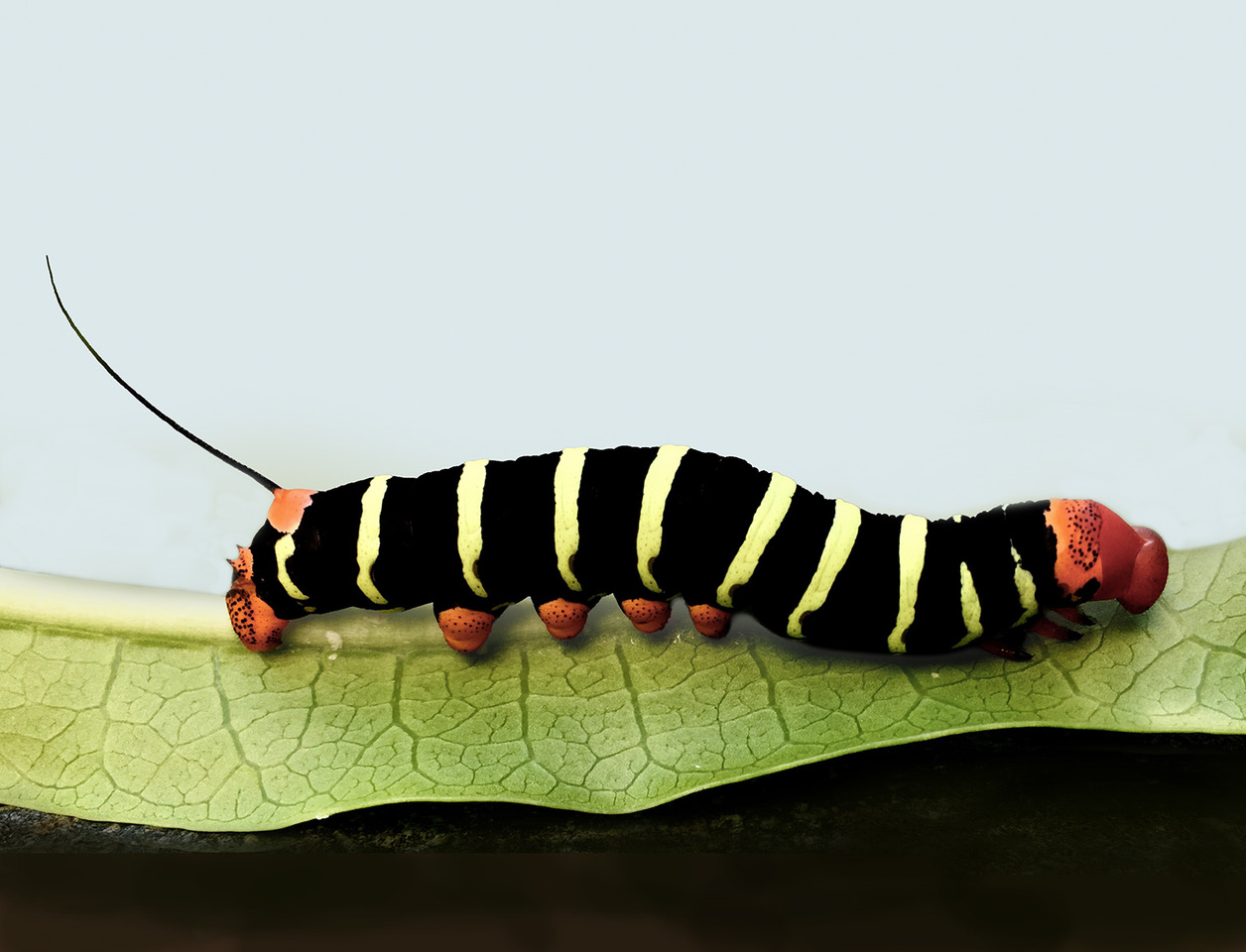
Regrowing all those leaves requires the frangipani tree to expend really a lot of effort. So the frangipani tree is actually paying a very high price for its pollination. That could explain why the tree doesn’t want to give the moths nectar as well.
I know it may seem silly to describe these plant-pollinator relationships in terms of intentions, feelings and judgments, since the long-term evolution of flower and insect behavior has been based on a mix of genetic diversity, natural selection and environmental factors.
However, a storytelling approach can be useful for getting people emotionally engaged with the complicated relationships and dramas playing out in the natural world. I find it marvelous that these sweet-looking flowers are actually conducting very complex sexual reproduction maneuvers, including perhaps abusing the goodwill of unwitting third-party insects. Of course, I realize they are not just acting on impulse. Their respective ancestors have had millions of years to work out their mutual survival strategies. Let’s hope they can manage to continue.
_____________________
Gail Karlsson is the author of a photo book Looking for Birds on St. John, as well as two other books about nature in the Virgin Islands –The Wild Life in an Island House, and Learning About Trees and Plants – A Project of the Unitarian Universalist Fellowship of St. John. Follow her on Instagram @gailkarlsson and gvkarlsson.blogspot.com. More info at gailkarlsson.com