

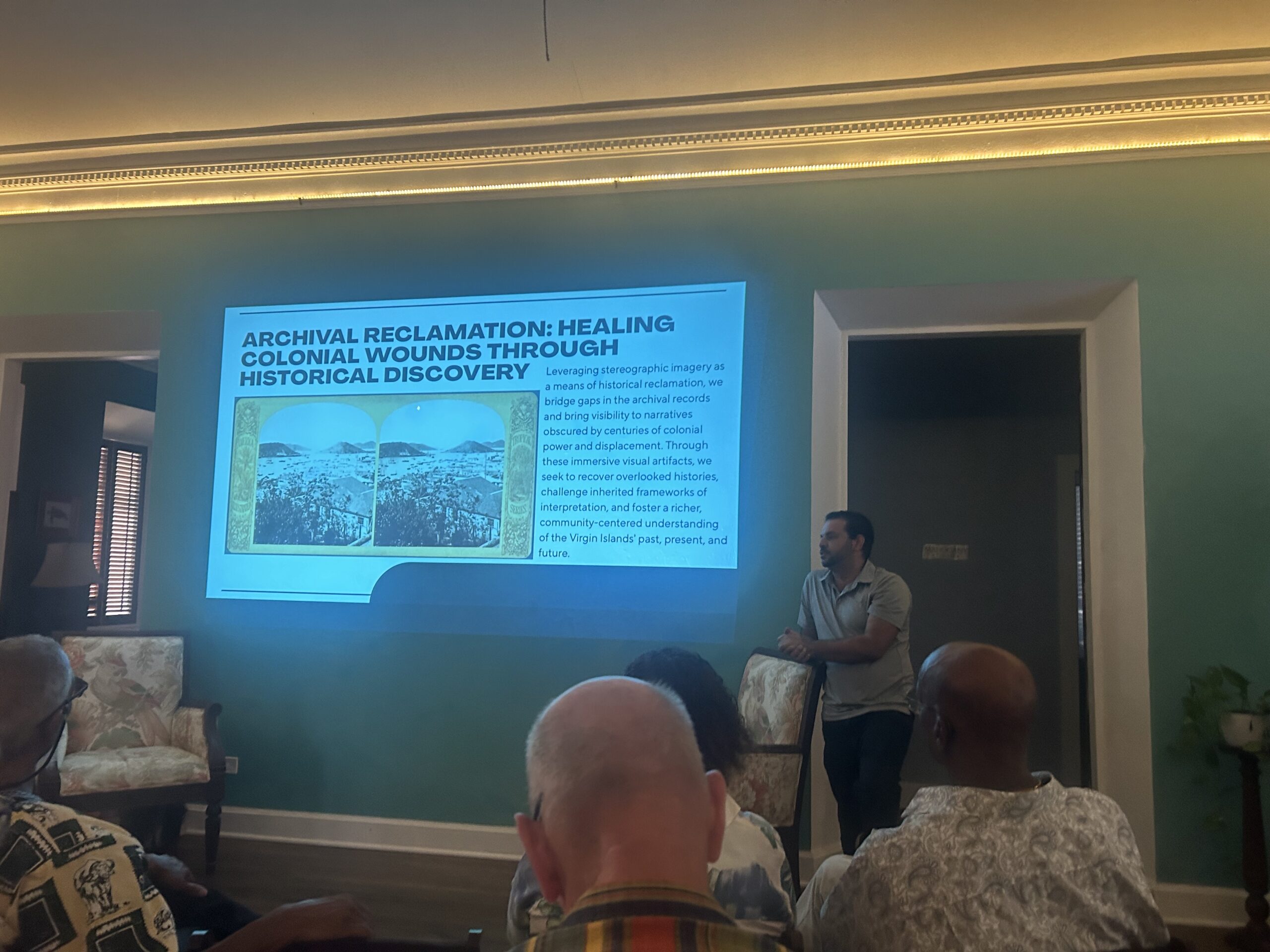
Caribbean-born photographer, archivist and cultural documentarian David A. Berg and archivist and researcher Juliana Berry presented “Unfinished Histories: An Archival Unveiling” at an intimate gathering in the great house at Feather Leaf Inn on Wednesday night.
Berg and Berry are co-founders of Find Your Archives a Home, or FYAH, a nonprofit organization dedicated to locating, preserving and sharing archives focused on the Virgin Islands.
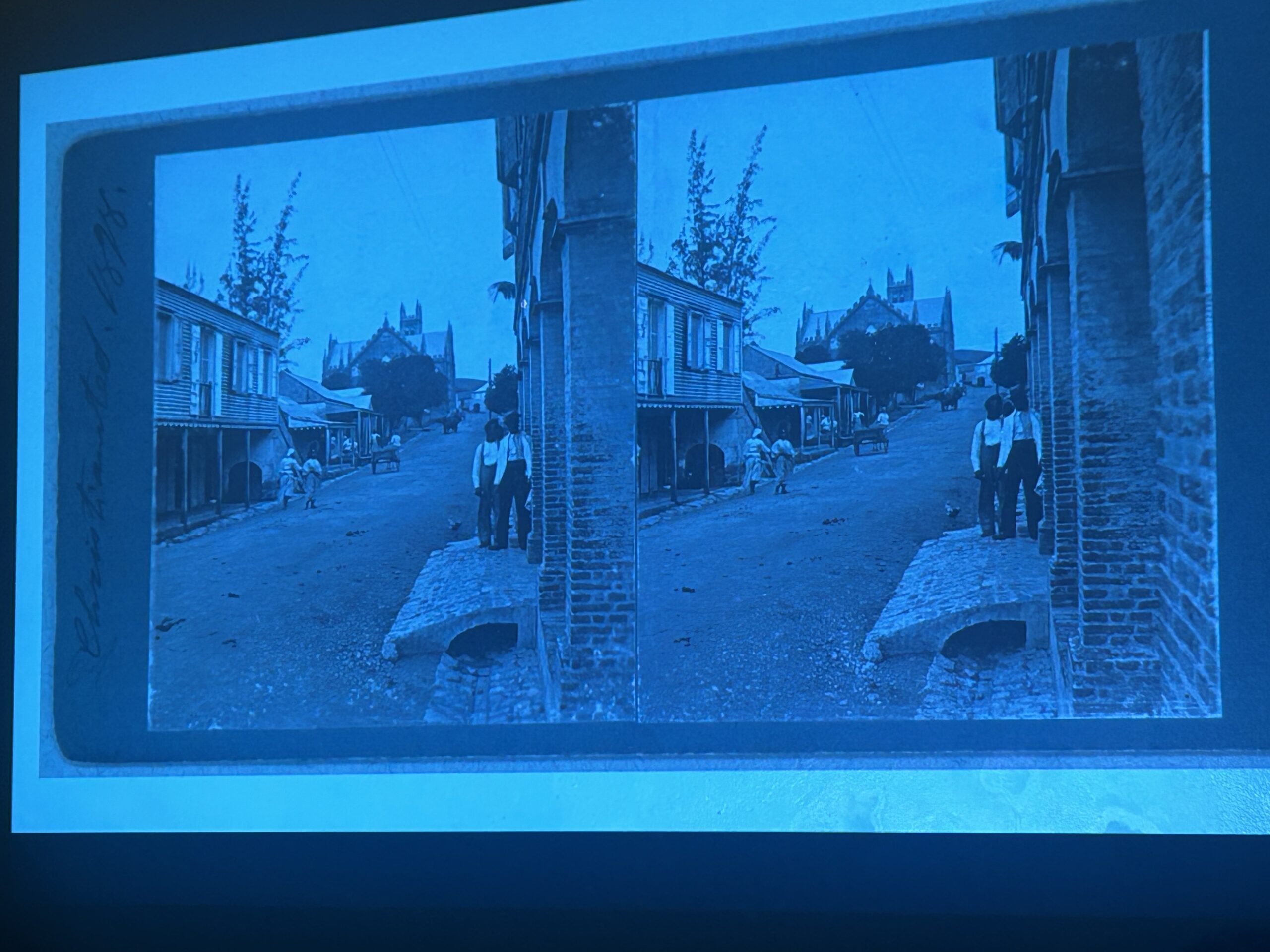
Their presentation, “Unfinished Histories,” delves into archives of 19th-century stereographic imagery to piece together and reclaim a visual and historical narrative they say was effectively erased by Danish colonialism. The two will take this research to the national stage at the 3D-Con event in Albuquerque, New Mexico, later this summer, but offered a preview in the Virgin Islands first.
“History is often written by those who hold the pen,” Berg and Berry said, “but curated by those who hold the archives.”
When Denmark sold the Virgin Islands to the United States in 1917, they said, a vast portion of the islands’ historical records was transported to Copenhagen. Berg and Berry describe their project as one that “seeks to reactivate these archival materials for contemporary audiences by connecting photographic practices with current conversations surrounding preservation, accessibility and visual culture.”
They are working to reclaim that lost memory and reverse cultural erasure by collecting, assembling and curating archival materials from Denmark and collections in the United States.
They said they are committed to accomplishing that through “physical engagement, digital repossession, and critical reinterpretation, transforming historical records into tools for community knowledge and cultural continuity.” Their work also seeks to move archival practice “beyond colonial frameworks” while fostering “community-centered spaces that prioritize restoration, agency, and the preservation of collective memory for present and future generations.”
During the presentation, Berg and Berry shared and interpreted historical stereographic images they collected while visiting the West Indies Photo Archives at the National Museum of Denmark, where most historical records and photographs from 1672 to 1917 are housed.
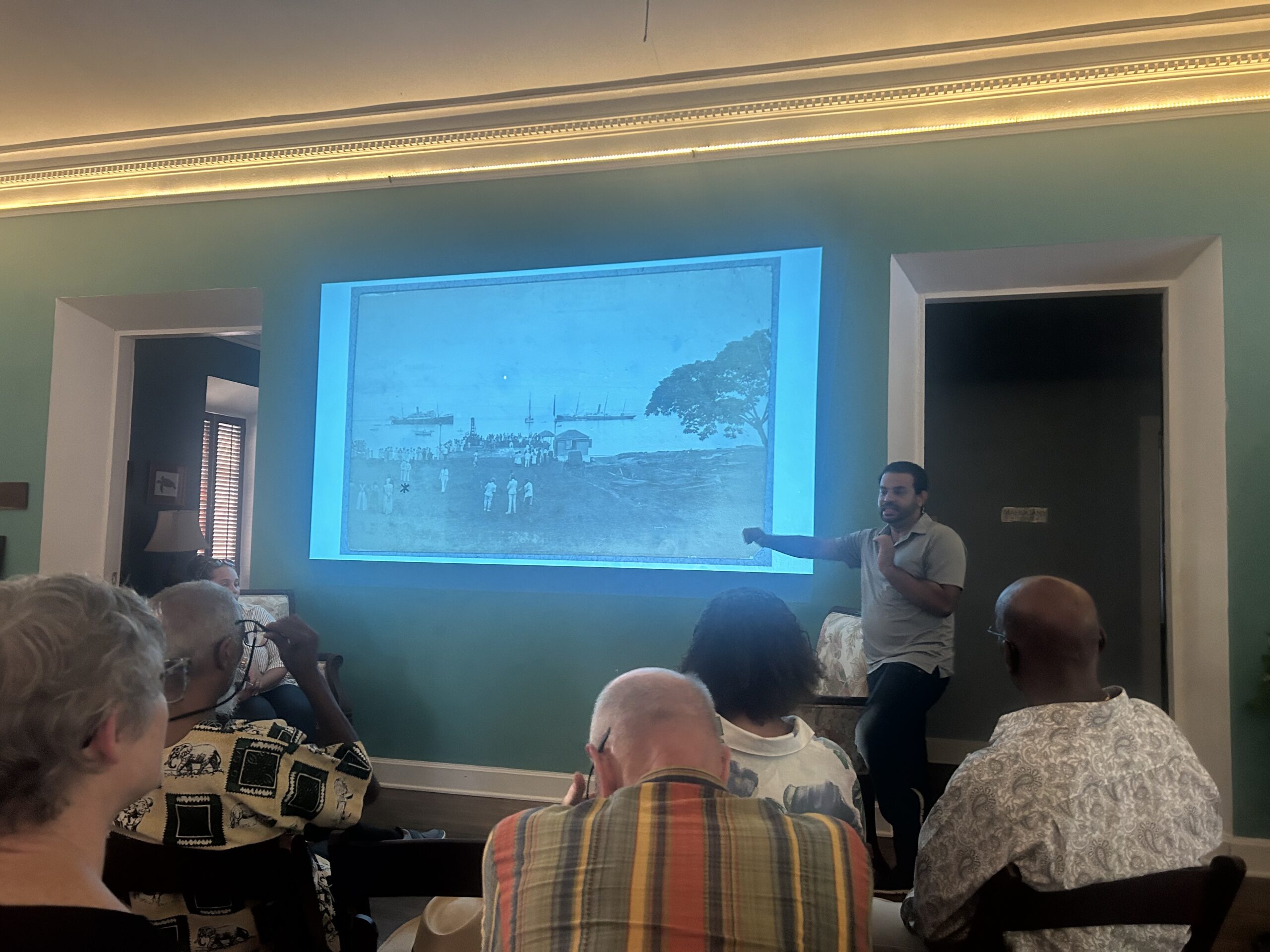
They also shared images from the Schomburg Center for Research in Black Culture’s Photos and Prints Division in New York and the Royal Library’s West Indian Photo Archives. Berg provided audience members with guidance on navigating metadata issues and locating archives and images cataloged in Danish.
Stereographic photography is a technique that creates the illusion of three-dimensional depth by capturing two images of the same subject from slightly different horizontal angles, approximately 2.5 inches apart, or about the average distance between human eyes.
Berg and Berry use stereographic imagery as a means of historical reclamation, working to “bridge gaps in the archival records and bring visibility to narratives obscured by centuries of colonial power and displacement.”
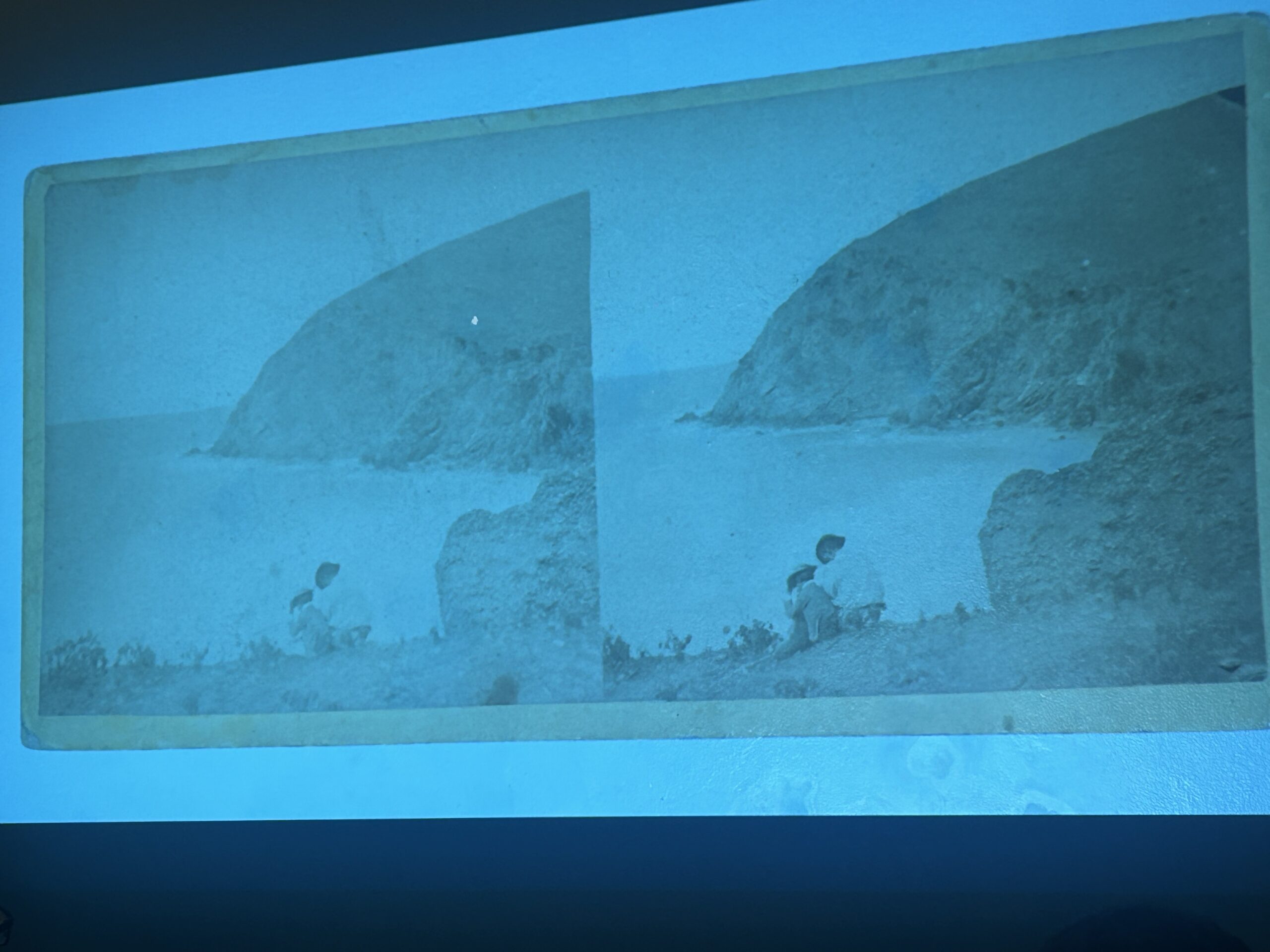
Through these visual artifacts, they seek “to recover overlooked histories, challenge inherited frameworks of interpretation, and foster a richer, community-centered understanding of the Virgin Islands’ past, present and future.”
In addition to co-founding FYAH with Berry, Berg is the founder of Blackwood Imaging, a fine-art photography and cinematic branding studio on St. Croix.
A ninth-generation Crucian photographer and digital archivist, Berg uses photography to preserve Caribbean history. A press release for his appearance in Fort Frederik Museum’s “Lunchtime with the Artist” series states: “Berg’s photography serves as a powerful tool for cultural preservation, capturing the essence of Caribbean life and history. His dual role as artist and archivist reflects a deep commitment to reclaiming and honoring Virgin Islands heritage from a distinctly local perspective.”
The title of Berg and Berry’s presentation, “Unfinished Histories,” references the academic book “Unfinished Histories: Art, Memory, and the Visual Politics of Nordic Colonialism.”
Berg contributed historical interpretation and rare archival photographs to the project, including an image selected for the book’s cover. Published by Yale University Press, the book explores how art and visual culture help explain the complex and often overlooked history of Nordic colonialism.
Editor’s Note: A previous version of this story incorrectly stated that this presentation was one in a series of Emancipation Week events organized by the Virgin Islands Division of Libraries, Archives and Museums. It was a stand-alone event organized by Berg and Berry.