

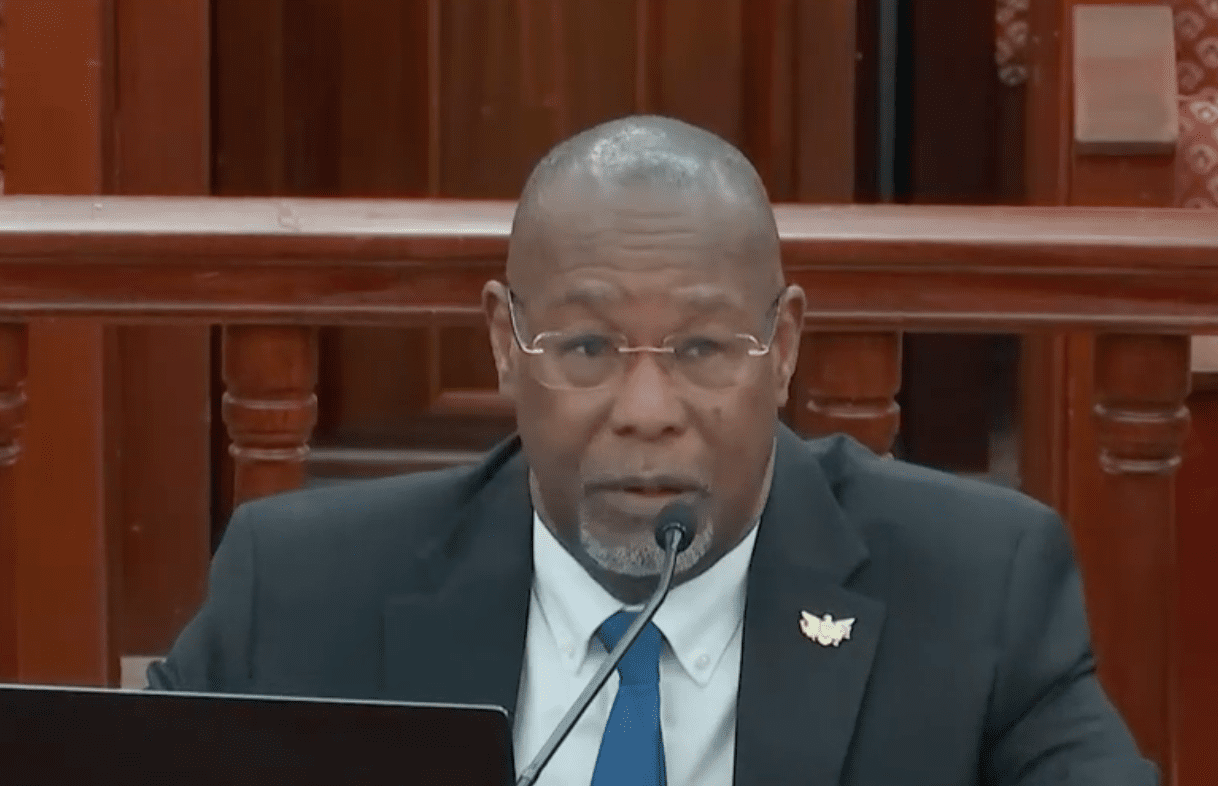
The Virgin Islands Labor Department is seeking a $12.8 million fiscal 2027 budget after paying off roughly $100 million in federal unemployment insurance debt, Commissioner Gary Molloy told senators Wednesday.
Molloy presented the request before the Senate Budget, Appropriations and Finance Committee, with an additional $9.1 million in anticipated federal grants, so the department’s proposed operating budget would total nearly $22 million.
The request comes as Labor officials point to the retirement of the long-standing unemployment debt as a major financial milestone, while also emphasizing ongoing workforce programs and system changes.
Senators pressed department officials on discrepancies in personnel costs, employee pay levels, workplace safety staffing, and unresolved workers’ compensation billing issues.
A central theme of the hearing was Labor’s payoff of the territory’s federal unemployment insurance debt, which had built up to about $100 million over several years. Molloy said the department made a final payment of about $11.9 million on April 30, fully retiring the balance.
Molloy said the payoff will help protect Virgin Islands employers from future federal tax increases tied to unemployment insurance and stabilize the system moving forward. As of June 18, he said, the unemployment insurance trust fund held about $14.73 million and had paid about $2.18 million in benefits so far this fiscal year.
Lawmakers praised the debt retirement as a major accomplishment but the hearing also focused on how effectively the department is turning budget dollars into jobs.
Assistant Commissioner Gene Ford said the Workforce Development Division has placed 295 people into jobs so far in the current program year, a placement rate of about 43.5% of job seekers the department assisted. He said many of those hires have been in construction and hospitality, two sectors that the department and its workforce board have identified as priority industries.
Ford told senators the division has provided more than 1,100 staff services to employers and handled nearly 10,000 self-service job referrals for more than 1,500 job seekers through its online system, underscoring that placements represent only a share of overall demand.
Molloy said the department is also working directly with major contractors to match local workers to new projects and has launched a high school graduate workforce initiative that sets aside weekly hours for recent graduates to receive resume help, interview coaching and direct referrals to employers.
Molloy called the Summer Youth Work Experience Program “the largest youth employment initiative in the territory” and said youth and apprenticeship programs remain a core part of the department’s strategy. For summer 2026, the department received 1,564 applications for the program and expects to serve about 1,055 participants through career exploration, work placements and college-level internships. The department is seeking $2,017,920 in general fund support for the program in fiscal 2027.
Senators described the youth program as a key investment in workforce development and crime prevention, arguing that paid summer work and internships help keep young people engaged and connected to local employers.
Molloy also pointed to the integration of the Workers’ Compensation Administration under Act 8859 as a major structural change for the department. Since October 2025, he said, the program has collected about $6.1 million in employer contributions and paid roughly $2 million in combined benefits to medical providers and injured workers. The workers’ compensation transfer fund now holds about $10.98 million.
He said there are no outstanding payments to individual medical providers, but that hospital claims remain unresolved as the department continues to verify them. Assistant Commissioner Nesha Christian-Hendrickson said the problem is hospital billing and invoicing, with the department not receiving complete invoices.
Asked by Sen. Marvin Blyden about compliance, Molloy estimated that employer compliance with workers’ compensation requirements is in the mid-80% range and said the department is still working to improve compliance.
On workplace safety, Molloy said the Virgin Islands Division of Occupational Safety and Health has been removed from a federal “high-risk grantee” designation after several years under heightened oversight, allowing it to enter fiscal 2026 in good standing. He said the division has completed 31 inspections so far this year toward a target of 45, but acknowledged staffing limits, particularly in the St. Thomas–St. John district may restrict its reach.
The sharpest scrutiny came when senators examined Labor’s personnel and fringe-benefit figures, which do not match the Legislature’s post-audit report. Molloy’s testimony lists $6.87 million in personnel costs and $3.50 million in fringe benefits, compared with lower figures in the audit report.
Sen. Dwayne DeGraff and Sen. Kurt Vialet questioned the discrepancy, raising concerns about potential double-counting of summer youth workers. Molloy acknowledged a “technical correction” may be needed and said he would provide a revised breakdown to the committee.
Pay levels also drew criticism, with lawmakers arguing wages remain too low for rank-and-file employees. Human Resources Director Jacqueline Allen said the department expects to fund 137 positions in fiscal 2027, including raises for some posts to a $35,000 minimum.
Despite the concerns, senators broadly praised the department’s performance. Sen. Ray Fonseca called Labor “a high-performing department,” and lawmakers cited the unemployment debt payoff and workforce programs as major accomplishments.
When Sen. Novelle Francis Jr. asked him to grade the department, Molloy gave it an “A-minus,” saying the payoff of the unemployment loan, the consolidation of workers’ compensation and the end of VIDOSH’s high-risk status were significant steps but that work remains to move the department from compliance to performance and to tie more Virgin Islanders to local jobs.