

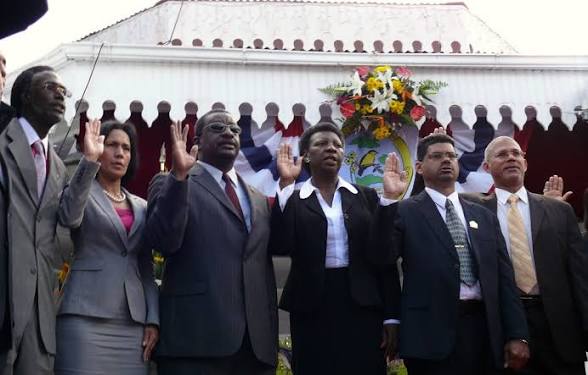
One of my favorite parts of working at the Source was the decade spent covering the Legislature, chiefly because of figures like former Sen. Ronald E. Russell, who helped me understand and connect to the Virgin Islands in a deeper way.
Through conversations, committee meetings, and stories from another era, I came to realize that many longtime senators carried far more than public office with them. They were educators, musicians, advocates, storytellers, and living connections to generations of Virgin Islands culture and community life – and Sen. Russell was very much part of that tradition.
For many Virgin Islanders, he will be remembered first as a former Senate president whose name became familiar through years of public service. But long before elected office became the defining headline attached to him, Russell belonged to another side of Virgin Islands life entirely: he was a musician.
That detail, though easy to overlook in the quick summaries that often follow the passing of well-known figures, says something important about both Sen. Russell and the era he represented. Before leadership became increasingly shaped by cameras, branding, and social media, many of the territory’s most recognizable voices emerged from community spaces first — churches, bands, classrooms, neighborhood organizations, radio discussions, and advocacy work. For Sen. Russell, it was moving comfortably between culture, law, education, and government rather than existing solely within elected office.
A 2003 Source profile described him simply as a “Musician, Lawyer, Senator” — not as separate chapters, but as parts of the same life. Looking back now, the description feels especially fitting.
Sen. Russell eventually served as president of the Legislature during a consequential period in Virgin Islands history marked by economic uncertainty, debates over government reform, and major shifts within the territory’s judicial system. In 2003, amid mounting financial concerns, he proposed the creation of a fiscal management board aimed at strengthening government accountability and long-term financial stability. A few years later, he became closely associated with legislative debates surrounding the establishment of the Virgin Islands Supreme Court, including efforts to permanently locate the court on St. Croix — a fight I remember him continuing publicly even after the court’s creation in 2006.
The work reflected the practical, legal-minded approach that defined much of his public life, and even after leaving office, he remained involved in conversations surrounding governance, constitutional issues, and the long-term direction of the territory.
There was little about Sen. Russell that felt performative.
He reflected an approach to leadership built through consistency, visibility in the community, and years of service rather than spectacle. In many ways, he represented a style that feels increasingly uncommon: grounded, disciplined, and deeply connected to civic responsibility.
And while his political résumé was substantial, it was never the only thing people associated with him, and that range may ultimately become one of the more meaningful parts of his legacy.
It is also difficult to fully understand Sen. Russell without understanding the family legacy that shaped him — particularly the influence of his grandmother, Eulalie “Marlee” Rivera, a towering cultural and civic figure on St. Croix whose life reflected resilience, faith, education, and service across decades.
In a 2009 tribute written following her death at the age of 101, Sen. Russell described a woman who overcame poverty, loss, and hardship while dedicating herself to teaching, faith, civic life, and the cultural fabric of St. Croix. He wrote about her raising two grandsons after the death of her daughter — “Ronnie is an attorney/senator and Eddie is a musician extraordinaire and teacher” — placing himself not at the center of the story, but as part of her larger legacy of perseverance and service.
The tribute revealed something deeply personal about Sen. Russell himself.
The qualities he admired in his grandmother — faith, steadiness, humility, devotion to education, and commitment to community — mirrored many of the same traits people associated with him throughout his own life.
Ms. Rivera, whom Russell described as a “true Virgin Islander and a Crucian to the bone,” was a founding member of Crucian Christmas Festival, a longtime educator, civic organizer, and cultural advocate. Her story, and Russell’s reverence for it, offered insight into the environment that shaped his understanding of service — one rooted not simply in politics, but in responsibility to others.
That influence remained visible throughout his life.
Even after leaving elected office, Sen. Russell stayed engaged through legal practice, civic commentary, and continued involvement in territorial matters. Most recently, and decades after first becoming known to many Virgin Islanders through legislative service, he was elected as a delegate to the Sixth Constitutional Convention — once again stepping into one of the territory’s most consequential civic processes.
For a man whose life moved between law, culture, education, and service, the role felt fitting. The work of helping shape and reexamine the future of the Virgin Islands connected naturally to the same sense of responsibility that appeared throughout his life.
What I will also remember about Sen. Russell was the time he took with people — including a young reporter still trying to piece together how such a vast institution worked. There were countless phone calls where he patiently explained the history behind an issue, walked through the legal nuances of legislation, or offered context that rarely made it into headlines. Sometimes he would call before others did with a tip or a perspective he felt was important to understand. Other times, like the tribute he wrote for his grandmother, he would simply send over something thoughtful and deeply personal without fanfare. He wrote the same way he spoke: carefully, sincerely, and with a strong sense of history and place. And he laughed often.
In today’s political climate, where well-known figures are often defined by moments or controversy, Sen. Russell instead reflected longevity and breadth — not simply the offices he held, but the many spaces in which he remained present over time: lawyer, musician, senator.
Sincere and heartfelt condolences to his wife and children, his colleagues, his friends and neighbors, and the community who loved him.