

Sen. Ray Fonseca is calling on territorial officials to pursue composting over the installation of air curtain incinerators (ACI) for the management of green waste — including yard trimmings, leaves, grass, and branches — across all three islands of the U.S. Virgin Islands.
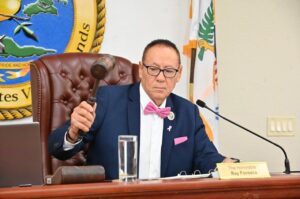
Sen. Fonseca is specifically urging the placement of a dedicated composting machine on St. Thomas, St. Croix, and St. John, ensuring that every community in the territory has access to a cleaner, more sustainable solution for green waste. Composting offers a proven, cost-effective approach that returns value to the soil, protects air quality, and supports the Virgin Islands’ long-term environmental and agricultural goals — and it does not require any change to existing law.
1. Composting Produces the “Black Gold” Our Farmers Need — Incineration Does Not: Composting transforms green waste into nutrient-rich material that improves soil fertility, water retention, and microbial life — benefiting farms, public landscaping, and community gardens across all three islands. Air curtain incineration, by contrast, destroys organic nutrients and produces ash with limited beneficial use.
2. Cleaner Air for All Virgin Islands Communities: Air curtain incinerators emit particulate matter, nitrogen oxides, volatile organic compounds, and potentially toxic combustion byproducts. These pollutants pose real health risks — particularly for children, the elderly, and communities near landfills and disposal sites on St. Thomas, St. Croix, and St. John. Composting, when properly managed, produces minimal air pollution and requires none of the complex, costly filtration systems that incinerators demand.
3. Climate Benefits: Composting Stores Carbon; Incineration Releases It: Composting sequesters carbon in the soil and reduces the need for synthetic fertilizers — lowering overall greenhouse gas emissions across the territory. Incineration immediately releases carbon dioxide and contributes nothing to carbon sequestration. For an island territory on the front lines of climate change, composting is the responsible choice for all three islands.
4. Lower Costs — and Potential Revenue for Each Island: Air incinerators are expensive to build, fuel, and maintain, requiring specialized equipment and ongoing pollution-control infrastructure. Composting operations use simpler, more affordable systems — and can generate revenue through compost sales to farmers, landscapers, and residents on St. Thomas, St. Croix, and St. John alike.
5. Supporting Local Agriculture and Reducing Erosion Territory-Wide: Compost improves soil health on farms and in public green spaces, reduces erosion, and decreases dependence on imported chemical fertilizers on all three islands. Incineration provides no comparable benefit to the soil or to agriculture.
6. A Circular Economy, Not a Dead End: Composting supports a circular approach to waste across the entire territory: organic material becomes compost, which feeds the soil, which grows food and plants, which return to compost again. Incineration is a linear, dead-end process — waste goes in, ash and emissions come out, with nothing returned to the community or the land.
7. Community Acceptance and Environmental Justice for All Three Islands: Incineration facilities routinely face community opposition due to legitimate concerns about air pollution, toxic emissions, and environmental justice. A composting machine on each island ensures that St. Thomas, St. Croix, and St. John each have a locally managed, community-friendly solution that presents far fewer public health risks to the neighborhoods surrounding them.
“Composting is the right solution for our islands. It protects our air, enriches our soil, supports our farmers, and saves taxpayer money. Every island — St. Thomas, St. Croix, and St. John — deserves its own composting machine and its own path toward a cleaner, greener future. We don’t need to burn our green waste — we need to give it back to the earth.” — Senator Ray Fonseca
What Senator Ray Fonseca Is Asking:
Senator Fonseca urges the relevant territorial agencies to prioritize composting as the primary method for managing green waste across the U.S. Virgin Islands, invest in a composting machine for each island — St. Thomas, St. Croix, and St. John — that will serve their communities for generations, and reject the installation of air incinerators that would harm air quality, cost more, and destroy valuable organic resources. This decision does not require any change to existing law. It requires only the will to choose a cleaner, smarter, and more sustainable path forward.
For more information, please contact the Office of Senator Ray Fonseca at 340-693-3577 or by email at SenatorRayFonseca@legvi.org.