

A comprehensive preliminary report released on Dec. 15 from the National Weather Service in San Juan, Puerto Rico, highlighted the most significant and extreme weather events that occurred in 2025 across the U.S. Virgin Islands and Puerto Rico.
In its “2025: Year in Review” document, the agency provided the following information:
“The 2025 meteorological year for Puerto Rico and the U.S. Virgin Islands was characterized by significant rainfall early in the year, with rainfall deficits building in the summer and fall months. Additional weather impacts included indirect effects from tropical cyclones, lightning, Saharan dust, and continued warmer-than-normal sea surface temperatures.”
The report serves as a comprehensive look back at a year that brought both hazardous and highly variable weather conditions across the Caribbean.
Lightning Among the Year’s Most Noteworthy Hazards
Among the year’s headline events, the NWS pointed to lightning incidents documented across Puerto Rico, including serious injuries and, sadly, one fatality.
“The most remarkable events of 2025 were the lightning strikes, with a total of 14 documented incidents across Puerto Rico, resulting in one fatality at Lago Toa Vaca, Villalba, and multiple injuries and property damage.”
Additionally, the NWS said that eight hail events occurred across Puerto Rico throughout the year. The summary also noted two waterspout events documented in Puerto Rico during the year. “Two notable waterspout events were reported offshore at Buye Beach in Cabo Rojo on May 17 and another over Lago Guajataca in Quebradillas on October 4.”
While not mentioned in the report, in the USVI, a waterspout was spotted off the northside of St. Croix on May 17.
Among the documented weather-related incidents, the NWS report also highlighted a tense moment early in the year when a magnitude 6.7 earthquake struck north of Honduras on Feb. 8, prompting a short-lived tsunami advisory for Puerto Rico and the U.S. Virgin Islands before it was canceled.
Hurricane Season Brought Indirect Effects
Puerto Rico and the USVI were fortunately spared a direct hit from a hurricane or tropical storm in 2025. However, even without a direct tropical cyclone strike, the NWS emphasized that the region still experienced indirect impacts from tropical systems moving nearby.
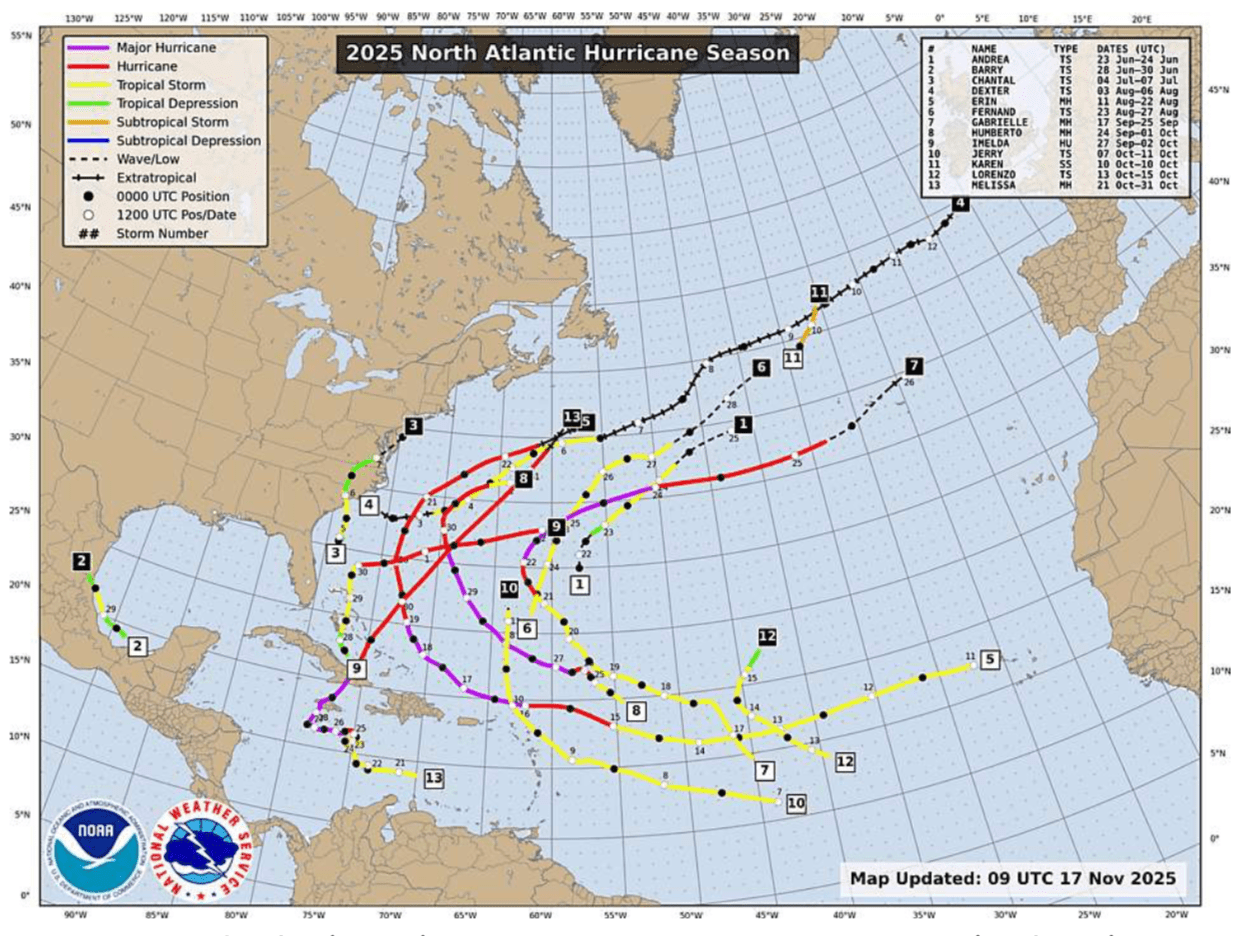
“The 2025 Atlantic hurricane season produced 13 named storms, five hurricanes, and four major hurricanes,” the NWS reported.
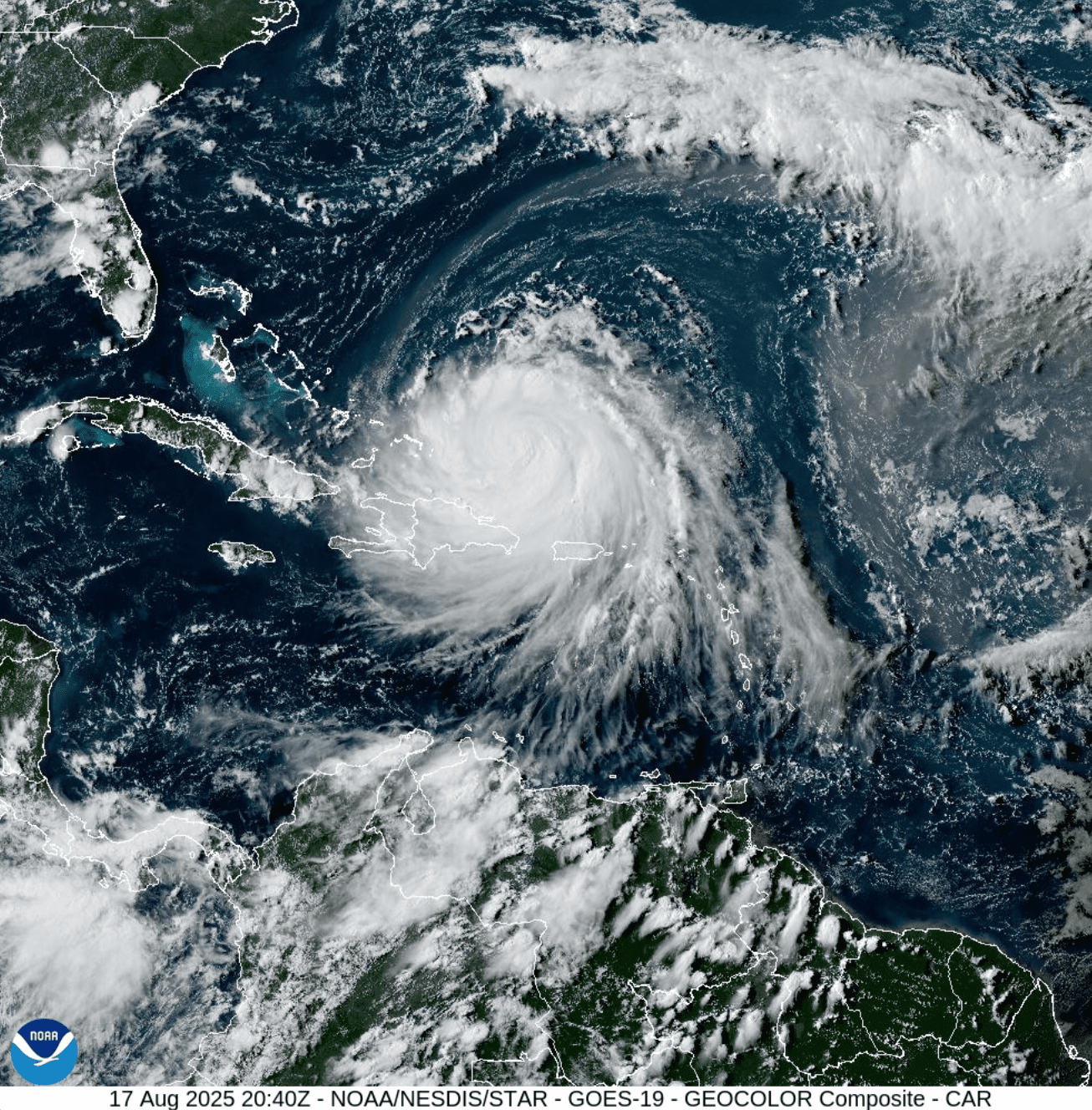
“One of the most notable examples cited for the territory was Hurricane Erin, a major Category 5 hurricane which passed just to the north of the local islands in mid-August. The storm caused windy conditions across St. Thomas and St. John, while St. Croix was less affected by the cyclone.
“Hurricane Erin passed north of the islands as a major hurricane in mid-August. It produced a maximum rainfall total of 9.16 inches in Cayey, PR, and 7.80 inches in St. John, USVI, contributing to flooding and landslides,” continued the report.
Later in the season, NWS explained that Hurricane Melissa’s outer bands produced a prolonged stretch of rainfall impacts for Puerto Rico and parts of the local region. Hurricane Melissa ultimately slammed into southwestern Jamaica on Oct. 28 as an extremely powerful Category 5 cyclone.
“Hurricane Melissa’s outer bands impacted the region from October 20–25, producing episodes of heavy rainfall. Preliminary rainfall totals reached up to 9.58 inches in Patillas, PR.”
Additional and notable wind events were included in the NWS analysis, including significant winds during the first two days of April, which were associated with a strong high-pressure system.
A Rainy Spring, Drier Summer and Fall
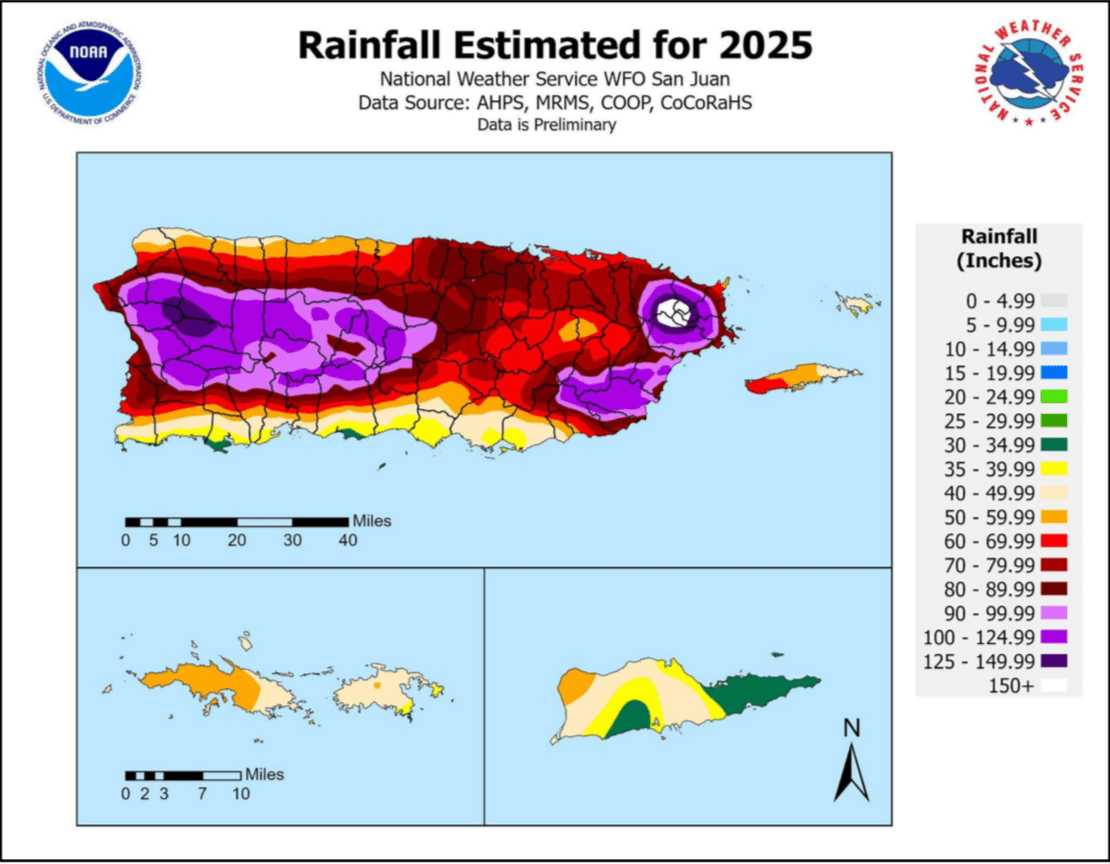
The NWS said a wet weather pattern dominated much of the meteorological winter and spring seasons, which includes the period between December 2024 and February 2025, followed by a drier summer and fall.
The report links some of the most impactful spring flooding episodes to repeated surges of tropical moisture and atmospheric instability across the region during April and May. The pattern produced widespread downpours, rapid rises on streams, and flooded roads in Puerto Rico, with heavy rain across the Virgin Islands.
The NWS explained that the wet weather began to abate by summer.
“By the summer, conditions began to dry out,” the NWS said. “About half of Puerto Rico and the Virgin Islands ended drier than normal through this period.” The report noted that the fall season also “ended drier than normal, except for western Puerto Rico.”
Heavy rain early in the year helped to boost annual totals, including precipitation measured at around 50 inches on St. Thomas, about 40 inches on St. John, and between 20 and 35 inches on St. Croix, showing clear variability between the wetter eastern and drier western parts of the island.
The NWS notes that the drier conditions during the latter half of 2025 resulted in portions of both Puerto Rico and the USVI being categorized as experiencing Abnormally Dry and Moderate Drought Conditions during the summer and fall.
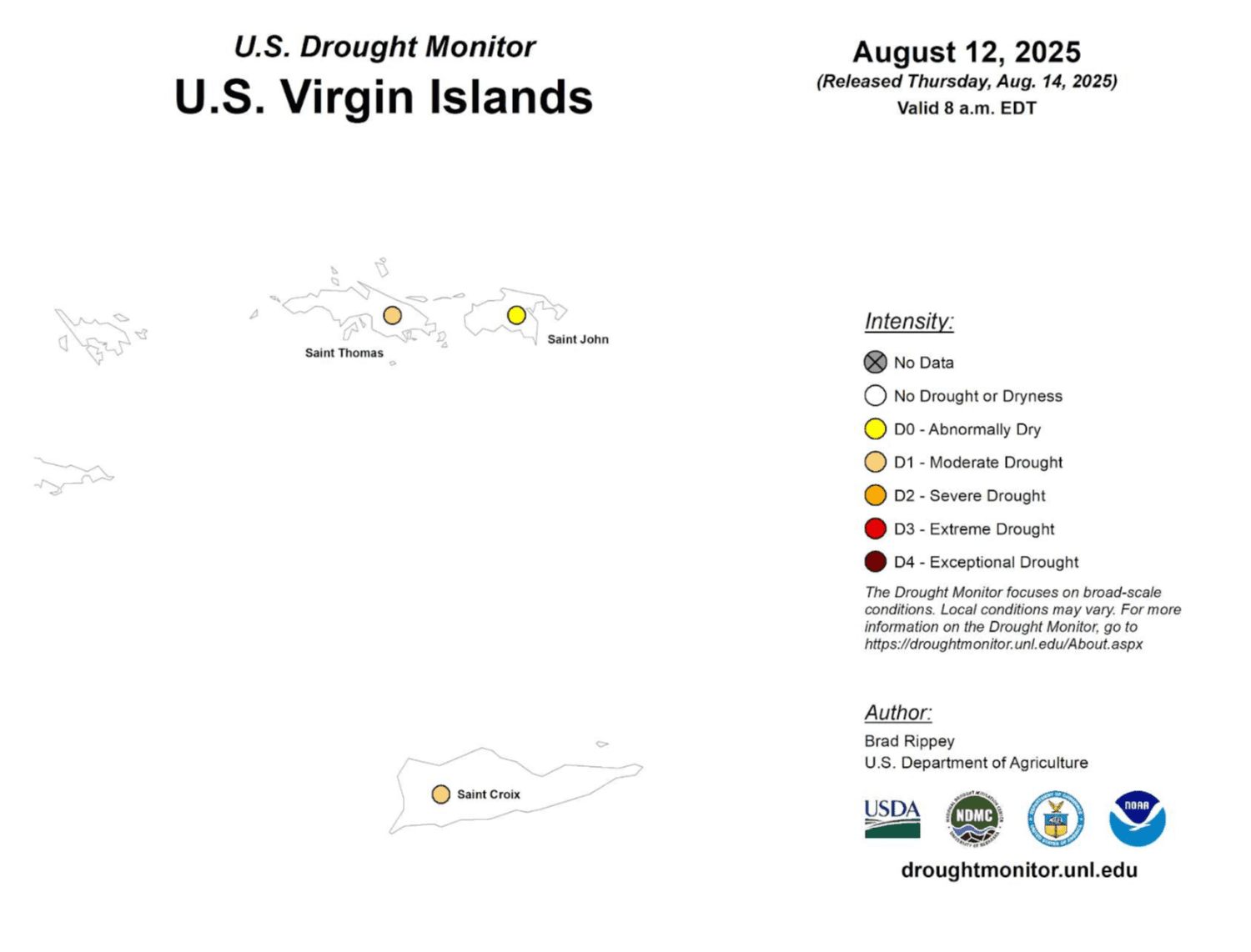
“The lack of frequent rains impacted the U.S. Virgin Islands during the summer and fall months. There are no true rivers in these islands, so residents depend on these rains to fill their cisterns. Additionally, the United States Geological Survey monitored wells continued to reflect low water levels, further exacerbating the lack of rainwater,” the NWS reported.
At the same time, NWS noted variability from week to week, which helped limit broader impacts. There were periods of heavy rain that occurred during the year, including on Sept. 18, when a tropical wave moved across the USVI, causing flooding across portions of St. Croix.
“Dry spells on the Virgin Islands were on and off, with some weeks of frequent heavy showers, followed by short dry spells,” the NWS report stated. “These showers were enough to prevent further deterioration across the islands. Vegetation was not severely impacted from this dryness or drought conditions.”
Heat Advisories Later in 2025, Persistent Warm Ocean Temperatures
Although temperatures were not extreme every single day, the NWS said that the winter season between 2024 and 2025 was especially hot, and extreme heat became a focus across both U.S. territories later in the summer and fall months.
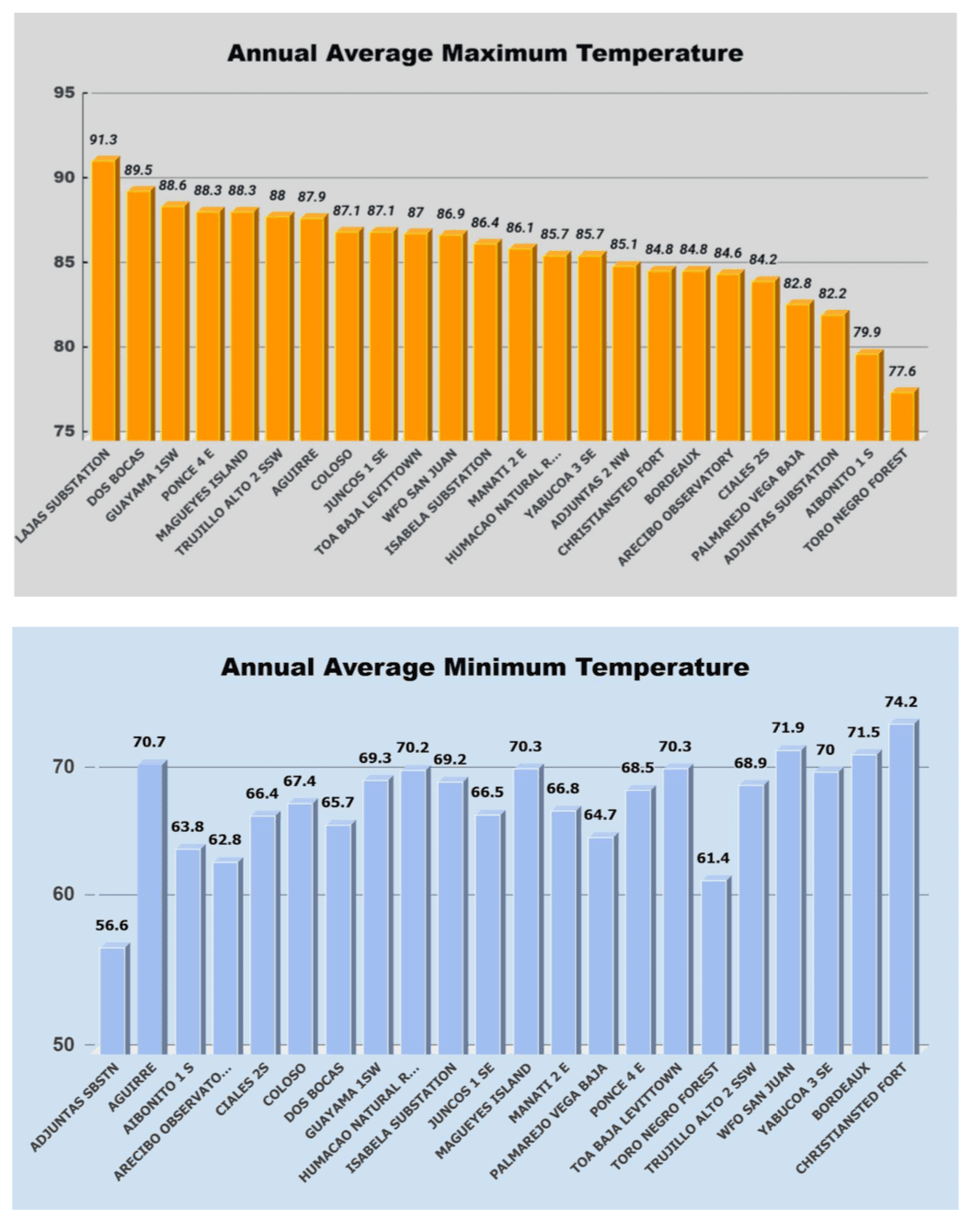
“While temperatures were generally seasonal, the 2024 to 2025 meteorological winter was the warmest on record for the San Juan Area climate site.”
The report explained that “A high number of Heat Advisories, 82 in total, and Extreme Heat Warnings, 16 in total, were issued later in the summer and fall months.”
At the same time, the NWS said sea surface temperatures stayed above normal through much of the year, a background condition that can influence marine hazards and contribute to uncomfortable circumstances.
The exceptionally warm ocean temperatures, which can help to fuel the development and intensification of cyclones, are part of the reason why 2025 produced three powerful Category 5 hurricanes.
“While the climatological peak of the hurricane season was quiet with no tropical activity, the season generated three Category 5 hurricanes, the second-most on record in a single season,” according to a Nov. 25 report from the National Oceanic and Atmospheric Administration, which was also covered by the Source.
Hazardous Marine Events in 2025
Marine conditions were also frequently hazardous in 2025, driven by persistent trade winds, passing weather systems, and long-period swells generated by distant storms. The NWS noted several periods of elevated winds and rough seas, particularly during the spring and early fall, which contributed to dangerous boating conditions and an increased risk of rip currents across northern- and eastern-facing coastlines throughout Puerto Rico and the U.S. Virgin Islands.
For instance, the NWS points to early April, when a strong high-pressure system produced gusty winds across Puerto Rico and the U.S. Virgin Islands, with multiple locations reporting wind gusts exceeding 40 miles per hour. Later in the year, long-period swells generated by distant tropical systems led to episodes of hazardous surf, including periods that prompted increased marine advisories and warnings, reinforcing the importance of marine and beach safety even when storms remain far from the region.
The report also said that surf conditions were extremely dangerous at times during the year across the broader region.
“A total of 10 surf zone fatalities were reported, with eight fatalities attributed to rip currents, and two fatalities caused by high surf.”
Saharan Dust
The NWS said Saharan dust intrusions were also a defining seasonal feature across Puerto Rico and the U.S. Virgin Islands, with the strongest stretch occurring from late May through July.
“The Saharan Air Layer (SAL) 2025 dust season peaked from late May through July, with three major dust intrusions recorded around June 1, July 5, and July 23, which generated reduced visibility.”
The agency explained that the SAL, which contains dry air and fine mineral dust from Africa, can suppress rainfall and increase heat index values. The combination of those factors contributed to occasional air-quality concerns and hazy skies throughout the region.
In Puerto Rico, the NWS noted that brief wildfire activity was reported in some southern and interior municipalities during drier spells in late summer, though impacts remained localized and quickly contained.
A Year of Variable Weather Across the Local Islands
The NWS end-of-year summary highlights the variability and diverse weather challenges faced across Puerto Rico and the U.S. Virgin Islands in 2025, including flooding rains, lightning incidents, indirect tropical impacts, and prolonged periods of heat and dust. Officials say the findings underscore the importance of year-round preparedness, even outside of the active hurricane season. A final version of the report is expected in mid-January.
USVI residents and visitors are encouraged to continue to remain prepared. Weather information is available from the NWS, the NHC, and NOAA.
The local weather forecast for the U.S. Virgin Islands is also regularly updated on the Source Weather Page and VI Source YouTube Channel. Residents and visitors can find additional weather alerts and preparedness information from the Virgin Islands Territorial Emergency Management Agency.