

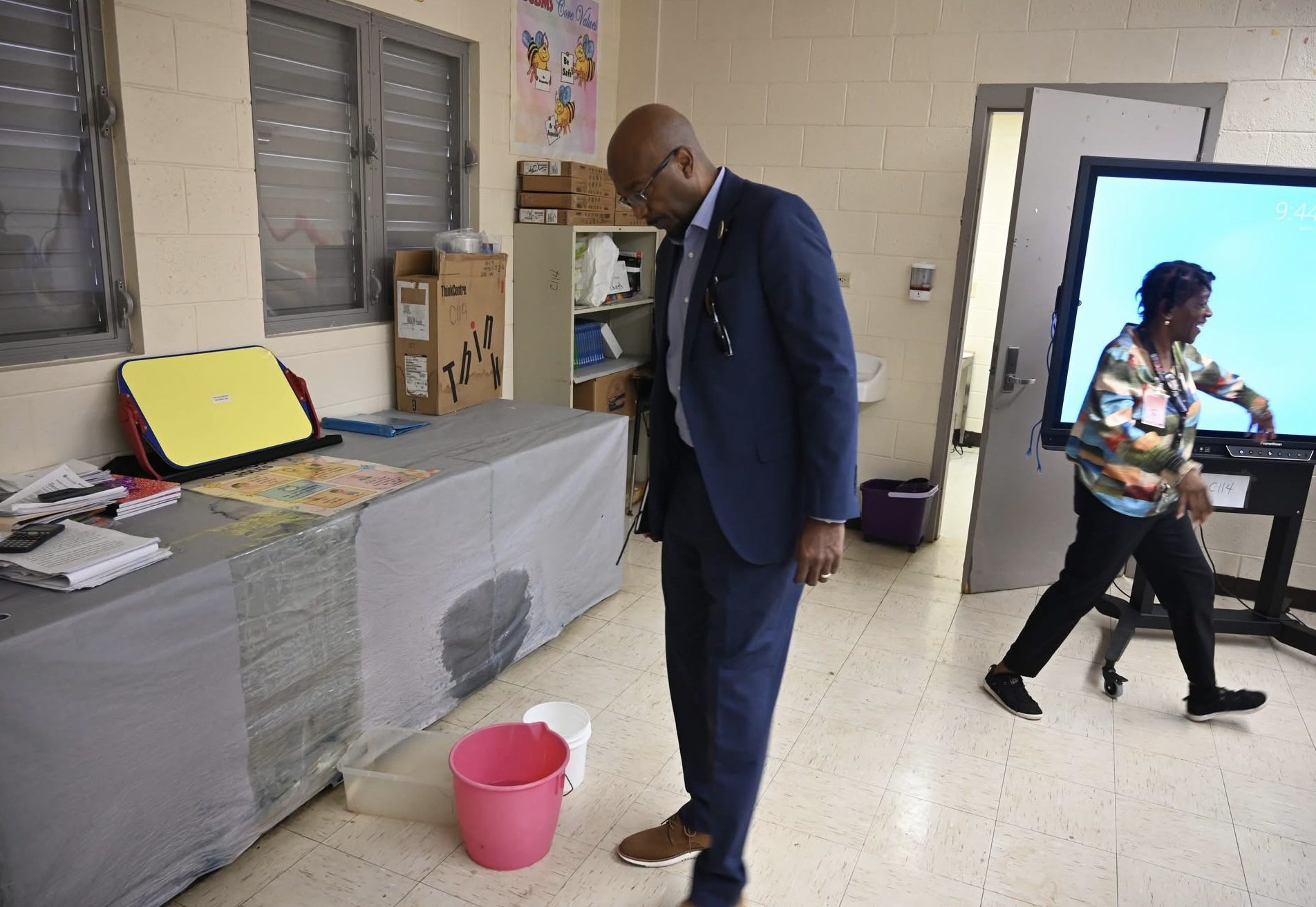
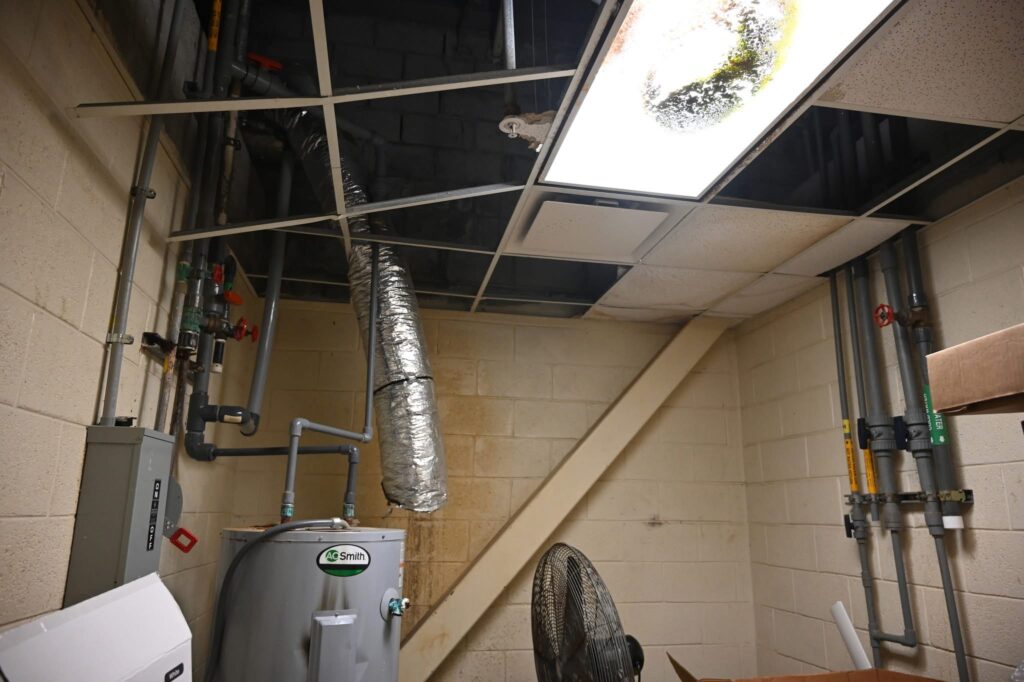
When Senate President Milton Potter walked through Bertha C. Boschulte Middle School last week, he didn’t need anyone to explain why students and teachers have been calling for help. The smell of mold lingered in the halls. Buckets caught condensation dripping from ceiling vents. Windows and doors were cracked open in classrooms just to keep the air moving, even as the heat built up inside.
Speaking with the Source afterward, Potter said he was shocked by the extent of the damage — a situation, he added, that “can’t continue” and demands urgent, coordinated attention.
“We definitely can’t function like this,” Potter said, calling for an honest dialogue among all agencies responsible for school infrastructure. “One thing that’s clear is that the relationship between the Bureau of School Construction and Maintenance and the Department of Education is not working in the way it’s perceived to be. The Senate has to have a discussion about what can be done in the interim.”
That discussion begins Wednesday, when the Senate’s Education and Workforce Development Committee, chaired by Sen. Kurt Vialet, brings both Education and Bureau officials to the table to explain what short-term measures are in place, what’s failed, and how long students and teachers will be expected to endure unsafe learning conditions.
Vialet said Tuesday that he intends to press for a detailed plan — not only to keep existing campuses operational until modernization begins, but also to define who is accountable day-to-day. “I definitely want to revisit how the Bureau is structured,” he said. “There are 17 people in exempt positions at the Bureau performing duties like procurement — positions that already exist under the Department of Education. I’d rather see those resources redirected into schools, not offices.”
Vialet suggested that maintenance personnel be assigned directly to school campuses and report to site administrators who can manage day-to-day repairs and upkeep. Larger issues, he said, could then be escalated to the Bureau for additional support, freeing Education leadership — including superintendents and the commissioner — to focus on instruction, curriculum, and student outcomes instead of broken pipes and leaking roofs. “That’s what the school imprest funds were designed for,” Vialet added, “to give principals some flexibility to address basic maintenance without waiting days for a contract or a purchase order.”
That need for clearer responsibility has been building. In mid-October, teachers at BCB did not report for duty, forcing an early dismissal and prompting the Education Department to issue an “urgent alert.” In a statement to the Source at the time, staff cited “ongoing concerns about mold, heat, leaks, and other maintenance issues that have gone unaddressed for months.” Bureau Director Craig Benjamin later acknowledged that the school’s aging systems were under strain, explaining that his office maintains more than 760 air-conditioning units across the territory with just two full-time technicians.
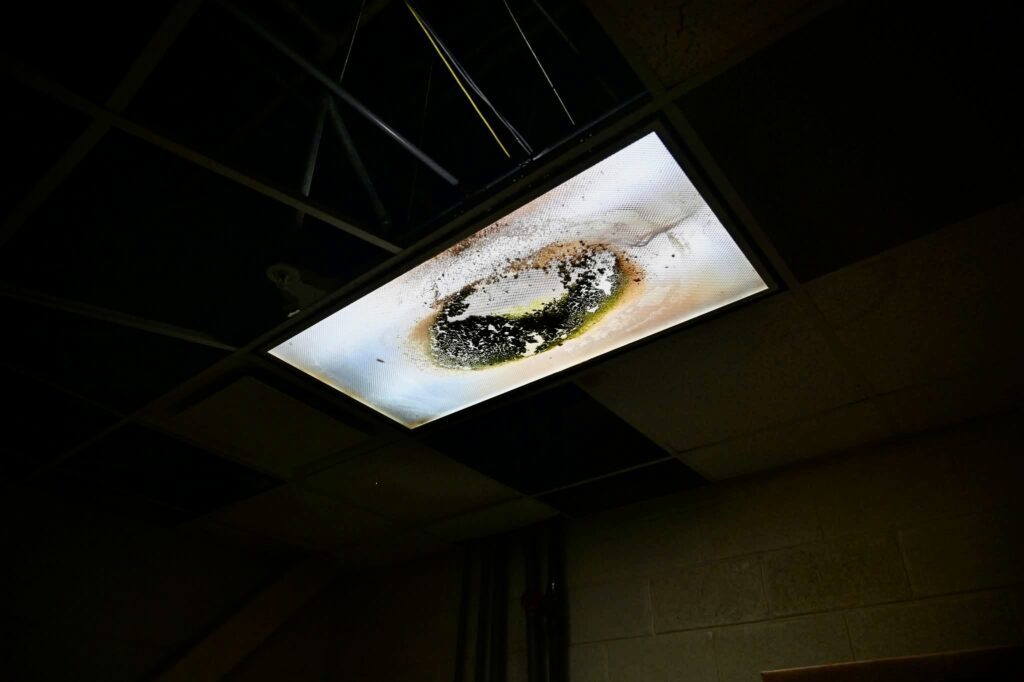
Benjamin also noted that the Bureau has since completed a professional cleaning to address mold, installed a new high-capacity rooftop unit over the gym, and serviced several classroom systems. A transformer failure temporarily set repairs back, compounded by delays in government purchase orders at the end of the fiscal year. “We’re doing the best we can with the technicians we have,” Benjamin said. “Internal work is continuing, but we can’t issue purchase orders or engage contractors until the financial system reopens.”
Still, major relief won’t come until a full modernization of the BCB campus begins under a design-build contract awarded to the Consigli/Benton Joint Venture 1 — a partnership between Consigli Construction and J. Benton Construction — that also includes Charlotte Amalie High School. Benjamin previously said work would begin in December, but Consigli/Benton representatives told the Source this week it may look more like January, with the timeline reflecting the design-build process, not a delay.
James Benton, whose company is leading the effort, said the project received a formal “notice to proceed” last September — a required contract milestone — but that the team is still in the design and permitting phase. “There’s been a lot of misinformation out there,” Benton said. “A notice to proceed doesn’t mean we immediately start construction. It triggers the start of design development, engineering, and the permitting process. The site hasn’t been turned over to us yet, so the Bureau is still fully responsible for maintaining those buildings until we mobilize. That’s expected to happen January 15, 2026.”
At that point, Benton said, the modernization will begin in four phases — starting with the gymnasium and adjacent classroom buildings — with completion projected for August 2029. The project, estimated at roughly $120.6 million, will convert BCB into a pre-K through 8 facility with new classroom wings, upgraded ventilation and chilled-water systems, and modernized learning spaces built to 2024 International Building Code standards.
Because the campus is occupied, the work must be done in stages — demolishing and rebuilding one section at a time while classes continue elsewhere. “It’s more complicated and less efficient,” Benton said, “but it’s the only way to keep the school operational.”
He added that the new design also aims to reduce long-term maintenance demands by using more durable finishes and materials — a lesson learned from decades of corrosion and wear in government buildings. “We’re designing these buildings to minimize the day-to-day maintenance that’s been the norm,” Benton said. “It adds cost up front, but it saves significantly over time.”
Senators say those savings will mean little, however, without a stronger system to maintain schools in the meantime. “You can have the best new facilities,” Vialet said, “but if we’re not all on the same page, we’ll be right back where we started five or six years after they’re finished — and we can’t afford that.”
The hearing Wednesday will determine how the Senate plans to hold both agencies accountable — not only for rebuilding schools, but for keeping them safe and functional while the work gets done, Vialet said.