

Gustave “Gus” Quetel, a culture bearer whose name adorns the Gustave Quetel Fishing Center in Frenchtown, is regarded as a prominent trailblazer in St. Thomas’ maritime heritage.

Born on Jan. 6, 1905, in the quaint little village of Carnage, now known more formally as Frenchtown, Quetel began fishing at the age of 9. This early interest in fishing would morph into a 70-year-long devotion to the craft.
Quetel was known to work several jobs in order to provide for his family. Some of those jobs included working on the naval vessel “Greeb” as a mess boy, and as a civilian worker for the U.S. Army during World War II. By 1947, he would fully commit to a career in fishing until he subsequently retired in 1981.
A true lover of the ocean, Quetel mastered every method of fishing, including bottom and tide fishing, seining, trolling, longline fishing, turtling, and pot fishing. He would go on to co-own and operate Frenchtown’s first outboard engine-equipped boat, which helped him to yield a larger catch for a fraction of the time. Additionally, he was able to acquire the community’s first diving mask, which revolutionized the way lobster and whelks were collected.
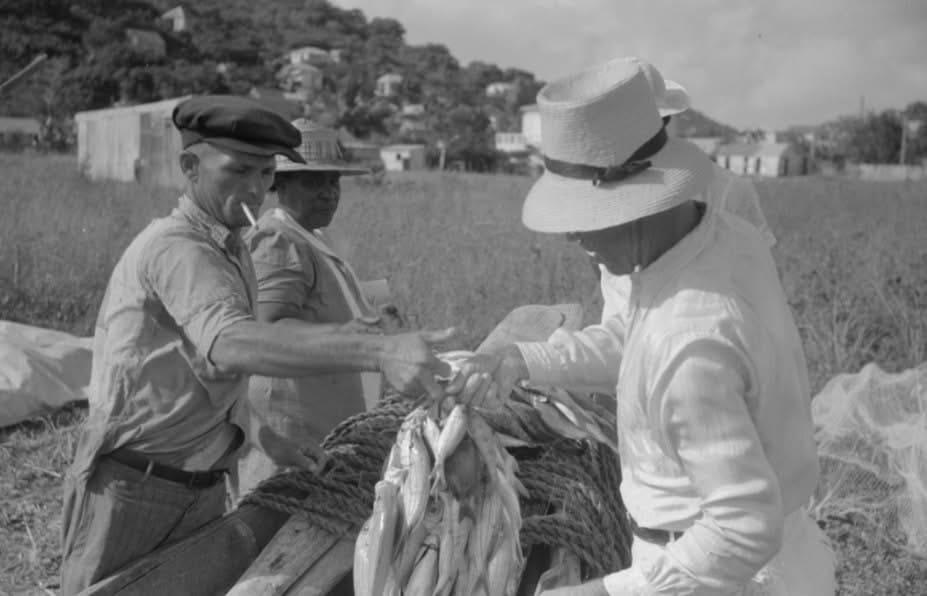
When not on the ocean, Quetel became proficient at hand-weaving nets; in his later years, he became one of the oldest fishermen in Frenchtown still practicing the craft. In the 1930s, during his service aboard the Sea Cloud, Quetel learned to make Square Knot Belts from a Swedish sailor. He fell in love with the craft and continued to hone his skillset even after arriving back to St. Thomas. He discovered that the cotton that was most commonly used in the belts tended to fray quickly, and transitioned to making the belts using the same durable nylon twine that was being used to make fish nets. Each belt was known to take up to 36 hours of labor to make. These belts would become prominent cultural heirlooms worn by doctors, senators, and governors in the community.

In December of 1986, the 17th Legislature of the Virgin Islands honored Quetel by naming the Frenchtown Fishing Center renovation the Gustave Quetel Fishing Center.
Quetel’s legacy reflects the importance of technical mastery, community involvement, and intergenerational commitment in sustaining cultural traditions. In recognition of this year’s French Heritage Week, the focus remains on preserving the crafts, stories, and values of those who came before, while continuing efforts to support and sustain these traditions for future generations.