

Virgin Islanders could soon pay $360 per year — nearly $1 per day — to help cover solid waste collection services in the territory.
Leadership from the V.I. Waste Management Authority told lawmakers on the Senate Housing, Transportation and Telecommunications Committee Friday that it intends to formally request approval for the plan from the Public Services Commission next month. The proposed collection fee would cover house-to-house services, bin sites, convenience centers, public housing, government agencies and garbage collection at schools.
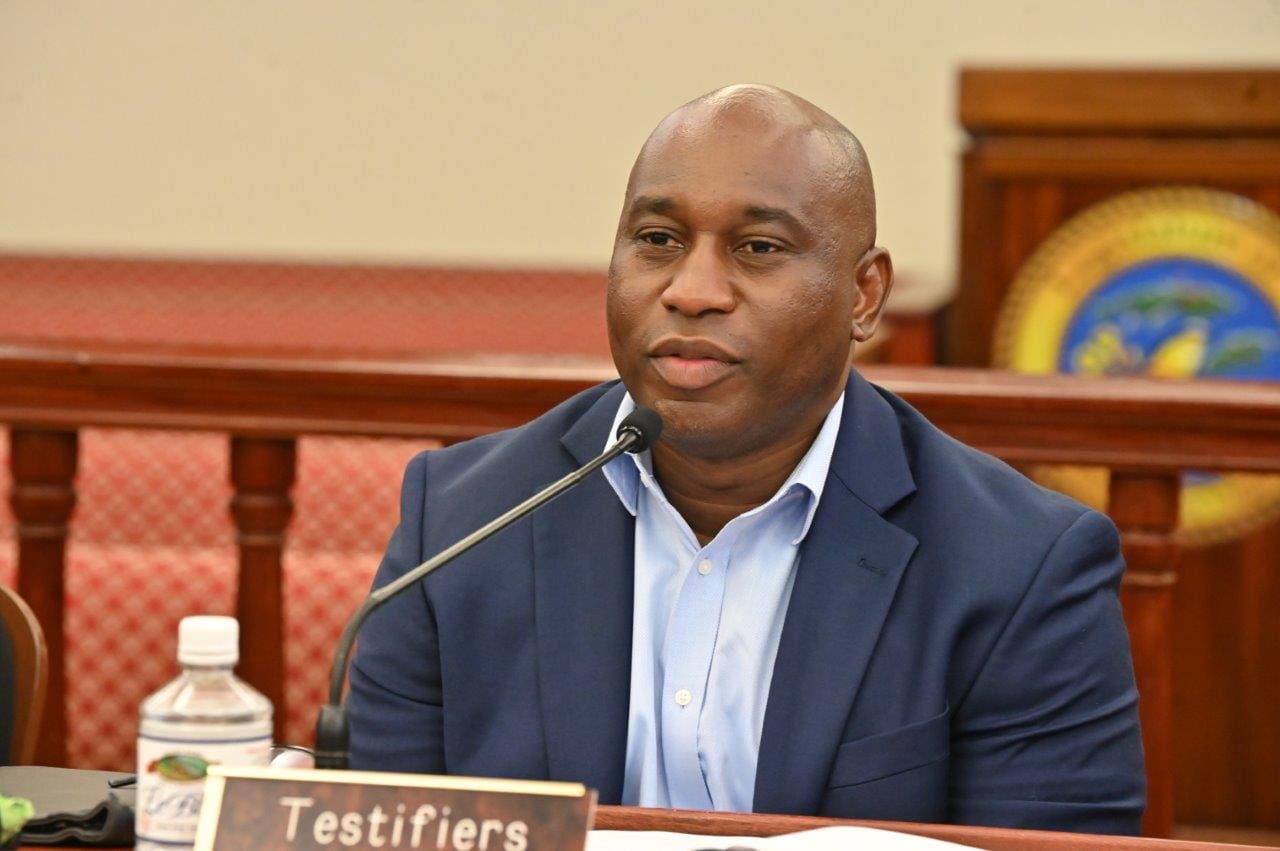
Interim WMA Executive Director Daryl Griffith told lawmakers during prepared testimony that the authority remains underfunded to the tune of $5 million and needed to generate revenue to tackle multiple issues on the solid waste side of its operations. Griffith said St. Thomas’s Bovoni landfill is nearly at capacity, and the authority is working on a Community Development Block Grant – Mitigation application for the landfill’s expansion.
The island’s bin sites, and by extension the landfill, have been inundated with used cooking oil, he said.
“Almost 90 percent of the oil at Bovoni is disposed of unlawfully,” he said. Shortly after, he added that used tires are another “glaring issue.”
“The authority has over 400,000 used tires in Anguilla and an equivalent amount at Bovoni,” he said. “Over 250,000 are estimated to be in the bushes throughout the territory, which brings the total number of tires needing to be disposed of to over one million tires.”
Lawmakers on the 33rd Legislature enacted a plan to help the authority fund its tire removal efforts in 2020 when they passed Act 8370, which allowed the V.I. Internal Revenue Bureau to charge $1-2 per tire and collect excise tax on tires.
Under the law, the funds are supposed to be sent to the Finance Department and placed in a Waste Tire Management and Disposal fund, at which point the Finance commissioner “shall disburse monies deposited into the Fund, upon the request of the Authority for purposes related to the collection and disposal of waste tires, including public education regarding disposal of waste tires and funding a waste tire redemption program administered by the Authority.”
Griffith said IRB generated more than $2 million from the tire fees.
“Waste Management has received none of these funds,” Griffith said Friday. “If possible, the authority requests from the Senate that the IRB funds be sent directly to Waste Management so that we can begin tackling this long-standing issue of used tires in the territory.”
Sen. Marvin Blyden, who chairs the Senate Housing, Transportation and Telecommunications Committee, was quick to agree with Griffith’s assertion that the U.S. Virgin Islands is one of the only jurisdictions that doesn’t charge for garbage collection, “and that’s why we have the issue we have.”
Blyden went on to caution the authority against charging all residents for services even in areas where the Authority doesn’t collect.
“I can picture and see exactly what’s going to happen,” he said. “So when you move and present your plan to the PSC, make sure you have something in place to augment in terms of assuring that you provide something for our residents,” he said,” because if you do not provide something for our residents, and you want to charge, I see a conflict there, and I see more issues compounding on what we are seeing right now.”
Though Griffith agreed, he pointed out that the islands’ different collection systems are largely dictated by terrain. St. Thomas has more bin sites because it has steeper hills which make house-to-house collection difficult.
“But I do agree, though,” he said. “We need to do small house-to-house collection in St. Thomas and we need to reduce the number of bin sites that we have in St. Thomas because in my humble opinion … for a beautiful place to live — and a tourist destination — you shouldn’t have garbage bins on almost every other corner.”
On the wastewater side, Griffith said the authority needed to receive 100 percent of the funds generated through wastewater user fees. The WMA’s allocation is currently capped at $1 million. Griffith said the fees generated $2 million last year, and the amount is expected to exceed $4 million once more properties are added to the system.
“Waste Management will need access to that full $4 million to be able to correctly maintain the system,” he said. Both St. Croix and St. Thomas’s sewer systems have been approved for Federal Emergency Management Agency-funded prudent replacements that are expected to cost more than $1 billion and $2.2 billion, respectively. Under the adjusted cost-share rate for FEMA Public Assistance programs, the federal government will bear 98 percent of the costs.
In the meantime, Griffith said the territory’s aged and failing system is “bombarded with excessive grease, rags, and other small debris on a typical day.” After Tropical Storm Ernesto passed through the U.S. Virgin Islands, flooding and rocks overwhelmed six sewer pumps — three of which, Griffith said, were critical stations.
Blyden asked Griffith about persistent sewage runoff in Frenchtown, and Griffith said replacement pumps arrived in the territory on Wednesday. Despite progress, Griffith said fixing recurring wastewater system problems won’t be “an overnight fix.”
“The money just got obligated … a month ago for St. Thomas and St. John,” he said. “And this is going to be a fix that’s going to take years to happen. The first part — replacing the pumps — is the easiest part, which will happen within a year time frame. But replacing the pipes underground, that’s going to take years.”