

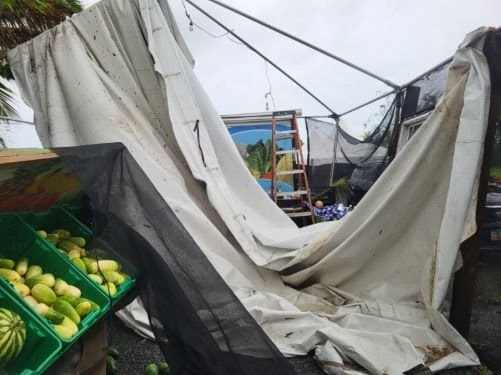
Farmers impacted by the recent passage of Tropical Storm Ernesto say they have no time to wait. Several told of damage to infrastructure needed to grow, harvest and sell their crops and livestock.
Reports of storm damage to local farms were heard territory-wide, although some said they fared well. Damaged infrastructure led the list of problems along with dead livestock, withered crops and uprooted fruit trees.
But not all were unfortunate. On St. Thomas, Leroy Richardson said Ernesto largely left him alone. “The only problem I have is water running from downhill through my farm. My farm is just below the market at Bordeaux Farms,” Richardson said.
Agriculture Commissioner Louis Petersen said he spent the days after Ernesto trying to salvage sugar apple trees. Some were too far gone to recover, he said. Yvette Brown of Sejah Farms in Castle Burke told of neighboring farms with toppled avocado trees filled with fruit that were now on the ground. Unless they were replanted quickly, the trees would be lost, she said.
The Castle Burke farm is part of a local collective made up of several small St. Croix farmers. By encouraging mutual aid, the group hopes to spur the kind of momentum that keeps local agriculture resilient. Similar efforts are being made through Virgin Islands Good Food Coalition.
Coalition supporter Niki Pacheco said farmers in her group have spent the days since Ernesto seeking help and advice over social media.
“I know it was no hurricane, but it impacted our farmers. Right now the farmers are needing help with cleanup and repositioning trees that have fallen over, and also help with future preparations for other potential natural disasters,” Brown said.
Among her immediate tasks, post-Ernesto was burning the bodies of dead goats. Goats tend to huddle together when under stress, she said; sometimes they huddle so tightly that some will suffocate.
At Roller Farm on St. John, Maumi Roller and Tyler Sharp said they were out inspecting crops of assorted greens protected by a partially collapsed shade house. “There was a lot of cleanup involved. My fiancee Tyler was here all day and one of our workers was able to come. It was a long day of cleaning up with all three of us working,” Roller said about the day after Ernesto passed through the V.I.
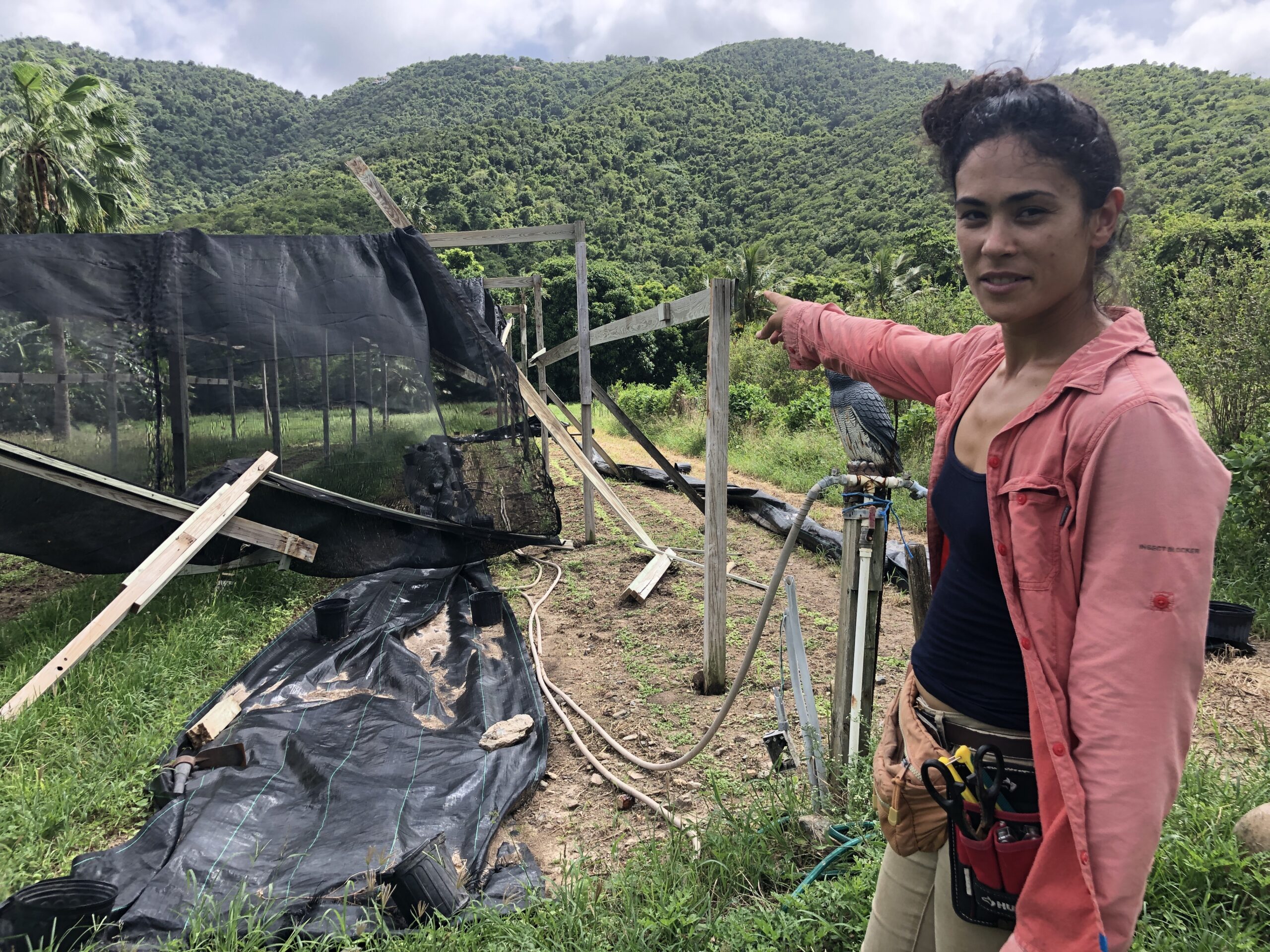
A supply of arugula slated for the supermarket was left in doubt, and Roller said three rows of micro arugula bound for local restaurants were left washed out by heavy rain. “The restaurants like it, but it’s an expensive crop; it’s about 55 dollars per pound,” she said.
With the communal farmer’s market tent collapsed at Sejah Farms, a quick repair or replacement was needed for produce vendors to resume their business, Brown said.
Efforts to help farmers prepare and find resources to help them get through natural disasters were on their way to the Virgin Islands at the time Ernesto struck. A group affiliated with the Southern Sustainable Agriculture Research and Education group had scheduled a workshop to prepare farmers for the season.
“When I saw the storm coming I reached out and informed them it would be coming,” said SARE Communications Specialist DaraMonifah® Cooper.
The workshop was postponed, but Cooper said she is asking farmers to send her video footage of their post-storm conditions that can be shared with the research group.
“When the farmers post, some of them have started tagging Southern SARE so I can see their videos and photos. I then share their footage with my colleagues,” Cooper said.
Those who make their living from the land say time is a luxury they cannot afford. Farmers can’t stop what they’re doing until government officials show up to make assessments, said the owner of Selah Farms.
“There’s one thing that’s overlooked. There is no assessment of damage to the farmers, and that’s critical. That’s something that our leaders need to look at. We can’t sit back; this is our livelihood,” Brown said.