

 Even with no utility or industry officials present, hundreds of St. Croix residents packed Gertrude’s Restaurant Wednesday evening to hear more about the pros and cons of proposed petroleum coke- and trash-fired power plants.
This summer the Water and Power Authority and Waste Management Authority entered into agreements with Alpine Energy Group for the construction of two power plants—one on St. Croix’s
south shore by Hovensa and one in Bovoni on St. Thomas—to reduce energy costs in the territory by replacing expensive oil-fired generators and solve the territory’s mounting waste problems.
A panel of well-known local personalities, senators, former senators and environmental activists each took the microphone to speak at length and make their case for and against. WAPA, Alpine and Waste Management officials and expert consultants testified before the Legislature on St. Thomas earlier in the day and were not able to make the St. Croix meeting.
Most of those speaking were against Alpine’s proposed power plants, variously citing environmental concerns, worries over health hazards, a preference for local ownership and distrust of either the government or outside corporations.
Steffen Larsen, a renewable-energy activist whose home is entirely powered by solar and wind power, argued the territory must reflect worldwide concerns about greenhouse gas emissions and global warming and so should not use a high-carbon, fossil fuel like petroleum coke, which is a waste product from oil refining. He said the plan was a "slap in the face " to President Barack Obama, "an insult to his mission and an insult to Delegate Donna Christensen, who has warned us for years against the use of petroleum coke."
Instead, Larsen argued some of the proposals that were rejected by WAPA might be viable alternatives, including a competitive bid for using trash to generate electricity.
Radio personality and longtime social activist Mario Moorhead urged support of the plan, emphasizing strong financial guarantees enshrined in WAPA’s agreement with Alpine.
"Every step of way is a check, a balance, insurance, assurance and a surety," Moorhead said.
"There is even the precaution in the likelihood any of the permitting agencies, from EPA on down to the Army Corps of Engineers, should any of them fail to approve this contract."
Moorhead argued that large amounts of cash are set aside in escrow, available to pay off WAPA and the territory should any aspect of the contract not be met. In Moorhead’s view, it is a vastly better deal, with more benefits and fewer risks and costs to taxpayers than contracts with Diageo, Cruzan Rum and others, in which the territory offers large tax breaks, pays startup costs and has no cash set aside in escrow to guarantee performance.
"The fact is this, it is not WAPA’s money being used to build this," he said. "Now the Diageo plant being built down the road is that our money? Yes."
That the plant would help get rid of municipal waste and old tires littering St. Croix’s empty lots and roadsides was another benefit, from Moorhead’s perspective.
St. Thomas residents Dwayne Callwood and Clarence Payne both opposed the plan on the grounds they suspected it would be worse for the environment and for the health of residents than WAPA and Alpine claim.
Sen. Nereida Rivera-O’Reilly, just back from a fact-finding trip to a petroleum coke-burning power plant in Jacksonville, Fla., argued the ash left by burning pet coke was too much of a disposal problem. Although the Jacksonville plant was well-run and clean, even with the easy transportation and other advantages of being on the mainland, that plant could not get rid of its ash, she said.
"It has a very large mountain of ash, like an Egyptian pyramid, which the plant managers say is just one year of waste," she said. "In all fairness, the people at the plant were not trying to convince us of anything, and they say their biggest challenge was getting rid of the ash. … I foresee just another giant mound, just like the mound of red dust."
Rivera-O’Reilly was referring to a large hillock of red bauxite tailings left from aluminum smelting decades ago on St. Croix’s south shore. Though not poisonous, the red dust is mildly caustic and an eyesore for residents.
Paul Chakroff of the St. Croix Environmental Association agreed with Rivera-O’Reilly, saying the ash could be incorporated into cement as proponents claim, but only as an aggregate, and even well-heeled stateside facilities were having a problem getting rid of it.
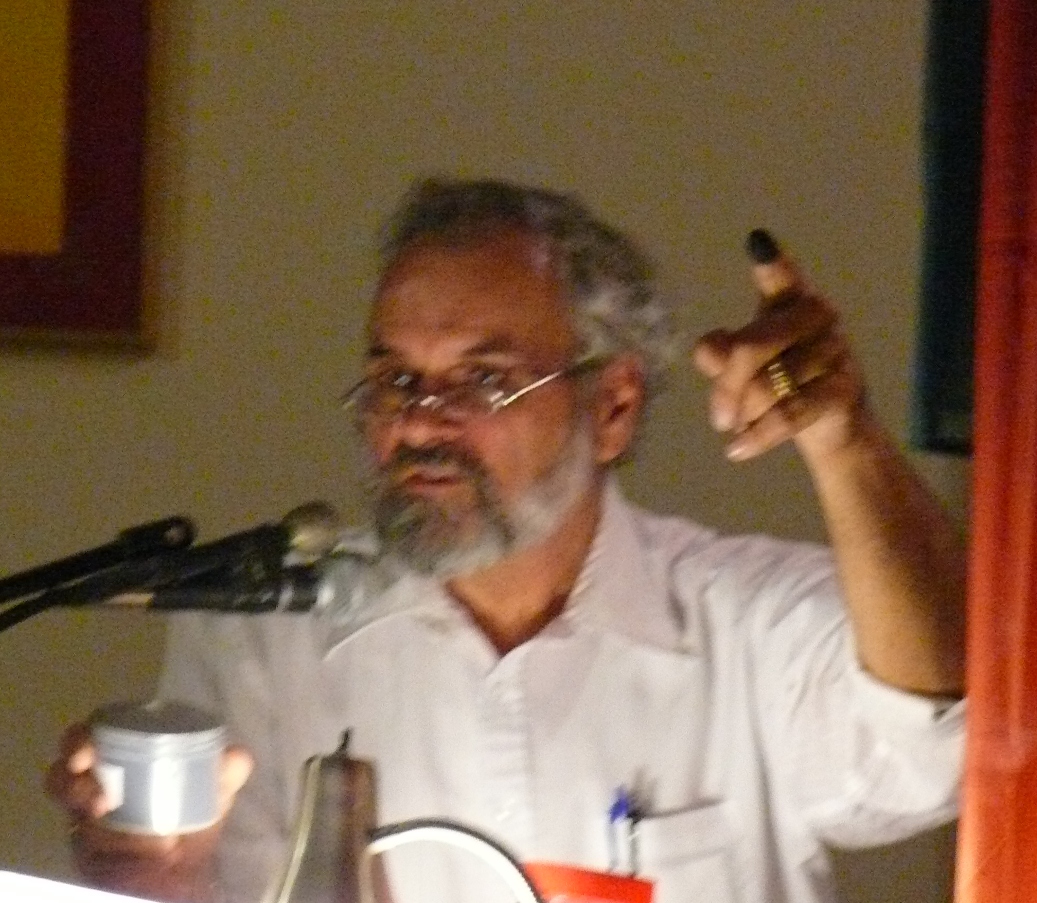
Chakroff also tried to refute claims by Alpine consultants that the petroleum coke is relatively inert and not hazardous to store and transport. He held up a jar of black petroleum coke dust, sticking his finger in it to show it stuck and spread like charcoal dust, and mixed it with water to show that it became a black slurry-like suspension, rather than simply resting inertly in the water.
Chakroff also challenged the bidding and vetting process WAPA used. Holding up a fat, dictionary-sized notebook, Chakroff said it contained information on alternative energy proposals considered by a town in Michigan put together by that town’s local power cooperative. That Michigan power cooperative gave out the information and got community feedback before settling on the final choice, Chakroff said.
"They went into great detail on 16 different alternatives for their community," he said. "As opposed to (WAPA) putting an announcement in the Daily News."
After the speakers gave their presentations, audience members were given a chance to ask questions. The opinion panel fielded the questions, many of which were of a technical nature, to which the panelists offered their opinions and best guesses in response.
St. Croix political group Crucians in Focus, headed by Michael Springer, put on the forum.