

Untreated sewage spilling into the streets, despite a $3.2 billion federal effort to overhaul the wastewater system, drew sharp questioning from senators Wednesday at an oversight hearing.
The Senate Health, Hospitals and Human Services Committee met to examine public health risks from sewage and the Virgin Islands Waste Management Authority’s use of Federal Emergency Management Agency funding. Senators questioned whether the authority has a realistic plan and timeline to fix the system as the multi‑billion‑dollar replacement effort moves forward.
The hearing focused on the Waste Management Authority’s wastewater division, represented by Chief of Wastewater Walton Keith Smith and Chief Engineer Alex Bruney.
Smith said the territory’s system includes about 240 miles of pipeline, more than 4,200 manholes, 31 pump stations and eight treatment plants.
“Much of this infrastructure has exceeded its intended service life, and now requires increasing levels of maintenance,” Smith said. He told senators FEMA has concluded that “all wastewater infrastructure is beyond repair” and “cannot be patched or rehabilitated. It requires replacement.”
Smith described daily challenges including deteriorated pipelines, failing pump stations, collapsing manholes, stormwater infiltration and unreliable power.
He warned that sanitary sewer overflows expose residents and visitors to “bacteria, viruses, parasites, and other diseases” that can cause gastrointestinal illness, skin and eye infections and respiratory irritation. Young children, elderly people, pregnant women and those with weakened immune systems are especially vulnerable, he said.
Approximately $3.2 billion in FEMA funding has been identified through a federal recovery process for full replacement of the wastewater infrastructure, Smith said. Planning, design, permitting and construction “will take years to complete,” with full replacement anticipated by 2034.
The authority launched a Wastewater Optimization Program in 2024 to maintain the deteriorating system while preparing for its replacement. Smith said the program focuses on administrative effectiveness and infrastructure reliability, with progress in the low-30% range. The authority also recently received two camera trucks for sewer inspections and preventive maintenance.
Senators pressed the authority on how much of the federal funding has been spent so far. Bruney said more than $900,000 has been spent in the St. Thomas–St. John district and roughly $2 million to $2.5 million on St. Croix.
He said the money has gone toward design work and pumps and controls purchased for early repairs at pump stations. Committee members requested a written breakdown of spending by district and project, along with timelines for obligating the remaining FEMA funds, and Bruney said the authority would submit that information to the committee.
Several senators questioned whether the authority can move the $3.2 billion quickly enough. Sen. Alma Francis Heyliger asked Smith whether VIWMA could spend the money “in the time frame that we have” and what urgency was being placed on meeting federal deadlines.
Smith said he believes the authority can meet the deadlines if it continues its current pace.
“Right now, I think that we are on track,” Smith said. “If we continue this focus, finishing the design, starting the construction, going with the timetable that we have right now, if we continue that track, we’ll finish in an allotted period of time.”
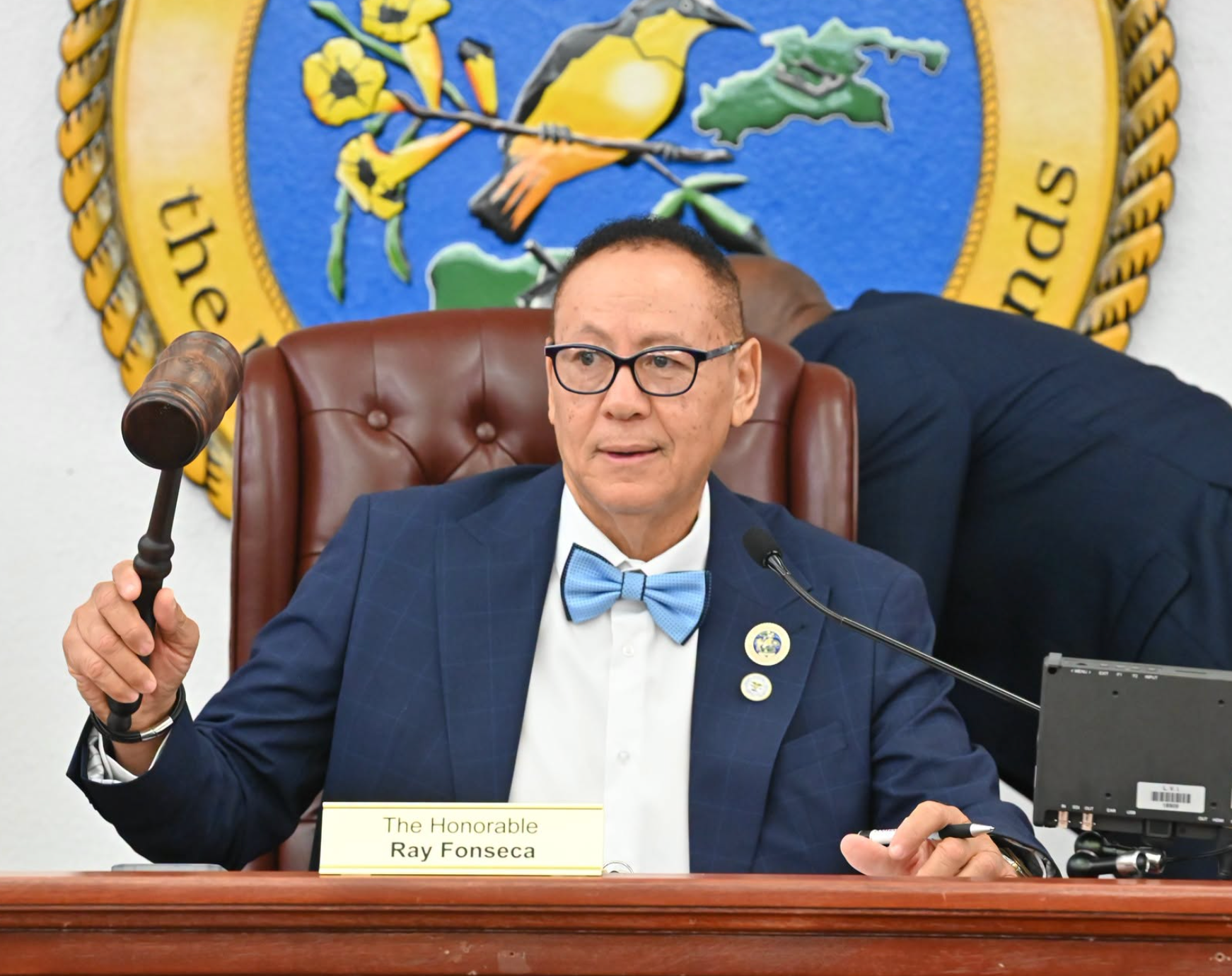
Committee Chair Sen. Ray Fonseca later criticized the authority’s planning and execution, saying, “I don’t think the Waste Management Authority has a real plan, and any deadlines to spend the $3.2 billion.” Senators also requested firm design and construction schedules that were not available during the hearing.
Senators also raised concerns about private sewer laterals connecting homes and businesses to public mains. Smith said FEMA money cannot be used on private property and that homeowners are responsible for connections beyond the property line.
Bruney said many laterals are old and could be difficult to reconnect. Fonseca warned that even if the $3.2 billion replaces all public mains and pump stations, “we’re not going to be able to get the sewage flowing,” because private laterals would still be failing and could require hundreds of millions of dollars in additional work.
The committee also examined failures in the existing system. Smith said about 1,000 feet of a 42‑inch gravity main near the Cancryn pump station on St. Thomas has collapsed underground, forcing the authority to install a temporary pumping system.
He said unreliable power and aging equipment have left some pump‑station generators inoperable and destroyed more than $300,000 in pumps in about two months. Smith also acknowledged that sewer lines were not replaced during recent reconstruction of First Avenue in Sugar Estate, prompting Fonseca to call the possibility of reopening the newly paved road “unacceptable.”
In closing, Fonseca called the federal wastewater funding “$3.2 billion that’s at stake” and said the territory “needs to coordinate more” to avoid tearing up newly built roads and repeating past mistakes. He thanked Waste Management employees, but said the testimony shows “why the Waste Management Authority is troubled, and there’s some serious concerns.”