

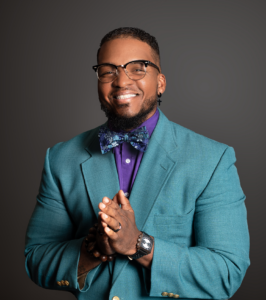
 In his biweekly column, Langley Shazor speaks to issues important to men within the territory.
When a man begins to heal, the change does not stop with him. It moves through his home, his children, and his community. It changes how he speaks, how he listens, and how he loves. It shifts the atmosphere of generations. Every healed man becomes a bridge that others can safely cross. The work of breaking cycles is not only personal, but also generational. What we do with our healing determines what our sons and daughters inherit after us.
For too long, children have grown up seeing men who were reliable but unreachable. They watched fathers who worked hard but rarely smiled. They heard words of correction more often than words of affirmation. Many saw men who were physically present but emotionally distant, convinced that love meant duty and discipline but not tenderness. Those men did what they were taught. They led from survival, not from wholeness. But a new generation is watching us now, and they deserve to see something different.
Raising sons and daughters who see the whole man means allowing them to witness strength and softness existing side by side. It means modeling what balance looks like, which is not perfection, but presence. It is showing that a man can be firm without being harsh, confident without being arrogant, and protective without being controlling. It is letting our children see that vulnerability is not weakness but wisdom. When they watch us express emotion, take accountability, and seek peace, they learn that manhood is not about performance. It is about purpose.
Our sons learn how to be men by watching how we live, not by listening to what we say. They study our silence, our patience, our laughter, and our love. They learn what responsibility looks like when they see us follow through on our word. They learn how to handle conflict when they watch us choose dialogue over domination. They learn how to love when they see us respect their mothers, their sisters, and ourselves. When a father apologizes, he teaches his son that humility is not loss. When he listens, he teaches that leadership includes empathy. When he forgives, he teaches that strength and grace can live in the same heart.
Our daughters, too, are learning from us. They are watching how we handle our emotions, how we communicate, and how we treat the women in our lives. They are learning what safety feels like by how we show up. A daughter who grows up with a whole man for a father learns that love does not have to come with fear. She learns that presence matters more than perfection. She learns to expect honesty, kindness, and consistency from the men she allows into her life. Every moment we spend modeling integrity becomes a silent lesson that will guide her long after we are gone.
To raise children who see the whole man, we must first be willing to be seen. Many men were raised to hide, shrink, and keep their pain private and their doubts buried. But children do not need flawless fathers; they need honest ones. They need to see us navigate frustration without violence, fear without avoidance, and failure without shame. They need to witness our growth. When they see that manhood is an ongoing process, they learn that humanity is not something to hide from but something to embrace.
Breaking cycles also means repairing relationships. For fathers who carry regret about the past; the years missed, the words unsaid, the distance unhealed, redemption is still possible. Children remember effort. They may not remember every mistake, but they remember when you tried. It is never too late to reach out, to apologize, or to begin again. Consistency rebuilds what time once eroded. Every effort to reconnect, no matter how small, becomes proof that change is real.
Raising whole children also requires community. No man fathers alone, even if he stands in the role by himself. Mentors, uncles, coaches, teachers, and friends all shape how young people see manhood. We must be intentional about surrounding our children with examples of integrity, compassion, and strength. When the community reflects the same principles being taught at home, those values take root. The presence of other whole men reinforces the truth that manhood is not a competition but a collective responsibility.
We cannot give our children what we do not have, and we cannot teach what we refuse to learn. If we want them to see men who love openly, forgive freely, and lead humbly, we must become those men. Our healing becomes their inheritance. Every boundary we set, every apology we make, every moment of patience we practice plants a seed in their memory. One day, they will model what they saw in us, not what we said but what we lived.
The goal is not to raise sons who fear emotion or daughters who normalize distance. The goal is to raise children who understand that strength and softness are partners, not opposites. When they see men who can be calm under pressure yet compassionate in conflict, they learn balance. When they see men who can work hard and still rest, they learn sustainability. When they see men who love deeply without fear, they learn courage.
Generational change does not happen through speeches. It happens through example. When our children grow up seeing the whole man, the one who is honest about his journey, who owns his mistakes, and who continues to evolve, they inherit not perfection, but possibility. They grow up knowing that manhood is not a burden but a blessing, not a standard to perform but a story to live truthfully.
The world our children will inherit needs whole men who listen, love, and lead with both heart and conviction. If we can give them that, we will have done more than break the cycle. We will have built a new one that is rooted in healing, in truth, and in love that lasts.
Editor’s Note: Opinion articles do not represent the views of the Virgin Islands Source newsroom and are the sole expressed opinion of the writer. Submissions can be made to visource@gmail.com.
Related Links:
Op-Ed: The Lounge | A Column for Men: Breaking the Cycle: From Myths to Manhood
Op-Ed: The Lounge | A Column for Men: Breaking the Cycle: Healing the Father Wound
Op-Ed: The Lounge | A Column for Men: Breaking the Cycle: Learning to Lead Without Losing Yourself
Op-Ed: The Lounge | A Column for Men: Breaking the Cycle: Building Emotional Wealth