

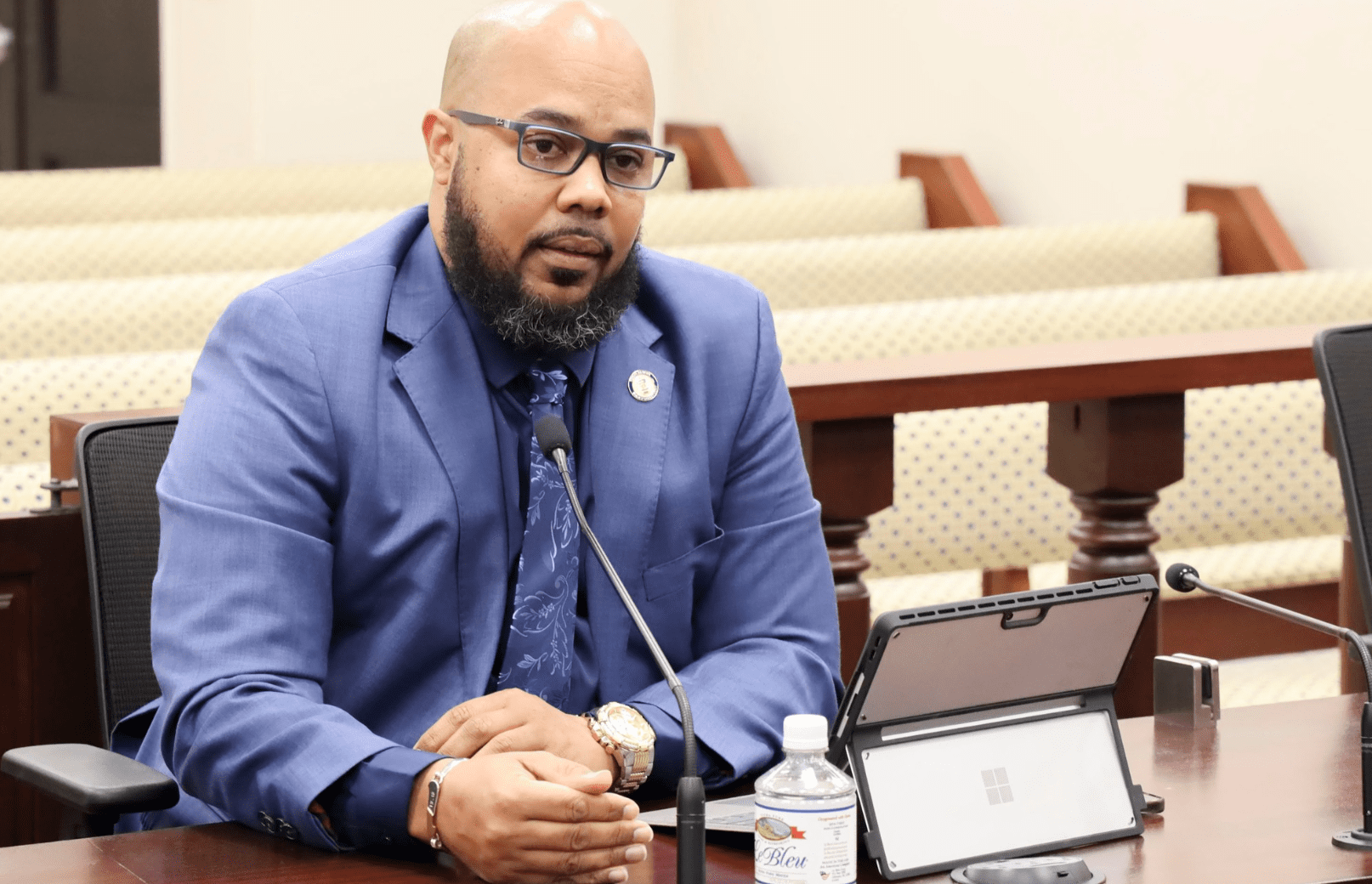
Virgin Islands senators pressed police leaders Friday on whether expanding the use of surveillance cameras, license plate readers, and drones is making communities safer while respecting residents’ privacy.
During a hearing of the Senate Homeland Security, Justice and Public Safety Committee, lawmakers questioned Assistant Police Commissioner Sean Santos and St. Croix Chief of Police Uston Cornelius about privacy safeguards around new technology, traffic enforcement, staffing, and the department’s efforts to meet the terms of a federal consent decree.
Santos said the department has completed phase two of its public safety camera expansion and launched a pilot using license plate readers from Flock Safety, a private company whose technology captures and stores vehicle plate data. He said the systems are installed and operating, but are still being evaluated for performance.
Flock Safety has drawn scrutiny over past data leaks and privacy concerns. The VIPD pilot phase is intended to assess system performance, data accuracy, and investigative value before any full-scale deployment.
Real-time crime centers in both districts have completed their physical build-outs, with software integration now in progress, and are expected to be fully operational by July, Santos told lawmakers.
He said the next phase will connect in-car cameras, vehicle GPS tracking, mobile routing systems, territorywide CCTV feeds, license plate reader data, and future body-worn cameras so that information can be delivered in real time to field supervisors and responding officers. The department is also in the procurement and evaluation phase of upgrading body-worn cameras and tasers.
Senators pressed Santos on how the new systems are being used and what results they are producing, while also raising complaints they hear from residents about reckless driving, slow delivery of police reports, and a lack of visible patrols, especially on foot.
Sen. Ray Fonseca, who said he saw a drone fly over the Oswald Harris Court community on New Year’s Eve but did not know if it belonged to police, questioned whether a drone program could lead to “unwarranted surveillance of residents” and whether some uses would require a warrant.
Santos said the department is still finalizing its drone policy and that, for now, drones are used only for specific incidents in public areas, such as traffic issues, and not for patrols over private locations. “We’re just using the drone for different types of operations that are outside of any type of violation of privacy of residents,” he said.
Sen. Kenneth L. Gittens questioned why, despite completion of two phases of the camera build-out, the department has not publicly highlighted specific cases where the system proved decisive. Santos said camera evidence is being used in open cases, including traffic crashes, but declined to provide examples while investigations remain pending.
Senators cited an increase in crashes, drivers ignoring school bus stop signs, and off-road vehicles operating recklessly in towns. Cornelius said VIPD and Highway Safety are running public advisories and exploring measures such as rumble strips, though funding is limited. Sen. Novelle Francis Jr., a former police commissioner, called for more routine traffic enforcement, citing a “serious increase” in crashes.
Staffing and deployment concerns also surfaced. Gittens said the department lacks enough officers to restore widespread foot patrols without pulling personnel from specialized units. Cornelius said officers from investigative and school security units are reassigned when patrol staffing is low. Santos said new recruits are being onboarded, with at least one academy class expected to begin by March, though he did not provide a sworn headcount.
Sen. Kurt Vialet asked whether GPS in patrol vehicles is monitored to dispatch the closest unit. Santos said newer vehicles have integrated GPS, older ones use add-on modules, and the department does not yet have staff assigned to monitor locations in real time.
Operational strains also extend to equipment. Sen. Avery L. Lewis questioned why officers report vehicle shortages while some new cars remain idle. Santos said delays were caused by missing light packages, spotlights, tires, and batteries, but repairs are underway, including with technicians from Puerto Rico. He added that future vehicles will arrive from the mainland already outfitted for police use to avoid similar setbacks.
Amid questions on privacy concerns, Santos emphasized the department’s commitment to careful implementation. “The department aims to use its expanding technology responsibly and strategically to serve and protect the people of the territory,” he told lawmakers.
Editor’s Note: This story has been corrected. The hearing was held Friday, not Tuesday as originally reported.