

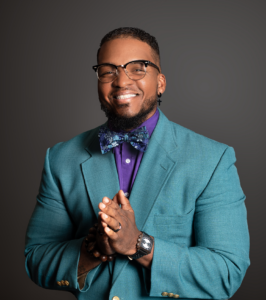
 In his biweekly column, Langley Shazor speaks to issues important to men within the territory.
I take exception to the term “real men.” All men are real. We all exist. That phrase, for all its cultural traction, has become a flawed compass, often pointing us toward affluence, domination, violence, or emotional disconnection as if those are the markers of true masculinity. It’s macho nonsense dressed up as wisdom. This bootstrap ideology hasn’t advanced us; it’s fractured us. It hasn’t built men; it has built masks.
We’ve grown up being told what “real men” do. Real men don’t cry. Real men provide. Real men take charge. Real men don’t need help. But what if we stopped parroting these slogans and asked a harder question: are we whole? Because I know too many men, good men, successful men, who are built, but not whole. They’ve achieved status. They’ve built businesses, bodies, reputations. They’re respected in public but suffering in private. They’ve nailed the exterior, but inside, something’s still undone.
That’s the lie we inherited: that manhood is performance. That it’s grit without grace. That strength means silence. But what makes someone a high-caliber man is not how many burdens he carries, but whether he knows how to carry himself. It’s character. Emotional regulation. Introspection. Accountability. Leadership. Being a man of integrity, class, peace, patience, and humility. And more than that, it’s being consistent when no one’s looking, when there’s no praise or applause to chase. Not just in public, but behind closed doors. That’s where real strength lives.
But we haven’t been taught that. We’ve been taught to build, just not within. So, we have men who can dominate a room but can’t sit still with their own thoughts. Men who protect everyone else but never protect their peace (“Chasing Peace”, 7/6/25 anyone?). Men who are loyal to the grind but strangers to their own hearts. You’ll find them everywhere: on job sites, in pulpits, in corner offices. They look solid. But if you ask them how they’re really doing, they’ll flinch or deflect or make a joke. Because no one ever gave them the tools or permission to be honest, especially with themselves.
It’s not just individual men who pay the price for this. Our families do. Our communities do. Our children inherit these broken templates and build their own identities on top of them. Little boys who learn that being loud and angry is leadership. Little girls who learn that silence is strength. Relationships suffer. Brotherhoods die. Trust erodes. And all because we taught men to be functional but not full. Useful, but not rooted.
It’s time we reframe what manhood could mean. I said it in the post, and I’ll say it again: if we want to redefine this term, let it be about trustworthiness. About being dependable, and not simply the dependability to show up, but that your word is impenetrable. That when you say, “I got you”, that can be taken to the bank and deposited. About being the kind of person people can believe and believe in. A man who will do the right thing because it’s the right thing, not because someone’s watching or the cameras are rolling. That’s the standard. That’s the measure. Anything less is just as artificial and misleading as the social media masculinity metrics that keep us chasing the wind.
So, what does wholeness look like? It doesn’t mean being perfect. It means being complete. It means having the courage to ask for help when you need it. To apologize when you’re wrong. To sit with uncomfortable feelings instead of numbing them. It means building the emotional stamina to listen, reflect, and grow. It’s knowing who you are when no one’s validating you. It’s how you show up when there’s no incentive except self-respect.
The work of becoming whole is not glamorous. It won’t get you likes. It won’t impress the loudest circles. But it will give you peace. And it will make you the kind of man whose presence doesn’t just dominate but heals. The kind of man who knows how to lead without lording over. The kind who doesn’t just survive pressure but rises from it with grace.
Men like that don’t need to be told they’re “real.” They just are. And you can feel it. In how they speak. In how they handle correction. In how they protect their families and their principles without losing themselves. That’s not something you post. That’s something you prove — in the quiet, in the chaos, and in the commitment to grow, even when no one sees it but you.
If you’re already built, but you know there’s more, more healing to do, more self to uncover, more truth to embrace, good. You’re on the right path. Stay on it. Let’s build men who are whole, not just hard. Complete, not just competent. Let’s put the phrase “real men” to rest and start living in a way that no phrase can fully capture, only our character can.
Langley “Casual-Word” Shazor is a poet, author, publisher, entrepreneur, public speaking coach, podcast host, and pastor who is an advocate for youth and men. His goal is to enlighten, empower, and liberate those who are silenced, marginalized, and enslaved to self-destructive thoughts and behaviors. Visit thecasualword.com.
Editor’s Note: Opinion articles do not represent the views of the Virgin Islands Source newsroom and are the sole expressed opinion of the writer. Submissions can be made to visource@gmail.com.