

The number of dengue cases is rising and the Virgin Islands Health Department is urging residents to take immediate precautions to prevent further transmission, the department announced Monday.
“To date we have 82 reported cases of dengue in the territory and we are once again strongly urging residents to take steps now to prevent wider transmission,” said V.I. Health Commissioner Justa Encarnacion on Monday. “Remove standing water from around your home, repair your window screens if there are holes or tears, and use mosquito repellent when outdoors. These simple steps significantly reduce the risk of dengue.”
As of Friday, there were 63 reported cases on St. Thomas, 18 cases on St. John, and one case reported on St. Croix, according to Dr. Esther Ellis, the VI Health Department’s Territorial Epidemiologist.
“We are aware that our numbers on St. Croix are under-estimating our true dengue burden, and I encourage residents to get tested for dengue if you have symptoms,” said Ellis. “Additionally with recent heavy rains, standing water allows mosquitoes to hatch and reproduce.”
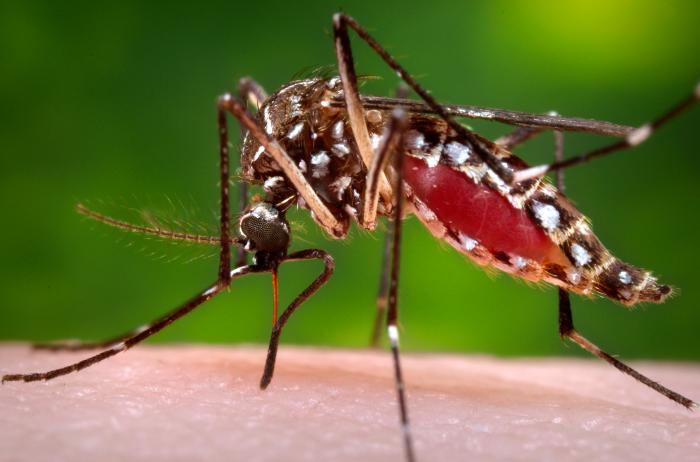
The Aedes aegypti mosquito, which transmits the dengue virus, thrives in these conditions and can cause symptoms ranging from mild to severe and, in some cases, life-threatening. The most common symptoms of dengue include fever, pain behind the eyes, muscle, joint, or bone pain, nausea, vomiting, and/or rash, according to the press release.
Dr. Tai Hunte-Ceasar, the health department’s chief medical officer, is also advising the public to see their healthcare provider if they experience symptoms of dengue, the press release stated.
“If you are experiencing symptoms, it is crucial to see your doctor and get tested to confirm whether you have dengue or another illness,” said Hunte-Ceasar. “This is the only way we can accurately track the rate of dengue in our community.”
“We know the numbers of cases are far higher than what is recorded because people do not always seek care allowing for testing and accurate diagnosing. It is important to tell your provider the exact onset of symptoms, so they perform the appropriate test to avoid falsely negative results,” Hunte-Ceasar added.
The Epidemiology Division recently launched the USVI Epidemiology Data Dashboard, which provides weekly updates on both dengue and COVID-19 cases in the territory. To view the dashboard click here.
Recommendations from the Centers for Disease Control for preventing mosquito bites:
- Use Environmental Protection Agency (EPA)-registered insect repellents with one of the following active ingredients: DEET, picaridin, IR3535, oil of lemon eucalyptus, para-menthane-diol, or 2-undecanone.
- Wear lightweight loose-fitting long sleeves and long pants, as well as mosquito repellent on exposed skin.
- Always follow instructions when applying insect repellent to children.
- Do not use insect repellent on babies younger than two months old. Instead, dress your child in clothing that covers arms and legs. Cover strollers and baby carriers with mosquito netting.
- Do not use products containing oil of lemon eucalyptus (OLE) or para-menthane-diol (PMD) on children younger than three years old.
- Do not apply insect repellent onto a child’s hands, eyes, mouth, cuts, or irritated skin. Adults: spray insect repellent onto your hands and then apply it to a child’s face.
To protect the home, the CDC recommends:
- Use screens on windows and doors. Repair holes in screens to keep mosquitoes outdoors.
- Once a week, empty and scrub, turn over, cover, or throw out any items that hold water like tires, buckets, planters, toys, pools, birdbaths, flowerpot saucers, or trash containers. Mosquitoes lay eggs near water.
- Tightly cover water storage containers (buckets, cisterns, rain barrels) so mosquitoes cannot get inside to lay eggs.
- For containers without lids, use wire mesh with holes smaller than an adult mosquito.
- Fill tree holes to prevent them from filling with water.
- If you have a cistern and/or septic tank, repair cracks or gaps. Cover