

Now celebrating its centennial, the country’s most powerful women’s organization – the League of Women Voters – was just gearing up to mark its 50th anniversary back in the late 1960s when word came that some women, in a place many Americans had never even heard of, wanted to join in the party.
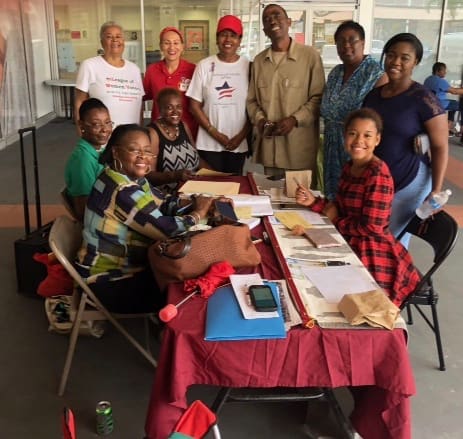
Formed in 1920, the same year women’s right to vote was assured by the ratification of the 19th amendment, the League of Women Voters had developed into a major influencer and had expanded to include hundreds of chapters across the States.
LWV leaders in Washington knew little if anything about a tiny U.S. territory in the Caribbean called the Virgin Islands before they received an inquiry from a newly formed St. Thomas-St. John group, seeking to affiliate with the national organization. A petition for St. Croix would late follow.
Now roughly half as old as the national organization, the Virgin Islands League is still a force in the local community.
Today it concentrates almost exclusively on electoral issues. In its first 20 or so years, it led on environmental and land-use planning initiatives, played a role as government watchdog and took a stance on virtually every idea debated in the public sphere, from legalization of gambling to zoning laws.
In separate interviews with the Source, several current and former V.I. League leaders shared their memories of the early years and their thoughts on the present. The national League also provided copies of the V.I. group’s bylaws as well as memoranda describing the lengthy organizational process.
Getting started
Officially, the St. Thomas-St. John group became a provisional League on Oct. 23, 1968, according to a memo dated Nov. 12, 1968, by Louise Montgomery to the National Board. Montgomery had been assigned by the national organization to help V.I. women set up their chapter in line with national criteria. She had been working with the group for much of a year and had made more than one site visit.
Montgomery’s report began with some background. The population of the territory, according to a census made in September 1967 for reapportionment of the V.I. Senate, was 49,545 (less than half what it is today.) That number broke down to 35,768 who were U.S. citizens by birth, 1,725 who were naturalized citizens and 12,052 noncitizens.
“There are uncounted illegal aliens in addition,” the report noted.
Population totals by island were: 25,893 St. Thomas; 22,092 St. Croix; and 1,560 St. John.
She also gave some basic geographical and economic information, including the per capita income, which was estimated at $2,200 a year and was the “highest in the Caribbean.”
Montgomery’s 1968 memo, as well as a 1969 memo by her colleague, Mabelle Long, (which includes comments from Montgomery), are full of high praise for the fledgling organization, although they do point out some potential rough spots.
The St. Thomas-St. John League “started out magnificently with some 125 members,” Montgomery wrote. That was a significant number considering that the total adult population for the two islands was just 9,201. And besides that, they signaled real commitment; many of them paid dues before the group was officially formed.
“The organizing committee did an unusually effective job, using some techniques we may want to pass along,” she added.
“Other factors account for this high degree of interest and participation,” Long wrote, citing widely held suspicion of government corruption and suggesting the populace might be hoping the League would address it.
There was also the fact that voting was about to become more important. In 1970, for the first time ever, citizens would be able to elect their governor, not just their municipal council or territorial Legislature.
“High prices, high taxes, miserable roads, schools, health facilities, etc. are great spurs to membership in the LWV,” Montgomery wrote.
National leadership was impressed by the V.I. group’s facility with publicity, hard-working board, high level of enthusiasm, appeal to all political sectors on the islands – charter members included Democrats, members of the Independent Citizens Movement and Republicans – and its inclusiveness – it has always welcomed men and, in 1969 Long reported it had “ a men’s advisory committee of 22 very distinguished people.”
There were some concerns, though.
“The decision was made to organize two Leagues because the distance between St. Thomas and St. Croix made a one League situation financially impossible,” Long reported in 1969. “When recognized, like two Leagues in a county, they will need to agree on local Program, or they will be quite stymied.”
While national was cognizant of the geography, the leaders in Washington may not have fully appreciated the differences between the two districts.
Recent years have been marked by cooperation, but in past decades there was sometimes tension.
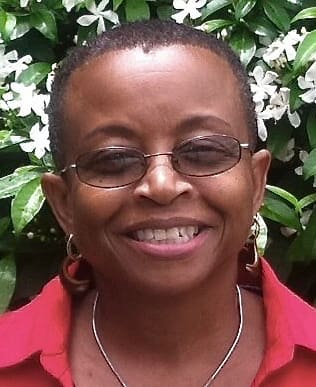
LaVerne Ragster, who served many years on the V.I. board and was president in the mid-1980s, said it was often a challenge to get the two groups to agree on a given issue.
“It was always a struggle because people saw it differently,” she said. “And the national people want to know what the dickens is wrong with us.”
Montgomery’s early reports identified another concern that would dog the V.I. League for many years.
“It is a good, strong board, although overloaded with Continentals,” she observed in 1968. “I believe only three are native Virgin Islanders.” That disparity was reflective of the entire membership.
A subsequent memo to national from Phyllis Levine, then president of the St. Thomas-St. John provisional League, said its initial membership consisted of about 70 percent Continentals and 30 percent native Virgin Islanders. That was just about backwards of the general population.
One member of that 30 percent, Mavis Brady, 90, is believed to be the oldest living member of the League. For 50 years she has supported its initiatives; she was a highly active member and served on the board until about 10 years ago.
“I have been a member of the League since the beginning,” she said. “We had a lot of women who loved the islands. Many of them were white women from the States … I was criticized a lot” by other Virgin Islanders. “They said, ‘Why you want to go join that group?’”
But Brady, a career educator, said she was unfazed.
“To grow, you have to know more than what is you, what is in your house … you have to look outside, not just stay in a cocoon right here … [These days] everybody wants to go into a cocoon. It’s a mistake, a real mistake, because there’s so much to learn from others.”
The racial imbalance of the League continued for decades. The current president, Gwen Marie Moolenaar, (whose mother Ruth Moolenaar was an early member) said the group was still about 60 to 70 percent white when she joined around 1990. In subsequent years, “the complexion of it changed.”
The Pioneers
“Most of us had jobs,” Brady said. Some worked in government, some in the private sector. Some were professionals. Some were business owners.
All had two things in common, according to Brady: A love of the Virgin Islands and a desire for good government.
Membership rolls for five decades are replete with the names of prominent Virgin Islands residents.
One of the best known is Helen Gjessing.
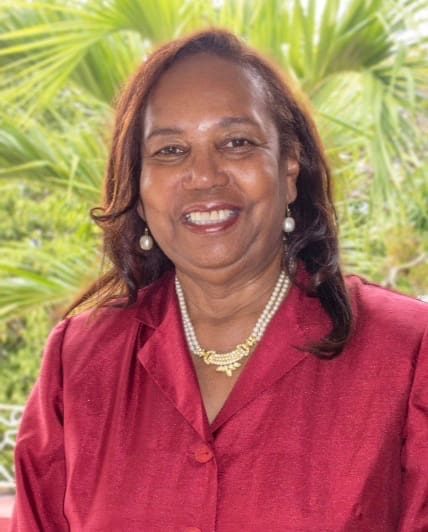
She taught at the University of the Virgin Islands where, according to Moolenaar, “she was practically the entire biology department.” She was also “the engine for environmental issues.”
Gjessing was unfairly accused of being anti-development, Moolenaar said, when she was really only promoting responsible development. But she was a formidable foe; she did her research and made a strong presentation.
“I worked with Helen on the environmental committee,” Ragster said, having been recruited for the League after she received her science degree.
“The reason I joined was because of Helen Gjessing and Edith Bornn,” she added. The pair convinced her it was important.
A prominent St. Thomas attorney, Bornn was more than instrumental in establishing the League and – sometimes as president and sometimes as advocate – she led most of its battles for decades.
“Edith Bornn actually became the symbol of the League,” Brady said. “She was fearless. She’d take on most anything.”
“Edie also just loved the fight,” Ragster said, with a laugh.
“She had an opinion on everything,” Moolenaar said. “Edith Bornn was really the powerhouse.”
Moolenaar recalled being tapped by Bornn to appear with her on television, opposing the legalization of gambling in the territory. It was during the second wave of a very contentious public debate on the topic. Moolenaar went armed with research she had done about the impact of casinos in other jurisdictions.
Eventually, casinos were introduced on St. Croix, but were not allowed in the rest of the territory.
“If it were not for Edith, we would have had gambling on St. Thomas,” Moolenaar said.
While she took on many issues, her passion for a comprehensive land use plan was perhaps best known. The lack of long-range planning for the territory “was her frustration,” said her son, Michael Bornn.
He and his brother, David Bornn, recalled their mother’s work with the League as “one of [her] favorite and stellar community engagements.” Under her leadership, it “came to be a force not only for open and fair elections but promotion of competence in government and developed expertise in budget analysis and reality.”
David Bornn said his mother “caught the attention of the National LWV and she was drafted to be a member of the National board.” Her work with National included a stint as chair of its International Division and trips to Russia and Morocco promoting efforts to get women in those countries involved in government.
Back home, “there was no road map” for the trailblazing the Virgin Islands League was doing, said Michael Bornn. “They were bulldozing the hill. There was no road ahead.”
The Work
Areas of interest for the V.I. League were at first modeled on those of National. The 1970 memo from the local group to Washington lists assignments to 12 committees: Tax Rates and Treaty Making, Finance, China and Foreign Policy, Local Study, Voters Service, Water Resources, Public Relations, Publications, Bulletin, Human Resources, Membership and Radio and TV.
Brady said the V.I. League published the first ever “Voter Service” election extra in 1970. It was a nonpartisan presentation of the senatorial and gubernatorial candidates.
“Joy Clark and I worked on it,” she said. They interviewed all the candidates, in person or by telephone, on St. Thomas and St. Croix.
“We have some healthy politics around here,” Brady observed, and the election extra was well received.
Whatever the issue, the approach to it was essentially the same, according to those interviewed.
First there was research.
“We studied issues. It wasn’t a social club,” Brady said. “We study issues. We don’t just get up and talk.”
Then there was internal discussion.
“They were so passionate about issues,” Moolenaar said. “That was what was so wonderful.” She recalled being pulled aside by members on different sides of a topic, with each making her case.
Then there was a united front.
“It’s been well researched. It’s been well reviewed” before the League takes a position on a given subject, Brady said.
“Consensus came out of looking at the data,” said Ragster. “Once we got the information, we stayed on message.”
“People would come to a consensus and then move forward as one,” Moolenaar said.
Results and Effects
“It wasn’t all smooth riding,” Brady said. When you challenge the status quo, “you’re not very popular.”
She recalled one evening with League representatives visiting a legislative hearing when a senator approached her and asked: “So what are you here to oppose this time?”
By and large, however, the League had and continues to have a good relationship with the Legislature, she said.
In general, the organization enjoys public respect. That may be because, as Brady put it, “We know what we’re talking about.”
Both Brady and Ragster offered that their association with the group also helped them grow personally.
“I have learned government inside and out because of the League,” Brady said. It was her work there that led to her appointment as one of the first members of the Coastal Zone Management Commission, a position she found very challenging.
“It required a lot of studying,” but she was used to that.
Ragster said her work with the League “gave me the courage to be a part of a class action suit.”
She didn’t win the suit – which was about whether a blank ballot should be counted as a vote, but it did clarify the question. Ragster thought when no candidate in a particular race appealed to her, she could protest them all by voting for no one. The Court ruled a blank ballot doesn’t count. “Hence now I write in people I like.”
Moving Forward
The primary mission of the League always has been what its name implies: The promotion of the electoral process.
“I think they’re beginning to remember how important that is,” Ragster said.
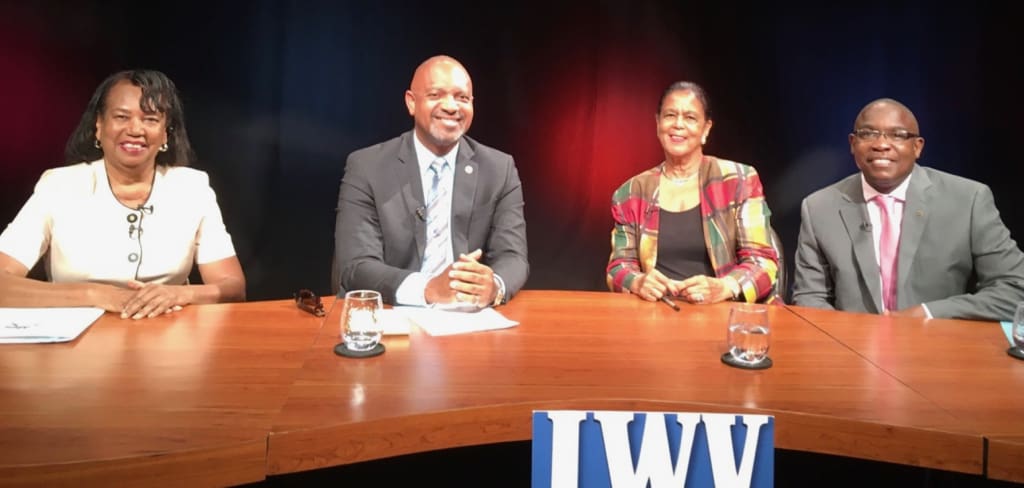
In recent years the group has concentrated on voter registration and candidate forums. It routinely hosts debates and discussions on television and furnishes the public with candidate profiles.
“The community really appreciates that,” Moolenaar said.
Although the League remains an advocate for environmental causes, she said “[political] status and the constitution, that’s our main focus now.”
The group numbers are down from its heyday. Moolenaar said there about 37 due-paying members territorywide. It doesn’t have the same human resources it once had so, “We choose our battles carefully.”
But if bodies are lacking, enthusiasm and a sense of pride in purpose are not.
“I think we’ve made a difference,” Moolenaar said.