

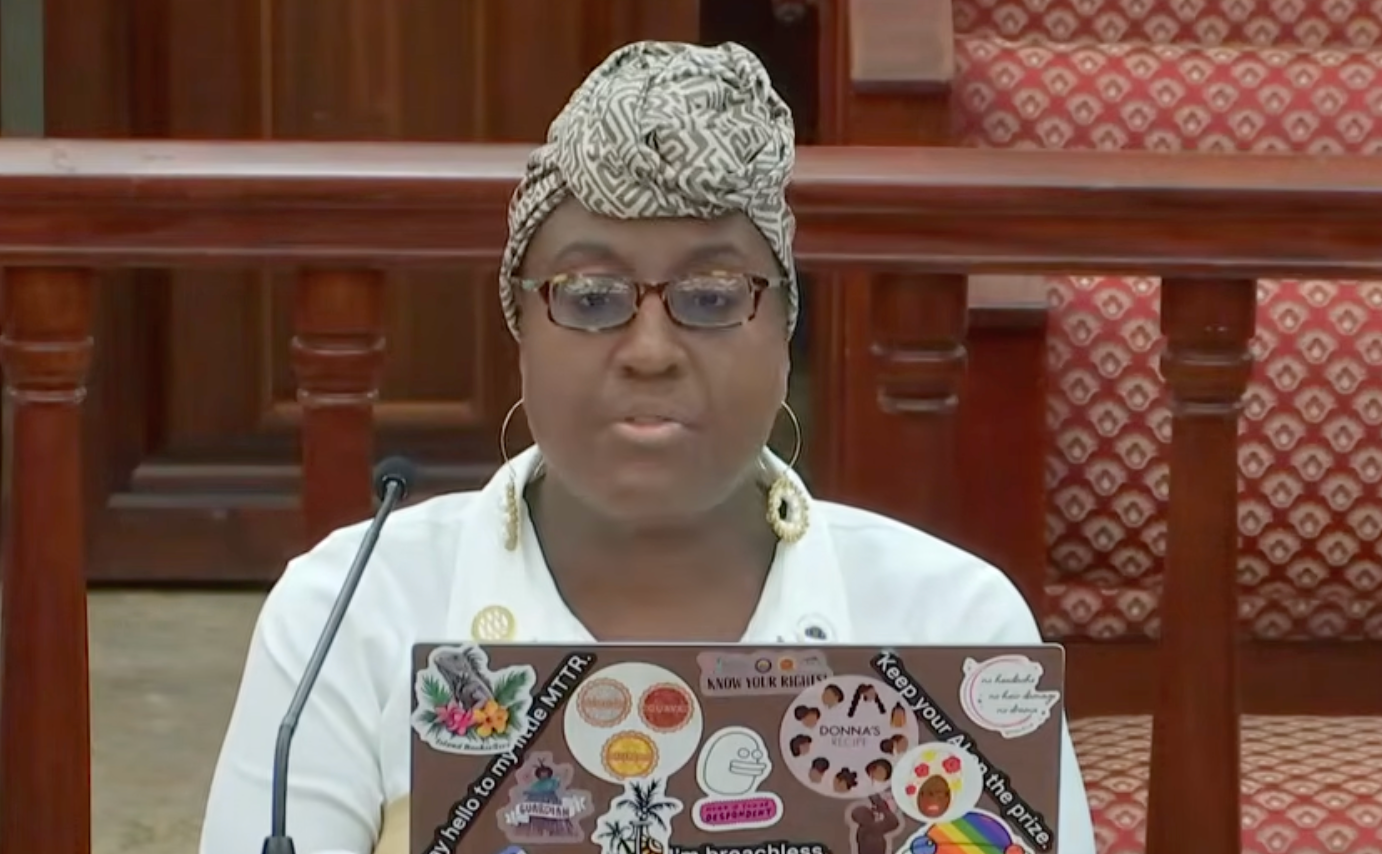
Lawmakers heard Friday that the territory’s main government-operated long-term care facilities are not ready for federal certification by the Centers for Medicare and Medicaid Services as the senior population grows.
During a hearing of the Senate Culture, Youth, Aging, Sports and Parks Committee, Assistant Commissioner Taetia Phillips-Dorsett of the Human Services Department said current U.S. Census estimates show that “approximately 21.3% of the Virgin Islands population is age 65 or older,” up from 13.5% in 2010. She said the shift “will inevitably expand the demand for medically supervised residential environments” as more residents age.
Sen. Carla J. Joseph said the numbers reflect what she called a “silver tsunami” of aging residents and questioned whether the territory is prepared for the increased need for long-term care.
Risk Manager Raphael Joseph told senators that assessments conducted earlier this year found that the Herbert Grigg Home for the Aged on St. Croix, the Queen Louise Home for the Aged on St. Thomas and the Eldra Schulterbrandt Residential Facility on St. Thomas were all “not adequately prepared” for an initial certification survey by the Centers for Medicare and Medicaid Services, or CMS.
Phillips-Dorsett said the Human Services Department is stabilizing operations at Herbert Grigg and Queen Louise while pursuing FEMA-funded replacement projects designed to meet federal standards, even as limited local capacity continues to force some residents to receive long-term care off-island.
Herbert Grigg currently houses 25 residents, with five additional beds “not presently activated due to staffing limitations,” Phillips-Dorsett said. She said the department plans to replace the facility with a FEMA-funded, 54-bed nursing home that could later be expanded if funding and staffing permit.
On St. Thomas, Phillips-Dorsett said Queen Louise residents were relocated Jan. 22 to the Palms Court Harborview Hotel “to allow for essential structural and environmental repairs” at the original building. She said 13 residents are being cared for at the temporary site while the department works with the Office of Disaster Recovery on a new 34-bed nursing home near Roy L. Schneider Hospital that will be built to CMS standards.
Joseph said inspectors found “incomplete and inconsistent” clinical documentation, deficiencies in care planning, medication management and infection control, inadequate staff training and quality assurance programs, and life safety concerns involving emergency preparedness, fire safety systems and facility maintenance. He said the findings “are not isolated incidents, but reflect broader organizational and systemic challenges.”
Health Department Commissioner Justa E. Encarnacion said the Health Department is developing a 12- to 18-month implementation strategy to align territorial regulations with CMS requirements, strengthen oversight, plan for workforce needs and support infrastructure and life safety improvements. She said “achieving CMS certification requires more than regulatory compliance,” adding that certification will take longer because facilities must first correct deficiencies and demonstrate they can sustain compliance over time.
Limited local capacity has also forced the territory to continue sending some residents off-island for long-term care.
Phillips-Dorsett said the Human Services Department pays $489,000 a year for up to seven nursing home placements at Casa de Salud in Puerto Rico, with five residents currently receiving care there, and that another 14 Medicaid-eligible residents are receiving care at the Pines Nursing Home in Miami.
Lawmakers also heard about a private project that would add a new skilled nursing facility on St. Croix. Andrew L. Turner, founder of Raindance Healthcare, said construction has begun on the Royal Palms Skilled Nursing Facility at Estate Upper Love. He said the 120-bed facility will be certified for Medicare and Medicaid and serve Medicare, Medicaid and private-pay residents, with memory care services and an on-site pharmacy designed to serve both the skilled nursing facility and the surrounding public community.
Turner said Royal Palms is the first phase of what he described as a continuing care retirement community that will also include assisted living, memory care and independent living units when later phases are built, bringing total capacity to as many as 350 elderly residents. He told senators Raindance also plans to develop a similar skilled nursing and continuing care project on St. Thomas and is “open to partnering with the government” if a suitable site is identified.
Housing officials also described growing demand for senior housing. Virgin Islands Housing Authority Executive Director Dwayne Alexander said the authority’s two HUD-designated senior communities, the 79-unit Celestino A. White Sr. Residence on St. Thomas and the 30-unit Louis E. Brown II community on St. Croix, are fully occupied and have long waiting lists.
Alexander said the Housing Choice Voucher Program has 384 applicants age 60 and older waiting in the St. Thomas–St. John district and another 378 in the St. Croix district, with average waits of about two years. He said no senior voucher holder pays more than 30 percent of adjusted income toward rent because of HUD rules and the authority’s policy of charging no minimum rent.
Alexander said the authority is advancing additional senior housing, including a new 60-unit Tutu Senior housing development on St. Thomas that is expected to close next month, pending board approval, and a senior housing project planned at Oswald Harris Court in 2027.
Committee Chair Sen. Angel L. Bolques Jr. said bringing housing officials into the hearing was important because long-term care is “more than healthcare” and depends on “safe, accessible and sustainable housing infrastructure” for seniors. He said the committee expects to keep revisiting preparations for CMS certification as part of an ongoing discussion about long-term care.