

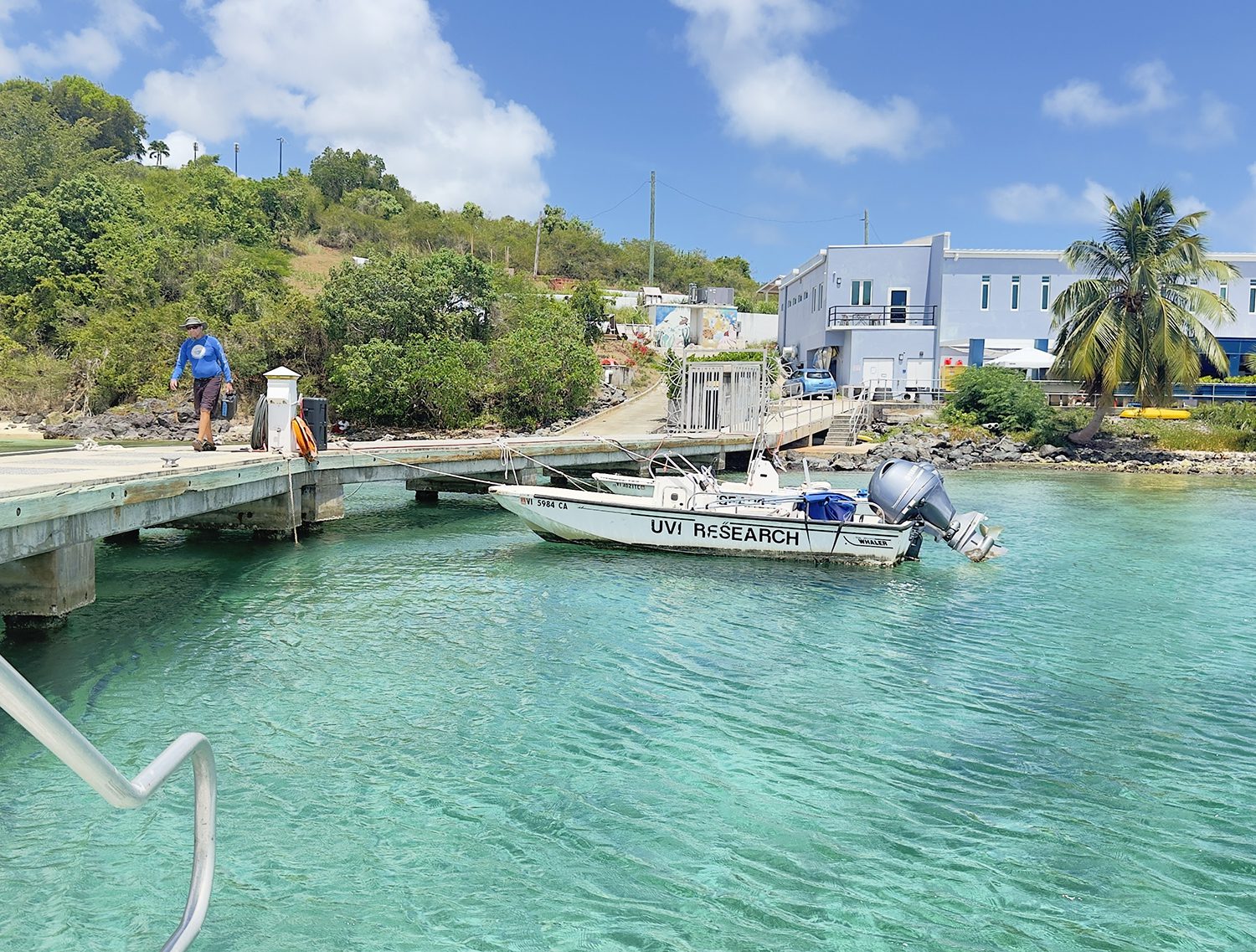
After my recent report on seabirds coming to nest on cays around St. John, I got a message from Steve Prosterman, from the Center for Marine and Environmental Studies at the University of the Virgin Islands on St. Thomas. He was kind enough to invite me on a boat trip to see the nesting colony of Sooty Terns out on Saba Island, which is about three miles south of the St. Thomas airport.
I was enticed by the idea of thousands of birds nesting out on this little island. I had never seen even one Sooty Tern before. That’s not surprising since they are pelagic seabirds that stay far offshore except when they are breeding.
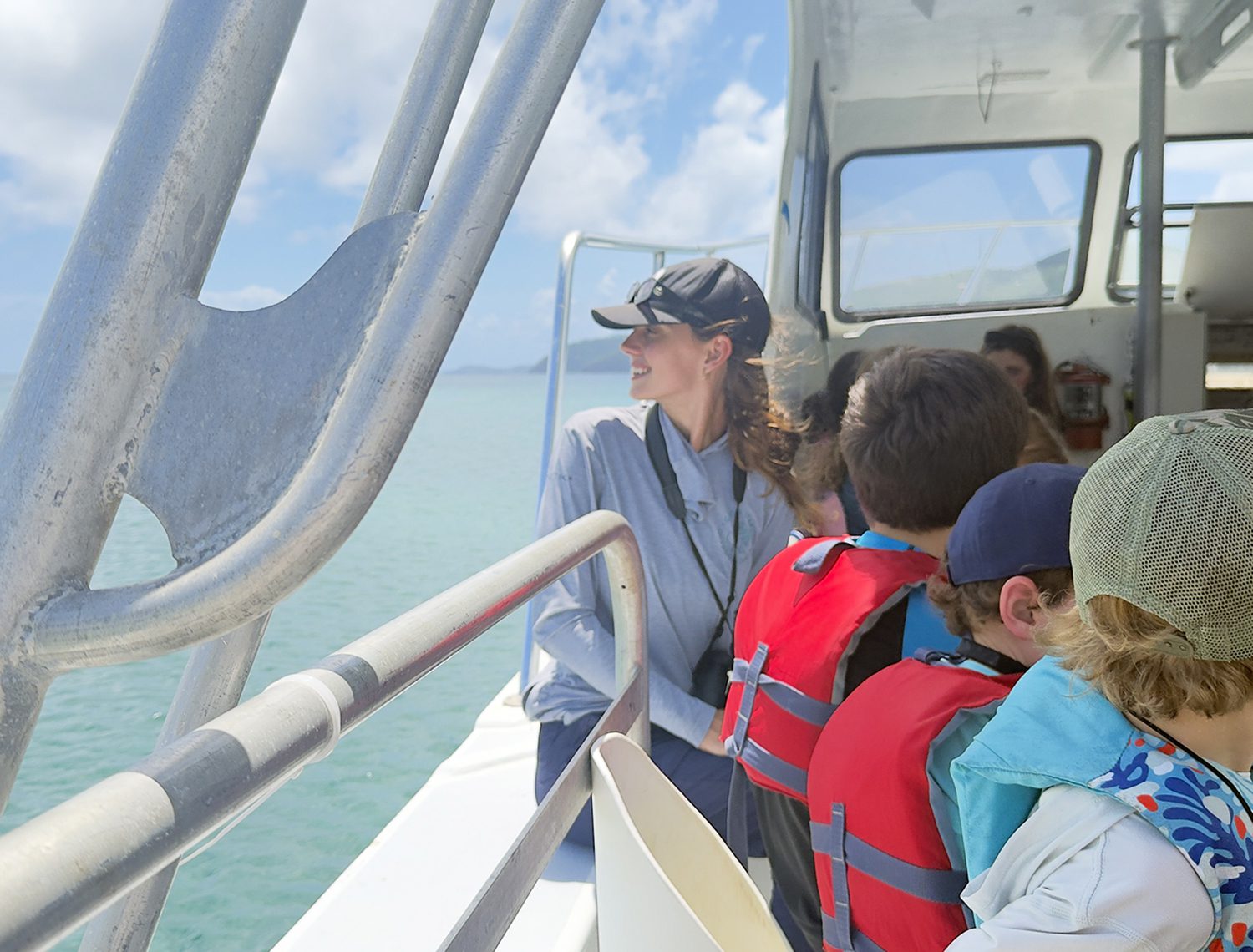
A group of students and teachers from the Gold Leaf Education Association, which focuses on nature studies, were the main participants on the boat trip. Steve Simonsen, a well-known St. John photographer, also came over with me to join the group.
We weren’t going to get off the boat and go onto Saba Island because that would disturb the nesting birds. This is a small uninhabited island managed as a wildlife sanctuary by the V.I. Department of Planning and Natural Resources, Division of Fish and Wildlife.
The name Saba was actually quite confusing for me. A few months ago I had been at Saba Rock Resort off Virgin Gorda in the British Virgin Islands. And then there is also the Saba that is an island down near Saint Martin. Later I read that ‘siba’ is the Taino word for ‘rock’, which got converted by Europeans to ‘saba’. That helps explain why it became a popular name for small, steep islands.
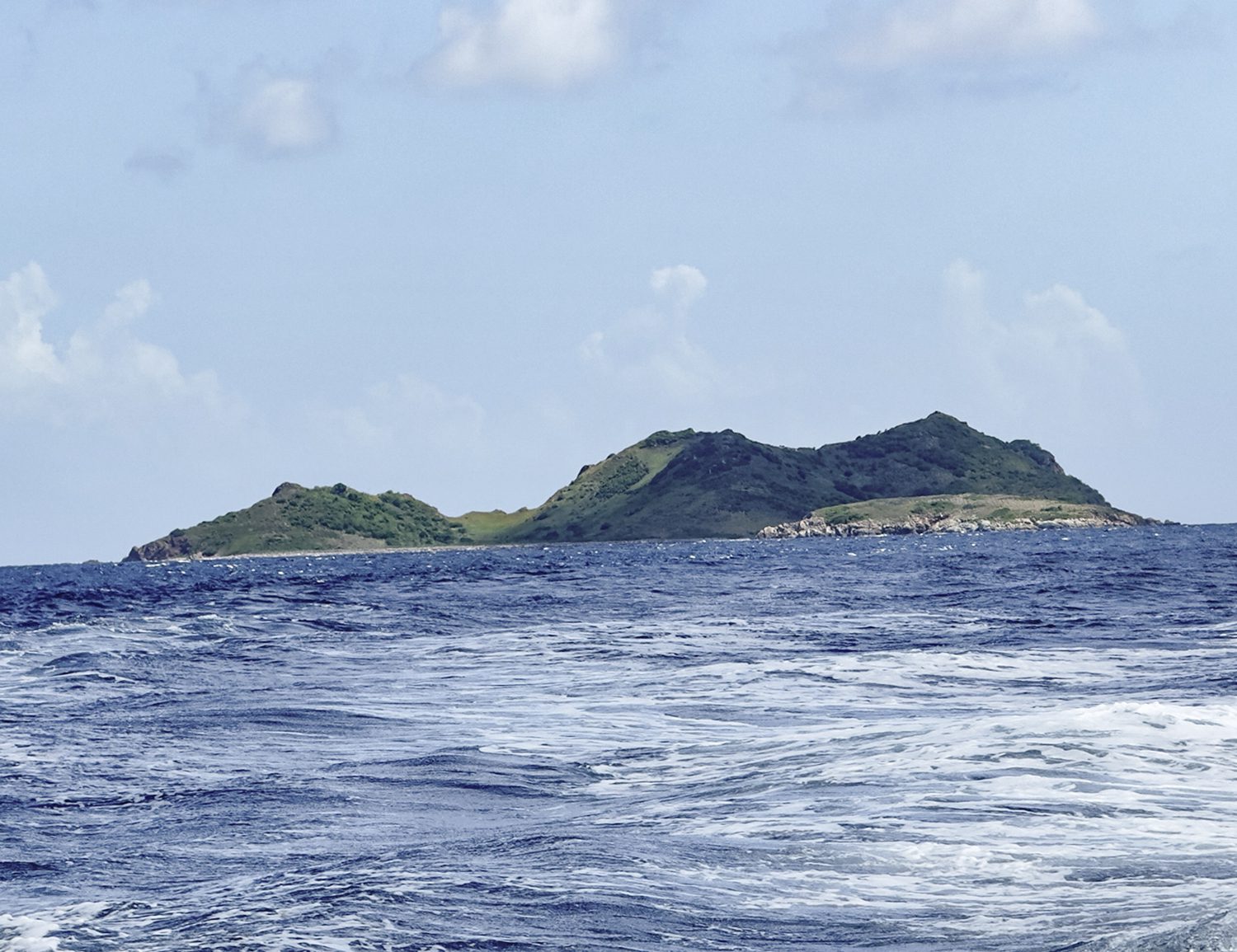
If I had learned that about the name of the island before I went out there, I wouldn’t have had a picture in my mind of a low, flat sandy cay with thousands of birds all sitting on nests in plain view. As it turned out, the nesting birds were mostly hidden down between the clumps of grasses and shrubs growing on the steep hillsides.
After we pulled into a small cove offshore, there was a chaotic scene onboard, with the boat rocking, hundreds of birds whirling around making shrill cries, and children moving around on the boat also calling out excitedly.
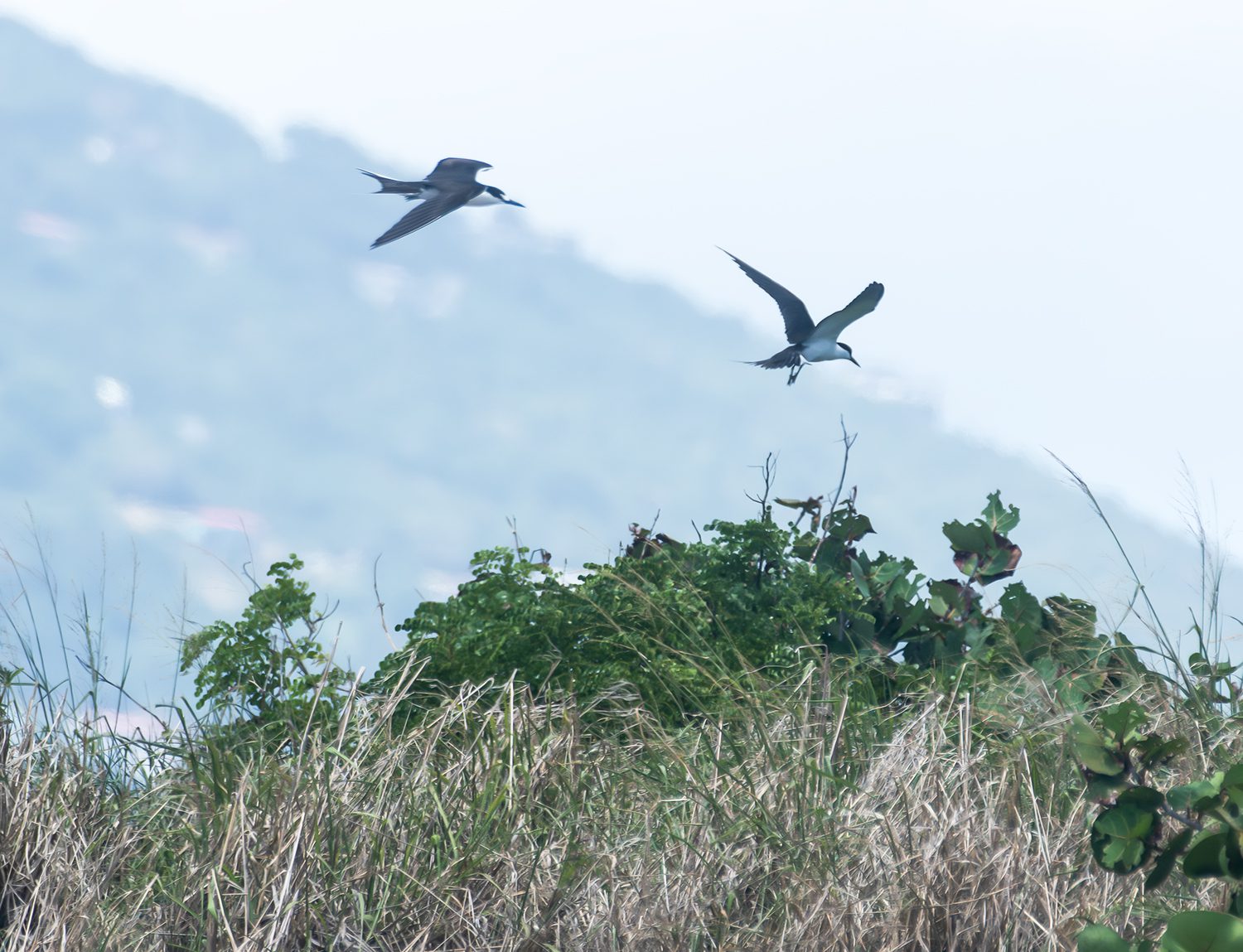
At first I started swinging my heavy telephoto lens around madly, trying to focus on different birds as they whipped by. It seemed like a miracle when I was actually able to catch one in motion.
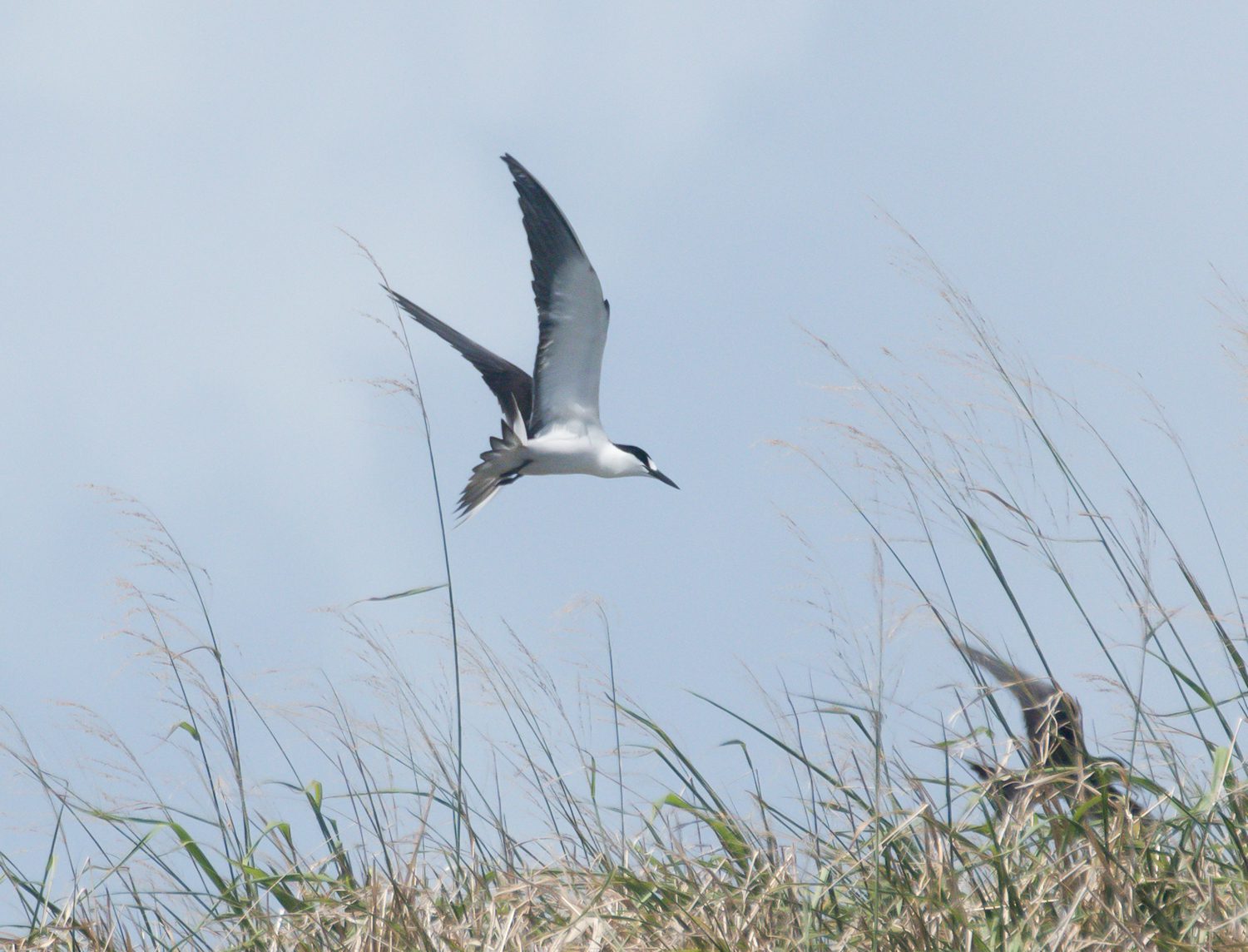
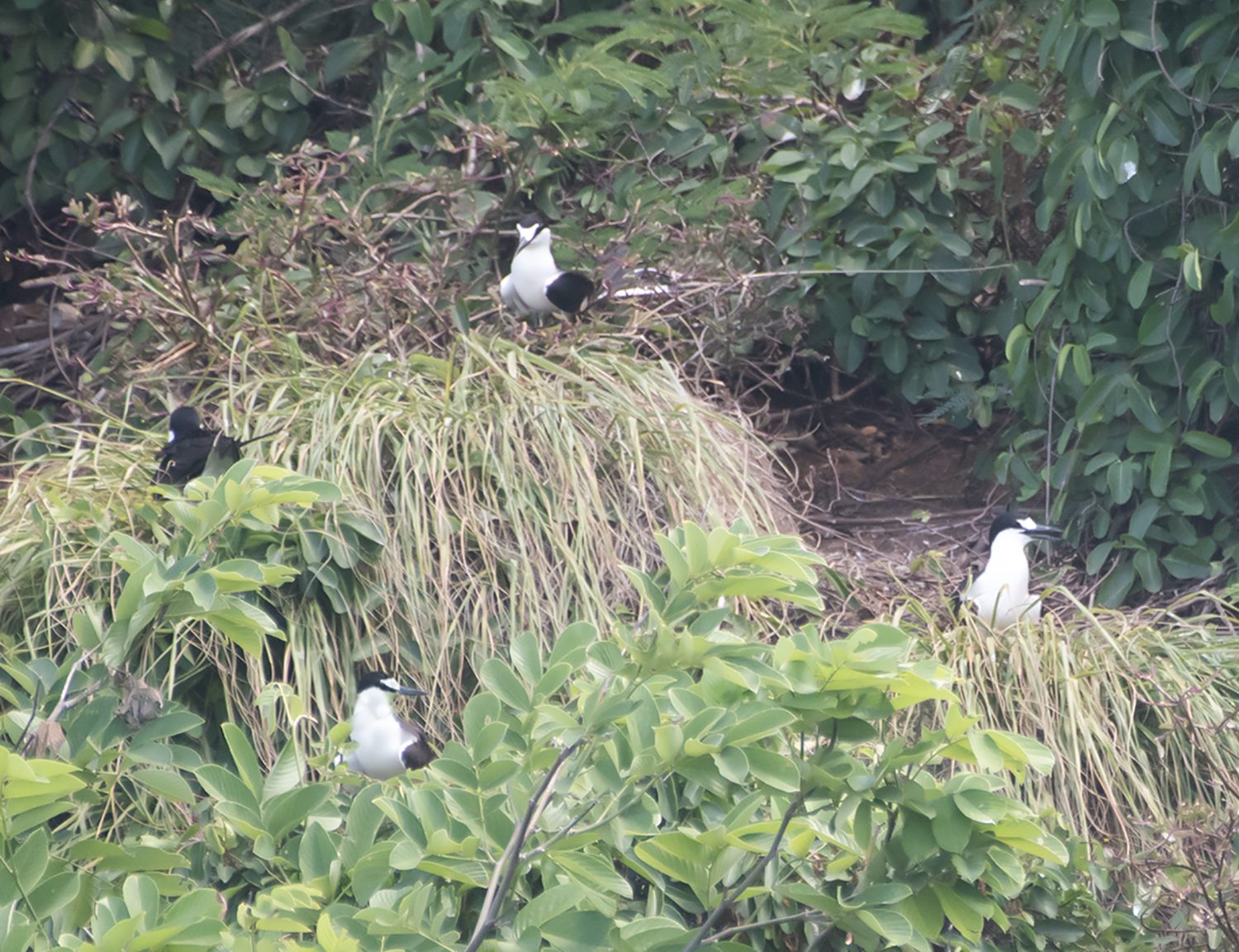
Eventually I was also able to locate a few that were settled down in a more open area than the others. Like many seabirds, these terns don’t actually make nests. They just scrape out a small patch in the soil or sand, maybe covering it with a few leaves, then placing their egg on top.
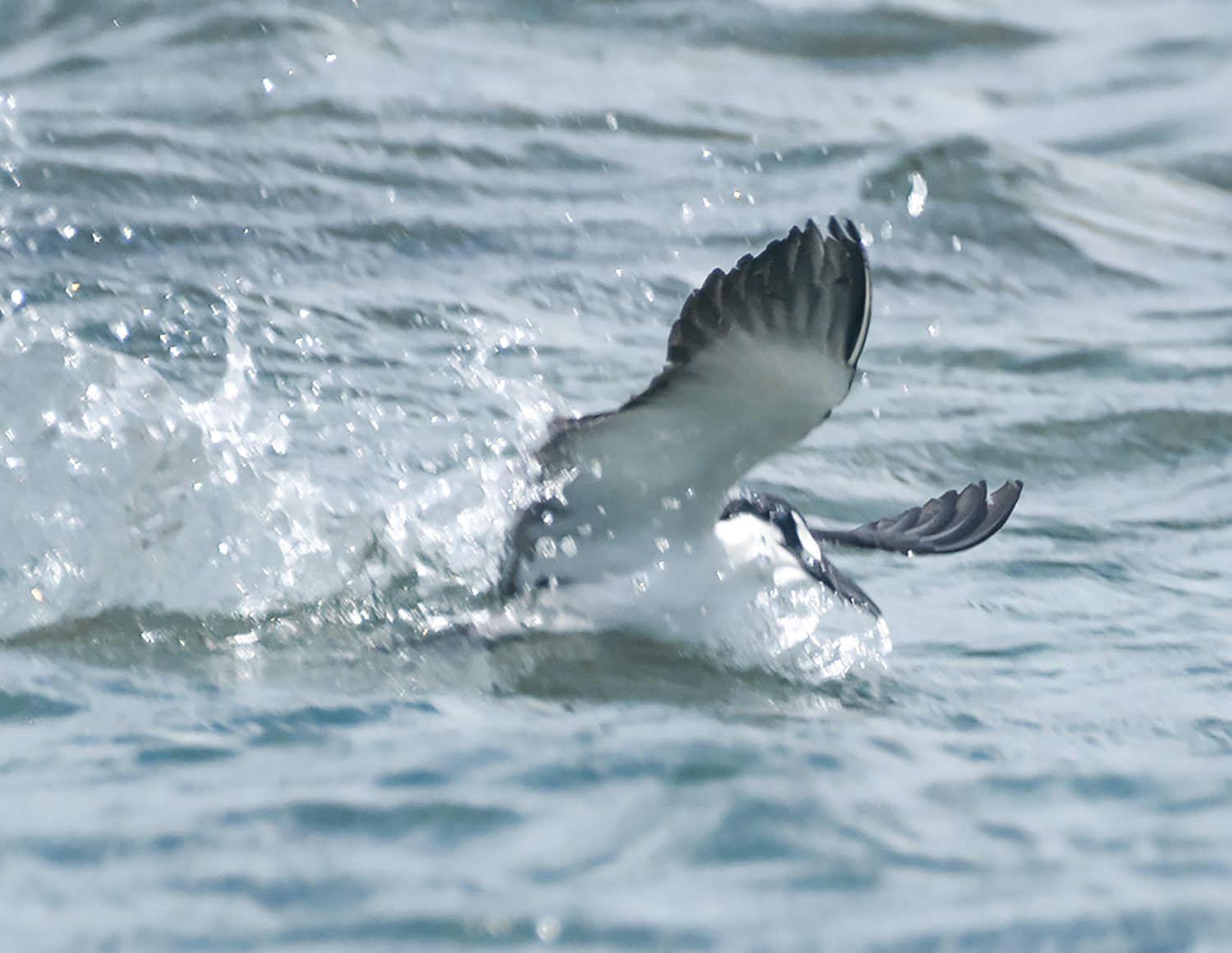
Some of the dark-backed Sooty Terns were going out fishing in the cove. However, when they are fishing, they don’t hover and then dive deep down under the surface, like some terns. That’s because their feathers don’t have oil to make them water repellent, and they could become water-logged and sink. Instead, they dip down while flying over the water, nabbing fish near the surface.
Once the breeding season is over and the chicks can fly, the young ones may not return to land again for years, until they are ready to breed themselves.
Since they are flying at sea all the time and can’t rest on the surface because of their water-absorbent feathers, I wondered where do they sleep? I read that Sooty Terns have developed a way to let one side of their brain sleep for short periods of time while the other side stays alert. That doesn’t actually sound very restful, but it does seem to work, because there are lots of Sooty Terns out there. The piercing call that the Sooty Terns make is described as ‘wide-a-wake’, which sounds appropriate given their sleep habits.
After a while I spotted a couple of the Brown Noddies flying past just above the water line along a rocky edge of the island. I didn’t see their nests, as those were probably on the south side of the island because they prefer the cliff ledges there.
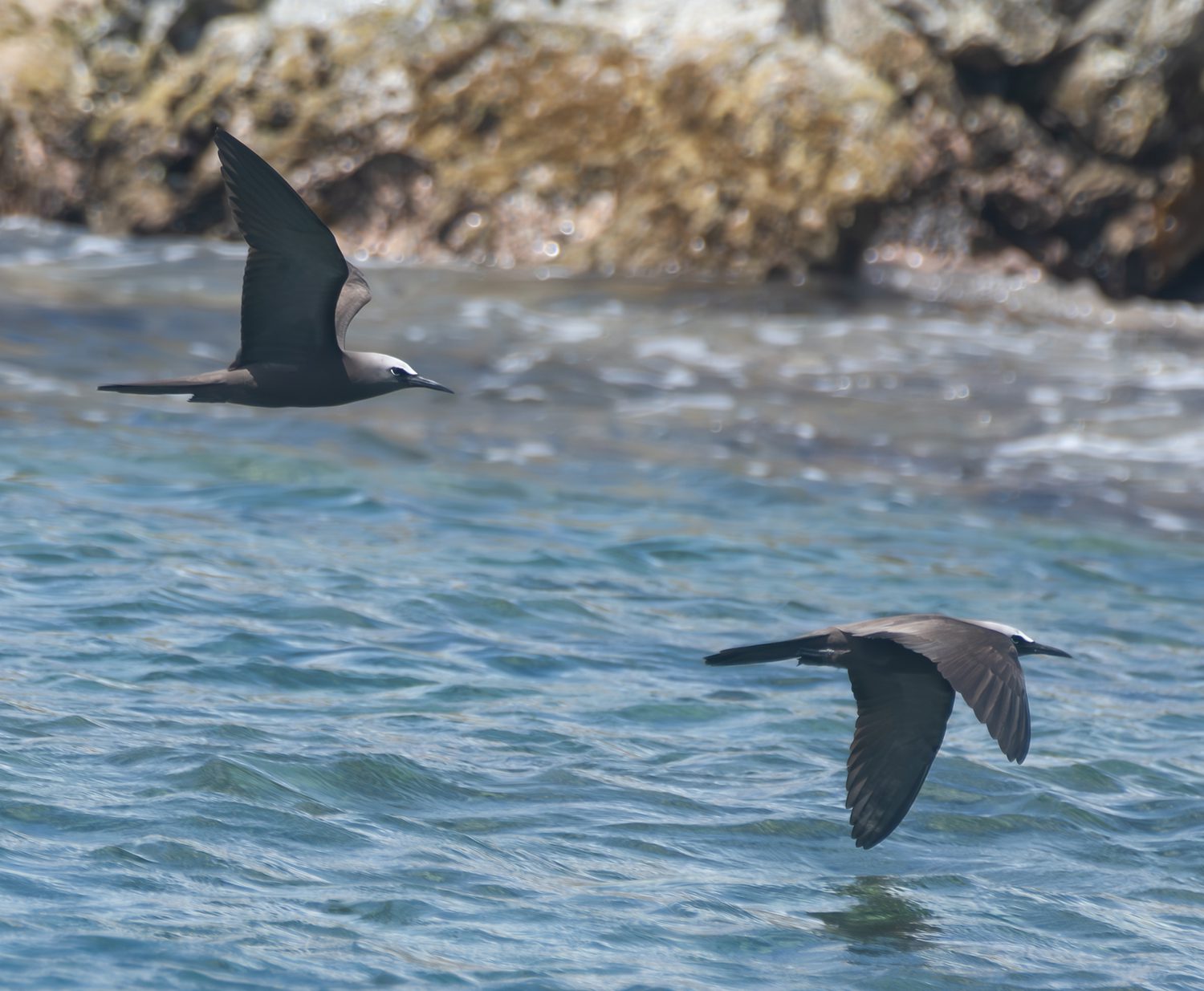
Brown Noddies are pelagic terns as well, but don’t spend as much time flying. And they are very different looking. The Brown Noddies are chocolate brown with pale gray heads. Many types of terns have white underbellies – maybe so they are less visible to fish as they hover over the water. But Brown Noddies apparently stay close to the surface and sometimes even pat the water with their feet to attract small fish. When they are doing that, their dark coloring might help camouflage them.
One striking thing about the Brown Noddies is that their eyes are set close to their bills, which makes them seem like they are frowning.
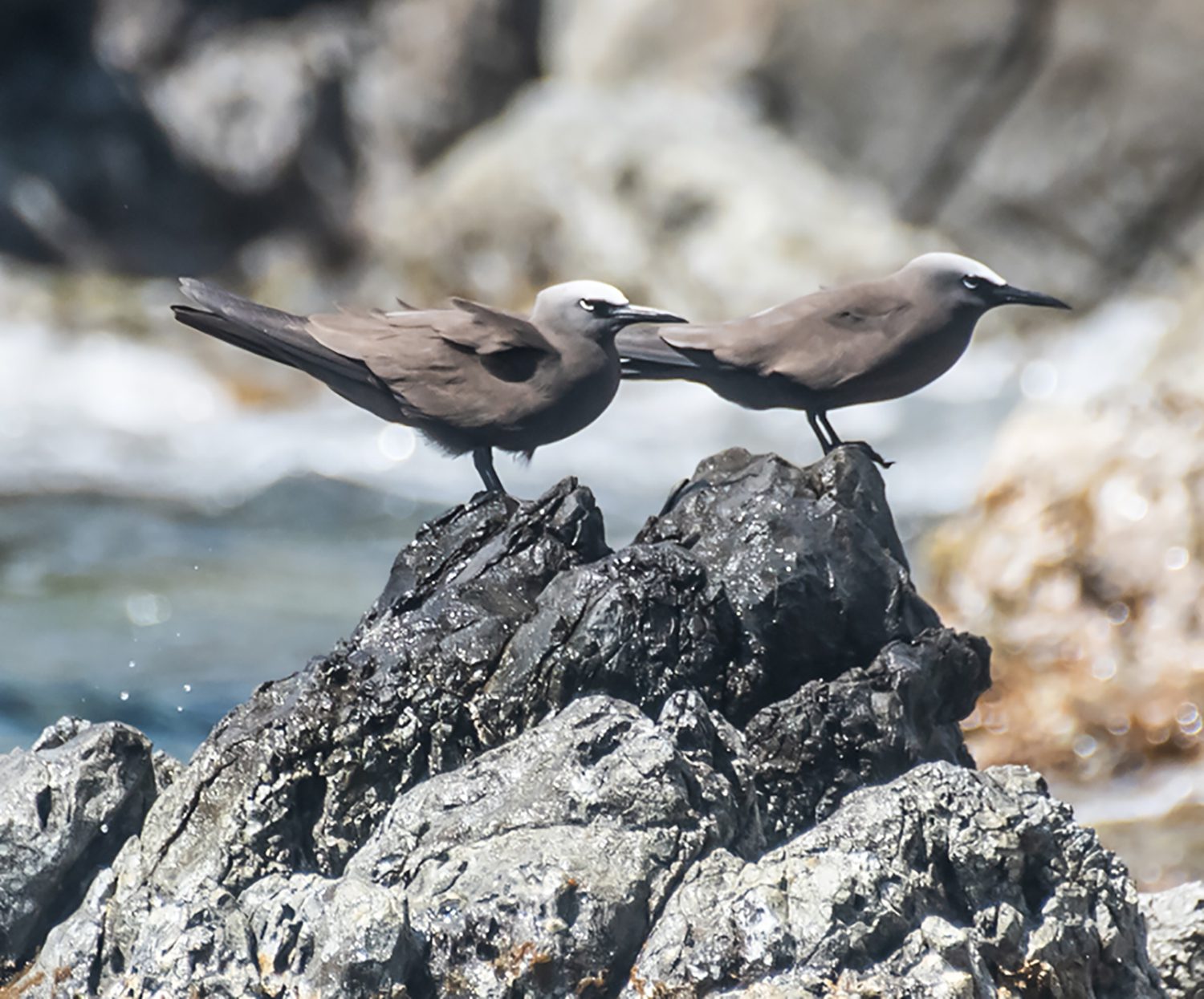
Supposedly these birds got their names because they nod and bow to greet each other, as part of their courtship behavior. However, the ones I saw did not seem to be very courteous. They looked like alien gangsters.
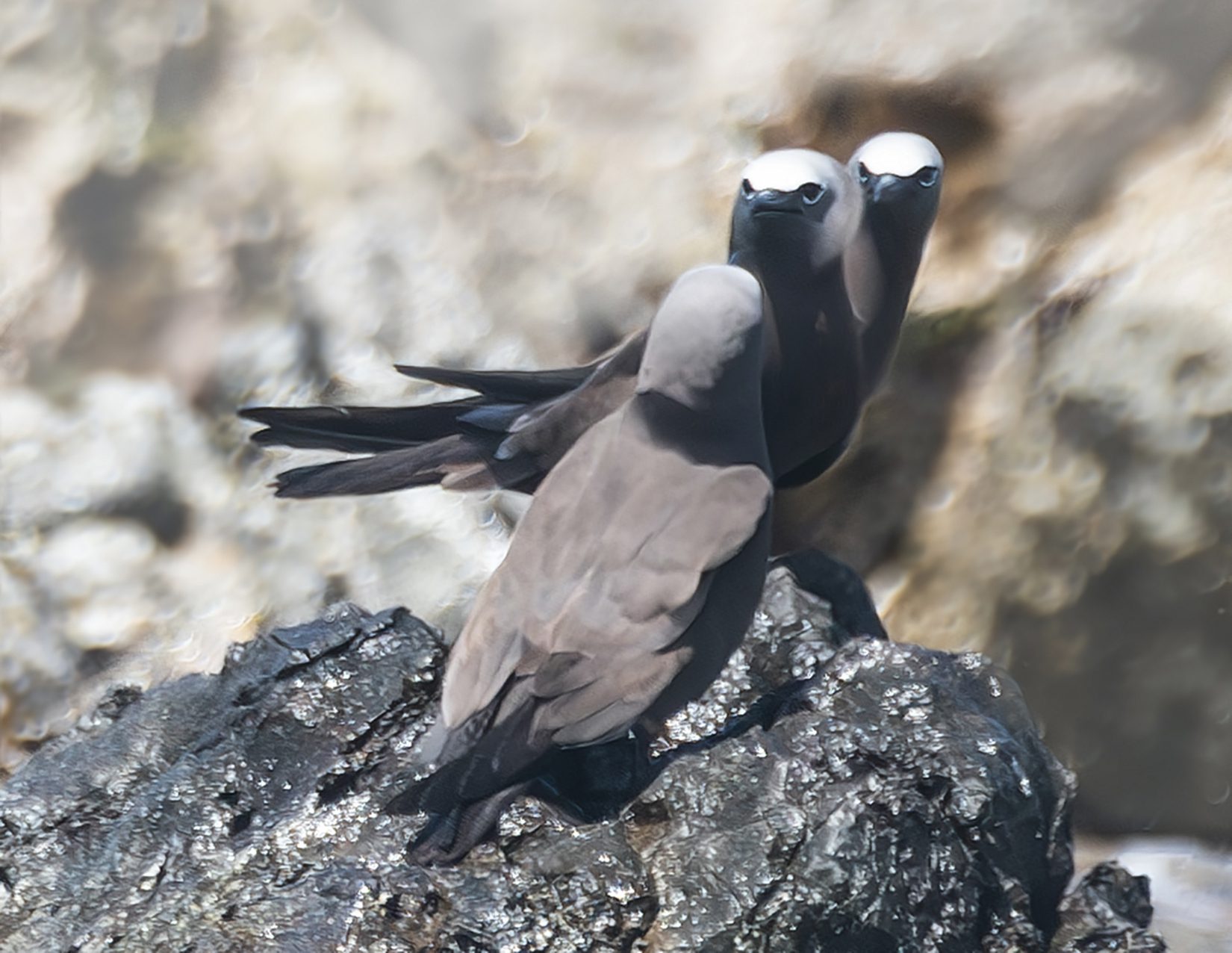
I read that although the male noddies are larger than the females, both sexes can be territorial and squabble with their neighbors. It’s probably not due to lack of sleep, though. Unlike the Sooty Terns, the Brown Noddies seem to get plenty of rest, as they don’t mind setting down on the surface of the water while they are out to sea.
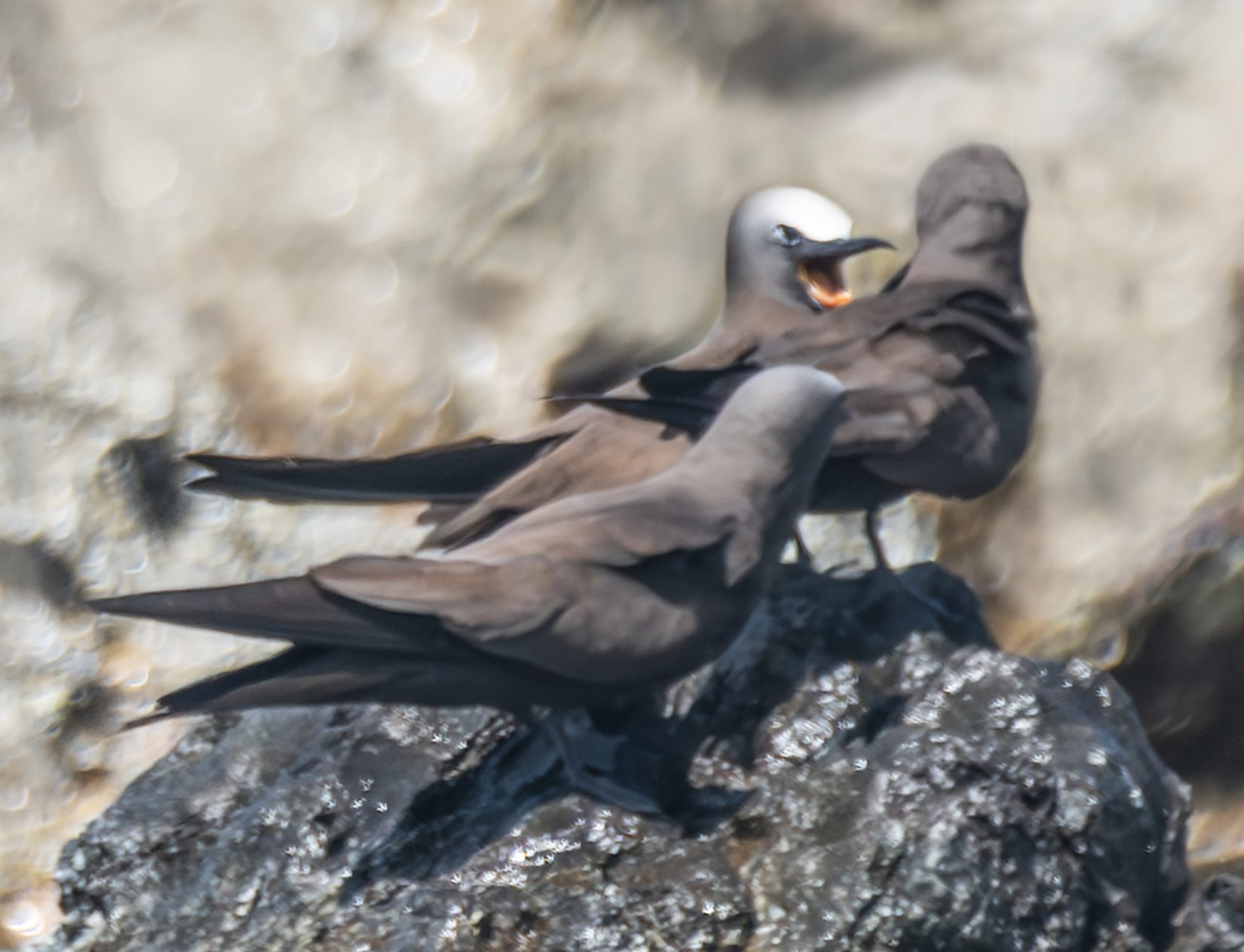
I had thought of pelagic seabirds as solitary voyagers traveling for years over the vast ocean – wandering lonely in the clouds. But apparently both these types of terns are sociable at sea, fishing in mixed flocks, and using their loud calls to keep in touch with their group members.
I was grateful to Steve Prosterman for offering me a chance to meet these birds while they were settled down close to shore. Maybe one day I will go on a long sea voyage myself where I could see some of them out flying around in the open ocean.
—————————-
Gail Karlsson is the author of a photo book Looking for Birds on St. John, as well as two other books about nature in the Virgin Islands –The Wild Life in an Island House, and Learning About Trees and Plants – A Project of the Unitarian Universalist Fellowship of St. John. Follow her on Instagram @gailkarlsson and gvkarlsson.blogspot.com. More info at gailkarlsson.com