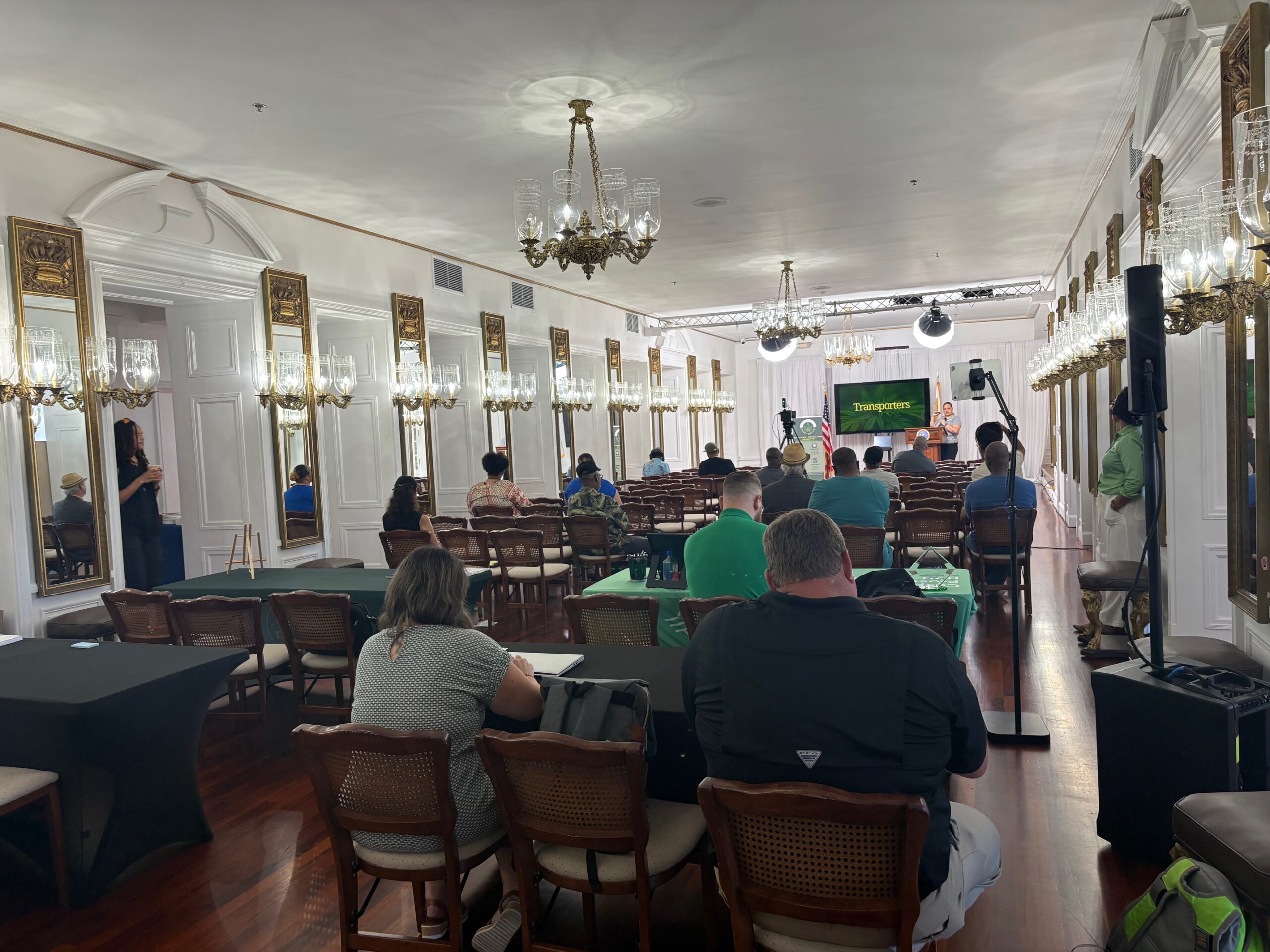
The Office of Cannabis Regulation, operating under the Licensing and Consumer Affairs Department, hosted a Cannabis Compliance Summit Tuesday at Government House on St. Croix.
About 30 attendees attended the summit, which provided detailed guidance on licensing tiers, cultivation limits, taxation, and compliance requirements for potential cannabis operators.
Deputy Director Lyn-Marie McCarthy led the presentation, which served as a technical overview for prospective cultivators, manufacturers, and dispensary owners navigating the territory’s cannabis framework. Attendees were reminded that while policy questions remain under discussion, the summit’s purpose was to clarify operational rules already established under the Virgin Islands Cannabis Use Act.
Officials explained that commercial cultivation licenses are divided into three tiers based on plant volume:
• Tier 1: 51 to 350 flowering plants and 201 to 1,200 immature plants.
• Tier 2: 351 to 650 flowering plants and 1,201 to 2,000 immature plants.
• Tier 3: 651 to 1,000 flowering plants and 2,001 to 3,000 immature plants.
Each tier must maintain at least the lower planting limit to ensure a consistent market supply. Cultivation must begin within six months of receiving a certificate to operate, and licensees are expected to notify OCR if unforeseen issues — such as weather or pest damage — affect production.
All cultivation facilities must demonstrate access to reliable power and water sources, maintain security measures that prevent public visibility of plants, and follow contamination-prevention protocols.
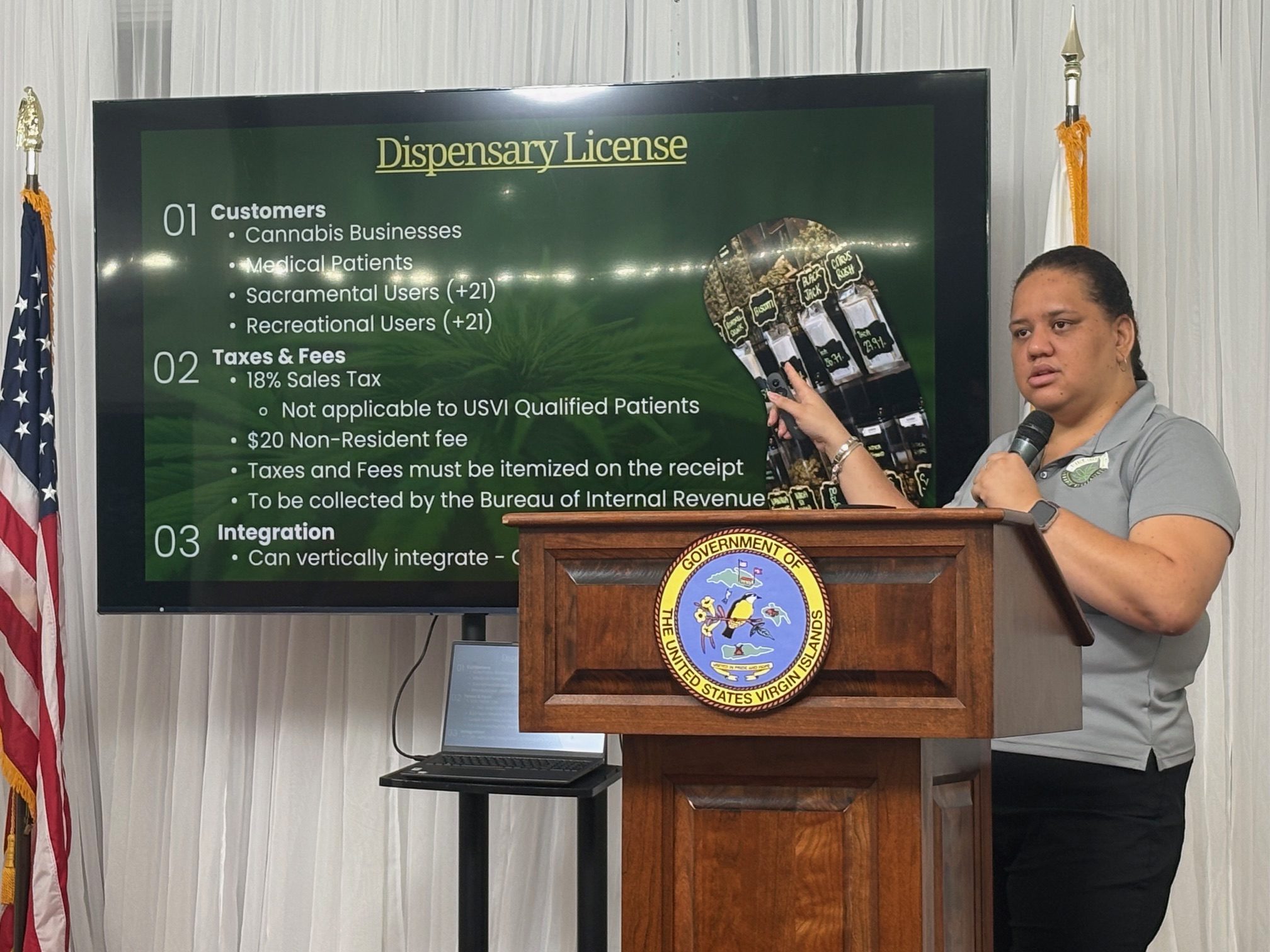
Dispensaries are the only entities permitted to sell cannabis directly to the public. They may sell to adult-use consumers, medical patients, and sacramental users but must collect an 18% sales tax and a $20 licensing fee per transaction.
Dispensaries must verify customer identification for each visit, maintain surveillance systems, and store cannabis in secure areas. Operating hours are limited to 8 a.m. to 7 p.m., Monday through Sunday.
By law, dispensaries can sell no more than 30% of their own product inventory. At least 70% must come from third-party sources, with 15% specifically sourced from micro-cultivators. Exclusive supply agreements between dispensaries and cultivators are prohibited to ensure equitable market access.
Manufacturers may process, transport, and package cannabis products, including edibles, oils, and concentrates. Packaging must be opaque, child-resistant, and tamper-evident, and cannot resemble mainstream consumer goods or include cartoon imagery.
Labels must display the license number, THC content, production date, expiration date, usage instructions, and a QR code linking to the full laboratory analysis.
Edibles are capped at 100 milligrams of THC per package, with 10 milligrams per serving. Officials emphasized that products cannot make medical or health claims.
Testing facilities will play a central role in quality assurance, conducting safety and potency analyses for all marketable products. They may also engage in research and development but must destroy all plants used for experimentation upon completion.
Micro-cultivators are allowed to sell seeds and immature plants under 12 inches but may not sell flowering plants. These small-scale licensees are exempt from excise taxes but must comply with all reporting and tracking requirements through the territory’s Metrc system.
OCR representatives urged potential licensees to maintain open communication throughout the process. “Don’t wait until the last minute,” said McCarthy. “If you’re encountering delays with permits or utilities, reach out to OCR so we can work through it with you.”
OCR officials noted that continued outreach and training sessions will be held as the cannabis industry moves closer to full implementation in the Virgin Islands.
OCR has also begun releasing the names of applicants approved for Conditional Commercial Cannabis Cultivation Licenses as of Oct. 6. The submission deadline has officially closed, and no further applications are accepted.
The approved applicants met the merit-based threshold established under Section 777-12 of the Cannabis Rules and Regulations. Approved licenses are as follows:
St. Croix
· Virgin Herb LLLC (Total Score: 995)
· Virgin Cannabis Co., LLC (Total Score: 985)
· Alchemy Labs (Total Score: 975)
· Loud Bhang Farms LLC (Total Score: 940)
· The Harmony Collective (Total Score: 830)
· Shoys Growers (Total Score: 815)
· MDC Cultivation (Total Score: 740)
St. John
· TDD LLC (Total Score: 650)
St. Thomas
· Fyah Burn Production LLC (Total Score: 1,000)
· Nature Nurse VI Ltd. (Total Score: 1,000)
· Island Time Solutions LLC (Total Score: 840)
· Natural Mystic Solutions (Total Score: 720)
· Ras Bobby Herbal Products LLC (Total Score: 665)
For more OCR updates, visit the Office of Cannabis Regulation website.