

The RTPark Community Impact Fund is launching the VI Leap Fund, a multimillion-dollar initiative that provides loans to small business entrepreneurs and underserved communities while offering financial literacy and support.
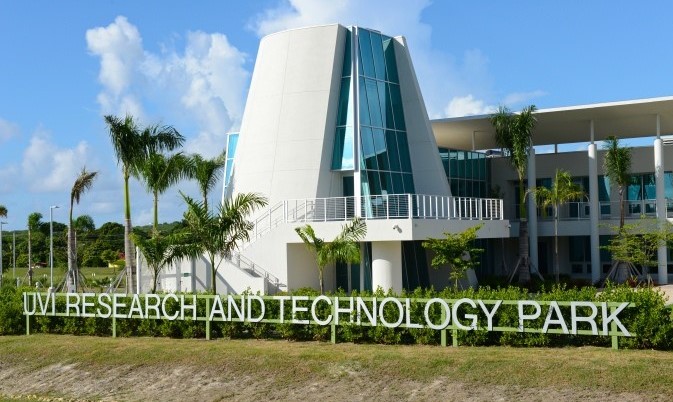
Gov. Albert Bryan Jr. announced Wednesday that the RTPark Community Impact Fund, a 501(c)(3) nonprofit and a separate entity from the UVI Research and Technology Park, has received a $3.6 million private grant to strengthen its operations and launch the program this fall. The grant was provided by an anonymous donor.
The VI Leap Fund will operate as a revolving loan program, offering flexible financing alongside grants for financial literacy and technical assistance. Of the $3.6 million, $2 million is set aside for loans and $400,000 for grants, with the remainder covering operating costs.
From September to December, the program will focus on building infrastructure, hiring key staff and preparing its CDFI certification application. Loan disbursements are expected to begin in September, with full-scale operations planned between January and May 2026.
The VI Leap Fund targets small businesses in the Virgin Islands that have struggled to access traditional loans, prioritizing those that have never received bank financing. Eligible applicants must have been in business for at least 18 months and hold a valid business license. Focused on driving innovation, the CIF is also exploring the distribution of nano-loans to support local small businesses.
“We can now directly address systemic challenges that have stifled growth for local businesses and communities,” CIF Board Chair Aminah Saleem said. “By building a loan portfolio, the fund also lays the groundwork to become a Certified Community Development Financial Institution through the U.S. Treasury Department’s CDFI Fund.”
The VI Leap Fund aims to become the first certified CDFI in the U.S. Virgin Islands. Certified Community Development Financial Institutions are specialized lenders that focus on providing financial services and technical assistance to communities traditionally underserved by conventional banks. “Once you become a certified CDFI, you can get money from the Federal Reserve and apply for grants to match your funds, so it’s a way to ensure we’ll always have funds coming in — not just now, but forever,” said Saleem.
They also noted that a key difference with CDFIs is their focus on teaching financial literacy. “One of the big things that makes community development financial institutions different from a bank is that they do financial literacy and technical assistance, and getting people loan ready,” Saleem explained. “A lot of times, people go to the bank and they don’t get a loan and they’re just rejected, and there’s nowhere for them to go to hear, ‘This is why you didn’t get the loan, and you need to do this.”
Community feedback during the development of Vision 2040 highlighted gaps in access to capital for local entrepreneurs and nonprofits, according to Richard Motta, press contact for Government House. “One of the concerns that was raised by many in the community was having some sort of lending institution outside of the traditional banking institutions,” said Motta. “That was something that was expressed in the Vision 2040 report that was needed and not something that was existing in the community at the time, and so that’s what prompted the creation of this.”
“This is not just a Vision 2040 accomplishment — it is a win for the territory that opens up a cadre of financial and economic opportunities available only through a certified CDFI,” Bryan said, referring to the Certified Community Development Financial Institution status the fund aims to achieve.
The VI Leap Fund will roll out in three phases. From July to December 2025, the focus will be on building infrastructure, hiring key staff, and preparing its CDFI certification application. From January to May 2026, the fund will launch lending and grant programs, enroll businesses in technical assistance, and host Small Business Summits. Starting in June 2026, the program will aim for full operations, secure CDFI certification, and fully disburse funds to ensure long-term sustainability.
Established in 2022, the RTPark Community Impact Fund currently manages the $5 million VI Catalyst Revolving Loan Fund, created by the Legislature under Act 8464. Executive Director Eric Sonnier explained that this experience was key to securing the new grant.
“In 2021, RTPark took the first step toward forming a Certified Community Development Financial Institution by creating the CIF as an independent 501(c)(3) nonprofit partner. Because CDFIs cannot be managed by government agencies, establishing a nonprofit was essential. Since 2022, the CIF has managed the VI Catalyst Revolving Loan Fund, which has given us valuable loan experience, a loan portfolio, and a strong pipeline – all major factors in receiving this new grant,” Sonnier said.
“I want to give people hope — not just that we have this grant, but that we actually can do something and help people.” Said Saleem, “We really want to come through and be transformational.”