

Updated 10 p.m. | Tuesday, May 27, 2025
Gov. Albert Bryan Jr. confirmed Tuesday that he will not rescind the executive pay raises that quietly took effect earlier this year — including increases for himself and Lt. Gov. Tregenza Roach — despite public and political concerns that the raises were implemented without clear legal authority or proper legislative oversight.
“You can’t rescind the law,” he said in an exchange with the Source Tuesday. “The law is the law. I didn’t make it. I just follow it.”
The raises were based on recommendations from the Virgin Islands Public Officials Compensation Commission, which was established to review and adjust salaries for top government officials. Although the commission was statutorily required to submit its report by May 2022, the final recommendations were not delivered until August 2024. Triggered by the submission of that report, Government House announced the raises on Jan. 5 — five days after they had already taken effect retroactively on Jan. 1.
Bryan confirmed to the Source on Jan. 8 that the government had already begun processing the paperwork to implement the raises, which Personnel Director Cindy Richardson said in a Senate committee meeting last week were fully executed the week before. In subsequent questioning from Sen. Marise James, it was also said that the higher salary would also be factored into the officials’ average annual annuity payments.
From the Jan. 5 announcement, the timeline and implementation have raised the public’s ire, as did the governor’s May 19 appointment of Haldane Davies, who led the commission during that period, to head the Bureau of Economic Research. While Bryan has said this is not prohibited by law, as Davies is not an elected official, the appointment of the commission chair to a Cabinet-level position shortly after the raises took effect prompted further legislative inquiry.
Asked after the announcement about why Davies was chosen, Bryan said the previous BER head was acting for nearly four years because an extensive search for a replacement had come up short.
“We have been looking for years for a chief economist,” he said to the Source. “Dr. Davies was a twist of good fate. He has economic as well as research experience. Ultimately, we need people who can build economic models that predict taxes, employment, and economic output. The usual data we put out is good, but using that data to develop good information that drives policy is a lot more intricate.”
However, Roach said in a sharply worded statement Tuesday that while he did not take issue with the commission’s work, Davies’ appointment “taints the work of the Commission and now makes the wage increases appear an instance of quid pro quo.” He has also called for the raises to be rescinded. In response, Bryan told the Source that Roach had been informed of Davies’ appointment and at the time, raised no objections.
Meanwhile, on the legal side, a January opinion from Legislature Chief Legal Counsel Amos Carty Jr. concluded that even if the governor had authority under Title 3 to implement raises for executive branch personnel, the enabling statute governing the Compensation Commission states that if the Legislature takes no action within 90 days, the recommendations take effect only after the next general election – meaning the raises should apply to future officeholders, not current ones.
Bryan, however, told the Source Tuesday that the 35th Legislature effectively ratified the raises by failing to act. “It is the 36th Legislature that is prohibited from giving a raise in the same Senate,” he said. “The 35th ratified it by non-vote.” He also defended the timing, adding, “Why would you do a salary study and implement it two years later? It would be stale.”
Former Sen. Positive Nelson, who authored the legislation that created the Compensation Commission, offered further context earlier this year when he told the Source that the law gave the Senate clear options, but they failed to use them. “They could reject it, agree with it or amend it, but the biggest issue I see here is that they didn’t have a public hearing where they discussed the recommendations,” he said. “Senators were to take a vote on it, and they did not do that – they allowed it to become law without any action and this is where I think the big fiasco comes in.”
In an interview with the Source Tuesday, Senate President Milton Potter said that even if Bryan’s interpretation was correct, it doesn’t change the Legislature’s concern over how the raises were handled. According to Potter, lawmakers were repeatedly told in early 2025 that the raises had not been processed, and only learned in May that they had taken effect.
“We had strong legal footing, public opposition, and specific budget language outlining the salary of the governor and lieutenant governor,” Potter said. “Then suddenly we find out it was implemented, with no warning, no written response, and no respect for the Legislature.”
Potter said the Senate has launched a formal legal review to determine next steps and noted that the raises raise broader questions about the limits of executive authority and the role of legislative oversight. “This is about ensuring decisions of this scale follow the law and are subject to appropriate checks and balances,” he said.
Efforts to reverse the raises have been ongoing since January by the legislative minority, when Sen. Dwayne DeGraff petitioned the Senate to convene a special session to repeal them but failed to garner enough support. More recently, Sen. Alma Francis Heyliger attempted to special order, during a legislative session, a bill to the floor that would rescind the raises. The motion was denied, with majority senators stating that the bill should be assigned to committee.
Speaking Tuesday, Francis Heyliger said the bill has since been “preformed” — formally drafted and introduced – and assigned to the Committee on Finance. She said she was informed this week that it may be the subject of a Committee of the Whole hearing on June 2, though that format does not allow for a vote. “That’s where it is right now,” she said. “And from there, they will either forward it to the full body, or not.”
Francis Heyliger added that she plans to reintroduce two additional bills focused on executive compensation, including one that would cap the annuity paid to the governor and lieutenant governor at a fixed percentage, similar to models used in other U.S. states.
4:00 p.m. | Tuesday, May 27, 2025
Editor’s Note: The office of Lt. Gov. Tregenza Roach issued the following press release Tuesday afternoon, calling on Gov. Albert Bryan Jr. to rescind their wage increases that were implemented on the recommendation of an independent compensation commission but have come under fire from the Senate as well as the public they serve.
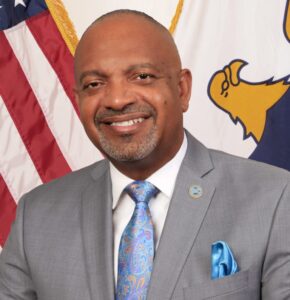
Lieutenant Governor Roach announces that he has written to Governor Albert Bryan, Jr. asking for the wage increases granted to him and to the Governor by the Virgin Islands Public Officials Compensation Commission to be rescinded. Lieutenant Governor Roach says that although he has made no criticism of the work of the Commission, the appointment of its Chair to a high-level Cabinet position has tainted the work of the Commission and now raises questions about its impartiality.
Lieutenant Governor Roach who has just returned from a United Nations sponsored trip to the Pacific, said he learned of Dr. Haldane Davies’ appointment while there through the media and was never consulted by the Governor about his decision to appoint Davies to head the Bureau of Economic Research. Such an appointment, Lieutenant Governor said, taints the work of the Commission and raises questions about the integrity of its recommendations.
Lieutenant Governor Roach said he wants to make it clear that he supported the legislation creating the Compensation Commission because he believed that it was an acceptable means of removing the authority from the legislative and executive branches to determine their own salaries. The Commission, whose membership consists of private and public sector representatives and human resources professionals, is charged with determining salaries for specific public officials.
“As far as I was concerned, the Commission did the task that was before it without any interference from either you or me. In fact, I had only one single interaction with the Commission after it was formed which was via a Zoom meeting in which the members essentially interviewed me about the job of Lieutenant Governor. They deemed that a necessary step because the job of lieutenant governor differs greatly from state to state. As an example, the Lieutenant Governor of Rhode Island has four employees under her command while I started in 2019 with almost 145 positions, spread over 9 locations on three islands. Other lieutenant governors have no statutory responsibilities and do essentially only the work that their Governor assigns to them,” Lieutenant Governor Roach said in his letter to Governor Bryan.
“Therefore, because I had no issue with the process, I felt the wage increases were appropriate and would clear the way for higher salaries in the executive branch, and eventually, all branches of Government. We both know that our ability to attract and keep the best talent has been compromised by the relatively low salaries that we are able to offer here,” Lieutenant Governor Roach continued.
Lieutenant Roach told the Governor that he is extremely dismayed by the appointment of Dr. Davies, the Compensation Commission’s Chair, to head the Bureau of Economic Research. “Had you and I consulted about this appointment, I would not have agreed to such a move, as it taints the work of the Commission and now makes the wage increases appear an instance of quid pro quo — wage increase for job appointment.”
“Thus, although I have before consented to the wage increases, I am afraid that this circumstance makes me now unwilling and unable to accept an increase in my salary. In fact, I am asking you to take the necessary steps now to rescind the wage increases and restore our salaries to the previous levels. I believe that implementing these raises will further erode the public trust in Government, and while trust lost may not necessarily be restored by the recission of the wage increases, I believe it a step in the right direction,” Lieutenant Governor Roach said.