

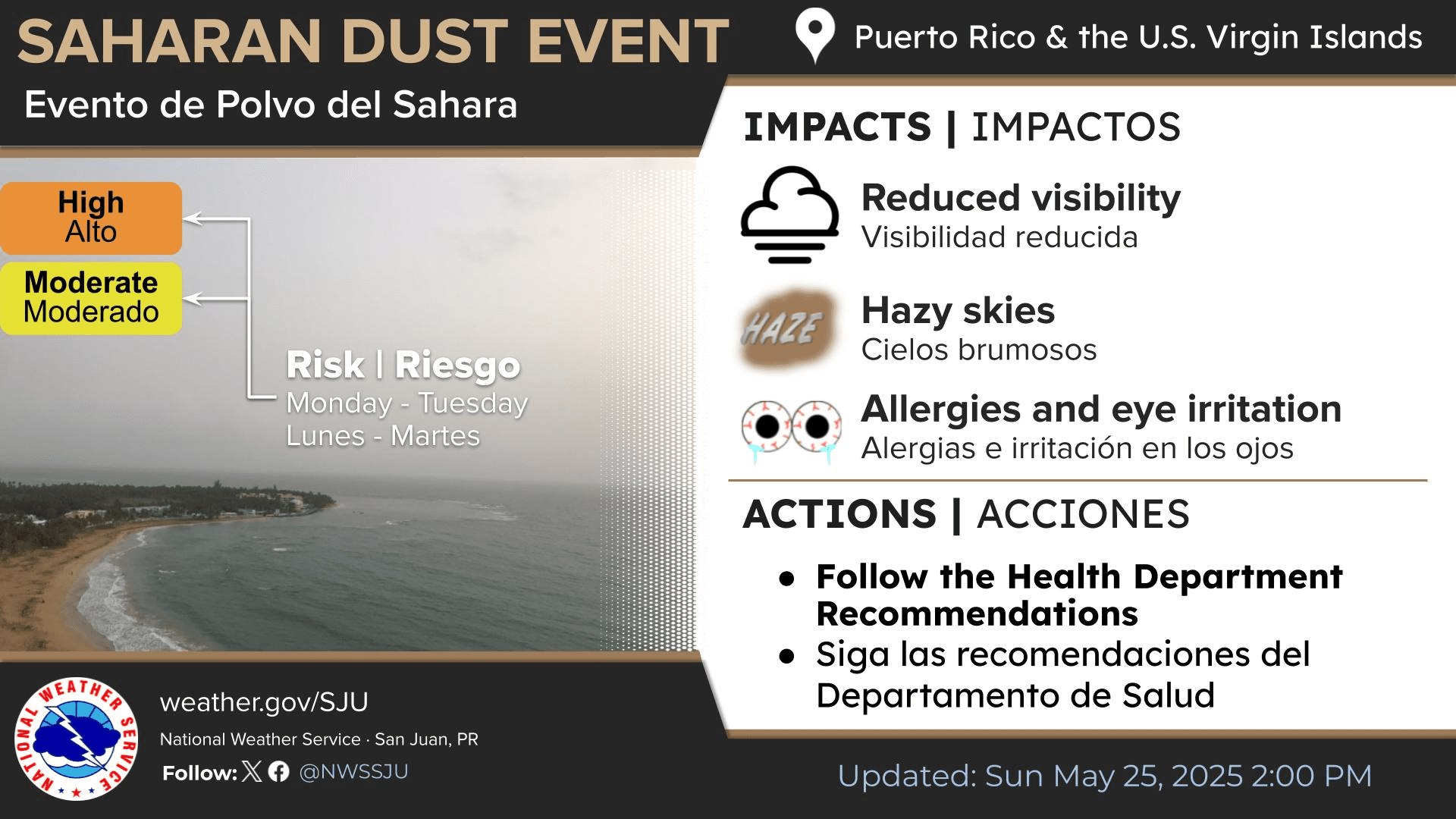
“A moderate to strong Saharan Air Layer with suspended Saharan dust will move across the region on Monday and Tuesday,” according to an update on Sunday from the NWS in San Juan, Puerto Rico.
“Expect moderate to locally high concentrations of dust that will bring hazy skies, lower visibility, and deteriorate air quality, affecting people sensitive to these particles,” the NWS said.
The desert sand travels thousands of miles from Northern Africa via winds in the upper atmosphere and can affect weather conditions in the Caribbean.
“Saharan dust is what it sounds like: dust and sand from the Sahara Desert, which is lofted up and transported over the Atlantic Ocean by the trade winds,” according to a previous Source interview with Jake Carstens, a meteorologist and an assistant professor of atmospheric sciences at the University of North Dakota. “These dust events can occur year-round, usually several times per year. Dust most often reaches the Caribbean and North/Central America in the spring and summer,” Carstens said.
Saharan Dust Health Impacts
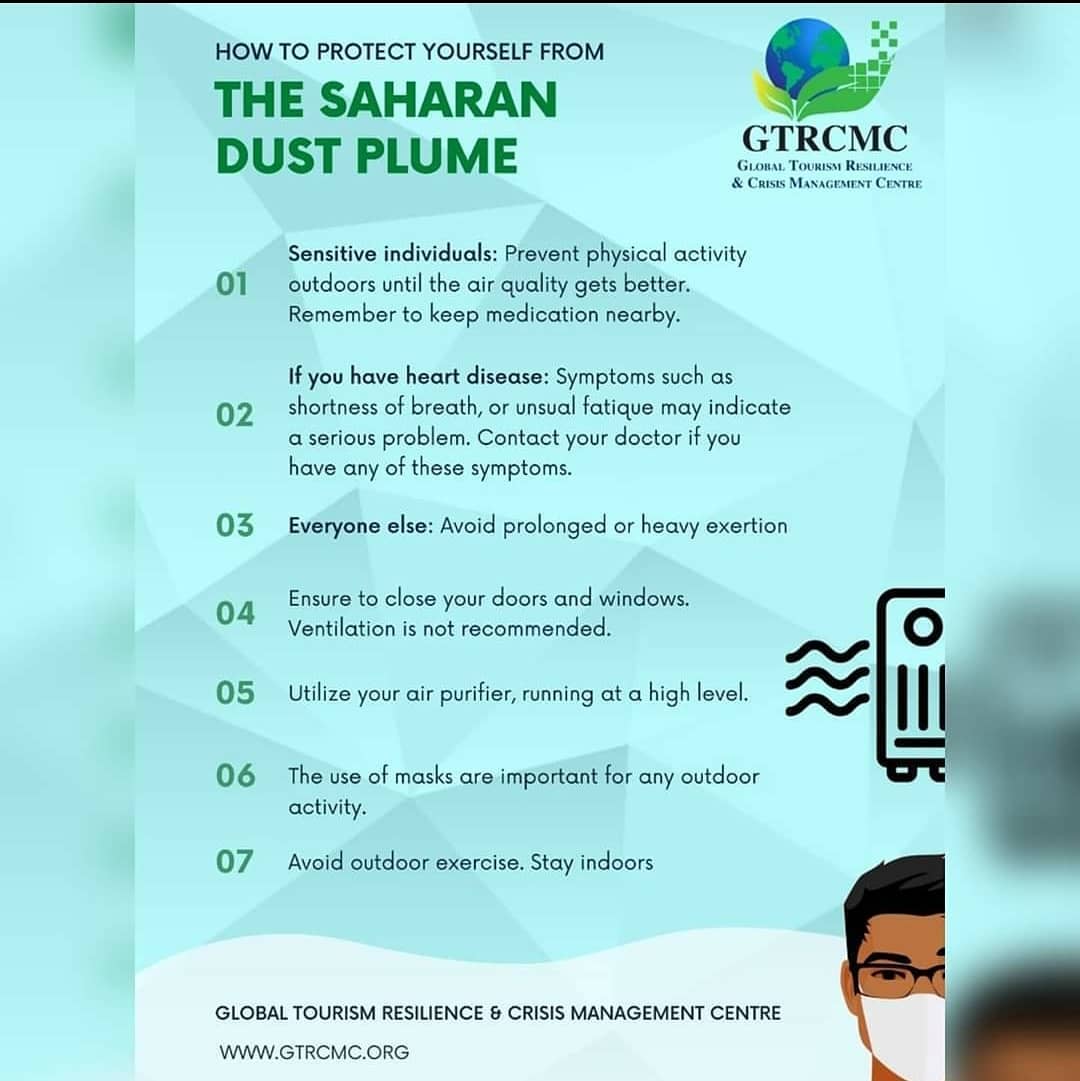
“Perhaps the most obvious consequence of Saharan dust is its impact on visibility and air quality,” Carstens stated in the interview. “It can make breathing difficult, especially for people with existing lung conditions, and it’s recommended that people limit outdoor activity as much as possible on dusty days,” Carstens advised.
Another previous Source article outlines the potential health threats associated with the dust, according to information obtained from the Centers for Disease Control and Prevention.
“Saharan dust can be harmful to your health,” the CDC said. “The particles can be breathed in and enter your lungs and bloodstream, potentially triggering asthma attacks in people who have asthma and aggravating other respiratory conditions. Saharan dust worsens air quality and increases the levels of particulate matter pollution in the air,” the CDC continued.
The CDC recommends remaining indoors as much as possible when high concentrations of sand particles are in the air.
“Saharan dust can affect anyone,” the CDC cautioned. “But like all particulate pollution, it bothers some people more than others. People most likely to experience health problems caused by exposure to Saharan dust include children and babies, older adults, people with underlying lung conditions, and people with chronic cardiopulmonary diseases,” the CDC explained.
Excessive Heat is Possible This Week
In addition to the incoming Saharan dust, the NWS explained that a tropical wave will move through the Caribbean this week, but it is forecast to stay south of the local region. However, an increase in moisture due to the passing tropical wave is possible, and along with the higher concentrations of Saharan dust, the NWS expects temperatures to rise across the area.

“With the Saharan dust event coming in, temperatures should increase to above normal,” the NWS stated. “With the increase in moisture content, it is very likely to observe heat indexes above excessive heat criteria. Hence, limited to elevated risk of heat is anticipated for most urban and coastal areas of Puerto Rico and the U.S. Virgin Islands,” the NWS warned.
Individuals and residents are encouraged to stay hydrated and remain as cool as possible during periods of extreme heat. More information about excessive heat safety is available from the NWS.
In addition to the possibility of warm weather this week, the NWS also noted that breezy conditions, isolated thunderstorms, and a moderate risk of rip currents are expected across the local islands.
Atlantic Hurricane Season Begins June 1
The 2025 Atlantic Hurricane Season officially begins on June 1, and as of Sunday, the National Hurricane Center does not anticipate any cyclonic development over the next seven days in the Atlantic Basin.
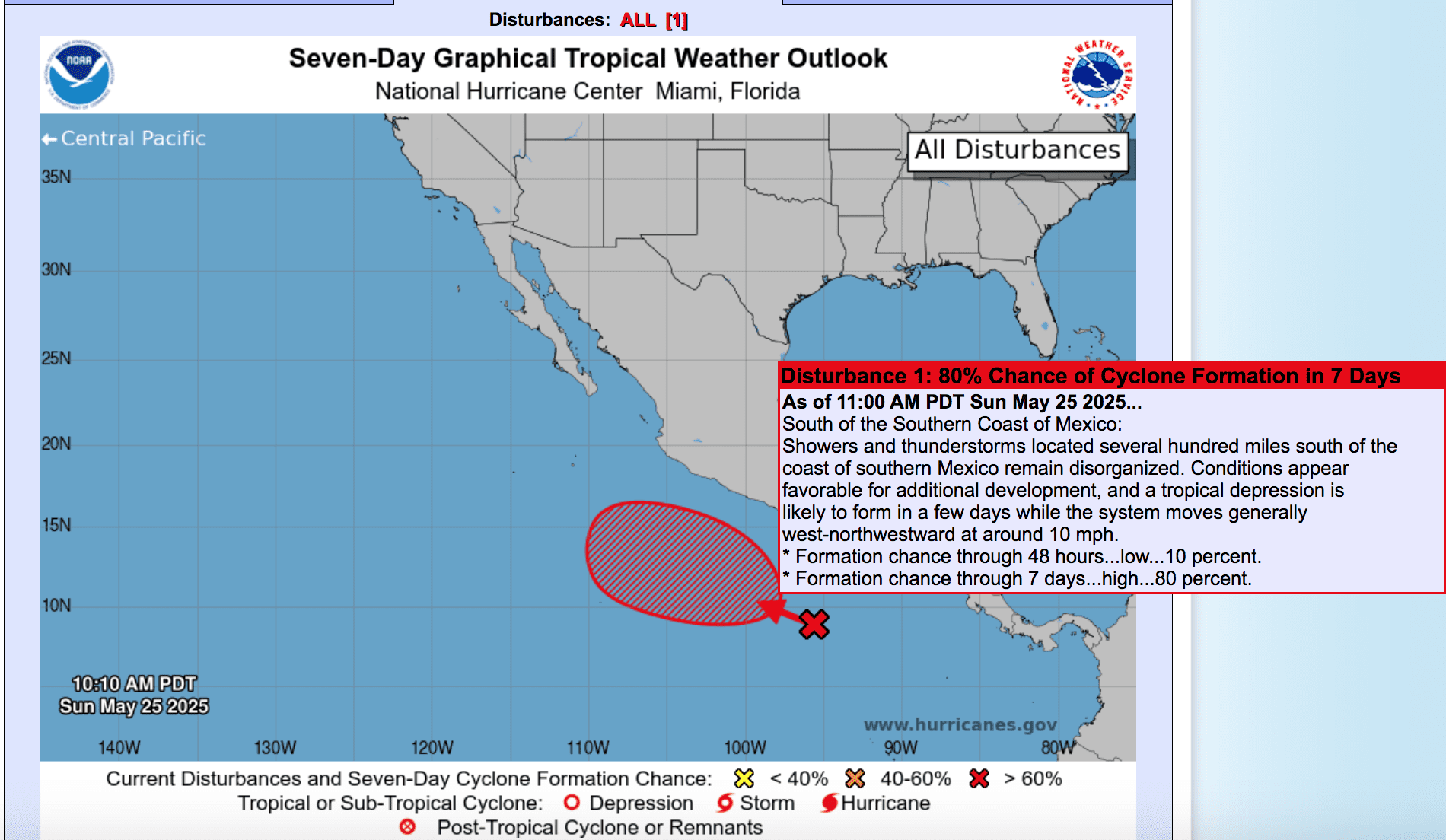
However, a system in the Eastern Pacific Basin, located near the southern coast of Mexico, may become the first cyclone to develop in the basin this year. If it strengthens into a tropical storm with winds of at least 39 mph, it would be named “Alvin.”
Weather Updates
While the presence of dry Saharan dust can potentially help thwart the development of tropical systems, it is vital to be prepared throughout the 2025 Atlantic Hurricane Season, which is forecast to be a potentially active hurricane season.
USVI residents and visitors can find weather information, including marine weather details, from the NHC, the NWS, and NOAA. Additionally, the Virgin Islands Territorial Emergency Management Agency offers residents and visitors the opportunity to sign up for emergency alerts.
Finally, the local weather forecast for the U.S. Virgin Islands is regularly updated on the Source Weather Page and VI Source YouTube Channel. Individuals can also find helpful weather information and alerts from the Virgin Islands Territorial Emergency Management Agency.